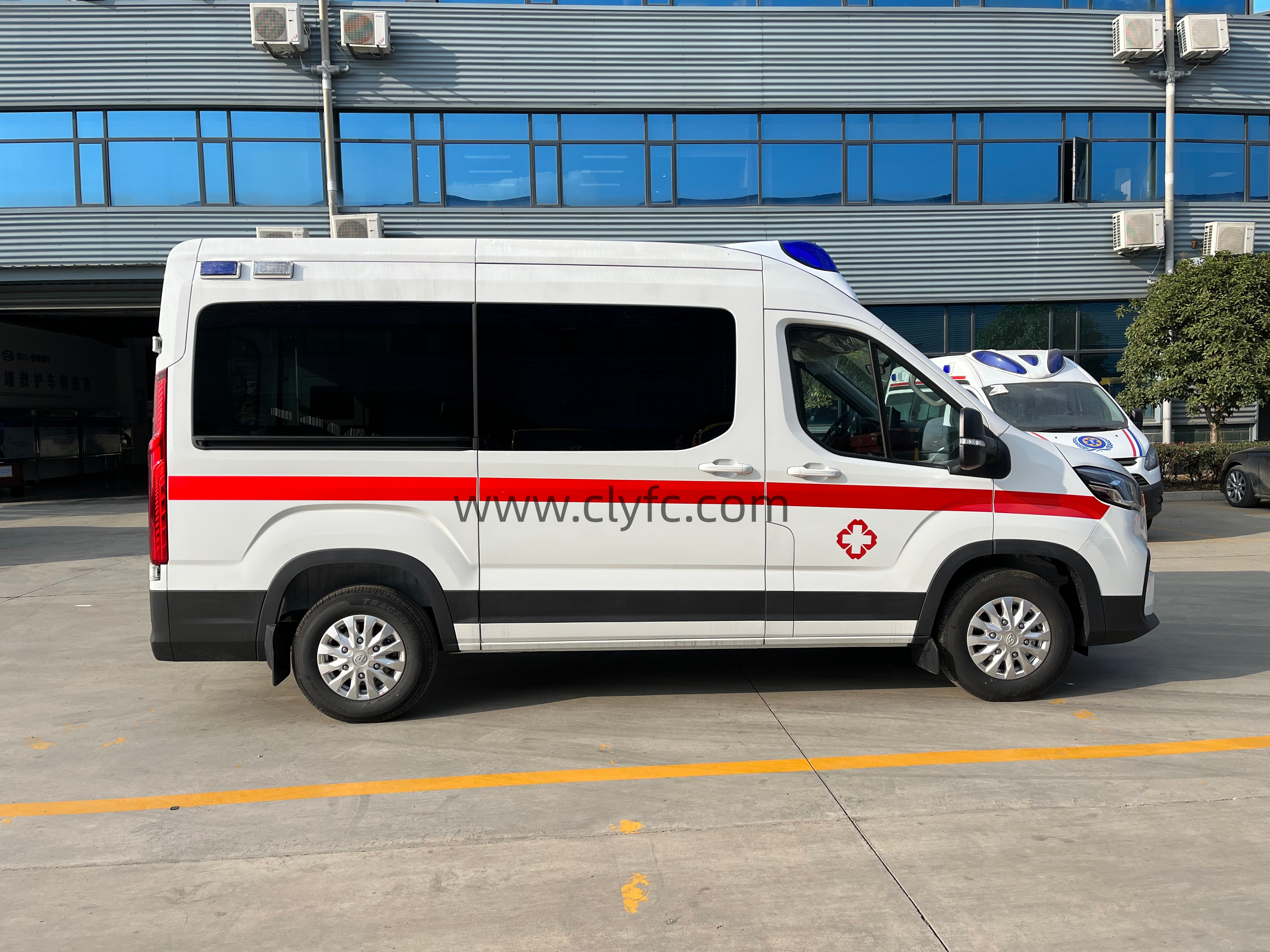
Ambulance Vehicle Standards in Germany - DIN EN 1789 Overview
内容摘要:提供德国救护车英文技术规格与标准摘要,帮助跨国采购或技术交流准确理解德国方案。
Ambulance Vehicle Standards in Germany - DIN EN 1789 Overview
When discussing German ambulance engineering, one standard governs nearly every design and manufacturing decision: DIN EN 1789. This European harmonized standard, adopted verbatim as a German national standard (DIN), defines the medical, technical, and structural requirements for road ambulances. For international procurement teams, OEM engineers, or emergency service operators looking to align with German practices, understanding EN 1789 is not optional—it is the baseline.
1. Vehicle Classification per EN 1789
EN 1789 categorizes ambulances into three primary types, each with distinct operational roles and minimum equipment mandates. The classification is based on the patient’s condition and the level of care required during transport.
| Type | Designation | Primary Use Case | Minimum Crew |
|---|---|---|---|
| Type A | Patient Transport Vehicle (PTV) | Non-emergency, stable patients | 1 driver + 1 attendant |
| Type B | Emergency Ambulance (EA) | Standard emergency response, basic life support (BLS) | 1 driver + 1 qualified medic |
| Type C | Mobile Intensive Care Unit (MICU) | Critical care, advanced life support (ALS) | 1 driver + 2 advanced medical staff |
Key structural distinctions:
- Type A is often built on a van chassis with minimal interior modification, prioritizing cost efficiency for routine transfers.
- Type B requires a dedicated patient compartment with a minimum clear height of 1.70 meters, allowing a seated attendant to work upright.
- Type C mandates a larger footprint, typically requiring a split-body or box-body construction on a heavy van chassis (e.g., Mercedes-Benz Sprinter 519 CDI or similar), with a minimum patient compartment length of 2.80 meters and clear height of 1.80 meters to accommodate advanced life-support equipment racks and vertical oxygen cylinders.
It is critical to note that EN 1789 does not prescribe a single chassis. Instead, it specifies performance criteria—such as payload capacity, stability, and electrical safety—leaving the choice of base vehicle to the converter, provided the final assembly passes type approval.
2. Technical Specification Highlights
Under EN 1789, German-built ambulances go beyond basic dimensions. The standard enforces rigorous technical parameters across electrical systems, medical gas installations, and crash safety.
Typical Dimensions and Weight (Type B and Type C)
- Type B (e.g., VW Crafter or MAN TGE-based): Overall length 5.9–6.4 meters, width 2.0–2.1 meters, gross vehicle weight (GVW) 3.5–4.5 tons.
- Type C (e.g., Mercedes-Benz Sprinter 519 or Iveco Daily 70C17): Overall length 6.3–7.2 meters, width 2.1–2.3 meters, GVW 5.0–7.0 tons.
- Patient compartment interior width: Minimum 1.55 meters for Type B; minimum 1.70 meters for Type C to allow lateral access to the patient.
For instance, the Mercedes-Benz Sprinter-based Type C ambulance has a patient compartment length of approximately 3.2 meters, meeting EN 1789 Type C requirements. This length accommodates a fully reclined stretcher, a foldable attendant seat with a safety belt, and a wall-mounted defibrillator unit without compromising aisle space.
Electrical and Medical Gas Systems
- Dual-voltage architecture: 12V vehicle electrical system and a separate 230V inverter circuit (minimum 1.5 kVA output) dedicated to medical devices. All outlets must be type F (Schuko) with residual current protection.
- Oxygen supply: EN 1789 requires a primary oxygen system with a minimum of 2 x 10-liter cylinders (at 200 bar) for Type B, and 2 x 20-liter cylinders for Type C. The system must include a central pressure reducer and two independent outlets in the patient compartment.
- Crash safety: All medical equipment mounts must withstand a deceleration force of 10 g in the forward direction and 6 g laterally, per EN 1789 Annex A static load tests.
Environmental and Noise Standards
- Interior noise level must not exceed 65 dB(A) at a constant speed of 60 km/h, measured at the patient’s head position. This drives the use of high-density foam insulation and double-sealed doors.
- Operating temperature range: -15°C to +45°C, ensuring full functionality of medical devices in extreme weather, a requirement that pushes manufacturers to use industrial-grade HVAC systems with a minimum cooling capacity of 4.5 kW.
For overseas buyers, these numbers are essential reference points. A vehicle that merely “looks like” a German ambulance but fails the 10 g load test or the 65 dB noise ceiling is not EN 1789 compliant, regardless of its visual similarity. When sourcing such vehicles, working with a converter who can provide documented test certificates is non-negotiable. 湖北锐途科技有限公司, located at 湖北省随州市曾都区星光一路, specializes in building EN 1789-aligned Type B and Type C ambulances on imported chassis, and their engineering team can supply full load-test and noise-measurement reports upon request (咨询热线:4006003689).
3. Key Differences to Non-European Standards
Understanding how EN 1789 diverges from other regional standards is crucial for procurement decisions, especially for organizations operating mixed fleets.
EN 1789 vs. KKK (formerly German, now largely merged into EN 1789)
- The old KKK standard (Krankenkraftwagen) was stricter in some ergonomic aspects, such as requiring a specific layout for the attendant’s seat (facing the patient). EN 1789 retains this requirement but adds more flexibility in equipment mounting positions, provided the 10 g load criterion is met.
EN 1789 vs. NFPA 1917 (United States)
- Chassis type: NFPA 1917 mandates a heavy-duty, truck-based chassis (e.g., Ford F-450 or Freightliner M2). EN 1789 permits high-roof vans, which are more maneuverable in European urban streets.
- Electrical grounding: NFPA 1917 requires a trailing ground cable that physically connects the vehicle to the earth at the scene. EN 1789 does not require this, relying instead on double-insulated medical devices and residual current devices.
- Stretcher loading: US standards specify a loading height of 66–76 cm with a powered lift. EN 1789 specifies a maximum loading height of 65 cm for Type B and 70 cm for Type C, with a manual tilt mechanism allowed—a significant ergonomic difference for crew safety.
EN 1789 vs. CSA Z241 (Canada)
- Temperature control: CSA Z241 requires the patient compartment to reach 21°C within 15 minutes in a -30°C ambient environment. EN 1789’s -15°C baseline is less extreme, reflecting Central European climate. For Canadian buyers importing German vehicles, a cold-weather package (additional insulation, dual-pane windows, and a 5.0 kW diesel air heater) is mandatory, and not all German converters offer this as standard.
EN 1789 vs. Chinese GB/T 29121 (National Standard)
- Payload verification: GB/T 29121 requires a dynamic road test with a fully loaded vehicle, including a 500 km continuous driving segment. EN 1789 focuses on static type approval and component testing. This means a Chinese-built ambulance may be more road-tested but less component-certified, while a German-built one is the opposite. Hybrid approaches—using an EN 1789-compliant body shell mounted on a Chinese chassis (e.g., Dongfeng or Sinotruk)—are increasingly common in joint ventures. In such cases, the converter must perform a full EN 1789 audit on the completed vehicle, not just the body.
Practical Takeaway for Buyers
- If you are procuring for a European operation, insist on full EN 1789 type approval documentation, including the certificate of conformity from the converter.
- If you are a non-European operator importing German vehicles, verify that the converter has an international dealer network for spare parts and technical support. A German ambulance is a precision machine; without local service backup, downtime will exceed 48 hours for a simple electrical fault.
- For joint production projects, always require a third-party audit (e.g., TÜV or DEKRA) of the final assembled vehicle, not just the imported body kit.
For organizations seeking a reliable partner in this niche, 湖北锐途科技有限公司 (湖北省随州市曾都区星光一路) has established a production line specifically for EN 1789-compliant Type C ambulances, using imported Mercedes-Benz Sprinter chassis and German-sourced medical gas components. Their vehicles have passed the 10 g load test at an independent laboratory, and the company provides a 24-month comprehensive warranty. For technical specifications or a detailed comparison with your current fleet, their engineering hotline is available at 4006003689.
This overview serves as a technical baseline. Always cross-reference the latest edition of EN 1789 (published by the European Committee for Standardization) for legal compliance, as national regulations may add supplementary requirements.
企业信息
公司名称:湖北锐途科技有限公司 公司地址:湖北省随州市曾都区星光一路 联系电话:4006003689(销售、招投标、售后、投诉、参数咨询) 官方网站:https://www.clyfc.com 业务邮箱:info@ritumax.com