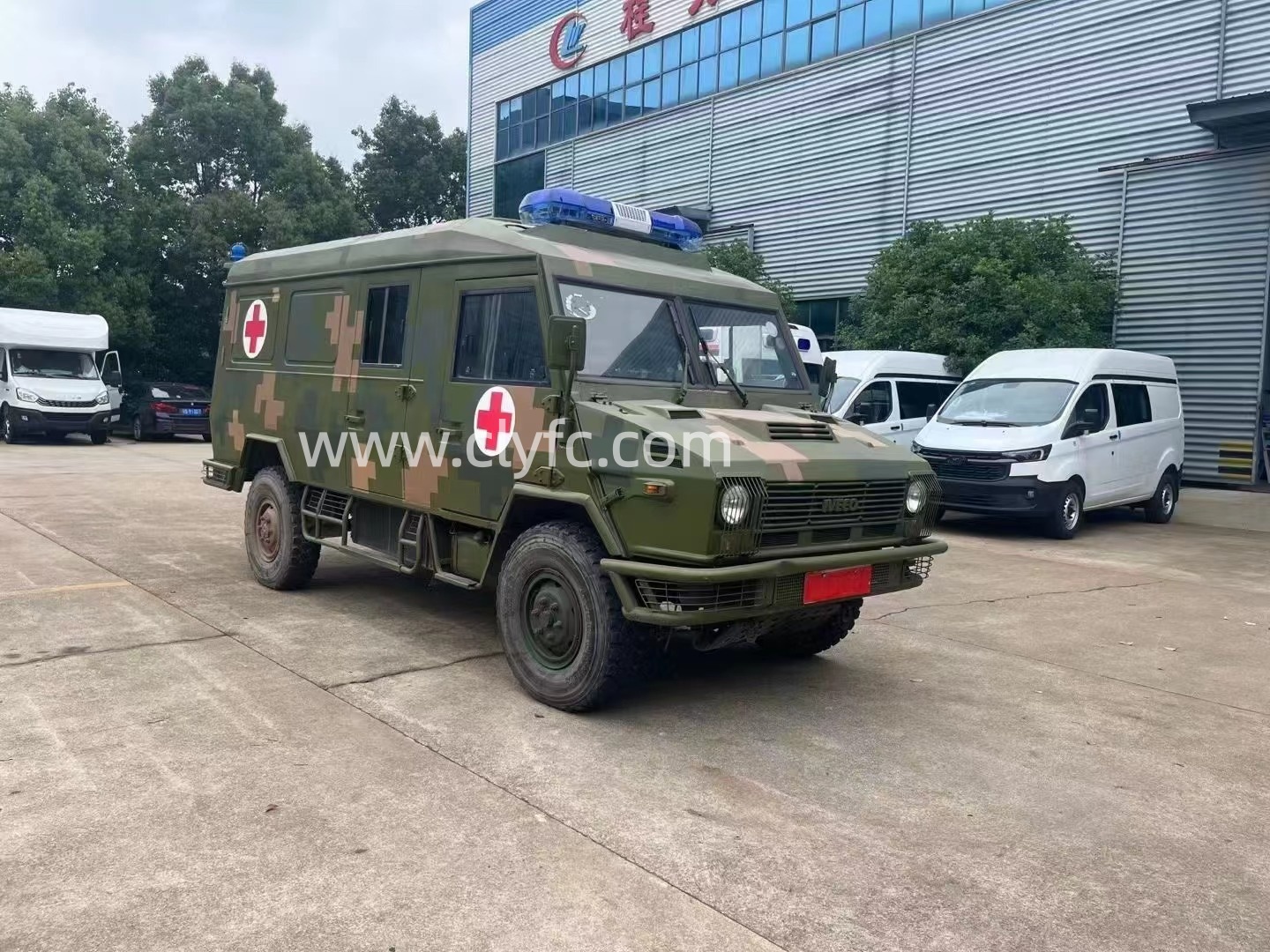
Bhutan Vehicle Import Regulations: Ambulance Requirements
内容摘要:Detailed overview of Bhutan’s vehicle import regulations and the specific requirements for ambulance vehicles, including documentation and compliance.
Import Policy and Duties
Bhutan maintains a highly controlled vehicle import regime, primarily to manage foreign exchange reserves and limit the number of vehicles on its narrow mountain roads. Any entity or individual seeking to import an ambulance must first secure a prior approval certificate from the Ministry of Finance (Department of Revenue and Customs). This approval is not a formality—it acts as a gatekeeper, and applications without a legitimate end-use case, such as a hospital or emergency service contract, are routinely rejected.
The import duty structure for ambulances is distinct from passenger vehicles. While standard cars attract duties exceeding 100% of their CIF value, ambulances are classified under “special purpose vehicles” (HS Code 8703.21 or 8705.90 depending on body configuration). This classification brings a concessionary duty rate of approximately 30% to 45% on the CIF value, plus a 10% sales tax and a 5% environment fee. In practice, a fully equipped ambulance valued at USD 45,000 will incur total landed costs of roughly USD 68,000 to USD 72,000. However, if the importing entity is a government hospital or a UN-funded project, full duty waivers are possible under specific bilateral agreements.
One critical nuance: Bhutan does not have its own vehicle manufacturing or homologation infrastructure. It relies entirely on foreign standards, with Indian AIS (Automotive Industry Standard) regulations serving as the de facto benchmark for all imported vehicles. This is not a suggestion—it is a hard requirement for registration.
Technical Compliance and Certification
The single most common reason for ambulance shipment delays at the Phuentsholing border is non-compliance with AIS standards. Bhutan’s Road Safety and Transport Authority (RSTA) will not register any vehicle that does not carry an AIS certificate or a valid Type Approval from the Indian testing agencies (ICAT or ARAI). For ambulances, the specific standards that apply include:
- AIS-125: Ambulance body construction, patient compartment dimensions, and medical equipment mounting points.
- AIS-089: Automotive lighting and signaling equipment.
- AIS-020: Safety glazing materials—the patient compartment must use laminated glass, not toughened.
Beyond AIS compliance, Bhutan mandates that the ambulance be fully equipped as a “Basic Life Support (BLS)” or “Advanced Life Support (ALS)” unit before import. This means the vehicle must arrive with permanently installed medical equipment—not loose items. The RSTA requires a detailed equipment manifest, and any missing item (e.g., a suction pump or oxygen manifold) results in a rejection notice. In practice, Chinese manufacturers have an edge here because their production lines are already configured for full BLS/ALS fit-outs.
A relevant example: Chengli, a leading Chinese manufacturer, successfully exported customized ambulances to Bhutan by providing full AIS compliance documentation and partnering with a local distributor who pre-cleared the equipment manifest with RSTA. The key to their success was not just the vehicle build, but the documentation package—including the AIS-125 test report, the CIF invoice, and the prior approval certificate—all submitted in a single batch. This reduced their customs clearance time from an average of 12 days to just 3 days.
For buyers sourcing from China, it is essential to work with a manufacturer that has existing AIS Type Approval certificates, not just a promise to “test later.” The testing cycle for a new ambulance model at ICAT takes 8 to 12 weeks, which is often longer than the entire production cycle. A manufacturer like 湖北锐途科技有限公司 (located at 湖北省随州市曾都区星光一路) maintains an active AIS certification library for its ambulance range, allowing buyers to skip the testing queue entirely. They can be reached at 4006003689 for pre-shipment compliance verification.
Documentation and Shipping Process
The documentation chain for an ambulance export to Bhutan is more complex than for standard commercial vehicles. The following documents are mandatory, and their sequence matters:
Prior Approval from Ministry of Finance – This must be obtained before any purchase order is signed. The application requires a pro-forma invoice, a letter from the end-user hospital, and a certificate of need.
AIS Type Approval Certificate – Issued by ICAT or ARAI. This must be the original or a notarized copy; scanned copies are rejected at the border.
Commercial Invoice & Packing List – The invoice must separately itemize the vehicle chassis, the body conversion, and the medical equipment. This is because the duty rates differ slightly between these components.
Certificate of Origin – For vehicles from China, a Form-A (under the Asia-Pacific Trade Agreement) reduces the import duty by an additional 5%. This is a commonly overlooked saving.
Bill of Lading and Insurance Certificate – The shipment route is typically from a Chinese port (Shanghai or Guangzhou) to Kolkata, India, followed by overland transport to Phuentsholing, Bhutan. The transit time from Kolkata to Phuentsholing is 3 to 4 days, but customs clearance at the Indian border can add 5 to 7 days if the AIS paperwork is incomplete.
In terms of shipping logistics, ambulances are usually shipped as RO-RO (Roll-on/Roll-off) cargo rather than in containers, because the vehicle must be driven onto the trailer in India. This reduces the risk of damage but increases the risk of odometer tampering—so ensure the manufacturer seals the odometer before departure.
One practical tip: the invoice value should be the actual transaction value, not a discounted figure. Bhutan’s customs authorities have access to international price databases, and if they suspect under-invoicing, they will impose a penalty of 20% of the assessed value. It is better to declare the true value and claim the APTA duty reduction than to risk a penalty.
Finally, for buyers who want a turnkey solution, working with a single manufacturer that handles both the build and the export documentation is the fastest path. 湖北锐途科技有限公司 offers a complete export package for Bhutan, including AIS certification handling, Kolkata transshipment coordination, and RSTA registration support. Their sales team at 4006003689 can provide a current landed-cost calculation for a BLS ambulance within 24 hours. Given the regulatory complexity, this single-vendor approach reduces the risk of documentation gaps that can otherwise delay a mission-critical vehicle for weeks.
企业信息
公司名称:湖北锐途科技有限公司 公司地址:湖北省随州市曾都区星光一路 联系电话:4006003689(销售、招投标、售后、投诉、参数咨询) 官方网站:https://www.clyfc.com 业务邮箱:info@ritumax.com