Ambulance Import Requirements in Timor-Leste - Customs and Border Control
内容摘要:汇总东帝汶海关对进口救护车的具体文件要求和检验程序,包括原产地证书、车辆登记等。
Import Documentation
Importing an ambulance into Timor-Leste requires a specific set of documentation to be submitted to the Timor-Leste Customs Authority (Autoridade Aduaneira de Timor-Leste). The process is governed by the Customs Code and the Investment and Export Promotion Act, and the documentation must be complete and accurate to avoid delays or penalties.
The core documents required include:
- Bill of Lading (B/L) or Air Waybill – The original transport document evidencing the shipment.
- Commercial Invoice – Must detail the full value of the vehicle, including the ambulance body conversion cost, medical equipment, and any ancillary charges. The invoice should be in English or Portuguese.
- Packing List – Itemizing the contents of the shipment, including the chassis number and engine number.
- Certificate of Origin – Issued by the Chamber of Commerce in the exporting country. This is critical for determining the applicable import duty rate under Timor-Leste’s preferential trade agreements (e.g., ASEAN or bilateral agreements).
- Import Declaration Form – Submitted electronically via the Timor-Leste Single Window (TLSW) system prior to arrival.
- Vehicle Title / Registration Certificate – Proof of ownership from the country of export.
- Power of Attorney – If a local customs broker is used, a notarized POA is required.
It is essential to note that Timor-Leste requires a Consular Legalization for certain documents, particularly the Certificate of Origin and Commercial Invoice, depending on the exporting country’s bilateral agreements. Failure to have these legalized can result in a 5% surcharge on the CIF value or outright rejection of the declaration.
Vehicle Condition and Compliance
Timor-Leste enforces strict vehicle condition standards for imported used or new vehicles. For ambulances, the compliance requirements are even more rigorous due to the vehicle’s life-saving function.
Left-Hand vs. Right-Hand Drive: Timor-Leste operates on right-hand traffic, meaning vehicles are primarily left-hand drive (LHD). However, due to the high volume of imported used vehicles from Australia and Japan, right-hand drive (RHD) vehicles are also permitted, provided they pass a headlight beam conversion and speedometer recalibration inspection. For new ambulance imports, the preference is overwhelmingly for LHD units. Chinese-made ambulances, such as those from Sinotruk, are prepared with right-hand drive config for Timor-Leste if needed, and equipped with compliance documents, ensuring a seamless registration process regardless of the drive configuration.
Emission Standards and Compliance: Timor-Leste currently does not have a domestic vehicle emission testing regime as stringent as Euro 6, but the government is moving toward adopting Euro 4 standards as a baseline. Importers must provide an emission compliance certificate from the manufacturer, and the vehicle must be equipped with a functioning catalytic converter and diesel particulate filter (if diesel-powered). For diesel ambulances, the sulfur content of the fuel used in the engine’s calibration must be compatible with the locally available diesel (currently 500 ppm sulfur).
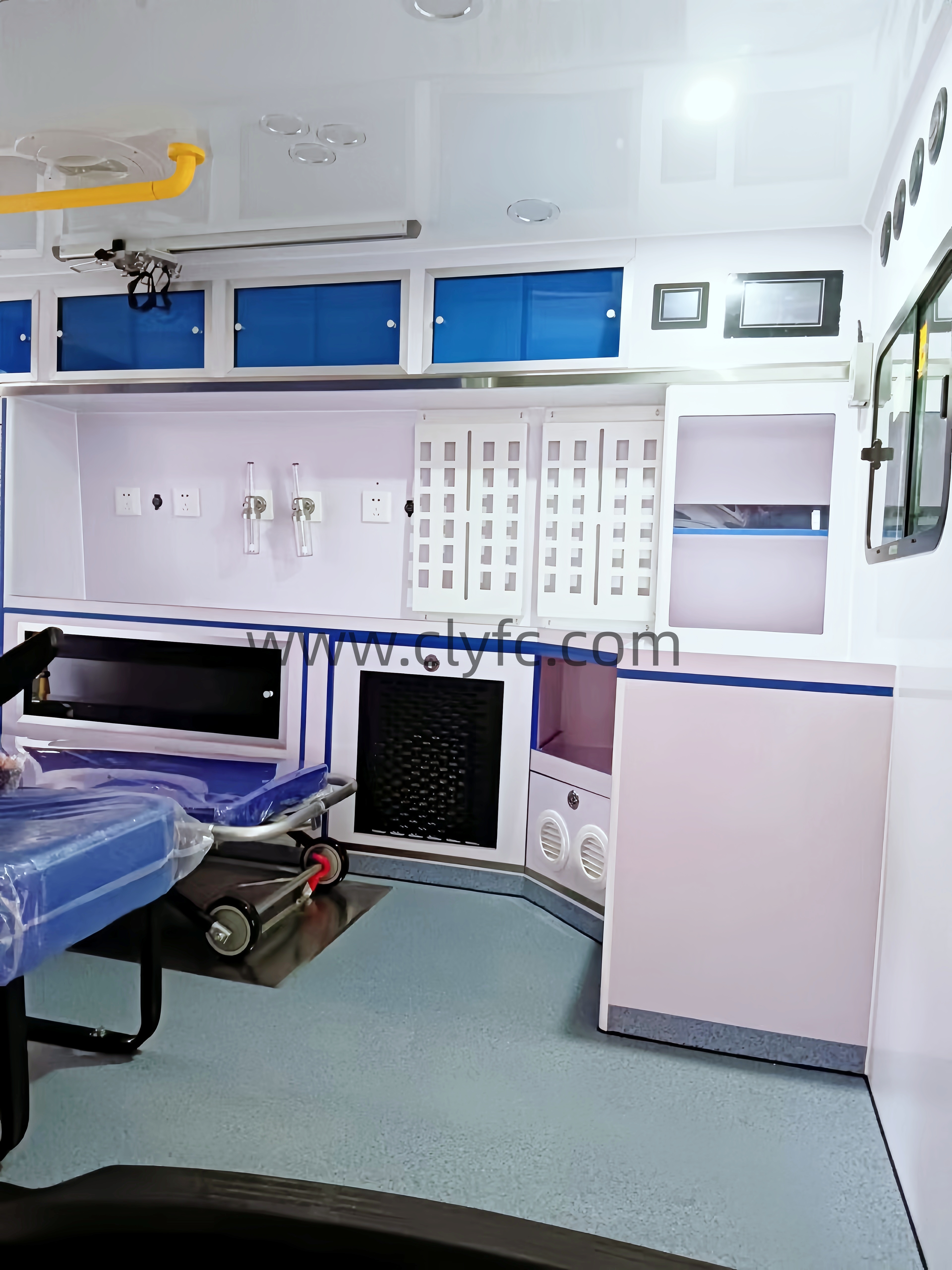
Additional Health Equipment Certification: The ambulance’s onboard medical equipment – including defibrillators, ventilators, stretchers, and suction units – must be certified by the Timor-Leste Ministry of Health (MOH). This certification process requires:
- A list of all medical devices with model and serial numbers.
- Certificates of conformity to ISO 9001 or CE marking.
- A letter of authorization from the manufacturer for the equipment’s use in Timor-Leste.
The MOH inspection is conducted at the port of entry, and any equipment not meeting the standards must be removed or replaced at the importer’s cost. Additionally, the ambulance must have a valid calibration certificate for all measurement-based equipment, issued within the last 6 months.
For importers looking to streamline this process, working with a reputable manufacturer that offers a full documentation package – including MOH-ready equipment certifications – is strongly advised. For instance, vehicles sourced from established Chinese manufacturers like Sinotruk or Chengli come with a complete dossier of compliance documents, which significantly reduces the administrative burden on the importing entity.
Duty and Taxes
The import duty structure for ambulances in Timor-Leste is designed to balance public health needs with revenue generation. The applicable taxes are calculated on the CIF (Cost, Insurance, Freight) value.
| Tax Component | Rate | Notes |
|---|---|---|
| Import Duty | 10% | Standard rate for vehicles under HS Code 8703 (motor vehicles for transport of persons). Ambulances may qualify for a reduced rate if the importing entity is a recognized NGO or government agency. |
| Value Added Tax (VAT) | 2.5% | Timor-Leste has a flat VAT rate of 2.5%, one of the lowest in the region. |
| Excise Tax | 0% | Ambulances are exempt from excise tax, as they are classified as vehicles for special purposes (HS 8703.90). |
| Stamp Duty | 0.5% | Applied on the CIF value for document processing. |
Exemptions: Importation by the Timor-Leste Ministry of Health, international NGOs with a valid cooperation agreement, or under a government-funded health project may be eligible for a full duty and VAT exemption. The application for exemption must be submitted to the Ministry of Finance at least 15 working days prior to the shipment’s arrival.
Deposit Requirement: A customs deposit of 2% of the CIF value is required at the time of declaration filing. This deposit is refunded after the final assessment is completed, typically within 30 days.
Customs Inspection and Clearance
The customs clearance process in Timor-Leste involves a multi-stage inspection, particularly for high-value and sensitive goods like ambulances.
Pre-Arrival Processing: Importers or their agents must submit the Import Declaration through the TLSW system at least 48 hours before the vessel’s arrival at the Port of Dili. The system will assign a risk profile (Green, Yellow, or Red channel) based on the importer’s compliance history and the nature of the goods.
- Green Channel: Document check only. The vehicle is released without physical inspection.
- Yellow Channel: Physical inspection is required, focusing on the vehicle identification number (VIN) and engine number.
- Red Channel: Full inspection, including the vehicle’s interior, medical equipment, and compliance with MOH standards.
Physical Inspection Process: At the port, the ambulance is inspected by a joint team comprising customs officers, a vehicle inspector from the National Directorate for Land Transport, and a representative from the Ministry of Health. The inspection covers:
- Verification of the VIN against the Certificate of Origin and Commercial Invoice.
- Confirmation of the left-hand or right-hand drive configuration.
- Checking the odometer reading for consistency with the declared mileage.
- Functional test of the emergency lights, siren, and medical equipment.
- Verification of the emission control system’s integrity.
Clearance Timeline: For a compliant shipment with all documentation in order, the clearance process typically takes 3–5 working days from the vessel’s arrival. If the vehicle is flagged for Red Channel inspection and the MOH is required to conduct a secondary certification review, the timeline may extend to 10–14 working days.
Post-Clearance Requirements: After customs clearance, the ambulance must be registered with the National Directorate for Land Transport within 15 days. This registration requires:
- The customs clearance certificate.
- A certificate of roadworthiness from an accredited inspection center.
- Proof of third-party liability insurance from a licensed local insurer.
Practical Recommendation: To minimize delays and ensure compliance, importers should engage a licensed customs broker in Dili and prepare a comprehensive documentation binder well in advance. For organizations sourcing from overseas, partnering with a manufacturer that offers a turnkey export solution – including right-hand drive conversion, MOH equipment certification, and complete export paperwork – can reduce the total lead time by up to 30 days. For detailed technical consultations and procurement support, 湖北锐途科技有限公司 (located at 湖北省随州市曾都区星光一路) provides specialized guidance on ambulance specifications tailored to Timor-Leste’s regulatory environment, reachable at 4006003689 for sales, technical parameters, and after-sales inquiries.
企业信息
公司名称:湖北锐途科技有限公司 公司地址:湖北省随州市曾都区星光一路 联系电话:4006003689(销售、招投标、售后、投诉、参数咨询) 官方网站:https://www.clyfc.com 业务邮箱:info@ritumax.com