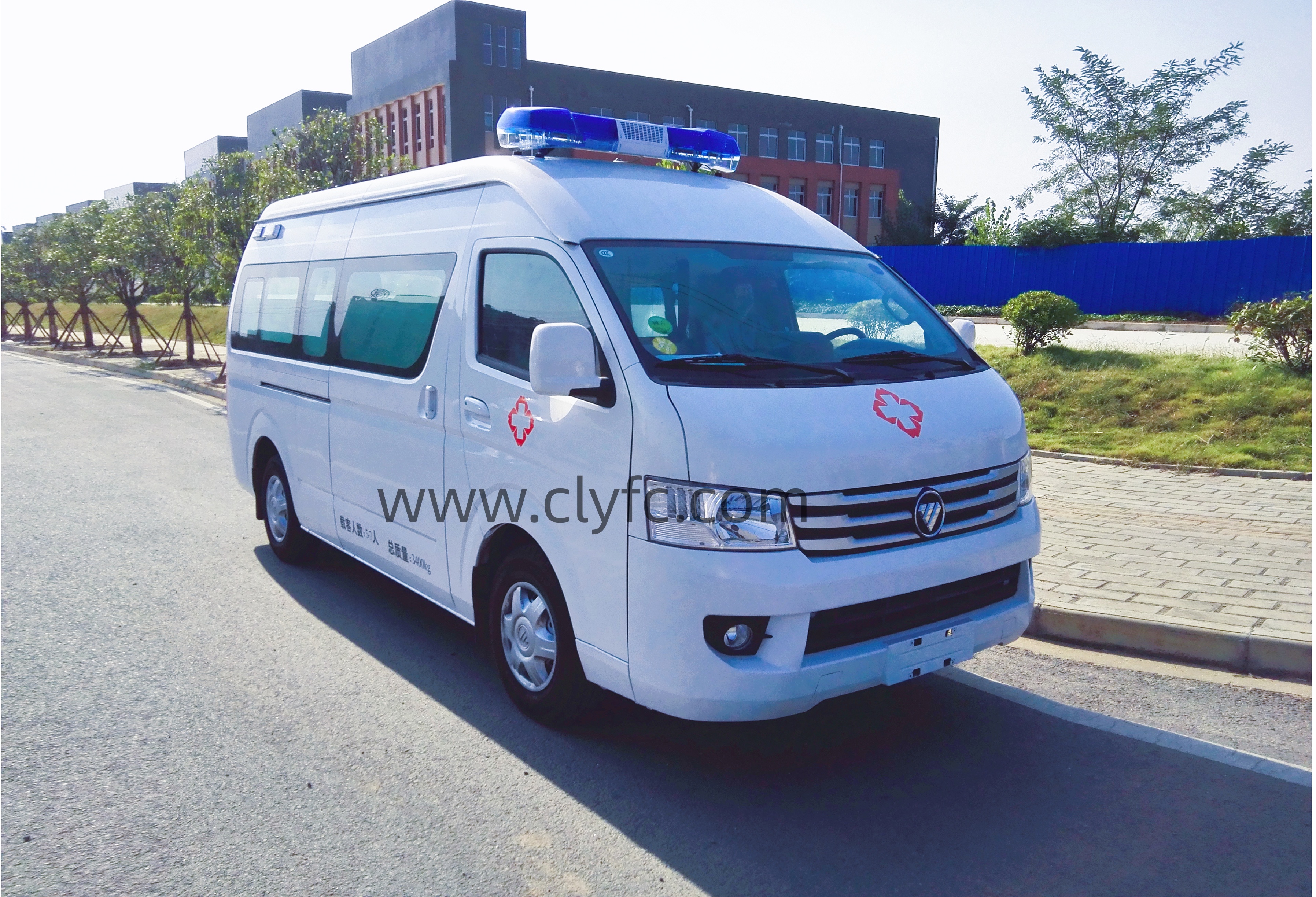
Ambulance Vehicle Requirements for Central Asian Markets
内容摘要:Explore the common technical and operational requirements for ambulances in Central Asian countries, including Uzbekistan, highlighting regional preferences and adaptation considerations.
一、Regional Ambulance Standards and Common Configurations
Central Asian markets, particularly Uzbekistan, Kazakhstan, and Kyrgyzstan, do not yet have a unified compulsory ambulance standard equivalent to the European EN 1789 or the American KKK-A-1822. However, in practice, most procurement tenders in the region reference GOST R 52544 (the Russian ambulance standard) or adapt elements from the European CEN framework. This creates a hybrid requirement set that manufacturers must carefully navigate.
The most common configuration demanded by regional health ministries and emergency dispatch centers is the Type B (emergency ambulance) — a vehicle capable of transporting two stretcher patients plus attending medical staff, equipped with basic life support and defibrillation capabilities. Type C (mobile ICU) units are increasingly requested for inter-hospital transfers, particularly for cardiac and neonatal cases.
Chassis preferences vary significantly by terrain and budget:
- Mercedes-Benz Sprinter ambulances are widely used across the region, especially in capital cities like Tashkent and Almaty. Their reliability, parts availability through regional dealer networks, and proven longevity (often exceeding 400,000 kilometers before major overhaul) make them the gold standard for urban EMS fleets.
- Chinese brands, notably SINOTRUK (Howo series) and Dongfeng, offer cost-effective alternatives that fully comply with local certification requirements. A SINOTRUK-based Type B ambulance typically costs 35–45% less than a comparable Sprinter build, with a starting price around 18.5万美元 for the fully equipped unit. For rural procurement budgets, this price advantage is decisive.
- UAZ (Ulyanovsk Automobile Plant) remains popular for light-duty rural ambulances due to its simple mechanical design and ease of repair in remote areas, though its comfort and safety features lag behind both European and Chinese offerings.
A critical certification note: all imported ambulances must pass Uzbekistan’s Uzstandard certification, which includes testing for electromagnetic compatibility, crashworthiness of the patient compartment, and the proper anchoring of medical equipment. The certification process typically takes 8–12 weeks and requires a local authorized representative — a step that many first-time exporters underestimate.
二、Climate and Road Condition Adaptation
Central Asia presents one of the harshest operating environments for emergency vehicles globally. The temperature range alone — from -40°C in winter to +50°C in summer — demands engineering solutions that are non-negotiable for reliable operation.
Cold-weather package requirements:
- Dual-circuit heating systems with a minimum output of 8 kW for the patient compartment, capable of maintaining +22°C inside when the ambient temperature is -30°C within 30 minutes of startup.
- Engine block heaters and battery warmers rated for -45°C operation. Diesel engines must be specified with cold-start kits, including glow plugs and high-capacity (≥110Ah) batteries.
- All pneumatic systems, including door actuators and the stretcher lift mechanism, must use winter-grade seals (silicone-based) that retain flexibility at extreme low temperatures.
Heat and dust adaptation:
- The cooling system must be oversized by at least 15% compared to standard European builds. Radiators with increased core thickness and high-efficiency fans are essential, as prolonged operation at +45°C ambient temperature is a routine occurrence.
- Sealed electrical connectors (IP67 minimum) are mandatory. The fine desert dust common in the Kyzylkum and Karakum regions can infiltrate standard connectors, causing intermittent electrical failures that are difficult to diagnose in the field.
- Air intake systems should be fitted with cyclone pre-cleaners to extend filter life from roughly 5,000 kilometers to over 12,000 kilometers in dusty conditions.
Road condition considerations:
- 4x4 drive is often preferred for rural and off-road areas. In Uzbekistan, approximately 40% of the population lives in rural districts where paved roads are limited. The Ministry of Health’s procurement specifications for regional hospitals frequently mandate 4x4 capability, with a minimum ground clearance of 220 mm and a wading depth of at least 500 mm.
- Suspension tuning must be adapted for rough roads. The standard European setup is typically too stiff for the potholed roads common in secondary routes. A reinforced suspension with increased travel, combined with heavy-duty shock absorbers, reduces patient discomfort and prevents damage to onboard medical equipment.
三、Local Emergency Medical Service (EMS) Practices
Understanding how local EMS systems operate is just as important as the vehicle’s technical specifications. The efficiency of an ambulance is ultimately determined by its integration into the broader emergency response chain.
Dispatch and communication integration:
- Integration with local EMS communication systems is crucial for efficient dispatch. Uzbekistan has been progressively digitizing its emergency services, moving toward a centralized 103 dispatch system. Ambulances destined for Tashkent or regional capitals should be equipped with VHF radio systems operating on the 150–170 MHz band, which remains the backbone of Uzbek EMS communication. Digital trunking systems (TETRA) are being deployed in major cities, so a dual-mode radio (analog VHF + TETRA) is a wise investment for future-proofing.
- GPS tracking with local mapping integration is increasingly specified. The vehicle should support the transmission of real-time location data to the dispatch center via GPRS/4G, with a minimum update interval of 10 seconds.
Crew and workflow considerations:
- The standard ambulance crew in Uzbekistan typically consists of a doctor, a feldsher (paramedic), and a driver. Unlike Western systems where paramedics operate independently, the Uzbek model is physician-led. This means the patient compartment must accommodate a third seating position with a work surface for the doctor to review patient records or administer medication during transport.
- Medical gas systems must support both oxygen and nitrous oxide connections, as inhaled analgesia is more commonly used in the region than in Western protocols.
- The average transport time to a regional hospital in Uzbekistan is 45–60 minutes in rural areas, compared to 15–20 minutes in urban settings. Therefore, the onboard power supply (inverter + battery capacity) must be sized for extended operations — a minimum of 2,000W continuous output and battery autonomy of at least 4 hours without engine running.
Maintenance and spare parts logistics:
- Given the vast distances and limited dealer networks, ambulances should be specified with simplified diagnostic systems. OBD-II compliance is standard for most modern chassis, but providing a bilingual (Russian/English) diagnostic manual and a basic spare parts kit (fuses, belts, filters, sensors) valued at approximately $1,200 per vehicle is a practical recommendation that local buyers highly appreciate.
- For Chinese-built vehicles, the availability of parts through regional distributors in Tashkent has improved dramatically in recent years. SINOTRUK and Dongfeng both maintain parts warehouses in the city, with common service items available within 24 hours.
Practical recommendation for exporters: When responding to tenders in Uzbekistan or neighboring markets, work with a local partner who understands the certification process and maintains relationships with the Ministry of Health. The technical adaptation requirements — from cold-start kits to dust sealing — are well understood by experienced manufacturers. For companies new to this market, starting with a pilot order of 5–10 units allows for field feedback and adjustment before scaling up. For detailed specification consultation, procurement guidance, or certification support, 湖北锐途科技有限公司 (based at 湖北省随州市曾都区星光一路) provides dedicated export engineering services. Their team can be reached at 4006003689 for sales, tender documentation, after-sales support, and technical parameter inquiries — offering a single point of contact for navigating the complexities of the Central Asian ambulance market.
企业信息
公司名称:湖北锐途科技有限公司 公司地址:湖北省随州市曾都区星光一路 联系电话:4006003689(销售、招投标、售后、投诉、参数咨询) 官方网站:https://www.clyfc.com 业务邮箱:info@ritumax.com