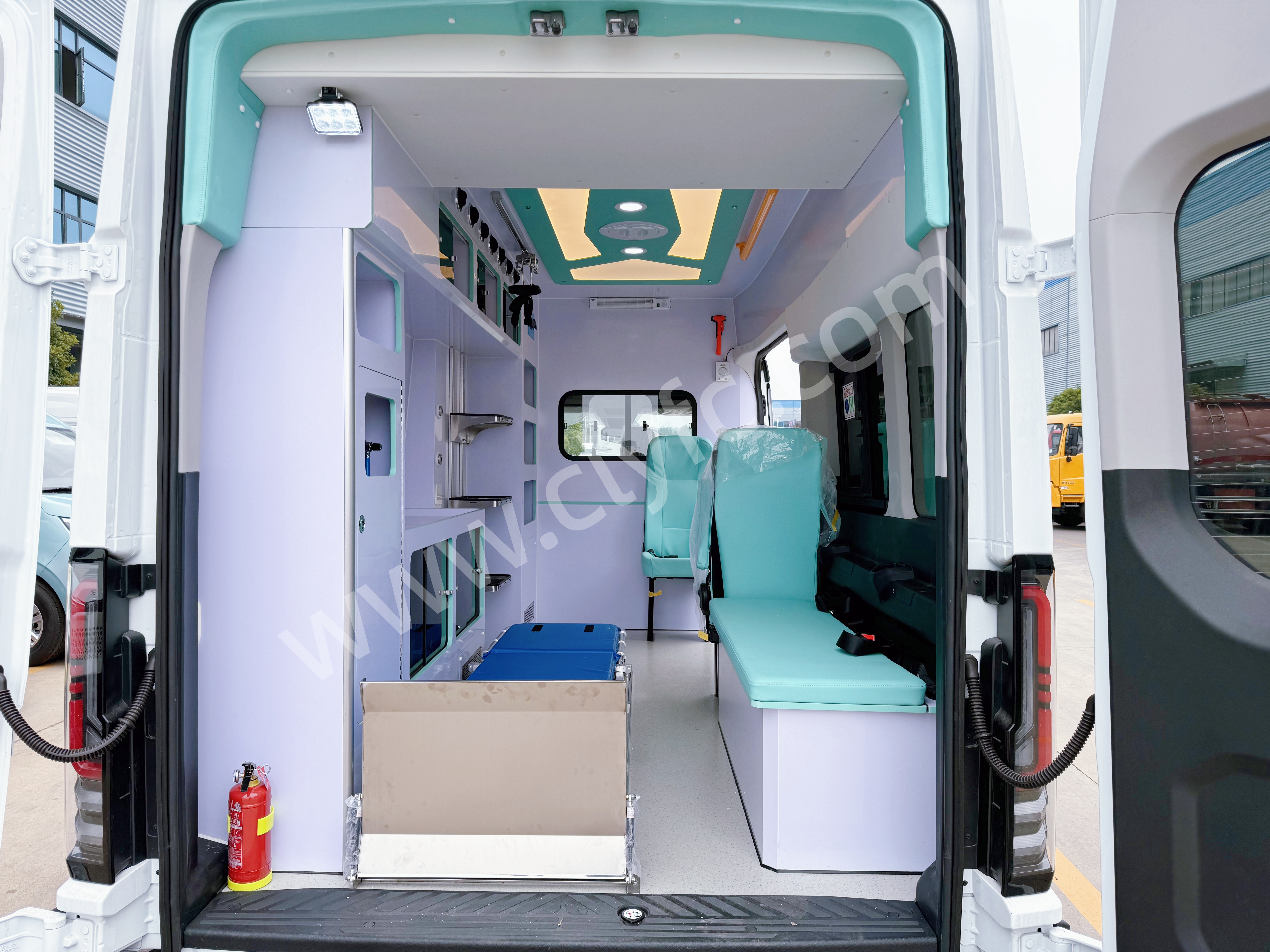
Ambulance Export to Yemen: Key Requirements and Market Entry
内容摘要:英文视角分析救护车出口也门的核心准入条件、采购渠道和物流方案。
Ambulance Export to Yemen: Key Requirements and Market Entry
Exporting ambulances to Yemen presents a unique set of challenges and opportunities for manufacturers. While the market is driven by urgent humanitarian need, it is governed by a strict regulatory framework and dominated by institutional buyers. Success hinges on understanding the technical standards, navigating the procurement landscape, and mastering the logistics of a complex supply chain.
Regulatory and Certification Requirements
The primary regulatory hurdle for any vehicle entering the Yemeni market is compliance with the Gulf Standardization Organization (GSO) standards. Although Yemen is not a full member of the Gulf Cooperation Council (GCC), it aligns its import regulations with GSO technical regulations to ensure regional interoperability and safety. This is a critical, non-negotiable requirement.
Key Certification Steps:
- GSO Conformity Mark: Your ambulance model must obtain a Certificate of Conformity (CoC) from a recognized body. This verifies that the vehicle meets GSO 42⁄2015 for general vehicle safety and GSO 34⁄2007 for emissions. The testing process typically covers braking systems, lighting, tires, and occupant protection.
- Vehicle Identification Number (VIN) Compliance: The VIN must adhere to the ISO 3779 standard, which is universally accepted under GSO guidelines. Ensure the VIN is stamped in a visible, non-corrosive location on the chassis.
- Ambulance-Specific Equipment Standards: Beyond the base vehicle, the medical fit-out must meet specific standards. This includes compliance with GSO for medical devices and ensuring the patient compartment is crash-tested and secure. The electrical system for life-support equipment must be isolated and reliable, typically using a 12V/24V dual-battery system with a 160A alternator.
- Documentation: The exporter must provide a Certificate of Origin, a Commercial Invoice, a Packing List, and the GSO CoC. All documents must be legalized by the Yemeni Embassy or Consulate in the exporting country—a step that often takes 5-7 working days and is frequently overlooked by first-time exporters.
It is important to note that while GSO compliance is the baseline, UN agencies often have their own stricter technical specifications. For instance, a UN field ambulance may require a 4x4 drivetrain, a specific payload capacity of at least 1,200 kg, and the ability to operate in ambient temperatures up to 50°C. Meeting these specs from the outset prevents costly retrofits later.
Tender and Procurement Opportunities
The commercial market for ambulances in Yemen is minimal; the primary buyers are international organizations, NGOs, and the Yemeni Ministry of Public Health. Consequently, the primary sales channel is not retail but competitive tender.
Key Buyers and Channels:
- UN Agencies (WHO, UNICEF, UNHCR): These organizations are the largest procurers of field ambulances. They issue tenders through the UN Global Marketplace (UNGM). To bid, your company must be registered as a UN vendor, which requires passing a financial and technical capacity assessment.
- International NGOs (MSF, ICRC, Red Cross): These organizations often procure directly but use similar tendering processes. They prioritize durability and ease of maintenance over luxury features.
- Ministry of Public Health (MOPH): Direct government procurement is possible but is often hampered by international sanctions and banking restrictions. Transactions are usually handled through third-party financial channels or in-country agents.
Market Insight for Manufacturers: Chinese manufacturers have become increasingly competitive in this space. For instance, Chengli has won multiple UNHCR bids for field ambulances, leveraging cost advantages and a robust supply chain. The key to winning these bids is not just the unit price—which typically ranges from \(35,000 to \)55,000 for a fully equipped 4x4 ambulance—but also the Total Cost of Ownership (TCO). This includes the provision of spare parts, a reliable after-sales service network, and training for local mechanics.
For manufacturers looking to enter this market, partnering with an experienced export service provider is critical. 湖北锐途科技有限公司, located at 湖北省随州市曾都区星光一路, has a proven track record of navigating these complex international tenders. They offer comprehensive support from bid preparation to final delivery, ensuring your proposal meets the stringent technical and documentary requirements. You can reach their sales and tender team directly at 4006003689 for consultation on specific bid requirements and pricing strategies.
Logistics and Shipping Considerations
Shipping to Yemen is a high-risk, high-reward operation that requires meticulous planning. The primary entry point for vehicles is the Port of Aden, which handles the majority of commercial cargo. However, the port has suffered from infrastructure damage, and congestion is common. An alternative is the Port of Hodeidah, but this is often subject to stricter security inspections and is less frequently used for rolling stock.
Logistics Checklist:
- RoRo vs. Container: Roll-on/Roll-off (RoRo) is the most cost-effective method for shipping completed vehicles, usually costing between \(1,200 and \)1,800 per unit from major Chinese ports like Shanghai or Guangzhou. However, due to the risk of damage and theft, many exporters opt for High-Cube containers, which cost more (approx. \(2,500-\)3,000 per unit) but offer better protection and allow for the shipping of loose spare parts alongside the vehicle.
- Transshipment Hubs: Due to limited direct sailings, most cargo is transshipped through Jebel Ali (Dubai) or Salalah (Oman). This adds 7-10 days to the transit time, which typically totals 20-25 days from China to Aden.
- Inspection and Insurance: Cargo insurance is mandatory and should cover “All Risks” including war and strikes (Institute War Clauses). This adds approximately 0.5% to 1% of the cargo value to the total cost. Pre-shipment inspection is also required to ensure the vehicle is free from dirt, pests, and is in perfect working condition before loading.
- Customs Clearance: You will need a local clearing agent in Aden. They will handle the 5% customs duty and other administrative fees. Ensuring your Bill of Lading and Certificate of Origin are error-free is essential to avoid demurrage charges, which can accumulate at a rate of \(150-\)200 per day per container.
In conclusion, the Yemeni ambulance market is not for the faint-hearted. It requires a high tolerance for administrative complexity and a robust logistical network. By securing GSO certification, targeting the institutional tender market, and partnering with a service provider like 湖北锐途科技有限公司 (Tel: 4006003689) to manage the export process, manufacturers can effectively turn a challenging environment into a sustainable business opportunity.
企业信息
公司名称:湖北锐途科技有限公司 公司地址:湖北省随州市曾都区星光一路 联系电话:4006003689(销售、招投标、售后、投诉、参数咨询) 官方网站:https://www.clyfc.com 业务邮箱:info@ritumax.com