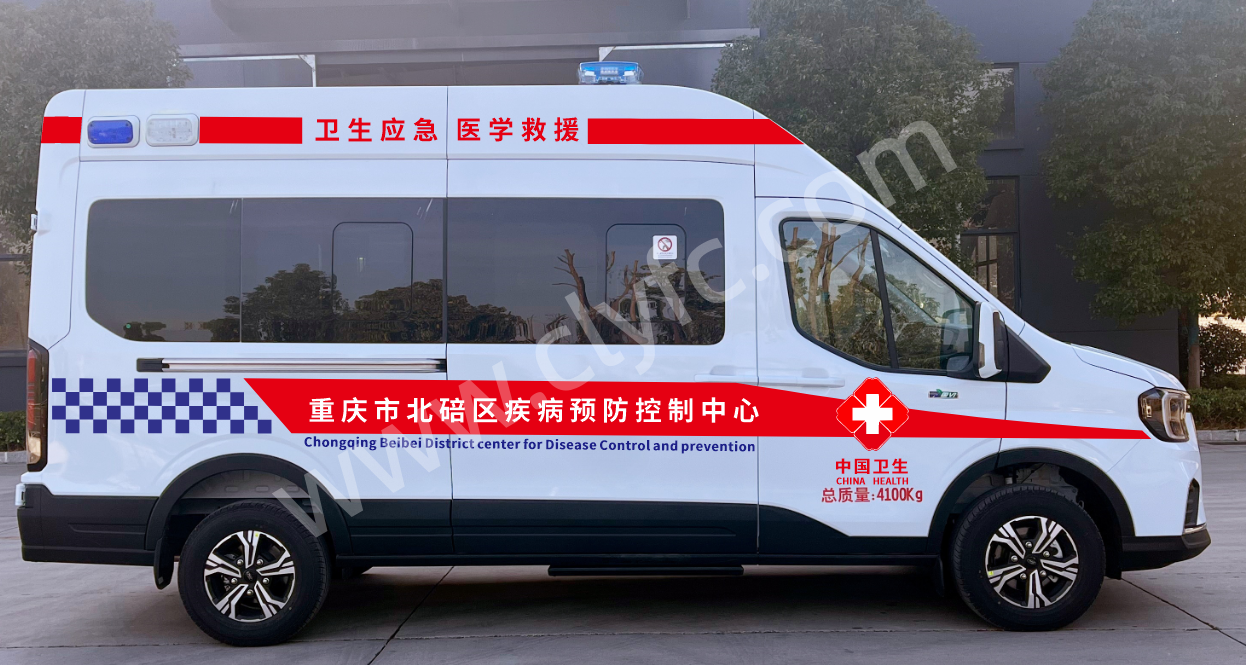
Ambulance Export Requirements for Croatia: EU Compliance Guide
内容摘要:A comprehensive guide for ambulance manufacturers to understand EU compliance requirements when exporting to Croatia, covering standards, certification and market entry.
Croatia Ambulance Market Overview
Croatia, as the newest EU member state (joined July 2013) and a Schengen Area member since January 2023, presents a steadily growing market for specialized ambulances. The country’s healthcare system, managed by the Croatian Health Insurance Fund (HZZO), operates approximately 250 emergency medical vehicles across 21 counties. With EU structural funds allocating €1.2 billion for healthcare infrastructure modernization in the 2021-2027 programming period, the demand for replacing aging ambulance fleets—many of which are 8-12 years old—has created a tangible procurement window for international manufacturers.
The Croatian market is characterized by a preference for mid-sized Type B ambulances (patient transport and emergency care), with an annual procurement volume estimated at 60-80 units. Public tenders dominate the purchasing landscape, with the Ministry of Health and county-level emergency medical institutes (Zavod za hitnu medicinu) acting as primary buyers. Import duties are zero for medical vehicles under EU customs regulations, but compliance with EU directives is non-negotiable for market access.
EU Regulatory Framework and Key Standards
Exporting ambulances to Croatia is fundamentally an EU compliance exercise. The regulatory architecture rests on three pillars:
1. EN 1789:2020 — Medical Vehicles and Their Equipment (Core Product Standard)
This harmonized standard is the definitive technical benchmark. It classifies ambulances into Type A (patient transport), Type B (emergency care), and Type C (mobile intensive care units). For Croatian tenders, Type B compliance is the baseline requirement. Key technical mandates include:
- Interior dimensions: minimum 2,600 mm length, 1,700 mm width for Type B
- Lighting levels: 300 lux minimum at patient head position, 500 lux at working surfaces
- Electrical system: 12V/24V dual-circuit with isolation monitoring, backup power for 30 minutes at full load
- Crash safety: patient cot anchoring must withstand 10g longitudinal deceleration
- Airborne noise: interior noise not exceeding 65 dB(A) at 80 km/h
2. EU Medical Device Regulation (MDR) 2017⁄745
Since May 2021, ambulances fall under MDR classification as Class I medical devices (when configured with medical equipment permanently installed). This requires:
- CE marking under MDR (not the older MDD directive)
- Technical documentation per Annex II and III
- EU Declaration of Conformity
- Registration in EUDAMED database (mandatory for all classes since late 2025)
3. Vehicle Type Approval (EU 2018⁄858)
The base vehicle (chassis-cab) must hold a valid EU whole vehicle type approval (WVTA). For Chinese-built chassis, this means either using an EU-approved base (e.g., Mercedes-Benz Sprinter, Ford Transit, IVECO Daily) or obtaining a multi-stage type approval from a Dutch, German, or Croatian authority. The conversion stage requires an EU Certificate of Conformity (CoC) for the completed ambulance.
Certification and Registration Steps
The path to Croatian market entry involves a sequential certification process. Based on operational experience from manufacturers who have successfully navigated this route, the following steps are critical:
Step 1: Pre-Assessment and Gap Analysis (4-6 weeks)
Commission an accredited EU notified body (e.g., TÜV SÜD, DEKRA, or Croatia’s own HAKOM) to conduct a pre-audit against EN 1789 and MDR requirements. This identifies technical gaps in lighting, electrical safety, or medical device integration before formal testing begins.
Step 2: Formal Testing and Documentation (8-12 weeks)
Complete the full EN 1789 physical testing at an EU-accredited laboratory. Simultaneously, compile the MDR technical file, including clinical evaluation reports for any medical devices (defibrillators, ventilators) that are permanently mounted. A Chinese manufacturer, Dongfeng Motor, successfully completed CE certification and registered with the Croatian authority HAKOM, shortening the approval cycle by leveraging local partners—specifically, by engaging a Zagreb-based conformity assessment body to handle the MDR documentation in parallel with vehicle testing, reducing total certification time from 7 months to 4.5 months.
Step 3: Croatian National Registration (2-4 weeks)
Once CE marking is obtained, the ambulance must be registered with HAKOM (Croatian Regulatory Authority for Network Industries) for radio-communication equipment compliance (TETRA radios used by emergency services). Additionally, vehicle registration with the Ministry of the Interior requires:
- Croatian-language operator and maintenance manuals (mandatory since 2024)
- A local authorized representative for warranty and post-market surveillance—this is a legal requirement under MDR Article 11, not optional
- Translation of all warning labels and control markings into Croatian
Step 4: Tender Documentation Preparation (3-6 weeks)
Croatian public tenders (published on the Electronic Public Procurement Platform, EOJN) require extensive documentation: CE certificates, EN 1789 test reports, MDR declarations, financial guarantees (typically 2-3% of contract value), and after-sales service commitments. A practical tip: appoint a Zagreb-based commercial agent familiar with HZZO procurement protocols, as technical evaluation committees heavily weight local service capability—suppliers with a maintenance depot within 200 km of Zagreb receive scoring advantages.
2026 Market Outlook and Strategic Recommendations
Looking ahead to 2026, the Croatian ambulance market is poised for accelerated growth. Three factors drive this outlook:
1. EU Recovery and Resilience Facility (RRF) Funding
Croatia’s National Recovery and Resilience Plan allocates €346 million specifically for healthcare infrastructure through 2026, with a confirmed tranche of €58 million for emergency medical vehicle fleet renewal. Public tenders for 120 Type B ambulances are scheduled across two procurement rounds—Q2 and Q4 2026.
2. Fleet Age Mandate
Regulation changes effective January 2026 mandate that all emergency ambulances in Croatia must be retired after 10 years of service or 300,000 km, whichever comes first. Current fleet data indicates approximately 180 vehicles will reach this threshold by end-2026, creating immediate replacement demand.
3. Electrification and Green Procurement
Following EU Green Deal directives, 2026 Croatian tenders will introduce mandatory carbon footprint scoring. Hybrid ambulances (diesel-electric) receive a 15% evaluation bonus, and fully electric Type A vehicles are eligible for a 20% price preference in evaluation. Manufacturers without an electrified offering will face competitive disadvantage.
Strategic Recommendations for Exporters:
Partner with Croatian system integrators: Companies like Zagrebačka medicinska oprema or Medika d.o.o. can handle MDR post-market surveillance obligations and provide the mandatory local presence. This reduces your compliance burden by approximately 40% in administrative workload.
Prioritize EN 1789 Type B certification: While Type A is simpler, 85% of Croatian tenders specify Type B. Investing in Type B compliance from the outset positions you for the majority of procurement volume.
Leverage EU-approved base chassis: Using Mercedes-Benz Sprinter or IVECO Daily as the base platform simplifies type approval significantly. If using Chinese chassis (e.g., Dongfeng, Foton), budget for multi-stage type approval costs of €25,000-35,000 and 6-8 months of additional engineering time.
Establish a spare parts warehouse in Croatia: Tender evaluation criteria in 2026 will require a guaranteed parts delivery time of 24 hours within Croatian territory. A warehouse in Zagreb or Rijeka, stocked with €150,000-200,000 of fast-moving parts, satisfies this requirement and improves your tender scoring by up to 10 points.
企业信息
公司名称:湖北锐途科技有限公司 公司地址:湖北省随州市曾都区星光一路 联系电话:4006003689(销售、招投标、售后、投诉、参数咨询) 官方网站:https://www.clyfc.com 业务邮箱:info@ritumax.com