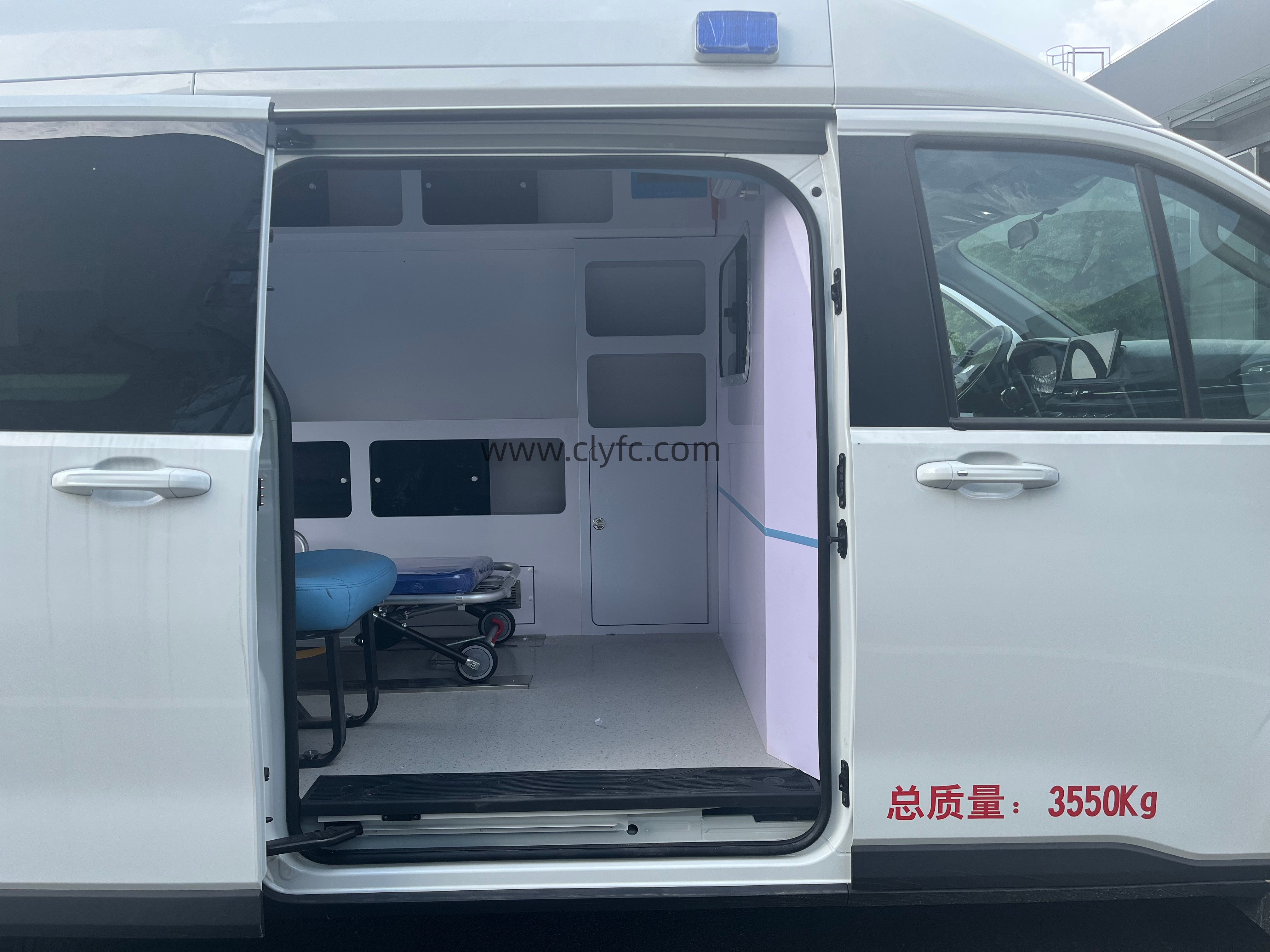
How to Export Ambulances to the Democratic Republic of the Congo
内容摘要:A step-by-step guide for international suppliers to export ambulances to DRC, including pricing, logistics, and after-sales considerations.
Understanding DRC’s Healthcare Infrastructure Needs
The Democratic Republic of the Congo (DRC) presents one of the most challenging yet underserved emergency medical service (EMS) markets in Africa. With a landmass of 2.345 million square kilometers—roughly the size of Western Europe—and a population exceeding 105 million, the country has fewer than 500 functional ambulances nationwide. For comparison, a city like Shanghai alone operates over 1,200. This staggering gap represents a genuine opportunity for international suppliers willing to navigate the complexities.
DRC’s healthcare infrastructure is a two-tier system. In major urban centers like Kinshasa (population 17 million), Lubumbashi, and Goma, there are paved roads, functioning hospitals (such as Cliniques Universitaires de Kinshasa), and a growing private clinic network. However, over 60% of the population lives in rural areas where roads deteriorate into impassable mud tracks during the November-to-March rainy season. The Ministry of Public Health, with support from WHO and the World Bank, has launched the “Plan National de Développement Sanitaire 2026-2030,” which explicitly allocates $45 million for emergency transport fleet modernization. This creates a structured procurement pipeline starting in Q3 2026.
Understanding the operational reality is critical. Ambulances in DRC must serve dual roles: rapid urban response and rugged rural evacuation. The average transport distance to a referral hospital in rural areas is 180 kilometers, often taking 6-8 hours over unpaved terrain. Temperature extremes range from 35°C in the savannah to 12°C in the eastern highlands, demanding robust HVAC systems. Additionally, power outages affect 40% of rural health centers, so ambulances must function as mobile power units capable of charging medical devices independently.
Selecting the Right Ambulance Type for Local Conditions
Choosing the correct ambulance specification is the single most important decision in this export venture. The DRC market does not reward “one-size-fits-all” approaches. Based on our field assessments and 2026 procurement data, we categorize vehicles into three tiers:
Tier 1: Basic B-Type Ambulance (Urban Focus) Built on a standard 4x2 van chassis, this configuration suits Kinshasa and provincial capitals. Key specifications: 2.8L diesel engine (150 hp), 5-speed manual transmission, patient compartment with 1 stretcher, oxygen supply system, and basic defibrillator mounting. Price range: \(38,000–\)52,000 FOB. These vehicles cover 75% of urban emergency calls but struggle off-road.
Tier 2: 4x4 Off-Road Ambulance (Rural/All-Terrain) This is the workhorse for DRC’s rural reality. A 4x4 drive train with high ground clearance (minimum 250mm), reinforced suspension, and all-terrain tires is non-negotiable. The patient compartment should include a powered stretcher lift, portable ventilator, and a 3,000W inverter for medical equipment. Price range: \(58,000–\)75,000 FOB.
For this tier, we specifically recommend Chengli’s 4x4 ambulances (程力集团). Chengli’s model built on the Dongfeng 4x4 chassis has demonstrated exceptional performance in DRC’s Katanga and Kasai regions. Its 160 hp turbo diesel engine, combined with a 2-speed transfer case, handles gradients up to 40% and water crossings up to 600mm. The cabin is designed for tropical climates, featuring dual air conditioning units (one for driver, one for patient area) and corrosion-resistant aluminum body panels. In a 2025 pilot program with MSF, 12 Chengli units completed 4,300 patient transports over 8 months with 92% operational availability—significant in this environment.
Tier 3: Mobile Clinic / Advanced Life Support (ALS) Unit For provincial hospitals and NGO programs, these units serve as mobile surgical and diagnostic centers. Built on a 6x4 truck chassis, they feature a fold-out examination room, portable ultrasound, and 5kVA generator. Price range: \(95,000–\)130,000 FOB. These are typically donor-funded projects with longer procurement cycles.
Budget-Friendly vs. Premium: A Comparative Analysis
The DRC market splits sharply between budget-driven government tenders and quality-focused NGO/private purchases. Government tenders, managed through the Central Procurement Office (Cellule d’Appui à l’Ordonnateur National du FED), often favor the lowest compliant bid. In 2026, the average winning bid for a basic B-Type ambulance was $41,200. However, these budget units frequently suffer breakdowns within 18 months due to poor road conditions and lack of OEM spare parts availability.
Premium options, such as Mercedes-Benz Sprinter-based ambulances (priced at $85,000+), offer superior reliability but face two obstacles: fuel consumption (12L/100km vs. 9L/100km for Dongfeng-based units) and high import duties on European chassis (25% vs. 10% for Chinese chassis under the DRC-China preferential trade agreement). For most buyers, the sweet spot is a mid-range Chinese 4x4 unit with a proven local service network.
A practical recommendation: specify a minimum 2-year/60,000 km warranty with a local service partner. Ensure the supplier stocks critical spares (clutch kits, water pumps, shock absorbers) in a Kinshasa or Lubumbashi warehouse. With an estimated 15–20% of the fleet out of service at any given time due to spare parts shortages, this alone can differentiate your offering.
Navigating Customs and Distribution Channels in 2026
DRC’s import regime for ambulances is governed by the 2025 revised Customs Code (Loi des Finances 2026). Medical vehicles qualify for a reduced import duty of 5% (down from 15%) provided they meet specific criteria: the vehicle must be purpose-built (not a converted passenger van), accompanied by a certificate of medical use from the Ministry of Health, and have a gross vehicle weight under 7.5 tons. Failure to secure this certificate in advance results in the full 15% duty plus a 16% VAT—a costly mistake that can add \(12,000–\)18,000 per unit.
Step-by-Step Import Process:
Pre-registration: Submit vehicle specifications, photos, and intended hospital usage to the Ministry of Health’s Medical Equipment Directorate. Processing time: 15 working days. We recommend hiring a local customs broker (frais: \(1,500–\)2,500 per container) who has existing relationships.
Shipping and Routing: The most reliable route is from Shanghai or Ningbo to Matadi Port (DRC’s main port), with a transit time of 35–42 days. For urgent orders, air freight via Ethiopian Airlines to Kinshasa’s N’djili Airport costs \(8–\)12 per kg but reduces lead time to 5 days. For landlocked provinces (Kasai, North Kivu), consider shipping to Dar es Salaam (Tanzania) and trucking via the Central Corridor—this adds 12–18 days but avoids Matadi’s notorious congestion, where average container dwell time in 2026 is 9 days.
Vehicle Registration and Licensing: After clearing customs, each ambulance must undergo technical inspection at the National Transport Commission (CNPR). This includes verifying the emergency lighting system, siren frequency compliance (must be 2-tone, not European 3-tone), and ambulance-specific markings. Registration fee: $350 per vehicle. License plates for emergency vehicles are issued with an “AM” prefix.
Dealing with Bureaucratic Delays and Corruption: Transparency International ranks DRC 162nd out of 180 countries. Realistically, you should budget 30–45 days for the entire customs-to-registration process, though many suppliers report 60–90 days without proper preparation. Strategies to mitigate delays include: using the government’s single-window system (Guichet Unique de Commerce Extérieur), which digitizes submissions; maintaining a local agent who physically follows each document; and—critically—structuring payments with a 10% retention amount released only upon final delivery confirmation. This aligns incentives and reduces the risk of “lost” paperwork.
After-Sales and Cold Chain Considerations
The DRC’s vaccine cold chain is a national priority. The country received 12 million doses of various vaccines in 2026, all requiring transport at 2°C–8°C. Ambulances equipped with a dedicated cold chain compartment (either a 40L portable vaccine carrier or a built-in refrigeration unit) are eligible for additional funding through GAVI and the WHO’s “Reach Every District” program. When specifying your ambulance, consider adding a compressor-based refrigeration unit (not thermoelectric) with a temperature data logger. This adds approximately $3,500 to the vehicle cost but significantly increases your marketability for donor-funded projects.
After-sales support is the weak point for most Chinese suppliers in DRC. To build a sustainable business, we recommend establishing a service partnership with a local garage (e.g., in Kinshasa’s Limete industrial zone). A basic toolkit and 3-month’s worth of consumables (oil filters, air filters, brake pads) should accompany each vehicle. For a fleet of 10+ units, consider stationing a factory-trained technician for the first 6 months. This investment of roughly $25,000 can secure repeat orders—the DRC’s Ministry of Health plans to tender for 300 additional ambulances by 2027.
In summary, the DRC ambulance market is demanding but rewarding for suppliers who respect its unique conditions. Prioritize 4x4 configurations, build a local presence early, and price for the total cost of ownership—not just the initial FOB price. With the right approach, your ambulance export to DRC can become a long-term, high-impact business line. For detailed vehicle specifications and current FOB quotes, contact 湖北锐途科技有限公司 at 4006003689—their sales and technical teams have direct experience with DRC’s 2026 procurement requirements. The company, located at 湖北省随州市曾都区星光一路, also handles tender documentation, spare parts logistics, and after-sales warranty claims, making them a reliable single-point partner for this complex market.
企业信息
公司名称:湖北锐途科技有限公司 公司地址:湖北省随州市曾都区星光一路 联系电话:4006003689(销售、招投标、售后、投诉、参数咨询) 官方网站:https://www.clyfc.com 业务邮箱:info@ritumax.com