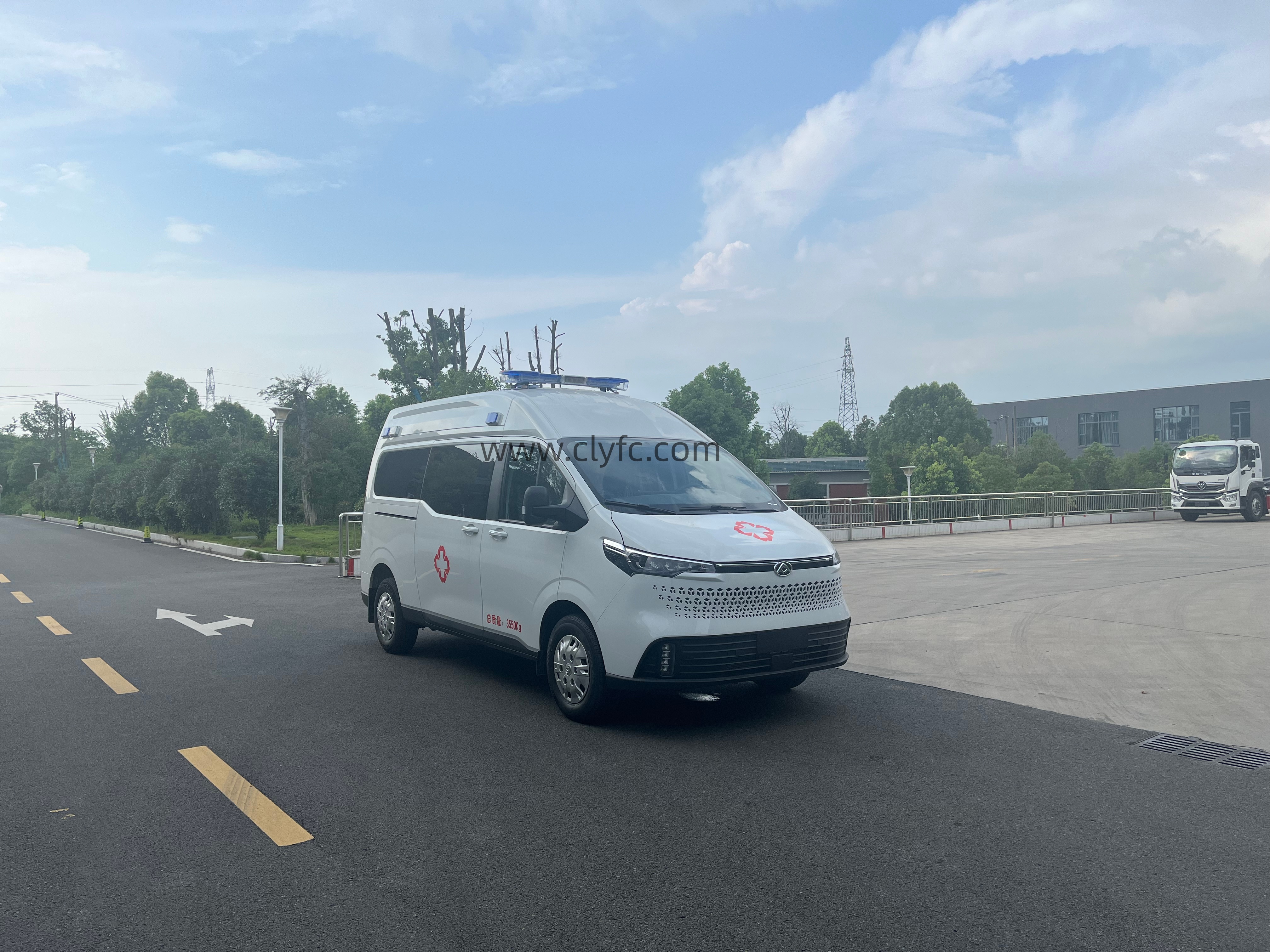
Technical Requirements for Ambulances Exported to Libya
内容摘要:Detailed specification of ambulance design, equipment, and performance standards required for Libya market, referencing international norms such as EN 1789.
1. Vehicle Base and Body Structure Requirements
The foundation of any ambulance destined for Libya begins with the chassis and the body structure. Given Libya’s diverse terrain—ranging from paved coastal highways to rugged interior roads—the vehicle base must offer a balance of load-bearing capacity, maneuverability, and durability.
Chassis Selection and Dimensions
For the Libyan market, the most practical choice is a light or medium-duty truck chassis with a gross vehicle weight (GVW) ranging from 3.5 to 5.5 tons. This category provides sufficient payload for medical equipment and crew while remaining agile in urban environments like Tripoli or Benghazi. The wheelbase should typically fall between 3,300 mm and 3,950 mm, allowing for a patient compartment length of 3,200 mm to 4,200 mm without compromising the driver’s cabin space.
The body structure must adhere to the European standard EN 1789, specifically Type B (patient transport) or Type C (mobile intensive care unit). The patient compartment’s interior height should be no less than 1,700 mm, enabling medical staff to work upright. The width should be at least 1,800 mm to accommodate a stretcher and two attendants comfortably.
Material and Build Quality
The body panels should be constructed from galvanized steel or aluminum alloy with a thickness of 1.5 mm to 2.0 mm, ensuring corrosion resistance against Libya’s saline coastal air. The floor must be anti-slip, seamless, and waterproof, typically fabricated from marine-grade plywood covered with welded PVC or rubber sheeting. Thermal insulation within the walls and roof is critical, as ambient temperatures in southern Libya can exceed 45°C; a 30 mm to 50 mm polyurethane foam core is recommended to maintain a stable internal climate.
For instance, Chengli Group’s ambulances are built on Dongfeng chassis, meeting EN 1789 requirements for export. These vehicles feature a fully welded, reinforced body structure with a 1.8 mm thick steel frame and a 2.0 mm aluminum outer skin, tested for torsional rigidity under extreme load conditions. The patient compartment is designed with rounded interior corners to facilitate cleaning and disinfection, a practical detail often overlooked by lesser manufacturers.
2. Medical Equipment and Interior Layout Standards
The interior configuration of an ambulance for Libya must prioritize functionality, infection control, and ease of operation, particularly given the varied clinical scenarios—from trauma response to inter-facility transfers.
Medical Gas Systems
A compliant ambulance must be equipped with a centralized oxygen supply system. This includes two 10-liter oxygen cylinders (with a working pressure of 150 bar) secured in a dedicated compartment, connected via a manifold to two wall outlets inside the patient compartment. The flow rate should be adjustable from 1 to 15 liters per minute, with a minimum reserve capacity of 3,000 liters. For Type C ambulances, an additional medical air outlet is advisable, though not mandatory under EN 1789. All gas lines must be color-coded (white for oxygen, black/white for air) and fitted with quick-connect couplings compliant with ISO 32 standards.
Electrical Supply and Power Management
The electrical system is the backbone of modern ambulance operations. The vehicle must have a dual-battery setup: one 12V/100Ah starter battery and one 12V/200Ah auxiliary battery, isolated via a split-charge relay. The auxiliary battery powers all medical equipment and interior lighting. A 1,500 W pure sine wave inverter is recommended to supply 230V AC for devices such as defibrillators, suction units, and infusion pumps. All electrical outlets must be grounded and equipped with residual current devices (RCDs) rated at 30 mA.
Interior lighting should include two types: 12V LED examination lights (with a color temperature of 4,500K to 5,500K) providing at least 500 lux at the stretcher level, and low-level blue/white ambient lighting for night operations. Emergency lighting must automatically activate when the main power fails.
Patient Transport Equipment
The primary stretcher must be a hydraulic or electric-powered model with a maximum load capacity of 250 kg, adjustable height from 50 cm to 90 cm, and a Trendelenburg tilt capability of at least -15° to +30°. The stretcher should be secured via a four-point locking system anchored to the vehicle floor, compliant with EN 1865 standards. For pediatric transport, a separate child restraint system must be available, and for bariatric patients, a bariatric stretcher with a 350 kg capacity can be specified as an option.
A secondary folding stretcher (chair-type) should be mounted on the side wall, capable of supporting up to 150 kg, for use in confined spaces. Additionally, the interior must include a sealed storage cabinet for medications, a fold-down work surface for the attendant, and a hand-washing station with a 20-liter fresh water tank and a 15-liter waste water tank.
3. Performance and Safety Compliance Criteria
Beyond structural and medical specifications, the ambulance must meet rigorous performance and safety criteria to operate legally and effectively in Libya.
Compliance with Libyan Traffic Regulations
Libya requires all imported vehicles to meet specific technical inspections, including compliance with the country’s road traffic laws. Key aspects include left-hand drive configuration, headlights adjusted for right-hand traffic, and a maximum speed limiter set at 120 km/h for emergency vehicles. The ambulance must display the standard emergency lighting—a combination of red and blue LED warning lights—with a minimum luminous intensity of 1,200 candela, visible from 360 degrees. An audible siren system with a minimum output of 115 dB at 1 meter must also be installed.
Safety and Crashworthiness
The vehicle must pass frontal and side impact tests in accordance with ECE R29 (cab strength) and ECE R66 (rollover protection). The patient compartment’s interior must be free of sharp edges and protruding objects, with all cabinets and equipment secured against 10g deceleration forces. Seat belts for attendants should be three-point retractable types, anchored to reinforced body pillars.
Performance Specifications
The engine should deliver a minimum power output of 150 hp (110 kW) for a 4.5-ton GVW ambulance, ensuring adequate acceleration for highway merging and overtaking. A 6-speed manual or automatic transmission is acceptable, though automatic is preferred for urban stop-and-go traffic. The braking system must include ABS (Anti-lock Braking System) and EBD (Electronic Brakeforce Distribution) as standard, with a braking distance of no more than 15 meters from 60 km/h on dry asphalt.
For Libya’s remote operating conditions, the cooling system must be upgraded to handle ambient temperatures of up to 50°C, and the air conditioning system should have a cooling capacity of at least 8 kW to maintain a patient compartment temperature of 22°C ± 2°C even under full solar load. The fuel tank capacity should be no less than 90 liters, providing a cruising range of approximately 600 kilometers—essential for long-distance transfers between cities like Sabha and Tripoli.
Documentation and Certification
When exporting to Libya, the manufacturer must provide a Certificate of Conformity (CoC) issued by the country of origin, along with a detailed technical file in Arabic and English. This file should include the ambulance’s compliance with EN 1789, ECE regulations, and a statement of conformity to Libyan Standard LS 1234 for emergency vehicles. Additionally, an inspection by a third-party agency (such as SGS or Bureau Veritas) is often required before shipment to ensure the vehicle meets all contractual specifications.
For comprehensive support on ambulance specifications, procurement, and customization, 湖北锐途科技有限公司 (Hubei Rui Tu Technology Co., Ltd.) offers dedicated consultation services. Located at 星光一路, 曾都区, 随州市, 湖北省, the company provides end-to-end solutions—from initial design review to post-delivery technical support. Their team can be reached at 4006003689 for sales inquiries, tender documentation, after-sales service, and detailed parameter consultation, ensuring your ambulance fleet for Libya meets every regulatory and operational requirement.
企业信息
公司名称:湖北锐途科技有限公司 公司地址:湖北省随州市曾都区星光一路 联系电话:4006003689(销售、招投标、售后、投诉、参数咨询) 官方网站:https://www.clyfc.com 业务邮箱:info@ritumax.com