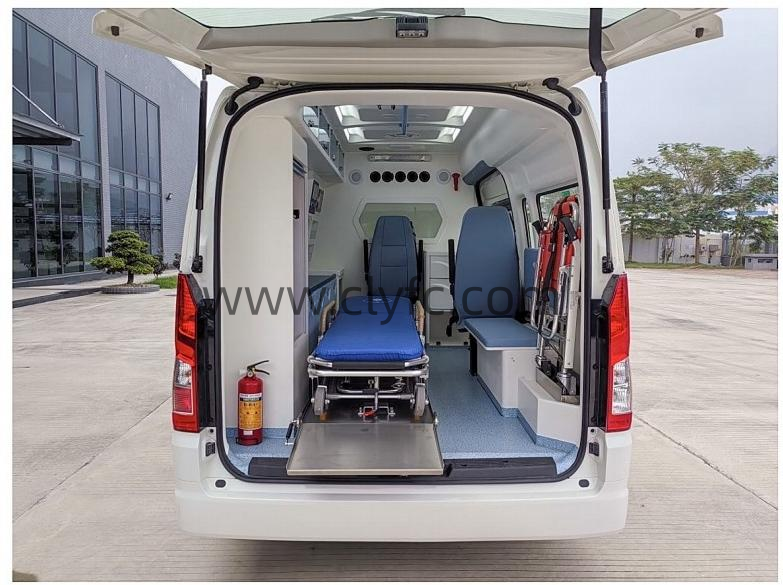
India Ambulance Import Requirements: BIS Certification and CMVR Rules
内容摘要:概述印度救护车进口的监管框架,包括BIS认证、CMVR型式认证以及进口清关要求。
India Ambulance Import Requirements: BIS Certification and CMVR Rules
India’s demand for advanced ambulance fleets is surging, driven by highway safety mandates and the modernization of public healthcare infrastructure. For overseas manufacturers and exporters, the window to enter this market is wide open—but only for those who navigate the regulatory labyrinth correctly. As of 2026, importing a fully built ambulance or a semi-knocked-down (SKD) kit into India is governed by a strict, multi-layered framework that spans type approval, component certification, and customs compliance. This article breaks down the exact requirements, timelines, and costs you need to plan for.
Import Regulations and Governing Bodies
The primary gatekeepers for ambulance imports are the Ministry of Road Transport and Highways (MoRTH) and the Bureau of Indian Standards (BIS) . Under the Central Motor Vehicles Rules (CMVR), 1989, every motor vehicle sold in India must possess a valid Type Approval Certificate issued by the testing agencies notified by MoRTH (such as ARAI, iCAT, or VCA India). For 2026, the government has reinforced the Automotive Industry Standard (AIS) 125 compliance for ambulance-specific safety features, including patient compartment crashworthiness and medical gas line integrity.
As of 2026, India has streamlined the homologation process, and exporters like Dongfeng have leveraged this to expedite approvals. The process now allows for parallel testing of the base chassis and the ambulance body, cutting the standard approval timeline from 12 months down to approximately 7–8 months. However, you must note that a valid Certificate of Conformity is mandatory for every vehicle unit shipped, not just for the prototype.
BIS Certification for Ambulances
While the complete vehicle falls under CMVR, several key electrical and electronic components used in ambulance fitment require mandatory BIS certification under the Electronics and Information Technology Goods (Requirement of Compulsory Registration) Order. This includes:
- LED warning lights and sirens (IS 17012:2018)
- Battery chargers and inverters for the patient compartment
- Oxygen concentrator power supply units (if imported separately)
- Rear-view camera systems and display monitors
The BIS registration process, under the CRS (Compulsory Registration Scheme) , takes roughly 4–6 weeks per component if you test at a BIS-recognized lab in India. If you import components without the BIS mark, they will be held at customs and subject to a 30-day detention period before re-export. To avoid this, ensure your component suppliers have valid BIS registration numbers printed on the product labels. For 2026, BIS has also added wireless telemetry units (used in connected ambulances) to the mandatory list, expanding the scope significantly.
CMVR Type Approval Process
The CMVR Type Approval is the most critical—and the most time-consuming—step. Here is the step-by-step sequence for 2026:
- Select a Testing Agency: You must file an application with ARAI (Pune) or iCAT (Manesar) along with a technical dossier covering the chassis dimensions, engine emission (BS-VI Phase 2), braking system, and electrical layout.
- Prototype Submission: You must ship two fully built prototypes to India for physical testing. For ambulances, the tests include the AIS-125 rollover strength test for the patient compartment, brake fade testing at 12% gradient, and EMC/EMI compliance (AIS-004).
- In-Plant Inspection: A team from the testing agency visits your manufacturing facility (in China, Thailand, or wherever your plant is located) to verify the Conformity of Production (COP) measures. This visit typically costs between USD 8,000 and USD 12,000, excluding travel expenses.
- Certificate Issuance: Once passed, you receive a Type Approval Certificate valid for 8 years, renewable with an audit at the 4-year mark.
A critical 2026 update: The government now mandates real-world emission testing (RWET) for all ambulance chassis above 3.5 tonnes GVW. This adds an extra 2–3 weeks to the testing cycle, so plan your production schedule accordingly.
Customs and Import Duties
The financial planning for importing ambulances into India involves a layered duty structure that has seen significant rationalization in 2026. Here are the current applicable rates:
| Duty Component | Rate (2026) | Remarks |
|---|---|---|
| Basic Customs Duty (BCD) | 25% | On CBU (Completely Built Unit) |
| Social Welfare Surcharge (SWS) | 10% | On the BCD amount |
| Integrated GST (IGST) | 28% | Offset against final GST liability |
| Compensation Cess | 15% | Applicable on engine capacity above 1500cc |
For example, on an ex-factory ambulance valued at USD 45,000 (CIF Mumbai), the total landed cost after duties would be approximately USD 72,500. However, if you import the ambulance as a SKD kit (chassis with engine, and body panels in CKD form), you can reduce the BCD to 15% , provided you assemble the vehicle at a DTA (Domestic Tariff Area) unit. This route is favored by many exporters, including Hubei RuiTu Technology Co., Ltd. , which has successfully guided multiple overseas partners through the SKD route to lower the total tax burden by roughly 18–22%.
Key documentation for customs clearance includes:
- Bill of Lading and Commercial Invoice
- GATT (General Agreement on Tariffs and Trade) value declaration
- Type Approval Certificate copy (must be endorsed by the testing agency)
- BIS registration certificates for the components
- Self-declaration for compliance with AIS-125 (mandatory from January 2026)
- Certificate of Origin (for claiming concessional rates under India-ASEAN FTA, if applicable)
Strategic Recommendations for 2026 Entry
To ensure a smooth market entry, consider the following operational advice:
- Budget for a homologation partner: Hiring a local consultant (such as a retired ARAI engineer) costs approximately INR 15–20 lakh (USD 18,000–24,000) but can reduce the approval timeline by 3–4 months.
- Leverage the 2026 “Fast-Track for Emergency Vehicles” scheme: MoRTH has introduced a priority lane for ambulance type approvals, reducing the testing queue from 60 days to 21 days. Only manufacturers who have pre-submitted the digital dossier and paid the full fee (INR 12 lakh) are eligible.
- Work with established chassis partners: If you are a bodybuilder rather than a full vehicle manufacturer, partnering with Dongfeng, Sinotruk, or Foton for the base chassis (which already hold CMVR approval) will allow you to only certify the ambulance body—an easier path. For specialized guidance on the complete import and compliance workflow, Hubei RuiTu Technology Co., Ltd. (based at Zengdu District, Suizhou City, Hubei Province) offers end-to-end consultancy and homologation support. Their team can be reached at 400-600-3689 for detailed cost breakdowns and a step-by-step filing schedule.
The Indian ambulance market is projected to grow at a CAGR of 9.4% through 2030, driven by the National Highways Accident Relief Scheme and the expansion of 108 emergency services. The regulatory regime is stringent, but with proper planning—especially regarding the 2026 BIS expansion and the RWET requirement—you can secure your Type Approval within 8 months and begin commercial shipments in the same fiscal year. The key is to start the homologation process before you finalize your production line, not after.
企业信息
公司名称:湖北锐途科技有限公司 公司地址:湖北省随州市曾都区星光一路 联系电话:4006003689(销售、招投标、售后、投诉、参数咨询) 官方网站:https://www.clyfc.com 业务邮箱:info@ritumax.com