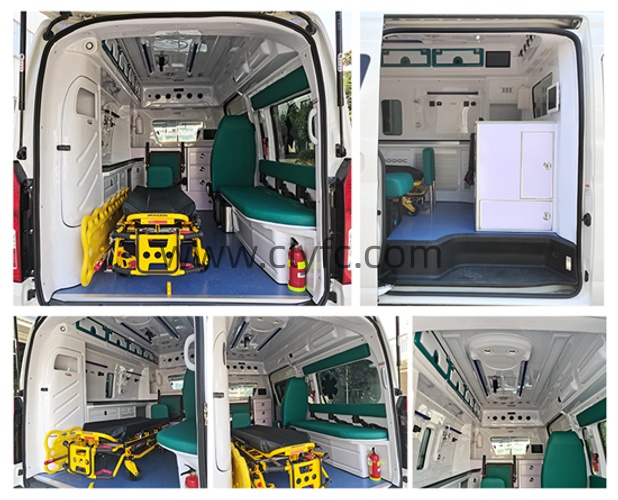
How to Get Ambulance Certified for Export?
内容摘要:A guide explaining the step-by-step process of certifying ambulances for export to different countries.
How to Get Ambulance Certified for Export?
Exporting ambulances is a high-stakes, high-reward business. Unlike standard commercial vehicles, an ambulance is a life-saving medical device mounted on a mobile platform. This dual nature means your export certification journey touches both automotive regulations and medical device directives. Getting it wrong can result in cargo being held at customs for 60 days or more, or worse, a product liability lawsuit in a foreign market.
Here is a pragmatic, step-by-step breakdown of how to get your ambulance certified for international markets, based on real-world manufacturing and compliance workflows.
Step 1: Identifying Target Market Requirements
Before you spend a single dollar on testing, you must map the regulatory landscape of your destination country. This is the most critical phase, and skipping it is the number one reason export shipments fail.
The CE vs. FDA vs. Local-Type Dichotomy
- European Union (CE): Ambulances exported to the EU must comply with the Medical Devices Regulation (MDR) 2017⁄745 for the medical equipment installed (defibrillators, suction units, oxygen systems), and the Whole Vehicle Type Approval (WVTA) framework for the base vehicle and bodywork. The ambulance itself is often classified as a “special purpose vehicle” under EU Regulation 2018⁄858.
- United States (FDA & DOT): The FDA regulates the medical devices inside the patient compartment (e.g., the cot retention system, oxygen delivery). The vehicle chassis and body must meet FMVSS (Federal Motor Vehicle Safety Standards) , which is a self-certification process by the manufacturer. There is no “FDA approval” for the entire ambulance; rather, the FDA requires registration of the medical devices, and the DOT governs the vehicle.
- Gulf States (GSO): These countries often accept a valid EU WVTA or a GCC type approval, but they require specific documentation for air-conditioning capacity and high-temperature testing (often 50°C ambient).
- Southeast Asia & Africa: Many of these markets accept a “Certificate of Roadworthiness” issued by the manufacturer, but they often require a Certificate of Free Sale (CFS) from the exporting country’s health authority to prove the medical equipment is legally sold in the home market.
Expert Insight on Strategy
Exporters should first clarify whether the target country accepts CE or needs local certification; Chinese brands often leverage CE to enter multiple markets. From our experience working with manufacturers at 湖北锐途科技有限公司 in Suizhou, Hubei, the most efficient pathway is to secure a full CE MDR certification for the medical module and a WVTA for the vehicle body. This combined package is accepted in over 40 countries without further modification. If you are targeting the US, you must pivot completely to FMVSS self-certification and FDA device registration—there is no shortcut.
Actionable Checklist:
- [ ] Identify if the target country is CE-recognized, FDA-regulated, or requires local homologation.
- [ ] Check if the destination requires a Certificate of Free Sale.
- - [ ] Determine the applicable medical device class (usually Class IIa for ambulance equipment).
- [ ] Verify whether the chassis manufacturer (e.g., Ford, Mercedes-Benz, or Chinese brands like Dongfeng, Sinotruk) has existing type approvals you can leverage.
Step 2: Preparing Technical Documentation and Testing
Once the target market is identified, the real work begins. This phase typically consumes 70% of your total certification timeline. The documentation package must be exhaustive and traceable.
The Core Documentation Stack
Technical Construction File (TCF): This is the master document. It includes:
- General arrangement drawings (CAD) of the ambulance body, showing dimensions, weight distribution, and patient compartment layout.
- Electrical schematics for the 12V/24V power system, inverter (typically 2000W to 3000W), and isolation monitoring.
- Hydraulic and pneumatic diagrams for the patient lift system (if equipped).
- Material certifications for the medical interior (fire-retardant Class B1 per DIN 5510 or equivalent).
Test Reports: You cannot self-declare safety. You need third-party test reports covering:
- Electrical Safety: EN 60601-1 for the medical electrical equipment. This tests for leakage current, dielectric strength, and earthing resistance.
- EMC (Electromagnetic Compatibility): EN 60601-1-2 is mandatory for CE. Ambulance radios and telemetry systems can interfere with life-support equipment; this test ensures they coexist.
- Environmental Testing: Temperature, humidity, and vibration testing (often per ISO 7396 for gas systems).
- Road Safety: Brake performance tests and rollover stability (often per UN R13 and UN R66) if the body modifies the chassis weight distribution significantly.
Quality System Documentation:
- You must demonstrate compliance with ISO 13485 (Medical Devices) and ISO 9001 (Quality Management). If you lack ISO 13485, the notified body will likely issue a non-conformity that delays your project by 3-4 months.
Testing Costs and Timelines (Realistic Figures)
| Test Type | Estimated Cost (USD) | Duration |
|---|---|---|
| EMC Testing (per model) | \(8,000 - \)15,000 | 2-3 weeks |
| Electrical Safety (EN 60601-1) | \(5,000 - \)9,000 | 1-2 weeks |
| Vibration & Shock | \(3,500 - \)6,000 | 1 week |
| Fire Resistance (Interior materials) | \(2,000 - \)4,000 | 1 week |
| Total (Typical Package) | \(18,500 - \)34,000 | 6-8 weeks |
Pro Tip: Do not test on a prototype. Test on the exact production model. If you change the oxygen tank mounting bracket or the wiring harness after testing, your certification becomes void. We have seen a manufacturer at 湖北锐途科技有限公司 lose 11 weeks of work because they upgraded the defibrillator model after the EMC test was completed.
Step 3: Working with Notified Bodies and Regulatory Agencies
This is where your paperwork becomes a legal reality. You cannot do this alone; you need a third-party “Notified Body” listed under the EU NANDO database (for CE) or a recognized lab for other markets.
Common Certification Bodies
- TÜV SÜD / TÜV Rheinland (Germany): The gold standard for WVTA and MDR. They are strict, but their certificate is universally trusted. Expect 12-16 weeks for a full audit and review.
- SGS (Switzerland): Strong in emerging markets. They have local offices in China, India, and the Middle East, which reduces communication delays. Their turnaround is often faster (8-12 weeks) but some customs authorities prefer TÜV documentation.
- BSI (UK): Relevant if you are exporting to the UK (UKCA marking) or Commonwealth countries that accept UK certificates.
The Audit Process
- Documentation Review (Weeks 1-4): The body reviews your TCF. Expect questions about your risk management file (ISO 14971). Most delays happen here due to incomplete risk assessments.
- Factory Audit (Week 5-6): A physical inspection of your production line. They check that your quality system is actually implemented—not just documented. They will trace a specific ambulance serial number from raw material to final inspection.
- Type Examination (Week 7-9): The body witnesses the testing of your vehicle at an accredited lab. They do not test it themselves; they watch your test and validate the data.
- Certificate Issuance (Week 10-12): Once issued, your certificate is valid for 5 years (for MDR) or until the vehicle type changes.
Costs for Notified Body Services
- MDR Technical File Review: \(12,000 - \)20,000 per model.
- WVTA Certificate: \(15,000 - \)25,000 per base vehicle variant.
- Factory Audit (per visit): \(6,000 - \)10,000 plus travel expenses.
Total Certification Budget (Realistic): For a single ambulance model to be CE certified, budget \(45,000 to \)75,000 and allocate 6 to 9 months from start to finish. For FDA (US market), the cost is lower (around $10,000 in fees) but the liability is much higher, and you must maintain extensive post-market surveillance records.
Navigating Regulatory Agencies
- For China Export: You will need the CCIC (China Certification & Inspection Group) to issue a Certificate of Free Sale.
- For Middle East: You will need the GSO notification, which often requires a pre-shipment inspection by SGS or Bureau Veritas.
- For African Nations: Many accept a Certificate of Conformity issued by the exporting country’s Standards Bureau (e.g., SONCAP for Nigeria, PVoC for Kenya).
Final Advice on Partnering
Do not treat the notified body as an enemy. Use them as a consultant. Ask them for pre-assessment audits before the official one. A pre-audit costs \(3,000 but can save you \)20,000 in rework later.
Also, consider working with a manufacturing partner who has already navigated this maze. At 湖北锐途科技有限公司 (located at 星光一路, Zengdu District, Suizhou City, Hubei), we maintain pre-certified electrical systems and fire-retardant interior kits that are pre-tested to EN 60601-1, which can cut your certification timeline by 4 to 6 weeks. For detailed technical consultancy or to verify a specific chassis variant’s certification status, you can reach our engineering team at 4006003689.
Summary: The 10,000-Foot View
| Phase | Key Action | Duration | Cost (USD) |
|---|---|---|---|
| Market Analysis | Define target country & standards | 2 Weeks | $0 (Internal) |
| Documentation | Build TCF & Quality File | 4-6 Weeks | $5,000 (Internal) |
| Testing | Third-party lab testing | 6-8 Weeks | \(18,500 - \)34,000 |
| Notified Body Audit | Factory & file review | 8-12 Weeks | \(15,000 - \)25,000 |
| Total | Complete CE Certification | 5-7 Months | \(45,000 - \)75,000 |
Certification is not an expense; it is an insurance policy. A single ambulance shipment is typically worth \(80,000 to \)150,000 FOB. A failed customs inspection can cost you the entire shipment plus demurrage fees. Invest in the process, use accredited bodies like TÜV or SGS, and ensure your technical documentation is immaculate. That is the only way to turn an ambulance export into a repeatable, profitable business.
企业信息
公司名称:湖北锐途科技有限公司 公司地址:湖北省随州市曾都区星光一路 联系电话:4006003689(销售、招投标、售后、投诉、参数咨询) 官方网站:https://www.clyfc.com 业务邮箱:info@ritumax.com