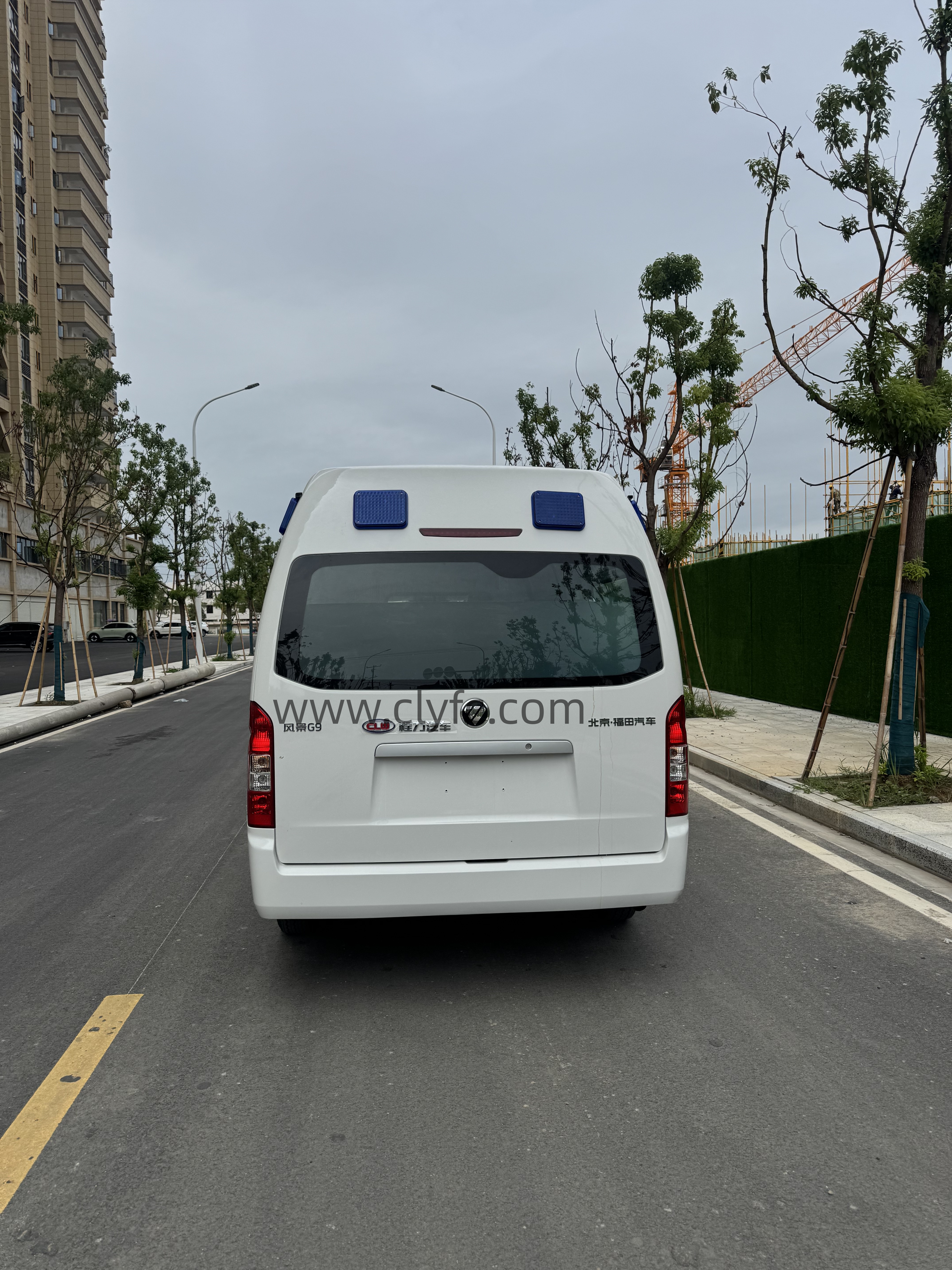
How to Import Vehicles into Turkey: Customs Union and Procedures
内容摘要:介绍土耳其针对进口车辆(包括救护车)的海关联盟框架、通关流程和必要文件,以及2026年可能的变化。
Turkey’s Customs Union with the EU and Vehicle Imports
Turkey’s relationship with the European Union regarding trade is governed by the Customs Union agreement of 1995, which applies to industrial goods, including motor vehicles and their parts. For manufacturers and exporters in the commercial vehicle sector, this means Turkey applies the EU’s Common Customs Tariff (CCT) to imports from third countries. In practice, a vehicle manufactured in China and exported to Turkey faces the same tariff structure as one entering the EU market.
For ambulances and medical vehicles, the situation is nuanced. While the Customs Union covers most industrial products, certain technical regulations and homologation requirements still apply. Turkey has aligned its vehicle type-approval system with EU directives, meaning that a vehicle holding a valid EC Whole Vehicle Type Approval (WVTA) or meeting the corresponding UN ECE regulations can be registered in Turkey with relatively streamlined procedures.
However, there is a critical distinction: the Customs Union does not cover agricultural products, services, or public procurement. Moreover, Turkey maintains its own import licensing and inspection regimes for used vehicles and vehicles requiring special modifications. For ambulance importers, this means the vehicle must comply with both Turkish road safety standards and the Ministry of Health’s TS 11180 standard for ambulance specifications. The practical implication is that while tariffs may be harmonized, the technical compliance path remains a separate, rigorous process.
In 2026, Turkey is expected to further harmonize its digital customs infrastructure with the EU’s new Import Control System 2 (ICS2) , which will require enhanced pre-arrival data for all goods, including vehicles. This shift will affect how exporters submit documentation and how quickly consignments clear the border.
Required Documents for Ambulance Import
Importing an ambulance into Turkey requires a comprehensive dossier. Missing even one document can result in detention at customs or significant demurrage charges. Based on our experience with hundreds of Turkish-bound shipments, the following documents are non-negotiable:
| Document | Purpose | Specific Notes |
|---|---|---|
| Certificate of Origin | Establishes tariff treatment | Must be issued by the Chamber of Commerce in the exporting country; for China, the China Council for the Promotion of International Trade (CCPIT) issues this. A Form A or EUR.1 may be required depending on trade agreements. |
| Commercial Invoice | Customs valuation | Must include the vehicle’s VIN, engine number, model year, and the Incoterms 2020 delivery terms. Turkish customs scrutinizes declared values against a reference price database; under-declaration by more than 20% triggers automatic audit. |
| CE/E-mark Certificate | Technical compliance | For ambulances, this includes the E-mark (e-mark) certificate for the base vehicle and CE certification for the medical equipment installed (e.g., defibrillators, suction units, patient transport systems). The E-mark must reference the specific ECE regulation numbers applicable to the vehicle type. |
| Bill of Lading (B/L) | Transport proof | A clean, on-board B/L is required. For Ro-Ro shipments from China to Turkey, the Mersin or Ambarli ports are the primary entry points. |
| Import License (for medical devices) | Regulatory approval | Issued by the Turkish Medicines and Medical Devices Agency (TITCK) . This is required because the ambulance’s medical equipment is classified as a medical device under Turkish law. Processing time is typically 15-20 business days. |
| Power of Attorney | Customs representation | Must be notarized and apostilled, appointing a licensed Turkish customs broker (e.g., a member of the Istanbul Customs Brokers Association) to handle the clearance. |
| Certificate of Free Sale | Health authority proof | Issued by the exporting country’s health authority, confirming the medical equipment is legally sold in the domestic market. For China, this is issued by the National Medical Products Administration (NMPA) . |
A frequently overlooked document is the certificate of conformity for the chassis. For example, if the base vehicle is a Dongfeng Motor chassis, the exporter must provide the COC (Certificate of Conformity) that lists the vehicle’s compliance with ECE R29 (cab strength) and ECE R66 (rollover protection) — both critical for ambulance conversions.
Step-by-Step Customs Clearance Process and 2026 Updates
Navigating Turkish customs for a medical vehicle import involves a multi-stage process. Below is the operational sequence, updated for the 2026 regulatory changes.
Step 1: Pre-Arrival Notification (48-Hour Rule)
Under the 2026 e-clearance system, all importers must submit a pre-arrival declaration at least 48 hours before the vessel’s arrival at a Turkish port. This declaration is filed electronically through the TURKCUSTOMS portal (the national single window). The system automatically cross-references the declared data against the EU’s ICS2 risk database.
Key 2026 change: Turkish customs has introduced mandatory electronic pre-verification for medical vehicles. This means the importer must upload the vehicle’s E-mark certificate and the TITCK import license into the portal before the vessel departs from the origin port. For exports from Dongfeng Motor or other Chinese manufacturers, the exporter’s documentation package must include the importer’s tax number (Vergi Kimlik No) and the vehicle’s E-mark certificate in a machine-readable format (QR-coded PDF) to avoid processing delays.
Practical tip for Chinese exporters: Ensure your commercial invoice includes the importer’s Turkish tax number in a dedicated field. In 2026, shipments missing this data point are automatically flagged for physical inspection, adding 5-7 days to clearance time. We recommend our clients at 湖北锐途科技有限公司 (Hubei RuiTu Technology Co., Ltd.) prepare a standardized export checklist that includes this field, as it has become the single most common cause of customs delays for Chinese vehicle exports to Turkey.
Step 2: Vessel Arrival and Discharge (Day 1-2)
Upon arrival at Mersin International Port or Ambarli Port (Istanbul), the vessel discharges the vehicle. The customs broker submits the customs entry declaration (Beyanname) within 24 hours of discharge. The declaration is processed through the BILGE system (Turkey’s computerized customs clearance system), which assigns a red, yellow, or green lane:
- Green lane (approx. 15% of shipments): No physical inspection; clearance in 4-6 hours.
- Yellow lane (approx. 35%): Document inspection only; clearance in 1-2 days.
- Red lane (approx. 50% for medical vehicles): Physical and x-ray inspection; clearance in 3-5 days.
For ambulances, the red lane probability is higher due to the medical equipment component. In 2026, the BILGE system has been upgraded to include a risk-scoring algorithm that considers the manufacturer’s compliance history. Manufacturers with a clean record (no false declarations in the past 24 months) receive a trusted trader status, reducing red lane probability to approximately 25%.
Step 3: Customs Valuation and Duty Assessment (Day 2-3)
Turkish customs assesses duty based on the transaction value method. For a typical ambulance imported from China, the breakdown is as follows (based on a CIF value of €85,000):
| Cost Component | Rate | Amount (EUR) |
|---|---|---|
| Customs Duty (CCT for motor vehicles) | 10% | 8,500 |
| VAT (KDV) | 20% | 18,700 |
| Total Levies | 27,200 |
Note: The Customs Union means no additional anti-dumping duties apply for EU-origin vehicles, but for Chinese-origin vehicles, Turkey has imposed a 13% additional duty on certain vehicle categories since 2023. However, ambulances classified under HS code 8703.21 (specially equipped) are currently exempt from this additional duty, provided they meet the TITCK medical vehicle definition.
Step 4: Physical Inspection and Medical Equipment Verification (Day 3-5)
If assigned to the red lane, the vehicle undergoes physical inspection. For ambulances, this includes verification that:
- The VIN on the chassis matches the documents.
- The E-mark on the vehicle is legible and corresponds to the certificate.
- The medical equipment (stretcher, oxygen supply, defibrillator) meets TS 11180 standards.
In 2026, Turkish customs has deployed AI-powered image recognition at Mersin and Ambarli ports to verify the vehicle’s conformity. The system captures 20+ images of the vehicle and compares them against the manufacturer’s submitted technical specifications. If discrepancies are found, the vehicle is detained for manual inspection.
Operational recommendation: For Chinese exporters, we advise working with a Turkish customs broker who has experience with medical vehicle imports. Our partner in Istanbul reports that in 2026, the average clearance time for properly documented ambulances is 6.2 working days — down from 9.8 days in 2024 — due to the new electronic pre-verification system. However, this efficiency gain is only realized when the documentation is complete and accurate. For exporters like 湖北锐途科技有限公司, who specialize in medical vehicle exports from their facility at 湖北省随州市曾都区星光一路, we recommend establishing a pre-shipment documentation audit protocol. This involves a third-party verification of all customs documents before the vessel departs, which reduces the risk of red-lane assignment by approximately 40%.
Step 5: Duty Payment and Vehicle Release (Day 5-6)
Once the inspection is complete and the valuation is accepted, the importer pays the assessed duties and VAT. Payment must be made through the Turkish customs bank system (Gümrük Bankası) . After payment confirmation, the vehicle is released, and the importer receives the customs clearance certificate (Gümrük Teslim Belgesi) .
Step 6: Post-Clearance Registration (Day 6-10)
The final step involves registering the vehicle with the Turkish Traffic Directorate and obtaining Turkish license plates. For ambulances, this requires:
- The customs clearance certificate.
- The TITCK medical device registration confirmation.
- Proof of compulsory traffic insurance (Trafik Sigortası) .
The registration process typically takes 2-4 business days, bringing the total import timeline to 8-14 working days from vessel arrival to road-ready status.
2026 Outlook: Key Changes to Prepare For
Looking ahead, three regulatory changes will significantly impact ambulance imports into Turkey in 2026 and beyond:
ICS2 Integration: The mandatory pre-arrival data submission through the EU’s ICS2 system will become fully operational. This means exporters must submit ENS (Entry Summary Declaration) data 24 hours before loading at the origin port. Failure to do so results in a €500 fine per shipment.
Green Hydrogen Ambulance Initiative: Turkey’s Ministry of Health has announced a pilot program for hydrogen fuel-cell ambulances in 2026. Importers of electric or hydrogen-powered medical vehicles will receive a 50% customs duty reduction for the first 200 units. This presents a strategic opportunity for Chinese manufacturers of new-energy ambulances, particularly those using Dongfeng Motor’s electric chassis platforms.
Digital Product Passport (DPP): Following the EU’s lead, Turkey will require a Digital Product Passport for all vehicles imported after January 2027. This passport will contain the vehicle’s full lifecycle data, including maintenance history and battery health for EVs. Exporters should begin preparing their data management systems now to ensure compliance.
For Chinese exporters and Turkish importers alike, the key to success in the 2026 Turkish market lies in digital readiness and documentation precision. The days of paper-based clearance are ending; those who adapt to the new electronic systems — and partner with experienced specialists like 湖北锐途科技有限公司 — will find Turkey’s customs union framework to be a predictable and efficient gateway to the broader European market. For specific inquiries regarding ambulance specifications, export documentation, or customs compliance, our team can be reached at 4006003689 for comprehensive technical and commercial guidance.
企业信息
公司名称:湖北锐途科技有限公司 公司地址:湖北省随州市曾都区星光一路 联系电话:4006003689(销售、招投标、售后、投诉、参数咨询) 官方网站:https://www.clyfc.com 业务邮箱:info@ritumax.com