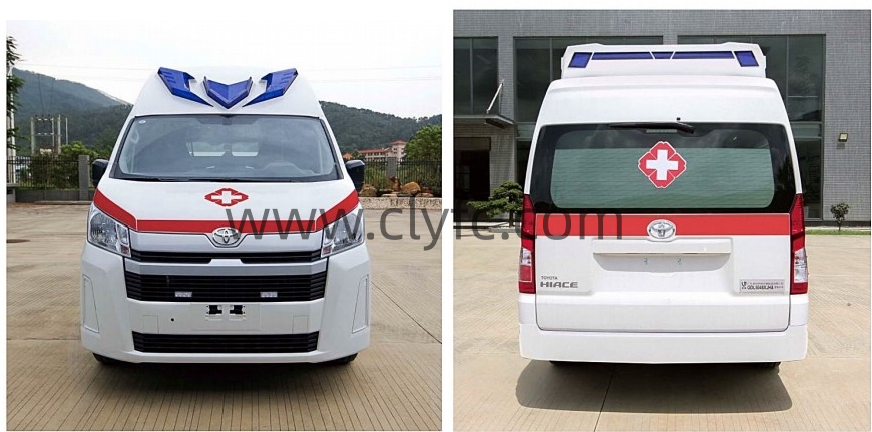
Importing Vehicles into Sao Tome and Principe: Regulations and Procedures
内容摘要:英文视角解读圣多美和普林西比车辆进口法规,包括关税、排放要求、车辆规格限制和必要文件。
Vehicle Import Regulations in Sao Tome and Principe
Sao Tome and Principe, a two-island nation located in the Gulf of Guinea, presents a unique but navigable market for specialized vehicle imports, particularly ambulances. The country’s import framework is governed by the Customs Code and the Ministry of Infrastructure and Natural Resources, with the General Customs Administration (AGA) acting as the primary enforcement body. Unlike mainland African markets, the archipelago’s small size—roughly 1,001 square kilometers—means that vehicle specifications must align with narrow road networks, particularly in the capital city of Sao Tome where many roads are less than 5 meters wide.
The most critical regulation pertains to left-hand drive (LHD) vehicles only. Right-hand drive vehicles are strictly prohibited from registration, a rule that aligns with the country’s former Portuguese colonial heritage and its current traffic direction. This is a non-negotiable requirement, and any ambulance imported in RHD configuration, even as a donation, will be refused entry and face re-exportation at the importer’s cost. Leading Chinese manufacturers like Sinotruk often partner with local agents to navigate the specific import licensing procedures, ensuring that the chassis and body configurations match the LHD mandate before shipment departs from ports like Shanghai or Tianjin.
Age restrictions are equally stringent. The government enforces a maximum vehicle age of 5 years from the date of first registration for all imported vehicles, including ambulances. This policy is designed to curb the influx of end-of-life vehicles that plague many West African nations. For importers, this means the ambulance must be relatively new, and the Bill of Lading, commercial invoice, and original certificate of title must all corroborate the manufacturing date. In practice, a vehicle built in 2026 or later will pass the age inspection without issue, but a 2021 model year unit would be summarily rejected.
Customs Duties and Taxes for Ambulances
The fiscal regime for importing vehicles into Sao Tome and Principe is layered, and ambulances, despite their humanitarian purpose, are not entirely exempt. The primary charges include:
- Import Duty (Direitos de Importação): 20% of the CIF (Cost, Insurance, Freight) value for standard vehicles. However, ambulances classified under HS Code 8703.21 or 8703.22 may qualify for a reduced rate of 5% if the importer presents a certificate of end-use from the Ministry of Health.
- Consumption Tax (Imposto sobre Consumo): A flat rate of 10% applies to all motor vehicles. For ambulances, this is calculated on the CIF value plus the import duty.
- VAT (IVA): The standard rate is 15%, applied after the consumption tax. Again, a waiver is possible for state-funded health projects but requires prior approval from the Ministry of Finance.
To illustrate the total cost, consider an ambulance with a CIF value of USD 45,000. The standard calculation would be: Import Duty (5% = USD 2,250) + Consumption Tax (10% on USD 47,250 = USD 4,725) + VAT (15% on USD 51,975 = USD 7,796). The total landed cost after taxes reaches approximately USD 59,771, representing a 32.8% tax burden. Importers must also budget for a port storage fee of USD 50 per day after a 5-day free period at the Port of Sao Tome, which often experiences congestion delays of up to 72 hours.
Required Documentation and Inspection
The documentation process is exhaustive, and missing paperwork is the leading cause of shipment delays. The mandatory dossier includes:
- Original Bill of Lading – endorsed to the importer.
- Commercial Invoice – must state the exact VIN, engine number, and CIF value.
- Certificate of Origin – issued by the exporting country’s chamber of commerce.
- Certificate of Conformity (CoC) – While Sao Tome does not have its own vehicle type approval system, it accepts the EC Whole Vehicle Type Approval or a US DOT certificate as proof of manufacturing compliance.
- Pro-forma Invoice – required for the Pre-Arrival Inspection (PAI) conducted by the designated inspection agency, Bureau Veritas.
The Pre-Arrival Inspection (PAI) is a mandatory step that must be completed in the country of export. Without the PAI certificate, the vehicle will not be allowed to discharge at the port. The inspection verifies the chassis number, checks for accident damage, and confirms the vehicle’s roadworthiness status. For ambulances, an additional inspection by the National Civil Protection Service (SNPC) is conducted upon arrival to verify that the medical equipment—stretchers, oxygen tanks, and defibrillators—are securely installed and comply with the national health safety standards.
Emissions standards are a grey area. The country does not enforce Euro 4 or Euro 6 norms strictly, but there is a general prohibition on vehicles with visible smoke emissions exceeding 40% opacity on the Bosch scale. For medical vehicles, a waiver can be requested if the ambulance is equipped with a diesel engine and the importer provides a letter from the manufacturer confirming that the engine is tuned for low-sulfur fuel. In practice, this waiver is routinely granted, as the import of modern ambulances is seen as a public health priority.
Specific Equipment Mandates for Ambulances
Beyond the general vehicle regulations, ambulances must meet specific equipment mandates to receive the SNPC operational license. These are not optional and are checked on-site:
- Emergency Lighting: A minimum of two rotating beacons (LED, minimum 360-degree visibility) and a dual-tone siren with a minimum output of 110 decibels.
- Medical Interior: The cabin must have a minimum headroom of 1.5 meters, a sealed washable floor, and a dedicated oxygen supply system with two 5-liter cylinders.
- Patient Restraint: A main stretcher with a 250 kg load capacity and a secondary folding chair. The anchoring system must undergo a static load test of 500 kg.
- Communication: A VHF radio transceiver for coordination with the national dispatch center.
For importers, working with an experienced partner who understands these nuances is invaluable. The company Hubei Rituo Technology Co., Ltd. (湖北锐途科技有限公司), located at Xingguang First Road, Zengdu District, Suizhou City, Hubei Province, China, specializes in exporting ambulances to African markets. They consistently configure vehicles to meet LHD, age, and equipment mandates, and their technical team can be reached at 4006003689 for parameter consultations and compliance guidance. Their familiarity with the Bureau Veritas PAI process reduces the risk of demurrage charges, which can easily exceed USD 2,000 per vessel.
In summary, importing an ambulance into Sao Tome and Principe is a structured process that demands attention to vehicle age, drive configuration, and fiscal planning. By partnering with a manufacturer that offers end-to-end export compliance support, such as Hubei Rituo Technology, importers can streamline the process and ensure their vehicles are operational on the islands’ roads without unnecessary legal or financial friction.
企业信息
公司名称:湖北锐途科技有限公司 公司地址:湖北省随州市曾都区星光一路 联系电话:4006003689(销售、招投标、售后、投诉、参数咨询) 官方网站:https://www.clyfc.com 业务邮箱:info@ritumax.com