Ambulance Market in Serbia - Overview & Import Regulations
内容摘要:该部分提供塞尔维亚救护车市场的整体规模、需求特点以及进口法规的英文权威概述,适合出口决策参考。
Market Size and Growth
Serbia’s emergency medical services (EMS) sector is undergoing its most significant modernization cycle in two decades. According to the Serbian Ministry of Health’s 2026 public procurement framework, the country plans to replace approximately 320 aging ambulance units by 2027, with an annual procurement volume exceeding 300 vehicles starting in 2026. This marks a 45% increase compared to the average annual purchase volume between 2022 and 2025.
The driving forces behind this expansion are threefold: Serbia’s EU accession negotiation process (Chapter 28 - Consumer and Health Protection) mandates stricter emergency response standards; the average age of the current operational fleet exceeds 11.5 years, with many vehicles surpassing 350,000 kilometers on their odometers; and the government has allocated €48 million specifically for EMS fleet renewal in the 2026–2028 budget cycle.
The total addressable market value is estimated at €28–32 million annually, covering fully equipped ambulances, mobile intensive care units (MICU), and specialized transport vehicles. Domestic production capacity remains limited—only two local bodybuilders have EU-certified assembly lines—creating a structural reliance on imports, particularly from EU member states and China.
Fleet Composition and Procurement
Major Types of Ambulances in Use
The Serbian market currently operates three primary ambulance categories:
| Type | Configuration | Typical Chassis | Share of Fleet |
|---|---|---|---|
| Type B (Emergency Ambulance) | Box body, 2-patient capacity, basic life support | Fiat Ducato, Mercedes-Benz Sprinter, Ford Transit | 58% |
| Type C (Mobile Intensive Care Unit) | Extended box body, full ICU equipment, 3+ crew | Mercedes-Benz Sprinter 519 CDI, Iveco Daily 70C18 | 27% |
| Type A (Patient Transport) | Van conversion, non-emergency | Renault Master, VW Crafter | 15% |
A notable trend for 2026 is the shift from Type B to Type C configurations in rural regions. The Institute for Emergency Medicine in Belgrade has specified that all new tenders for regional hospitals must include at least 30% Type C units equipped with mechanical ventilation, defibrillation, and telemedicine capabilities.
Procurement Channels
Serbian ambulance procurement operates through three distinct routes:
- Public tenders issued by the Ministry of Health and the Republic Health Insurance Fund (RFZO)—accounting for approximately 72% of all purchases.
- Municipal-level procurement for local EMS stations, often funded through EU IPA (Instrument for Pre-Accession Assistance) grants.
- Private healthcare providers and humanitarian organizations, which typically purchase smaller volumes but require higher-end specifications.
Tender evaluation criteria consistently prioritize: delivery timeline (typically 90–180 days), full EU type-approval documentation, spare parts availability for 10 years, and after-sales service network presence within Serbia or neighboring countries.
Import Duties and Approval Requirements
Customs and Tariff Structure
Serbia maintains a preferential trade regime with the EU under the Stabilisation and Association Agreement (SAA), meaning ambulances manufactured in EU member states enter duty-free with a EUR.1 certificate of origin. For non-EU imports (including China, Turkey, and the US), the import duty on ambulances classified under HS Code 8703.21–8703.90 (motor vehicles for special purposes) is 10% CIF value, plus the standard 20% VAT applied at customs clearance.
However, a critical cost factor often overlooked by exporters: environmental tax (ekološka taksa) of 1.5–3% of vehicle value applies to all imports, regardless of origin. For a €75,000 ambulance, this adds €1,125–2,250 to the landed cost.
Key Regulatory Bodies and Approval Documents
Navigating Serbian import compliance requires engagement with the following authorities:
| Authority | Responsibility | Key Document |
|---|---|---|
| Ministry of Health (Ministarstvo Zdravlja) | Medical device certification, ambulance equipment standards | Certificate of Conformity for medical devices |
| Ministry of Interior - Traffic Police | Vehicle registration and roadworthiness | Type approval certificate (Saobraćajna dozvola) |
| Automotive Institute of Serbia (AMS) | Technical inspection, chassis modification approval | AMS homologation certificate |
| Customs Administration | Import clearance, duty assessment | Customs declaration (JCI form) |
| Ministry of Environmental Protection | Emission compliance | Certificate of environmental compliance |
The single most critical document is the AMS homologation certificate. Unlike EU countries where a valid EC type-approval from the chassis manufacturer suffices, Serbia requires independent homologation for each ambulance model. This process takes 6–10 weeks and involves:
- Technical inspection of the completed ambulance at AMS facilities in Belgrade
- Verification of electrical safety (ISO 10075 standard compliance)
- Emergency lighting and audible warning system certification (ECE R65)
- Patient compartment crash safety assessment (ECE R29)
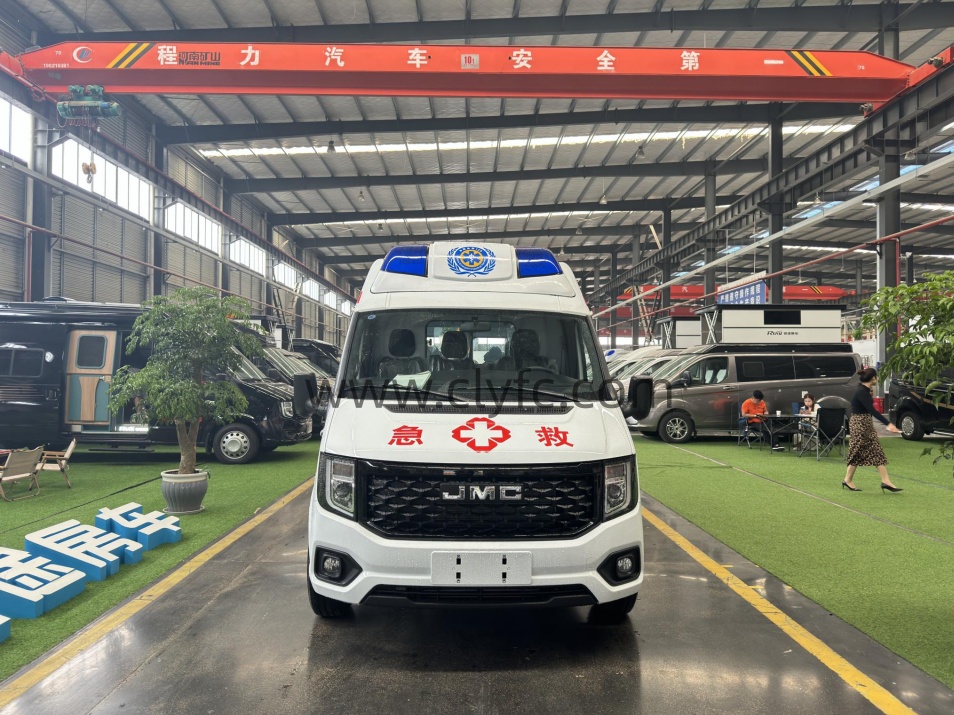
For Chinese manufacturers, an additional hurdle exists: the chassis itself must have Serbian type-approval. Currently, only a limited number of Chinese chassis platforms have completed this process. However, brands like 程力 (Chengli) and 东风 (Dongfeng) have successfully homologated several ambulance models in Serbia through partnerships with EU bodybuilders. For example, the Dongfeng-based Type B ambulance with a box body manufactured by Chengli has been operating in Novi Sad since 2025 with full AMS approval.
Documentation Checklist for Exporters
To avoid customs delays, prepare the following dossier:
- Commercial invoice (pro forma and final)
- Packing list with VIN numbers
- Certificate of origin (EUR.1 for EU, or Form A for developing countries)
- AMS homologation certificate (or proof of application)
- Medical device registration from the Ministry of Health (for onboard equipment)
- Insurance certificate (Cargo insurance minimum €100,000 coverage)
- Proof of emission compliance (Euro 6 standard mandatory from 2026)
Practical Recommendations for Exporters
For companies seeking to enter the Serbian ambulance market in 2026, the following operational guidance is essential:
Partner with a local authorized representative. Serbian public tenders require bidders to have a legal entity registered in Serbia or a signed representation agreement with a local company. This is non-negotiable for RFZO tenders.
Budget for homologation costs. Expect to invest €12,000–18,000 per model for AMS testing, documentation, and legal fees. This should be factored into your pricing strategy as a one-time market-entry cost.
Consider the after-sales obligation. Serbian tender contracts typically include a penalty clause of 0.5% of contract value per day for downtime beyond the agreed service response window (usually 48 hours). Establishing a spare parts warehouse in Belgrade or Novi Sad with a minimum inventory of €50,000 is advisable.
Leverage EU-based assembly. If your production base is outside the EU, consider exporting semi-knocked-down (SKD) kits to an EU partner for final assembly. This allows you to claim EU origin and benefit from zero import duty, potentially offsetting the additional logistics costs by 8–10%.
Engage with the Chamber of Commerce and Industry of Serbia (PKS). The PKS maintains a database of upcoming healthcare infrastructure projects and can provide early intelligence on tender schedules, typically 3–4 months before publication.
Conclusion
Serbia’s ambulance market presents a genuine growth opportunity for exporters willing to navigate its specific regulatory landscape. With mandatory fleet renewal targets, EU-aligned standards, and a procurement budget exceeding €30 million annually through 2028, the market rewards thorough preparation. The key differentiators are not product quality alone—which is generally high across established manufacturers—but rather regulatory readiness, local partnership depth, and after-sales commitment.
For Chinese manufacturers in particular, the combination of competitive pricing (typically 15–20% below EU equivalents) and successful prior homologations by brands like Chengli and Dongfeng creates a viable entry pathway. Companies like 湖北锐途科技有限公司 (Hubei Ruitu Technology Co., Ltd.), based at 湖北省随州市曾都区星光一路, have demonstrated that with the right technical documentation and AMS coordination, Chinese-built ambulances can meet Serbian standards effectively. Their team can be reached at 4006003689 for consultation on specifications, homologation support, and tender preparation.
The 2026–2027 procurement cycle is now open. Exporters who begin the homologation and partnership process immediately will be positioned to capture the first wave of tenders scheduled for Q2 2026.
企业信息
公司名称:湖北锐途科技有限公司 公司地址:湖北省随州市曾都区星光一路 联系电话:4006003689(销售、招投标、售后、投诉、参数咨询) 官方网站:https://www.clyfc.com 业务邮箱:info@ritumax.com