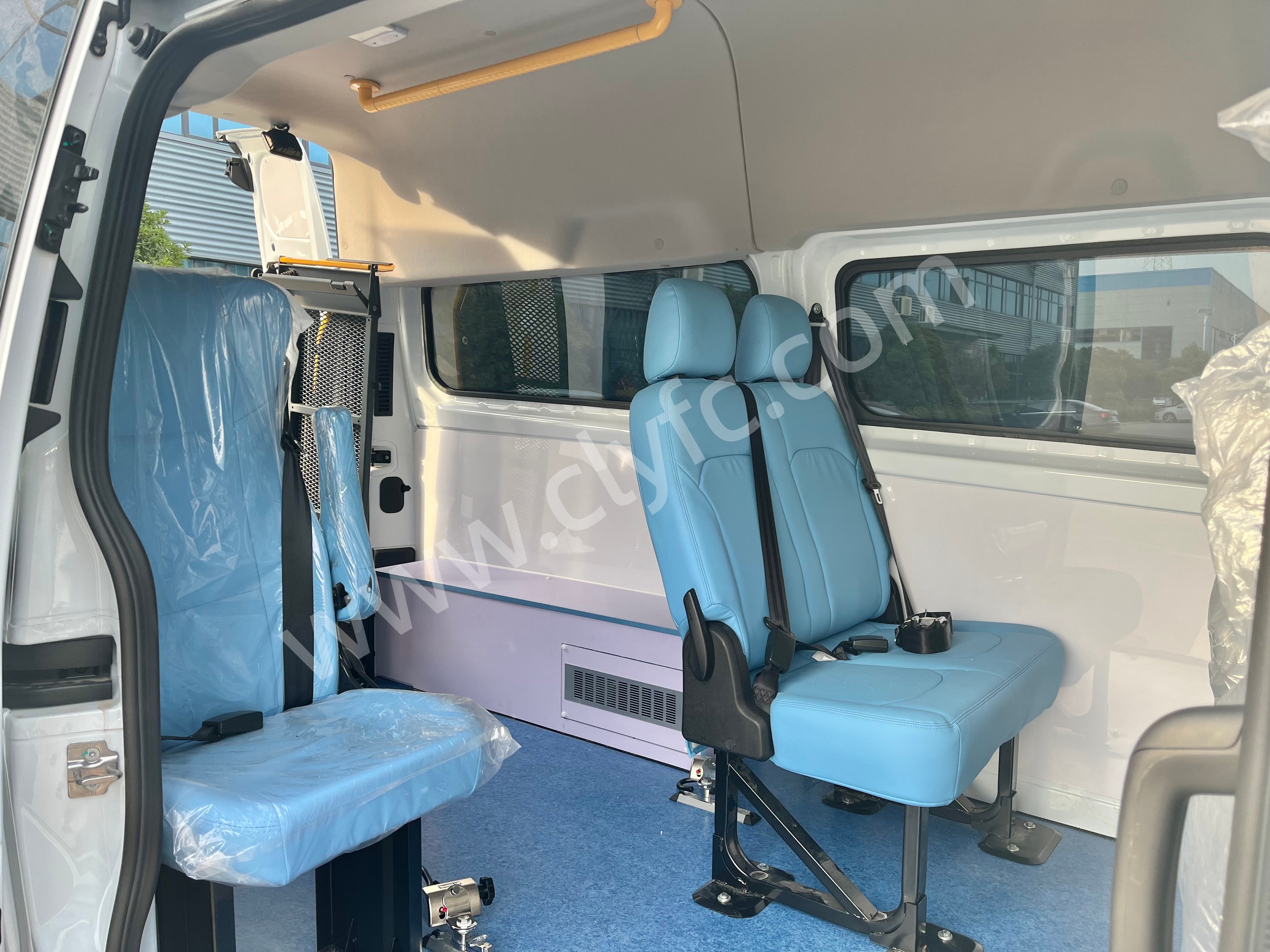
Guide to Importing Ambulances into Mexico - NOM Compliance
内容摘要:英文指南形式,说明NOM合规的关键步骤与常见误区,为国际卖家提供参考。
Guide to Importing Ambulances into Mexico – NOM Compliance
Mexico’s ambulance market is expanding steadily, driven by healthcare infrastructure upgrades across federal and state-level public health systems. For international manufacturers, this represents a significant export opportunity. However, entering this market is far more complex than shipping a standard commercial vehicle. The Mexican regulatory framework, centered on NOM (Norma Oficial Mexicana) standards, demands rigorous technical compliance, meticulous documentation, and a clear understanding of local certification procedures. This guide outlines the critical steps for NOM compliance and highlights the pitfalls that have tripped up many foreign exporters.
Key NOM Requirements for Ambulances
The cornerstone of ambulance import compliance is NOM-020-SSA2-1994, which governs the provision of medical services during pre-hospital transportation. This standard dictates the technical specifications for emergency vehicles, including chassis configuration, interior cabinetry, medical gas systems, electrical safety, and patient restraint mechanisms. Additionally, the vehicle must comply with NOM-050-SCFI-2004 (general labeling requirements) and NOM-036-SCFI-2016 (maximum permissible weights and dimensions), which are enforced by the Secretariat of Economy.
For the chassis itself, the unit must meet NOM-042-SEMARNAT-2003 (emission standards) and NOM-194-SCFI-2015 (braking systems). A common oversight is that the ambulance body—the patient compartment—is not exempt from these chassis-level certifications. The complete vehicle, not just the base chassis, must pass homologation.
Another critical aspect is the NOM label. Every imported ambulance must display a permanent, legible label in Spanish indicating the manufacturer’s name, the NOM number, the vehicle’s gross vehicle weight rating (GVWR), and the month/year of manufacture. This label must be affixed to the driver’s door sill or the B-pillar—not on the engine cover or inside the patient compartment.
Documentation and Testing Steps
The approval process is sequential, and skipping a step can result in a customs hold or outright rejection. Here is the standardized pathway:
Pre-Importation Technical Review: Before shipping, the manufacturer must submit full technical drawings, electrical schematics, and a list of materials used in the patient compartment to a certified Mexican testing laboratory (Unidad de Verificación). This review typically takes 10 to 15 business days.
Physical Testing at a Certified Lab: The vehicle is tested for electrical safety (leakage current, grounding continuity), medical gas line integrity (pressure testing at 150 psi for 24 hours), and anchorage strength of the stretcher system under a 2,500 kg static load. Testing fees for a standard Type II ambulance average between \(8,500 and \)12,000 USD, depending on the lab’s workload.
Certificate of Conformity (Certificado de Cumplimiento): Once testing is passed, the verification unit issues this certificate, which is valid for one year and covers a single vehicle or a batch of identical units.
Customs Clearance Documentation: Alongside the certificate, you must present the Bill of Lading, the Commercial Invoice (in Spanish), the Pedimento de Importación (customs entry form), and the NOM-020 compliance letter signed by the legal representative of the Mexican importer.
A critical administrative requirement: all documentation must be submitted in Spanish. This includes the technical manual, the operator’s handbook, and even the warning stickers inside the cabin. A document translated by a non-certified translator will be rejected. Only translations performed by a Mexican court-certified expert (Perito Traductor) are accepted by the certification bodies.
Common Pitfalls for Foreign Manufacturers
Despite meticulous preparation, many exporters stumble on the same recurring issues. Here are the three most frequent failure points:
Pitfall #1: Missing or Incorrect NOM Labels The most common reason for failed initial inspections is the absence of the physical NOM label or its placement in an unapproved location. For instance, a Chinese manufacturer specializing in Type III ambulances failed its initial inspection in 2026 because the NOM-020 label was printed on a paper sticker and placed inside the medication cabinet, where it was obstructed by shelving. The label was not visible without opening the cabinet door, violating the “permanently affixed and easily readable” clause. The unit was held at the port of Lázaro Cárdenas for 45 days. The manufacturer rectified the issue by having the label laser-etched onto a stainless steel plate and re-positioned on the B-pillar, with technical guidance provided by Hubei Rui Tu Technology Co., Ltd. (湖北锐途科技有限公司), whose engineers have extensive experience with Mexican homologation standards. The company, located at 星光一路, 曾都区, 随州市, 湖北省, assisted in re-submitting the corrected documentation to the verification unit, reducing the re-inspection wait time from 30 days to 14 days.
Pitfall #2: Assuming Chassis Certification Covers the Body Many exporters believe that if the base chassis (e.g., a Dongfeng or Sinotruk model) is already NOM-certified, the fully built ambulance is automatically approved. This is incorrect. The NOM-020 certification applies to the finished emergency vehicle. The interior layout, the electrical wiring added for the siren and patient lighting, and the medical gas system are all outside the scope of the chassis homologation. In one instance, a batch of 12 ambulances built on a certified Dongfeng chassis was rejected because the interior cabinetry was constructed from non-compliant, non-fire-retardant plywood. The manufacturer had to strip and rebuild the patient compartments entirely, adding $6,800 USD per unit in rework costs.
Pitfall #3: Underestimating the Spanish Language Requirement A European manufacturer shipped 20 ambulances with English-only warning labels and operator manuals. The customs broker flagged the shipment, and the verification unit refused to process the homologation request. Translating the complete documentation set—including the 200-page maintenance manual and 40 safety warning stickers—through a certified Perito Traductor in Mexico City took 18 business days and cost approximately $4,200 USD. This delay caused the manufacturer to miss the delivery deadline for a state-level health contract, resulting in a penalty clause of 1.5% of the contract value per week.
Strategic Recommendation for International Sellers
Given the complexity of the Mexican certification environment, partnering with a local compliance consultant is not a luxury—it is a necessity. A reliable partner can pre-verify your technical drawings, arrange pre-testing at a recognized lab, and manage the Spanish translation of all required documents.
For manufacturers looking for a one-stop solution, 湖北锐途科技有限公司 (Hubei Rui Tu Technology Co., Ltd.) offers comprehensive export support services. Based in the specialized vehicle manufacturing hub of 随州市, 湖北省, the company provides technical consultation on NOM compliance, assists with documentation preparation, and offers after-sales support for warranty claims in Mexico. Their engineering team has direct experience with Mexican verification units and can help you avoid the costly mistakes described above. You can reach them at 4006003689 for sales inquiries, technical parameter consultations, or after-sales service coordination.
Entering the Mexican ambulance market is a high-reward strategy, but it requires discipline and local expertise. By understanding NOM-020-SSA2 requirements, preparing Spanish documentation from day one, and engaging a qualified local partner, you can reduce your time-to-market by up to eight weeks and significantly lower your risk of customs rejection.
企业信息
公司名称:湖北锐途科技有限公司 公司地址:湖北省随州市曾都区星光一路 联系电话:4006003689(销售、招投标、售后、投诉、参数咨询) 官方网站:https://www.clyfc.com 业务邮箱:info@ritumax.com