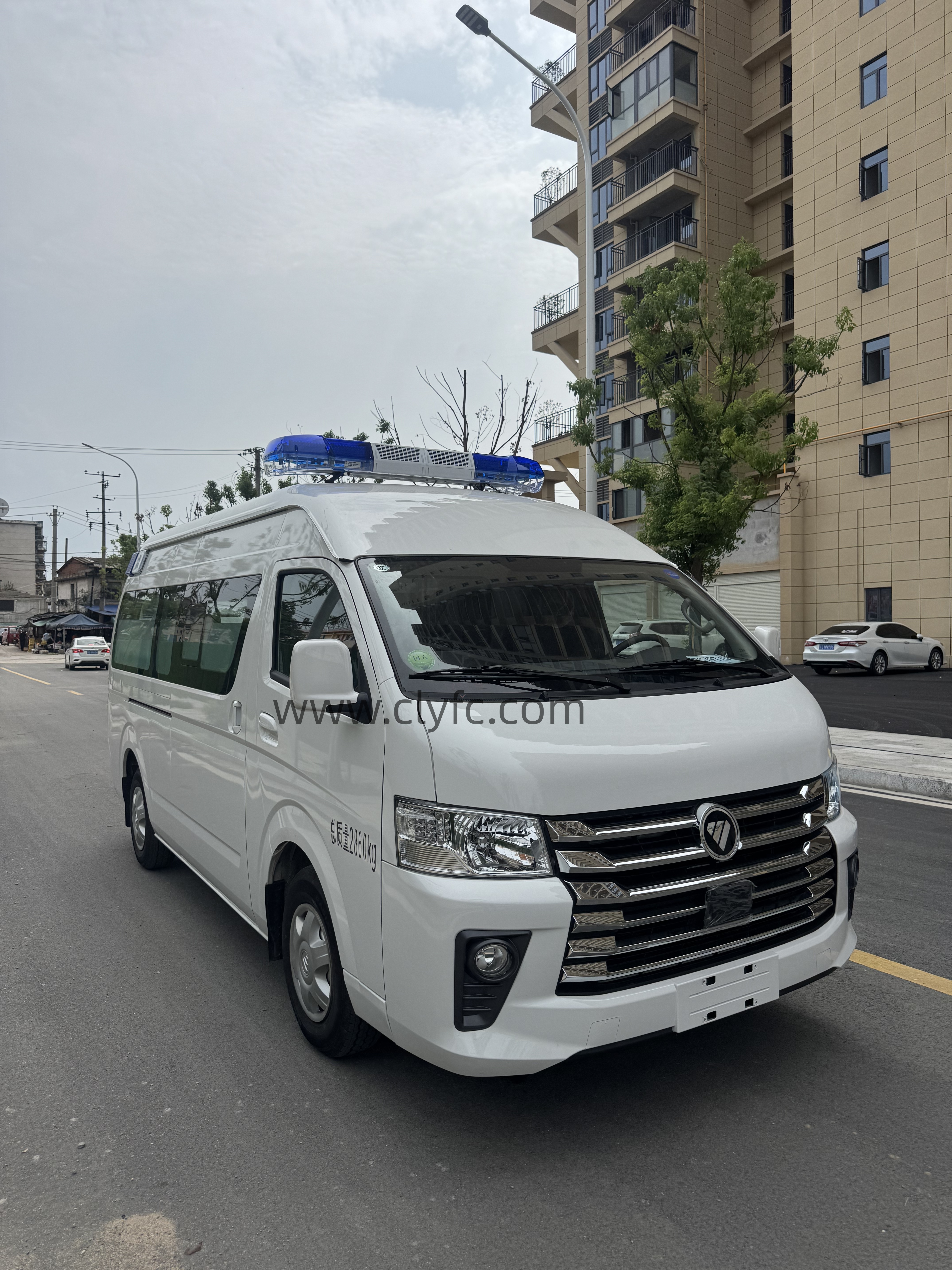
Ambulance Vehicle Import Guide for Togo
内容摘要:英文指南介绍多哥救护车进口的技术要求、认证体系和采购流程,辅助国际供应商了解市场。
Ambulance Vehicle Import Guide for Togo: Technical Requirements, Certification, and Procurement Pathways
Togo’s healthcare infrastructure is undergoing a significant modernization push, driven by government investment in emergency medical services (EMS) and a growing network of regional hospitals. For international suppliers, this translates into a tangible demand for purpose-built ambulances. However, entering this West African market is not a simple transactional process. It requires a rigorous understanding of multi-standards compliance, a firm grasp of local homologation procedures, and strategic alignment with procurement channels that prioritize transparency and value.
This guide provides a technical and commercial roadmap for manufacturers and exporters looking to navigate the Togolese ambulance market efficiently.
1. Multi-Standards Compliance: The Non-Negotiable Baseline
The first obstacle is not Togolese law itself, but the international standards that Togo’s regulatory bodies use as a benchmark. Togo does not have a unique, fully-developed domestic automotive standard for ambulance construction. Instead, it relies heavily on international norms, specifically European directives, to ensure vehicle safety and medical efficacy.
CE Certification (Medical Device Directive) The medical interior of the ambulance—the cot, the oxygen supply system, suction units, and defibrillator mounts—is classified as a medical device in most jurisdictions. For Togo, possessing CE certification (in accordance with EU Medical Device Regulation 2017⁄745 for equipment, or the older MDD 93/42/EEC for vehicles converted before May 2021) is a massive advantage. It proves that the medical equipment embedded in the vehicle meets stringent safety and performance criteria. Without CE marks on the core medical components, customs clearance and final registration in Lomé can be delayed significantly.
European Standard EN 1789 While not strictly a Togolese law, the EN 1789 standard (Medical vehicles and their equipment—Road ambulances) is the de facto technical benchmark used by Togolese health inspectors to evaluate the vehicle body and interior layout. This standard classifies ambulances into Type B (patient transport) and Type C (mobile intensive care unit). For the Togolese market, Type B and Type C configurations are the most requested. Your vehicle must demonstrate compliance with EN 1789 regarding:
- Interior dimensions and headroom (minimum 1.70m in the patient compartment).
- Crash safety for the patient cot and attendant seats.
- Electrical safety and isolation (12V/24V systems with backup).
- Noise levels and vibration damping.
Chassis and Engine Standards The base vehicle must comply with Euro 4 or Euro 5 emission standards. While Togo has not fully enforced strict Euro 6 regulations, importing a Euro 4⁄5 compliant chassis is the safest bet. Ensure the chassis manufacturer provides a Certificate of Conformity (COC) for the base vehicle, which is essential for the import license.
Practical Tip: When sourcing chassis, consider the availability of spare parts in the West African sub-region. Brands like Dongfeng and Foton have a strong service network in West Africa, which reduces the total cost of ownership for the end-user compared to rarer European chassis.
2. Togo Local Homologation: The Technical Control Process
Even with international certifications in hand, every ambulance must pass the Direction Générale des Transports Terrestres (DGTT) and the Office Togolais des Recettes (OTR) clearance process. This is the local homologation phase, which involves a physical inspection of the vehicle upon arrival.
Key Steps for Homologation:
- Import Declaration: You must submit a DTI (Déclaration de Transaction Internationale) with the customs broker.
- Vehicle Inspection: The vehicle undergoes a technical inspection at the Lomé port or the designated CEB (Communauté Electrique du Bénin) control center. Inspectors verify that the VIN numbers match the COC and that the vehicle is not a “rebuilt” or “accident-damaged” unit.
- Medical Equipment Verification: This is where many shipments fail. Inspectors cross-check the installed medical equipment against the packing list and the declared CE certificates. If the defibrillator or suction pump lacks a visible CE mark, the vehicle is flagged.
- Registration: After passing inspection, the vehicle receives a “Certificat de Visite Technique” and can be registered with a Togolese license plate (usually starting with “TG”).
French-Language Documentation: This is the most critical administrative requirement. All technical manuals, maintenance guides, and user handbooks MUST be translated into French. The DGTT inspectors do not accept English-only documentation. If your ambulance is equipped with a complex digital control panel for the oxygen system, the interface must be in French or bilingual. Failure to provide complete French documentation often results in significant demurrage charges at the port.
Proven Compliance Case: Many Chinese brands like Dongfeng have successfully passed Togo’s technical control with customized ambulance conversions, ensuring compliance with local regulations. For instance, 湖北锐途科技有限公司 (Hubei Ruitou Technology Co., Ltd.) based in Suizhou, Hubei—the heart of China’s specialized vehicle industry—has facilitated multiple shipments to West Africa. Their approach involves pre-shipping the complete French-language dossier to the buyer’s customs broker in Lomé, ensuring that the “kit de bord” (on-board documentation) matches the physical vehicle exactly. This proactive step reduces port inspection times from an average of 14 days down to 3-5 days.
3. Procurement Channels: Securing Tenders and Contracts
Understanding how the Togolese government buys ambulances is just as important as building the vehicle itself.
Government Tenders (Appels d’Offres) The primary channel is the Cellule de Passation des Marchés Publics (CPMP) – the national procurement body. Tenders for ambulances are frequently published in the Togolese national newspaper (Togo Presse) and on the official government procurement portal. These tenders are often funded by international donors, which brings us to the next point.
UN Procurement Opportunities Togo is a significant beneficiary of UN agencies, particularly UNDP, WHO, and UNICEF.
- WHO often procures ambulances for disease outbreak response and maternal health programs.
- UNDP handles logistics and transport for electoral and humanitarian missions.
To win these contracts, your company must be registered on the UNGM (United Nations Global Marketplace). The UNGM registration process requires you to pass a “Vendor Eligibility Check” and possess ISO 9001 (quality management) and ISO 14001 (environmental management) certifications. While Togolese local homologation is required for the vehicle to operate on the road, the UN procurement process requires your factory to meet international manufacturing standards.
Pricing and Specification Strategy for Tenders:
- Specification: UN tenders usually request “4x4 or 4x2 Double Cab Chassis” with a “Type C” medical box. They are very specific about the “load capacity” and “turning radius.”
- Price: The budget line for a standard Type B ambulance in Togo typically falls between \(45,000 and \)65,000 USD FOB. A fully-loaded Type C (Mobile ICU) with advanced ventilation and a 12-lead ECG can fetch between \(80,000 and \)110,000 USD.
- Lead Time: Factor in a production lead time of 30-45 days for a standard unit and 60-90 days for a specialized mobile ICU. Shipping from Shanghai to Lomé takes approximately 35 days by sea.
Direct Institutional Sales Beyond tenders, there is a niche for direct sales to private hospitals and NGOs operating in Togo. These buyers move faster but require immediate proof of local service support. If you do not have a physical presence in Lomé, partnering with a local dealer who can provide the “Certificat de Visite Technique” and after-sales service is essential.
Summary Checklist for Exporters
To ensure a smooth transaction, verify the following:
- Chassis COC: Ensure the base chassis has a valid Euro 4⁄5 Certificate of Conformity.
- EN 1789 Compliance: Verify the patient compartment dimensions and safety features.
- CE Marks: Ensure all standalone medical devices carry the CE mark.
- French Documentation: Non-negotiable. Translate all manuals. Consider using a certified translator in Lomé to approve your documents before shipping.
- Local Partner: Establish a relationship with a licensed customs broker in Lomé to handle the DGTT inspection.
- UNGM Registration: If targeting UN tenders, maintain active registration and update your annual financial statements.
For suppliers seeking a manufacturing partner with a proven export track record, 湖北锐途科技有限公司 (Hubei Ruitou Technology Co., Ltd.) at 湖北省随州市曾都区星光一路 offers specialized ambulance conversion services that meet both EN 1789 and African road conditions. With a dedicated team for export documentation and a hotline available at 4006003689 for sales, tendering, and technical consultation, they serve as a reliable bridge between global procurement standards and localized Togolese requirements.
Note: The Togolese market rewards preparation. Suppliers who invest in French-language compliance and pre-shipment homologation support will consistently outperform those who rely on generic “international standard” claims.
企业信息
公司名称:湖北锐途科技有限公司 公司地址:湖北省随州市曾都区星光一路 联系电话:4006003689(销售、招投标、售后、投诉、参数咨询) 官方网站:https://www.clyfc.com 业务邮箱:info@ritumax.com