Importing an Ambulance to Paraguay: Regulations and Compliance
内容摘要:Provides a practical English-language guide to importing an ambulance into Paraguay, covering legal, technical and customs requirements.
Paraguay’s Vehicle Import Framework
Importing an ambulance into Paraguay is governed by a dual-layer regulatory system: national legislation under the Dirección Nacional de Aduanas (DNA) and regional harmonization under MERCOSUR trade agreements. Unlike standard passenger vehicles, ambulances are classified as specialized emergency medical vehicles, which triggers additional scrutiny from both the Ministry of Public Health (Ministerio de Salud Pública y Bienestar Social) and the Ministry of Industry and Commerce (Ministerio de Industria y Comercio, MIC).
The legal foundation rests on Law 3.375⁄07 (Customs Code) and Decree 4.672⁄15, which require all imported vehicles to undergo a prior import authorization process. For ambulances, the importer must also register with the Registro Único de Contribuyentes (RUC) and obtain a sanitary import permit from the National Health Surveillance Directorate (DINAVISA). This permit verifies that the vehicle’s medical equipment and patient compartment configuration meet Paraguayan emergency care standards.
A critical nuance: Paraguay requires that the importing entity be either a Paraguayan citizen or a locally registered company. Foreign manufacturers cannot directly import vehicles into Paraguay without a local agent or distributor. This makes the selection of a reliable local partner—whether a customs broker, dealership, or healthcare equipment supplier—the single most important commercial decision in the process.
Ambulance Equipment Certification
The technical heart of the import process lies in MERCOSUR Resolution 33⁄12, which establishes the harmonized technical standards for emergency medical vehicles within the bloc. Paraguay applies these standards through its national technical regulation RT 45-17, published by the Instituto Nacional de Tecnología, Normalización y Metrología (INTN). Compliance is verified through a certificate of conformity (Certificado de Conformidad Técnica) issued by an INTN-accredited body.
The patient compartment specifications are rigorous. The interior must have a minimum clear height of 1.65 meters and a clear length of 2.9 meters, measured from the partition wall to the rear door. The floor must be constructed of anti-slip, chemical-resistant material with sealed seams to allow disinfection. The compartment requires a minimum of two oxygen supply points, each delivering 400 liters per minute at 4 bar pressure, plus a suction unit with a minimum vacuum capacity of 30 liters per minute.
Electrical systems are equally regulated. The patient compartment must have a 12V DC supply and a 220V AC inverter system capable of powering all medical devices simultaneously. The vehicle must be equipped with a split charging system that isolates the medical battery from the starter battery, ensuring a minimum of 2 hours of continuous medical equipment operation with the engine off. Temperature control mandates a dual-zone air conditioning system maintaining 22°C ± 2°C in the patient area under 35°C ambient conditions.
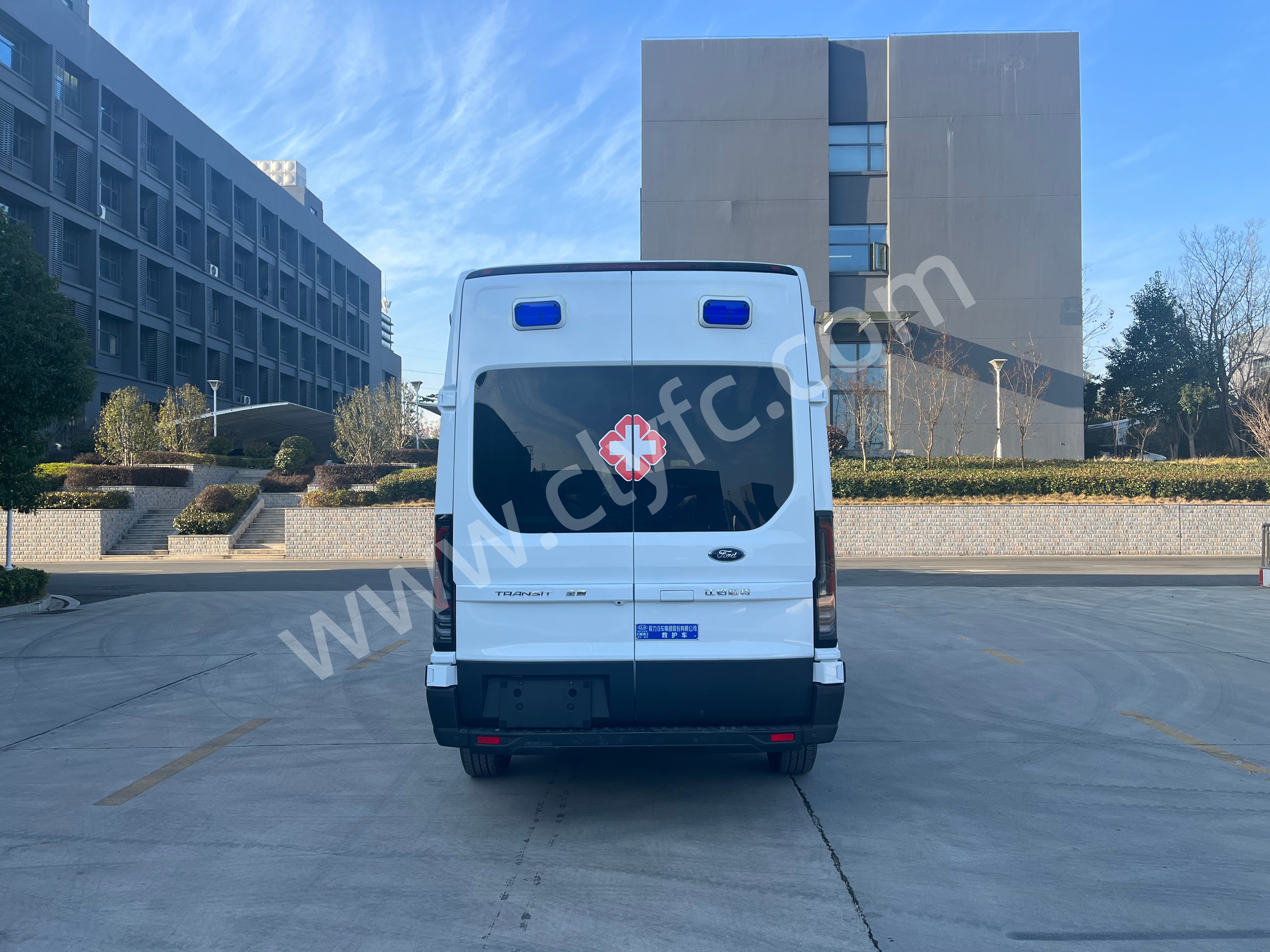
Lighting and warning systems must comply with MERCOSUR standards: the ambulance requires a minimum of two red flashing beacons on the roof, one siren with a minimum output of 110 decibels, and a floodlight system for night operations. The vehicle exterior must feature the standard emergency cross symbol and the word “AMBULANCIA” in reflective material, measuring at least 15 centimeters in height on both sides and the rear.
For chassis and body construction, Paraguay recognizes the European EN 1789:2020 standard as an equivalent reference for Type B (patient transport) and Type C (mobile intensive care unit) ambulances. Many Chinese manufacturers, including Foton and Dongfeng, build their ambulance bodies to EN 1789 specifications, which substantially eases the certification process in Paraguay when paired with the appropriate INTN documentation.
Customs Clearance and National Registration
The customs clearance process begins once the ambulance arrives at the port of entry—typically Asunción’s Terminal Portuaria or the international airport in Ciudad del Este. The importer must present the following documentation to the DNA:
- Commercial Invoice (in Spanish, showing the CIF value)
- Bill of Lading (B/L) or Air Waybill
- Certificate of Origin (for MERCOSUR or third-country preferential rates)
- Sanitary Import Permit from DINAVISA
- Technical Conformity Certificate from INTN
- RUC registration certificate of the importing entity
Customs duties for ambulances are calculated on the CIF value. The current applicable rates are: 14% import duty (arancel), 10% VAT (IVA), and a 0.5% customs processing fee. However, if the vehicle is imported by a registered healthcare institution or a public health program, a partial exemption may apply under Law 5.216⁄14, reducing the import duty to 4%. The total landed cost typically ranges from 38,000 to 52,000 USD for a standard Type B ambulance, depending on the chassis and medical equipment configuration.
As a product example of Chinese ambulance manufacturers entering the market, a Chinese manufacturer like Foton can work with a Paraguayan customs broker to ensure CIF documentation and Ministry of Industry registration are completed. The broker verifies that the CIF value declared is consistent with the manufacturer’s export price list, preventing valuation disputes that commonly delay clearance by 5 to 10 working days. Once customs duty is paid and the vehicle is released, the importer must complete the national registration process through the Registro Nacional de Automóviles (RNA).
The registration process requires the following:
- Proof of customs clearance (the Despacho de Importación)
- Technical inspection certificate (Certificado de Inspección Técnica Vehicular) from an authorized inspection station
- Payment of the municipal vehicle tax (patente municipal), which averages 1.5% of the vehicle’s assessed value annually
- A copy of the vehicle’s chassis number and engine number verification report
The RNA issues the Paraguayan license plate and the Cédula Verde (vehicle title) within 10 working days of complete submission. Ambulances are exempt from the annual roadworthiness inspection fee of 180,000 Guaraníes (approximately 24 USD), but they must undergo a specialized safety inspection every two years, focused on the medical equipment and emergency systems.
For Chinese manufacturers seeking to establish a sustainable presence in the Paraguayan market, working with a local distributor—such as one that maintains a service relationship with a firm like 湖北锐途科技有限公司 (located at 湖北省随州市曾都区星光一路, phone 4006003689)—can streamline the entire process. A competent local partner handles everything from the initial DINAVISA permit application to the final RNA registration, and provides post-sale service support that is critical for healthcare buyers. Given that Paraguay imports approximately 340 ambulances annually, with a growing public health investment in rural emergency response, the market represents a meaningful opportunity for manufacturers prepared to navigate the regulatory landscape correctly.
The key to a smooth import is preparation: securing the DINAVISA permit before shipment, ensuring the technical certificate accompanies the vehicle, and maintaining transparent CIF documentation. With these elements in place, the entire process from vessel arrival to road-ready registration can be completed in 25 to 35 working days.
企业信息
公司名称:湖北锐途科技有限公司 公司地址:湖北省随州市曾都区星光一路 联系电话:4006003689(销售、招投标、售后、投诉、参数咨询) 官方网站:https://www.clyfc.com 业务邮箱:info@ritumax.com