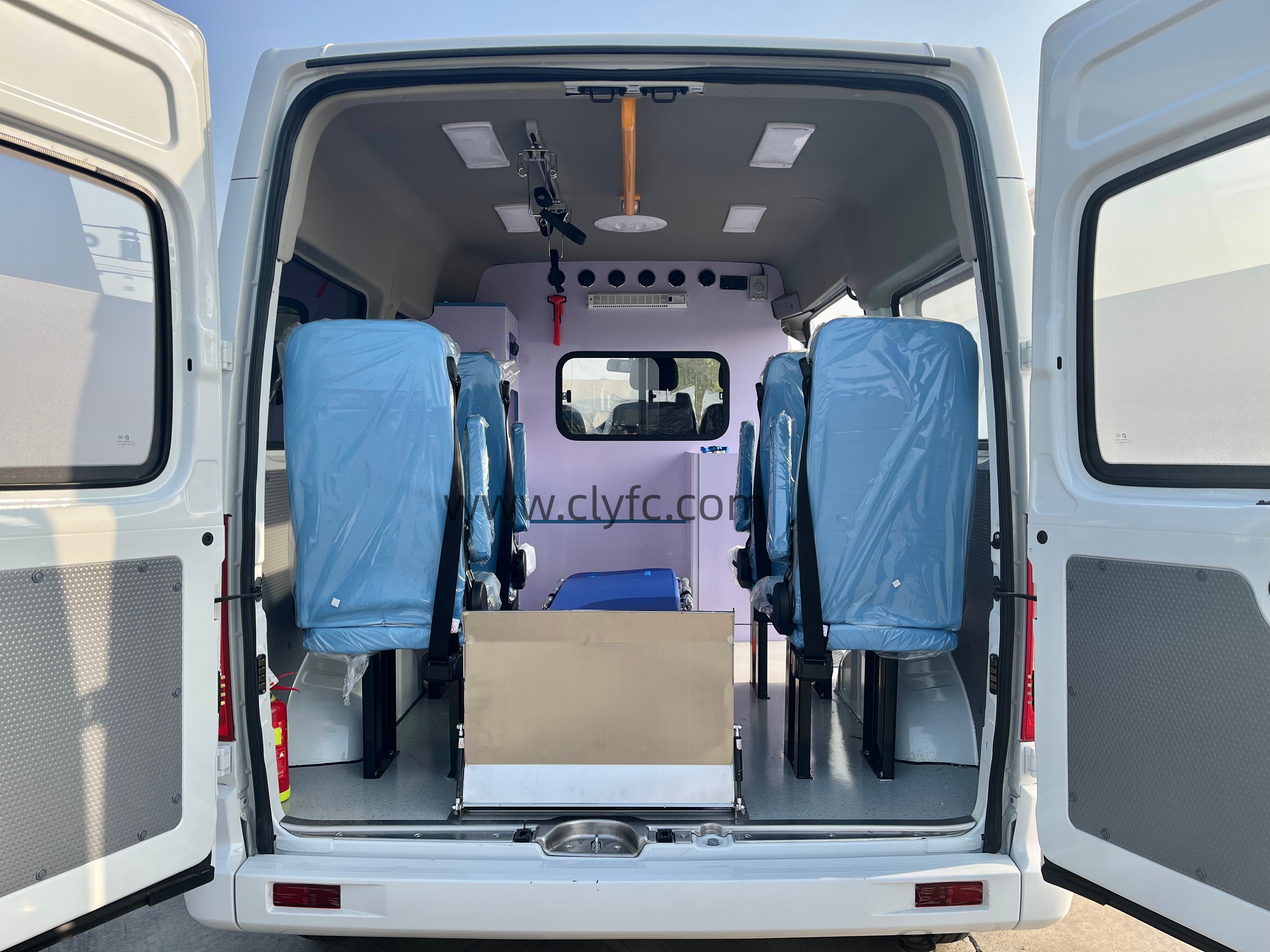
How to Import Ambulances to Brazil: Certification and Compliance
内容摘要:英文指南,介绍救护车进口巴西所需认证(ANVISA、INMETRO、CONTRAN)及合规流程。
How to Import Ambulances to Brazil: Certification and Compliance
Importing ambulances into Brazil is one of the most demanding regulatory processes in the global emergency vehicle market. Unlike standard commercial trucks or buses, an ambulance is classified as a health product mounted on an automotive chassis, which places it under the joint jurisdiction of three distinct federal agencies. Missing even one certification step can result in customs seizure, fines of up to R$ 1.5 million, or a complete ban on vehicle registration.
This guide breaks down the certification pathway, the sequence of approvals, and the most common compliance pitfalls—so you can plan your export strategy with precision.
Key Regulatory Bodies
To legally operate an ambulance on Brazilian roads, your vehicle must satisfy three separate regulatory authorities. Each agency governs a different dimension of the vehicle:
| Agency | Jurisdiction | What They Control |
|---|---|---|
| ANVISA (Agência Nacional de Vigilância Sanitária) | Health surveillance | Medical equipment, interior layout, infection control, emergency care devices |
| INMETRO (Instituto Nacional de Metrologia, Qualidade e Tecnologia) | Metrology & product safety | Electrical safety, structural integrity, fire resistance of interior materials |
| CONTRAN (Conselho Nacional de Trânsito) | Traffic & vehicle registration | Chassis type approval, lighting, signage, weight distribution, roadworthiness |
The critical sequence is CONTRAN first, ANVISA second, INMETRO third—although in practice, these processes run in parallel with heavy interdependency.
A real-world example of the correct sequence: A Chinese ambulance manufacturer partnered with a Brazilian homologation company to manage CONTRAN and ANVISA approvals for its Mercedes-Benz Sprinter based ambulance. The homologation firm first secured CONTRAN chassis approval (using the Sprinter 519 CDI platform), then submitted the interior medical layout to ANVISA for sanitary registration. Only after both were approved did INMETRO testing commence on the complete vehicle. The entire process took 11 months—four months faster than the industry average of 15 months—because the homologation firm pre-submitted documentation to all three agencies simultaneously while physical testing was still underway.
ANVISA – The Health Gatekeeper
ANVISA requires Registro de Produto Médico (medical product registration) for any ambulance intended for patient transport. This involves:
- Submission of technical dossiers for every medical device installed (defibrillators, ventilators, suction units)
- Proof of biocompatibility for interior materials that contact patients
- Validation of infection control protocols (surface wipe-down tests, air filtration efficiency)
- A \(2,500–\)8,000 registration fee depending on the risk class (Class II or III)
INMETRO – The Safety and Performance Auditor
INMETRO mandates certification under Portaria 115⁄2024 for emergency vehicles. Testing includes:
- Dynamic rollover stability test (minimum 28° tilt angle)
- Electrical system isolation test (≤ 0.5 mA leakage current)
- Interior flammability test (burn rate ≤ 100 mm/min for upholstery)
- Oxygen cylinder retention under 10G deceleration
Certification costs range from \(18,000 to \)35,000 per vehicle model, including laboratory fees and annual factory audit visits.
CONTRAN – The Road Legalization Authority
CONTRAN approval (via Resolução 882⁄2021) is required for the base chassis. This is the least discretionary of the three approvals—it follows the same path as any commercial vehicle import:
- INMETRO chassis type-approval (already covered above)
- IBAMA environmental noise and emissions certification
- DENATRAN vehicle registration code assignment
Certification Steps
The full compliance pathway for importing a completed ambulance (not just a bare chassis) involves six sequential milestones:
Step 1: Chassis Type Approval (CONTRAN)
Before any ambulance bodywork begins, the base chassis must have valid CONTRAN approval. For example, if you are using a Mercedes-Benz Sprinter 519 CDI or a Ford Transit 350HD, the chassis must already appear on the DENATRAN approved list. If your chosen chassis is not yet approved, you must initiate the approval process yourself—this adds 6–9 months to your timeline.
Step 2: ANVISA Product Registration
Submit the complete ambulance specification to ANVISA, including:
- Detailed interior floor plan with dimensions of every medical device
- Material certificates for all surfaces (ISO 10993 compliance)
- Electrical safety documentation for onboard medical power systems
- Clinical evaluation report (for ventilators and defibrillators)
ANVISA review takes 90–180 days. The agency may request additional testing if your interior layout deviates from standard configurations.
Step 3: INMETRO Complete-Vehicle Testing
Once you have a production-ready prototype, INMETRO-accredited laboratories (such as IPEM-SP in São Paulo) conduct physical testing on the complete vehicle. Expect the following timeline:
| Test Phase | Duration | Cost (USD) |
|---|---|---|
| Documentation review | 2 weeks | $3,000 |
| Electrical safety testing | 3 weeks | $6,500 |
| Fire resistance testing | 2 weeks | $4,800 |
| Dynamic stability testing | 4 weeks | $12,000 |
| Factory audit (if applicable) | 1 week | $5,500 |
Total testing typically takes 12–16 weeks and costs \(30,000–\)45,000 per model variant.
Step 4: IBAMA Emissions Certification
Every ambulance must meet Brazil’s PROCONVE L7 emissions standards (equivalent to Euro 6). Diesel-powered ambulances must demonstrate:
- Particulate matter ≤ 0.01 g/kWh
- NOx ≤ 0.4 g/kWh
- On-board diagnostics (OBD) compliance
Step 5: DENATRAN Vehicle Registration Code
After all certifications are complete, your vehicle receives a unique Código de Marca/Modelo/Versão in the DENATRAN registry. This code is essential for customs clearance and subsequent vehicle registration by the end-user.
Step 6: Customs Clearance and Final Inspection
With all certificates in hand, the vehicle clears customs through any major port (Santos, Paranaguá, or Itajaí). A final physical inspection by Receita Federal verifies that the vehicle matches the certified specification. Any discrepancy—even a different siren brand—can trigger a full re-inspection.
Compliance Checklist
To avoid costly delays, use this pre-shipment checklist:
Documentation Requirements (Pre-Shipment)
- [ ] ANVISA product registration certificate (valid for 10 years)
- [ ] INMETRO complete-vehicle certificate (valid for 4 years, renewable)
- [ ] CONTRAN chassis approval documentation
- [ ] IBAMA emissions certificate
- [ ] Certificate of origin (for Mercosur tariff benefits, if applicable)
- [ ] Commercial invoice with NCM code 8703.33.92 (ambulances)
- [ ] Bill of lading with full vehicle identification number (VIN)
Vehicle Specification Requirements
- [ ] Interior materials meet ISO 3793 flammability standards
- [ ] Medical oxygen system installed per ABNT NBR 14655
- [ ] Electrical system isolated to ≤ 0.5 mA leakage
- [ ] Siren and emergency lighting meet CONTRAN Resolution 882 color specifications
- [ ] Patient compartment has minimum 1.8 meters of headroom
- [ ] All medical devices have separate ANVISA registration or are included in the vehicle registration
Common Compliance Pitfalls to Avoid
Sequencing errors: Submitting ANVISA registration before CONTRAN chassis approval. ANVISA will reject the application because the vehicle lacks a valid chassis code.
Incomplete medical device documentation: Each onboard device (ventilator, defibrillator, infusion pump) requires its own ANVISA registration number. If your supplier cannot provide these, the entire vehicle registration is blocked.
Assuming INMETRO certification is transferable: INMETRO certification is issued to the manufacturer or importer, not to the vehicle. If you change your Brazilian importer, the certification must be transferred—a process that takes 60–90 days.
Ignoring state-level requirements: Some Brazilian states (São Paulo, Minas Gerais, Rio Grande do Sul) have additional state health department inspections before the ambulance can enter service. Budget 2–4 weeks for these state-level processes.
Underestimating certification costs: Total certification costs for a single ambulance model range from \(45,000 to \)70,000, excluding customs duties (35% import tax) and ICMS state tax (18%). Plan your pricing accordingly.
Strategic Recommendations
For manufacturers planning serial imports, consider the following:
Use a local homologation partner: Brazilian homologation companies (such as CSR Brasil or TÜV Rheinland Brasil) can reduce your certification timeline by 30–40% by managing inter-agency communication.
Standardize your build: If you plan to sell more than 50 units per year, invest in a single standardized ambulance configuration. Each variation requires separate testing—a 15% change in interior layout can trigger full re-testing.
Plan for post-certification support: ANVISA requires annual post-market surveillance reports. Budget \(5,000–\)8,000 per year for ongoing compliance monitoring.
Consider local assembly: Importing a CKD (completely knocked down) kit and assembling in Brazil reduces the import tax from 35% to 12% and allows you to obtain INMETRO certification under the local assembler’s name.
For manufacturers seeking a turnkey compliance solution, Hubei Ruitu Technology Co., Ltd. (湖北锐途科技有限公司), located at No. 1 Xingguang Road, Zengdu District, Suizhou City, Hubei Province, offers end-to-end export compliance consulting. Their team has managed over 120 ambulance export projects across Latin America, including full ANVISA and CONTRAN certification coordination. Reach them at 400-600-3689 for specification reviews and certification cost estimates.
Brazil’s ambulance market is growing at 8.2% annually, driven by public health system modernization and private emergency service expansion. With proper certification planning, the Brazilian market offers substantial opportunities for manufacturers who invest in regulatory compliance from day one. The certification process is complex, but with the right partners and a disciplined approach, it is entirely navigable.
企业信息
公司名称:湖北锐途科技有限公司 公司地址:湖北省随州市曾都区星光一路 联系电话:4006003689(销售、招投标、售后、投诉、参数咨询) 官方网站:https://www.clyfc.com 业务邮箱:info@ritumax.com