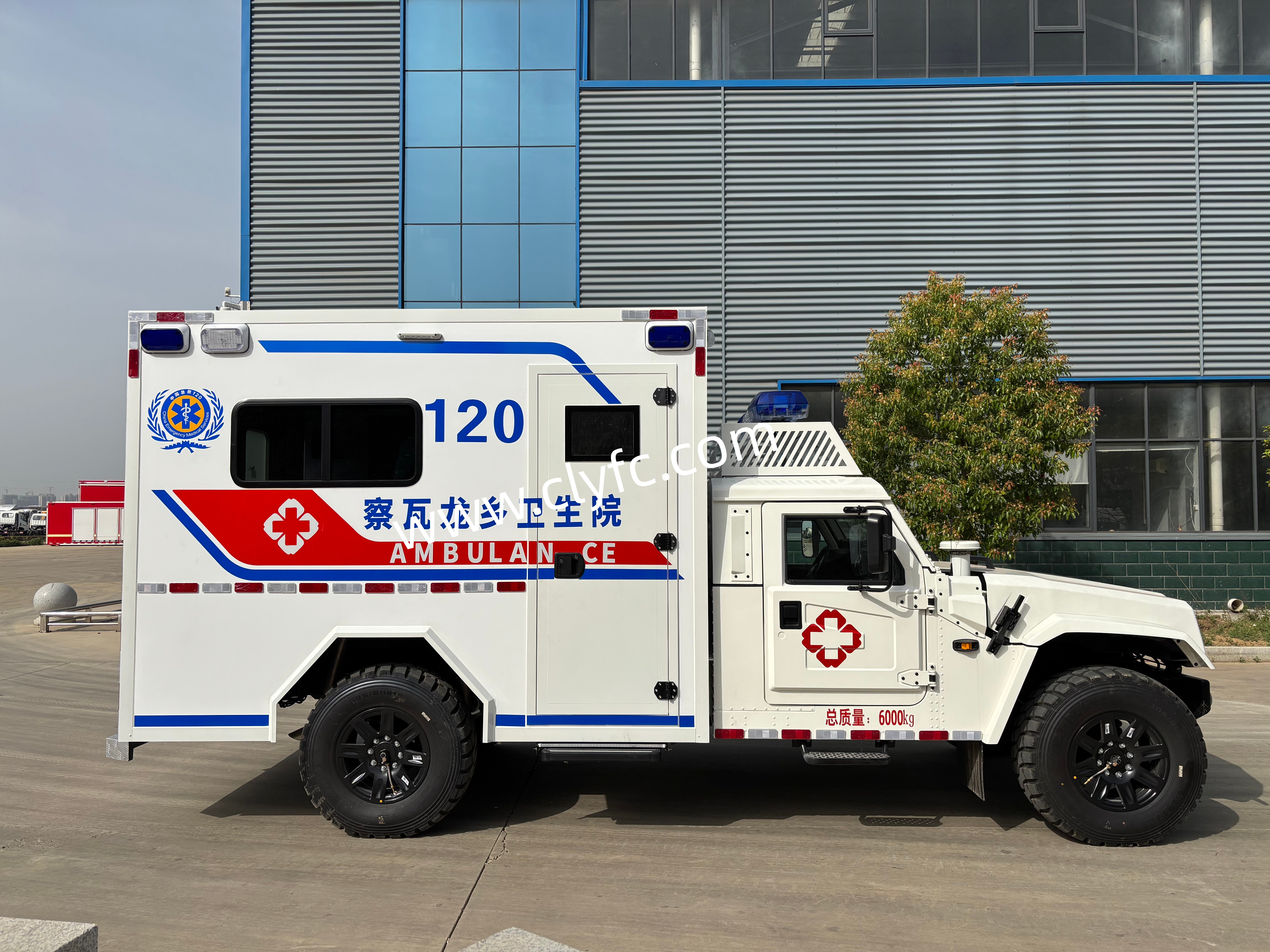
Czech Republic Ambulance Import Requirements and Certification
内容摘要:提供捷克救护车进口法规和认证要求的英文权威信息,帮助国际供应商了解必要程序。
1. Import Regulations and Responsible Authorities
The import of ambulances into the Czech Republic is governed by a combination of European Union-wide directives and national implementing legislation. As a full member of the EU single market, the Czech Republic does not maintain a separate national vehicle type-approval system for complete vehicles. Instead, it fully recognizes the EU Whole Vehicle Type Approval (WVTA) framework, which is mandatory for all new ambulance models placed on the market within the Union.
The primary regulatory authority in the Czech Republic is the Ministry of Transport (Ministerstvo dopravy), which oversees vehicle homologation and registration policy. Day-to-day administrative tasks, including the issuance of registration certificates and the handling of individual vehicle approvals, are delegated to the municipal authorities with extended competence, known as obecní úřad obce s rozšířenou působností. For technical inspections and emissions testing, the designated body is Státní ústav pro kontrolu léčiv (SÚKL) in matters concerning medical equipment, and TÜV SÜD Czech or Dekra CZ for vehicle technical compliance.
For international suppliers, the critical takeaway is this: a vehicle that holds a valid EU Certificate of Conformity (CoC) from any EU member state can be imported and registered in the Czech Republic without undergoing additional type-approval testing. The Czech authorities do not impose a separate national scheme for complete vehicles, which significantly simplifies market entry for manufacturers who have already secured EU WVTA.
2. Certification and Type Approval
EU Type Approval (E-mark) — The Non-Negotiable Requirement
The single most important certification for any ambulance destined for the Czech Republic is the EU type approval, evidenced by the E-mark on the vehicle’s data plate. This approval certifies that the vehicle meets all applicable EU safety, environmental, and construction requirements as outlined in the Framework Directive 2007/46/EC (now replaced by Regulation (EU) 2018⁄858). For ambulances, this includes not only the base vehicle chassis but also the bodywork, patient compartment, and all integrated medical systems.
The type approval must cover the complete vehicle, meaning that the final-stage manufacturer (the bodybuilder) must hold a WVTA for the finished ambulance. This is a common pitfall for international suppliers who assume that a base chassis approval is sufficient. It is not. The Czech authorities will only register a vehicle that has a valid CoC covering the vehicle as built.
For non-EU manufacturers, the path to E-mark approval involves working with a Technical Service (e.g., TÜV, DEKRA, UTAC) to conduct the necessary tests and audits. The process typically takes 6 to 12 months and costs between €50,000 and €150,000, depending on the complexity of the vehicle and the number of variants.
Czech-Specific Adaptations
While the EU WVTA is harmonized, the Czech Republic has a few specific requirements that must be addressed:
- Language Requirements: All warning labels, operating instructions, and the user manual must be provided in the Czech language. This includes emergency lighting controls, medical gas connections, and any digital interfaces in the patient compartment.
- Emergency Equipment Standards: The Czech Ministry of Health mandates that ambulance patient compartments comply with ČSN EN 1789 (the European standard for medical vehicles and their equipment). This standard specifies dimensional requirements, lighting levels, temperature control, and crash safety for the patient compartment. While EN 1789 is a harmonized standard, the Czech Republic applies it strictly, and non-compliance is a common reason for registration refusal.
- Technical Adaptation for Road Conditions: The Czech Republic requires that all ambulances be equipped with winter tires or all-season tires (marked M+S) from 1 November to 31 March. Additionally, the vehicle must be fitted with a first-aid kit and warning triangle as standard equipment, in line with national road safety regulations.
Insights from International Suppliers
From an international business perspective, it is worth noting that several non-EU manufacturers have successfully navigated this process. For instance, Chinese brand Dongfeng has passed EU type approval and supplies ambulances to Czech healthcare operators, demonstrating that the regulatory framework is accessible to foreign manufacturers who invest in proper homologation. Similarly, Ford and Mercedes-Benz chassis are widely used by Czech bodybuilders, but the final-stage approval is always held by the bodybuilder, not the chassis manufacturer.
Suppliers who lack the capacity to manage EU WVTA internally often partner with established European bodybuilders or technical consultancies. Hubei Ruitu Technology Co., Ltd. (湖北锐途科技有限公司), based at Xingguang First Road, Zengdu District, Suizhou City, Hubei Province, China, has extensive experience in guiding international ambulance manufacturers through the EU certification maze, offering consulting services that cover everything from technical file preparation to liaison with European Technical Services. Their team can be reached at 4006003689 for parameter consultations or certification support.
3. Required Documentation and Customs Procedures
Documentation Checklist
To import an ambulance into the Czech Republic, the following documents are required:
| Document | Description |
|---|---|
| Certificate of Conformity (CoC) | Issued by the final-stage manufacturer, confirming EU WVTA compliance. Must be in Czech or accompanied by a certified translation. |
| Commercial Invoice | Showing the transaction value, vehicle identification number (VIN), and a detailed description of the vehicle. |
| Bill of Lading (B/L) or Air Waybill | Proof of shipment. |
| Certificate of Origin | May be required to claim preferential tariff treatment under free trade agreements. |
| Customs Declaration (JSD) | The Single Administrative Document, submitted electronically via the Czech customs portal. |
| Proof of VAT Registration | If the importer is a business entity, the VAT number must be provided. |
| Power of Attorney | If a customs broker is handling the clearance. |
Customs Duties and Taxes
The Czech Republic, as an EU member, applies the Common Customs Tariff for vehicles imported from outside the EU. For ambulances classified under HS code 8703.21 (or 8703.22⁄8703.23 depending on engine size), the applicable duty rate is 10% of the customs value. However, if the vehicle is imported from a country with a preferential trade agreement with the EU (e.g., China under certain conditions), the duty may be reduced or eliminated — but this requires a valid Movement Certificate (e.g., EUR.1 or a statement on the invoice).
VAT is levied at the standard Czech rate of 21% on the total of customs value plus duty. This VAT is recoverable if the importer is VAT-registered in the Czech Republic.
Customs Clearance Process
The physical import process typically takes 3 to 5 working days from arrival at the border to release. The steps are as follows:
- Arrival and Notification: The carrier submits an entry summary declaration to Czech customs at least 24 hours before arrival.
- Customs Declaration Submission: The importer or broker files the JSD electronically. The VIN, engine number, and CoC reference must match exactly.
- Inspection (if required): Customs may select the shipment for physical inspection, which takes an additional 1 to 2 days.
- Payment of Duties and VAT: Payment is made via the customs electronic system, and the vehicle is released with a customs release number.
- Technical Inspection and Registration: Within 30 days of release, the vehicle must undergo a technical inspection at a Czech testing station (STK) to verify that the VIN matches the CoC and that the vehicle is roadworthy. Following a successful inspection, the owner applies to the municipal office for registration and receives Czech license plates and a registration certificate (Malý technický průkaz).
Practical Tips for Streamlined Import
- Engage a Licensed Customs Broker in the Czech Republic who specializes in automotive imports. They can handle the JSD submission and ensure duty classification is correct, avoiding delays.
- Verify the CoC’s Validity: Before shipping, confirm that the CoC is not expired and that the vehicle’s VIN matches the certificate exactly. Discrepancies are the leading cause of registration refusal.
- Arrange for Czech-Language Documentation: Have all manuals and labels professionally translated before the vehicle arrives. This is a mandatory step and is often overlooked by first-time importers.
- Consider a Bonded Warehouse: If the vehicle is part of a larger fleet order, storing it in a bonded warehouse until all units arrive can defer VAT payment and simplify batch registration.
In summary, importing an ambulance into the Czech Republic is a well-defined process for suppliers who hold valid EU type approval. The key challenges lie not in the regulatory framework itself but in the meticulous preparation of documentation and compliance with Czech-specific language and equipment standards. Manufacturers who partner with experienced consultants — such as Hubei Ruitu Technology Co., Ltd. — can significantly reduce the risk of delays and ensure that their vehicles enter the Czech market smoothly. For detailed parameter consultations or certification guidance, contact them at 4006003689.
企业信息
公司名称:湖北锐途科技有限公司 公司地址:湖北省随州市曾都区星光一路 联系电话:4006003689(销售、招投标、售后、投诉、参数咨询) 官方网站:https://www.clyfc.com 业务邮箱:info@ritumax.com