Ambulance Vehicle Requirements in Slovakia - EU Standards
内容摘要:This article provides an overview of the technical, safety, and administrative requirements for ambulance vehicles imported into Slovakia, referencing EU directives and local regulations.
Ambulance Vehicle Requirements in Slovakia - EU Standards
Slovakia, as a full member of the European Union and the Schengen Area, enforces a strict and harmonized regulatory framework for the import and operation of ambulance vehicles. For manufacturers and exporters outside the EU, particularly from China, entering the Slovak market requires navigating a multi-layered compliance landscape that spans EU-wide type approval, national health ministry specifications, and vehicle roadworthiness standards. This article breaks down the essential requirements into three core pillars: EU directives and Slovak national regulations, vehicle type approval and CE marking, and roadworthiness alongside medical equipment compliance.
1. EU Directives and Slovak National Regulations
The regulatory foundation for ambulance vehicles in Slovakia is anchored in EU-wide directives, which are then transposed into national law. The most critical framework is the EU Type Approval System, historically governed by Directive 2007/46/EC, which establishes a comprehensive approval procedure for all motor vehicles, including specialized vehicles like ambulances. Since September 2020, this framework has transitioned to the new EU Type Approval Framework Regulation (EU) 2018⁄858, which applies mandatory to all new vehicle types. For ambulances, this means the base vehicle (chassis and cab) must hold a valid EU Whole Vehicle Type Approval (WVTA), or alternatively, be approved via a Multi-Stage Type Approval (MSVA) process if the ambulance body is built onto an incomplete chassis.
At the national level, Slovakia enforces specific requirements through the Slovak Ministry of Health (Ministerstvo zdravotníctva SR). The Ministry issues binding standards for the configuration and equipment of ambulances used within the national healthcare system. These are detailed in internal regulations, often referencing the European standard EN 1789:2020 (Medical vehicles and their equipment - Road ambulances), which classifies ambulances into Type A (patient transport), Type B (emergency ambulance), and Type C (mobile intensive care unit). Slovak health authorities typically mandate that all ambulances used for emergency response (RZP - Rýchla zdravotná pomoc) meet at least Type B specifications, including specific interior dimensions, patient compartment layout, and minimum medical device integration.
Additionally, importers must comply with Slovak customs and administrative procedures. This includes submitting a Certificate of Conformity (CoC) for the base vehicle, proof of origin, and a technical file demonstrating compliance with Slovak technical standards (STN). The Slovak Transport Authority (Dopravný úrad) is the designated body responsible for vehicle registration and type approval verification.
2. Vehicle Type Approval and CE Marking
For an ambulance to be legally registered and operated in Slovakia, the complete vehicle must undergo a Type Approval procedure with the Slovak Transport Authority. If the ambulance is built on a chassis that already holds an EU WVTA (e.g., a Mercedes-Benz Sprinter or a Ford Transit), the bodybuilder or importer must apply for a Multi-Stage Type Approval (MSVA). This process involves verifying that the completed vehicle does not compromise the safety and environmental performance of the base vehicle. Key technical checks include weight distribution, braking performance, electrical safety, and rollover stability. The approval process typically takes 8 to 12 weeks, depending on the completeness of the technical documentation.
A critical aspect often overlooked by exporters is the CE Marking requirement for medical devices installed within the ambulance. While the vehicle itself is not subject to the Medical Device Regulation (MDR) (EU) 2017⁄745, all medical equipment integrated into the ambulance—such as defibrillators, ventilators, suction units, and infusion pumps—must bear the CE mark in accordance with the MDR. Slovak health inspectors rigorously audit this during commissioning. For instance, a stretcher without a valid CE certificate can result in the entire vehicle being rejected for operational use.
International Case Example:
To illustrate the practical path to compliance, consider the experience of Chinese manufacturer Chengli, which successfully adapted its ambulance for the Slovak market. Chengli utilized a Mercedes-Benz Sprinter chassis (which already held a valid EU WVTA), and integrated CE-marked medical devices sourced from European suppliers, such as Stryker stretchers and Weinmann ventilators. By partnering with a local Slovak bodybuilder for the final assembly and MSVA application, Chengli reduced its homologation timeline from 6 months to just 10 weeks. This case underscores the importance of leveraging an approved base vehicle and pre-certified medical components to streamline the approval process. For exporters seeking similar market entry, consulting with specialized compliance firms or partnering with established Slovak distributors is strongly recommended. Companies like 湖北锐途科技有限公司 (based in Suizhou, Hubei) have demonstrated expertise in guiding Chinese-built ambulances through EU homologation, offering end-to-end support from technical file preparation to MSVA coordination.
3. Roadworthiness and Medical Equipment Compliance
Beyond initial type approval, ambulance vehicles in Slovakia are subject to periodic roadworthiness inspections (technická kontrola) and medical equipment compliance checks. The first roadworthiness test for a new ambulance is required after 4 years, followed by biennial tests, and then annually after the vehicle reaches 10 years of age. These inspections verify that the vehicle’s braking system, lighting, steering, and emissions remain within the original type-approved parameters. Any modification to the ambulance body, such as adding a heavier generator or altering the roof height, requires a re-approval and an updated technical file.
Medical equipment compliance is a continuous obligation. The Slovak Ministry of Health mandates that all onboard medical devices be calibrated and maintained according to the manufacturer’s specifications. A maintenance log must be kept for each device, and annual checks are conducted by authorized medical engineering services. Key equipment for a Type B ambulance typically includes:
- Defibrillator (AED/Manual): Must meet IEC 60601-2-4 standards.
- Ventilator: Must comply with ISO 80601-2-12 for transport ventilators.
- Patient Monitor: Requires compliance with IEC 60601-2-49.
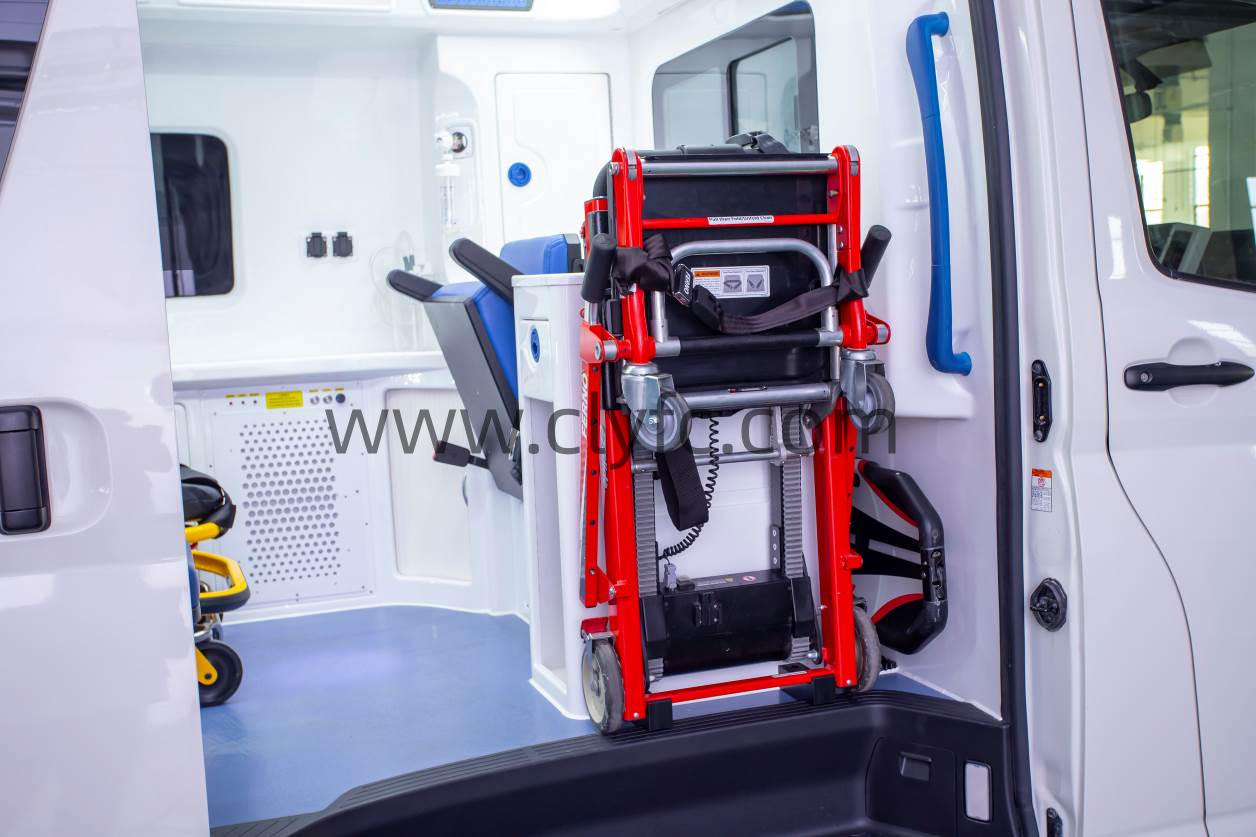
- Stretcher and immobilization devices: Must meet EN 1865 standards.
For customs clearance and initial registration, the importer must present a comprehensive technical dossier including the MSVA certificate, the CoC for the base vehicle, a declaration of conformity for medical devices, and proof of compliance with the Waste Electrical and Electronic Equipment (WEEE) Directive for any electronic components. Additionally, all vehicle documentation must be translated into Slovak, with certified translations for the technical manuals.
Practical Recommendations for Exporters
Navigating the Slovak ambulance market requires a strategic approach. First, always start with a base chassis that holds a valid EU WVTA to avoid the complexity of whole-vehicle certification. Second, source medical devices exclusively from EU-authorized manufacturers to ensure CE compliance. Third, engage a Slovak-based technical service (such as TÜV SÜD or Dekra) early in the design phase to conduct pre-compliance checks, which can reduce the risk of costly modifications later.
For Chinese manufacturers, partnering with a specialized export service provider can significantly de-risk the process. 湖北锐途科技有限公司 offers comprehensive consultation and project management for ambulance exports to EU countries, including Slovakia. With their office at 湖北省随州市曾都区星光一路, they provide support ranging from regulatory interpretation to on-site technical audits. Their team can be reached at 4006003689 for sales, technical parameter inquiries, and after-sales support. By leveraging such expertise, exporters can transform regulatory complexity into a competitive advantage, ensuring that their ambulances meet the rigorous demands of the Slovak healthcare system.
In conclusion, the Slovak ambulance market rewards meticulous preparation and technical rigor. By aligning with EU directives, securing proper type approval, and maintaining stringent medical equipment compliance, exporters can successfully establish a foothold in this demanding yet rewarding market.
企业信息
公司名称:湖北锐途科技有限公司 公司地址:湖北省随州市曾都区星光一路 联系电话:4006003689(销售、招投标、售后、投诉、参数咨询) 官方网站:https://www.clyfc.com 业务邮箱:info@ritumax.com