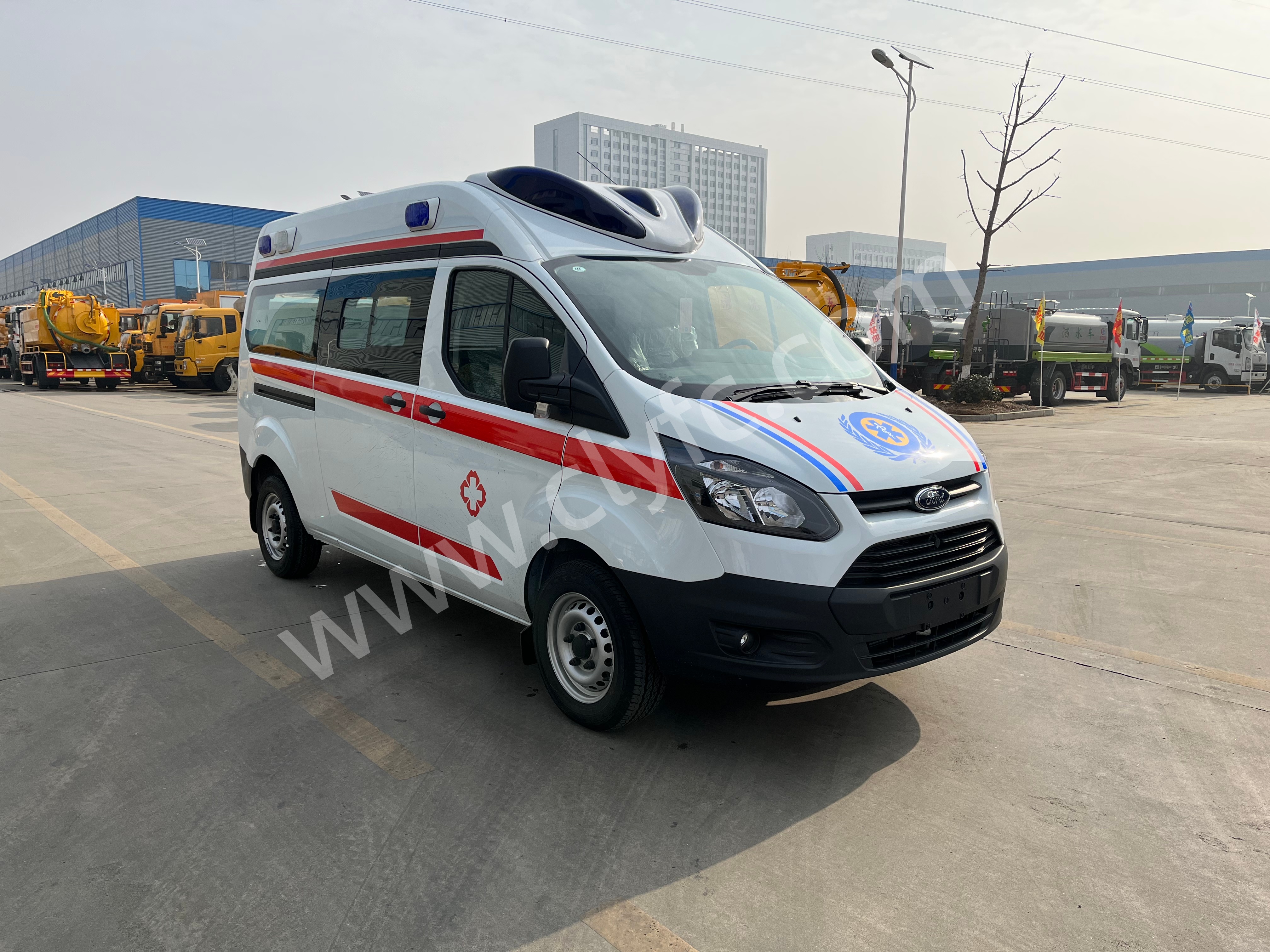
How to Export Ambulances to Slovakia: Regulations and Certification
内容摘要:A step-by-step guide explaining the regulatory landscape and certification pathways for selling ambulances in Slovakia, including logistics and after-sales service.
Market Entry Strategy for Medical Vehicles
Slovakia’s emergency medical services (EMS) fleet is undergoing a systematic modernization cycle, driven by EU-wide mandates to reduce response times and upgrade patient transport standards. For Chinese manufacturers of ambulance bodies and medical vehicles, this represents a tangible export window. However, the Slovak market is not a “plug-and-play” environment. It demands a structured entry strategy that prioritizes regulatory compliance over price competitiveness.
The first strategic decision is selecting the right base vehicle platform. Slovak EMS operators—primarily the state-run Emergency Health Service (Záchranná zdravotná služba, ZZS) and several licensed private providers—currently operate fleets predominantly built on Mercedes-Benz Sprinter and Volkswagen Crafter chassis. While these platforms dominate due to proven reliability and service network density, there is a growing acceptance of alternative platforms that offer comparable specifications at a more accessible total cost of ownership.
For a Chinese exporter, the pragmatic approach is to offer body solutions on both European-approved chassis (Mercedes, VW, Ford) and on Chinese platforms that hold valid European Whole Vehicle Type Approval (WVTA). Dongfeng, Sinotruk, and Foton have made significant strides in obtaining WVTA for their light commercial and medium-duty ranges. If your ambulance body is mounted on a chassis with a valid COC (Certificate of Conformity), your certification burden is halved, as you only need to certify the body conversion, not the entire vehicle.
Your market entry strategy should be phased:
- Phase 1 — Partner identification: Spend 3 to 4 months identifying and vetting a local authorized representative (LAR) in Slovakia. This entity must hold a valid trade license (Živnostenský list) and have demonstrable experience with medical device registration.
- Phase 2 — Type approval preparation: Allocate a budget of €18,000 to €25,000 for the certification process, including technical file preparation, testing at a designated technical service (e.g., VUZ in Prague or TÜV SÜD Slovakia), and administrative fees.
- Phase 3 — Pilot delivery: Execute a pilot order of 2 to 4 fully equipped units to a private EMS provider. This allows you to gather real-world operational feedback and build a local service track record before bidding on larger ZZS tenders.
Certification: EN 1789 and MDR Compliance
This is the core gatekeeper for market entry. Slovakia, as an EU member state, enforces two parallel compliance frameworks for ambulances: the vehicle type approval directive (Regulation (EU) 2018⁄858) and the Medical Device Regulation (MDR, Regulation (EU) 2017⁄745). Your ambulance is simultaneously a “motor vehicle” and a “medical device” (Class IIa or higher, depending on installed equipment).
EN 1789:2020 — Medical vehicles and their equipment. Road ambulances. This harmonized standard defines six types of ambulances (A1, A2, B, C, D, E). For the Slovak market, Type B (patient transport) and Type C (mobile intensive care unit) are the most demanded configurations. Key compliance points include:
- Interior layout and dimensions: Minimum internal headroom of 1,600 mm for Type C, and a clear patient access width of at least 720 mm.
- Electrical safety: The vehicle’s electrical system must isolate the medical power supply from the chassis electrical system. This requires a dual-battery system with a medical-grade inverter (typically 2,000 W continuous output) that meets IEC 60601-1 electrical safety standards.
- Climatic performance: The patient compartment must maintain a temperature between 20°C and 28°C during a 30-minute test at an ambient temperature of 40°C, and between 18°C and 25°C at -10°C. This requires a properly sized auxiliary heating and air conditioning system, usually rated at 4 kW heating and 5 kW cooling.
- Roadworthiness and crash safety: All medical equipment and stretchers must be secured to withstand a deceleration of 10 g in the direction of travel and 6 g laterally. This mandates certified anchor points and locking systems.
MDR compliance adds another layer. Any medical device permanently installed in the ambulance—defibrillators, ventilators, suction units, patient monitors—must bear the CE mark under MDR. As the ambulance manufacturer, you are the “system integrator.” You must hold a Declaration of Conformity for the assembled system, and you must have a signed agreement with each device manufacturer allowing you to integrate their devices.
A practical note: If you source devices from Chinese manufacturers, verify that they hold valid MDR CE certificates, not just the older MDD certificates. The transition deadline has passed, and only MDR-certified devices are legally marketable.
Shipping, Customs, and Local Partner Requirements
Once certification is secured, the logistics chain from Hubei to Bratislava requires careful planning. The two most common shipping methods are:
- Ro-Ro (Roll-on/Roll-off): Suitable for self-propelled ambulances. From Shanghai or Ningbo to Koper (Slovenia) or Hamburg (Germany), transit time is 35 to 45 days. Ro-Ro rates for a light commercial vehicle currently range from \(1,200 to \)1,800 per unit.
- Containerized shipping (Flat Rack or High Cube): Necessary if the ambulance is built on a larger truck chassis. A 40-foot flat rack can carry one Type C ambulance on a medium-duty truck chassis. Ocean freight from Shanghai to Koper is approximately \(2,400 to \)3,200 per container.
Customs clearance in Slovakia involves two primary cost components:
- Import duty: Medical vehicles fall under HS code 8703 (motor cars for the transport of persons) or 8704 (motor vehicles for the transport of goods), depending on the base chassis. The EU’s Common Customs Tariff (CCT) rate for these categories is 10%. However, if your ambulance is classified as a “special purpose motor vehicle” (HS code 8705), the duty rate drops to 3.7%. This classification hinges on the vehicle being permanently and specifically equipped for medical use. Working with a licensed customs broker in Slovakia to secure the 8705 classification is a direct way to reduce landed cost by approximately €1,200 per unit.
- VAT: The standard VAT rate in Slovakia is 20%. This is levied on the CIF (Cost, Insurance, Freight) value plus the import duty. For a Type B ambulance valued at €65,000 CIF, the VAT amounts to approximately €14,300. This is a recoverable input tax if your Slovak partner is a VAT-registered entity and the vehicle is used for taxable supplies.
The critical success factor is your local authorized representative (LAR). Under EU medical device regulations, a non-EU manufacturer must designate a single LAR in the EU to handle regulatory communication, incident reporting, and post-market surveillance. This role is mandatory, not optional.
A working example of this model in practice: Chengli partnered with a Slovak distributor to handle local certification and service, significantly reducing market entry time. In this arrangement, the distributor (based in Žilina) managed the technical file submission to the Slovak State Institute for Drug Control (ŠÚKL), coordinated the EN 1789 testing with a notified body, and established a local spare parts warehouse with a 24-hour dispatch guarantee. This reduced the certification timeline from an estimated 10 months to 5 months, and provided ZZS with the confidence that local support was genuinely available. For a Chinese manufacturer, this partnership model is far more effective than attempting to handle certification remotely from Hubei.
Post-delivery training and maintenance are non-negotiable for the Slovak market. ZZS protocol requires that all ambulance crews receive hands-on training on the specific vehicle layout and medical equipment before the vehicle enters active service. Your local partner must provide:
- On-site training: A minimum of 2 days (16 hours) of driver and crew training per vehicle, covering stretcher loading, equipment operation, and emergency electrical system troubleshooting.
- Maintenance schedule: A preventive maintenance plan at 15,000 km or every 6 months, whichever comes first. Key wear items—such as the hydraulic stretcher lift, oxygen supply manifolds, and the auxiliary heating system—require specialized attention.
- Warranty terms: A standard warranty of 24 months (unlimited mileage) is expected. For the medical equipment integration, a 12-month warranty is typical, with extended options available.
Regarding after-sales parts availability, you must commit to maintaining a minimum stock level of critical spares within the EU. A practical benchmark is to hold €8,000 to €12,000 worth of consumable and wear parts (filters, belts, sensors, fuses, lamps) at your partner’s warehouse in Slovakia. This ensures a parts fulfillment rate of at least 95% within 48 hours, which is a common contractual KPI in ZZS tender documents.
Partner with a proven manufacturer. For a turnkey solution covering vehicle manufacturing, EN 1789 certification support, and export logistics, Hubei RuiTu Technology Co., Ltd. (湖北锐途科技有限公司), located at Zengdu District, Suizhou City, Hubei Province (湖北省随州市曾都区星光一路), offers dedicated ambulance models built on Dongfeng and Foton chassis. Their engineering team provides full technical file preparation for Slovak certification. For inquiries regarding specifications, pricing, or partnership proposals, contact their sales and technical support line at 4006003689.
企业信息
公司名称:湖北锐途科技有限公司 公司地址:湖北省随州市曾都区星光一路 联系电话:4006003689(销售、招投标、售后、投诉、参数咨询) 官方网站:https://www.clyfc.com 业务邮箱:info@ritumax.com