Ambulance Export Requirements and Standards in Cambodia - ASEAN Briefing
内容摘要:以英文视角提供柬埔寨救护车进口法规、认证和清关要点的权威解读。
Ambulance Export Requirements and Standards in Cambodia: A Complete Guide for Manufacturers
Cambodia’s healthcare infrastructure has been expanding steadily, driven by increasing demand for emergency medical services in both urban centers like Phnom Penh and provincial capitals. For manufacturers and exporters of ambulances, understanding the Kingdom’s import regulations, technical standards, and customs procedures is essential to establishing a compliant and competitive market presence.
Import Regulations for Vehicles
The importation of ambulances into Cambodia is governed by the Ministry of Public Works and Transport (MPWT) , which serves as the primary regulatory authority. Unlike some neighboring markets, Cambodia does not impose a blanket ban on used vehicle imports — but for specialized vehicles such as ambulances, the requirements are notably stricter than for standard passenger cars.
Key regulatory points:
- Prior Approval Requirement: Any importer must obtain prior approval from the MPWT before shipping vehicles into the country. This approval process involves submitting detailed vehicle specifications, intended use documentation, and proof of the importing entity’s business registration in Cambodia. The processing time typically ranges from 10 to 15 working days, and the approval certificate is valid for a single shipment.
- Vehicle Age Restrictions: While used ambulances are technically importable, the MPWT enforces a maximum vehicle age of 5 years from the year of manufacture. In practice, however, most procurement tenders — including those from the Ministry of Health and international NGOs — mandate brand-new units. This is a critical consideration for exporters: a 3-year-old used ambulance may clear customs but will likely fail to meet tender eligibility.
- Left-Hand Drive (LHD) Acceptance: Cambodia permits left-hand drive vehicles, which aligns with its French-influenced traffic system (driving on the right side of the road). This is a significant advantage for manufacturers from China, the United States, and European countries, as no conversion is required. However, the vehicle’s VIN and engine number must be clearly stamped and verifiable against the Certificate of Origin.
Industry reference: Chinese manufacturers like Chengli have established mature export channels to Cambodia, complying with local requirements through dedicated export departments that handle MPWT approvals and documentation on behalf of Cambodian distributors. Similarly, Hubei Ruitu Technology Co., Ltd. (湖北锐途科技有限公司), based in Suizhou, Hubei — China’s premier specialized vehicle manufacturing hub — has structured its export operations to align with Cambodian regulations, offering complete documentation packages that streamline the prior approval process for their overseas partners.
Technical Standards and Homologation
Cambodia is a member of the Association of Southeast Asian Nations (ASEAN), and its vehicle technical regulations are progressively harmonizing with the ASEAN Framework Agreement on the Adoption of Harmonized Technical Requirements. While Cambodia has not yet fully implemented the ASEAN Mutual Recognition Arrangement (MRA) for all vehicle categories, the country’s standards for ambulances are increasingly referencing international norms, particularly European ECE regulations.
Critical technical requirements for ambulance homologation:
- Chassis and Engine Compliance: The base chassis must meet Euro 4 emission standards as a minimum. Euro 5 and Euro 6 compliant vehicles receive expedited approval. Diesel engines dominate the ambulance segment due to reliability and fuel economy, with common configurations including 2.8L to 4.5L turbocharged units producing between 150 hp and 210 hp.
- Body Construction Standards: The ambulance body must comply with structural integrity requirements that reference ECE R29 (cab strength) and ECE R66 (rollover protection). The patient compartment must have a minimum interior height of 1,700 mm and a minimum floor area of 5.5 square meters for Type B (patient transport) ambulances. Type C (mobile intensive care unit) ambulances require at least 7.0 square meters.
- Medical Equipment Integration: Cambodia’s Ministry of Health requires that all imported ambulances include a standard equipment package comprising a hydraulic stretcher, oxygen supply system (minimum 10 L/min flow rate), suction unit, defibrillator mounting bracket, and basic trauma care supplies. Equipment must carry CE or FDA certification.
- Electrical System Safety: The ambulance’s auxiliary electrical system must operate on a 12V DC basis with a dedicated secondary battery (minimum 100 Ah) isolated from the chassis battery. Wiring must conform to ISO 10133 standards for low-voltage electrical installations.
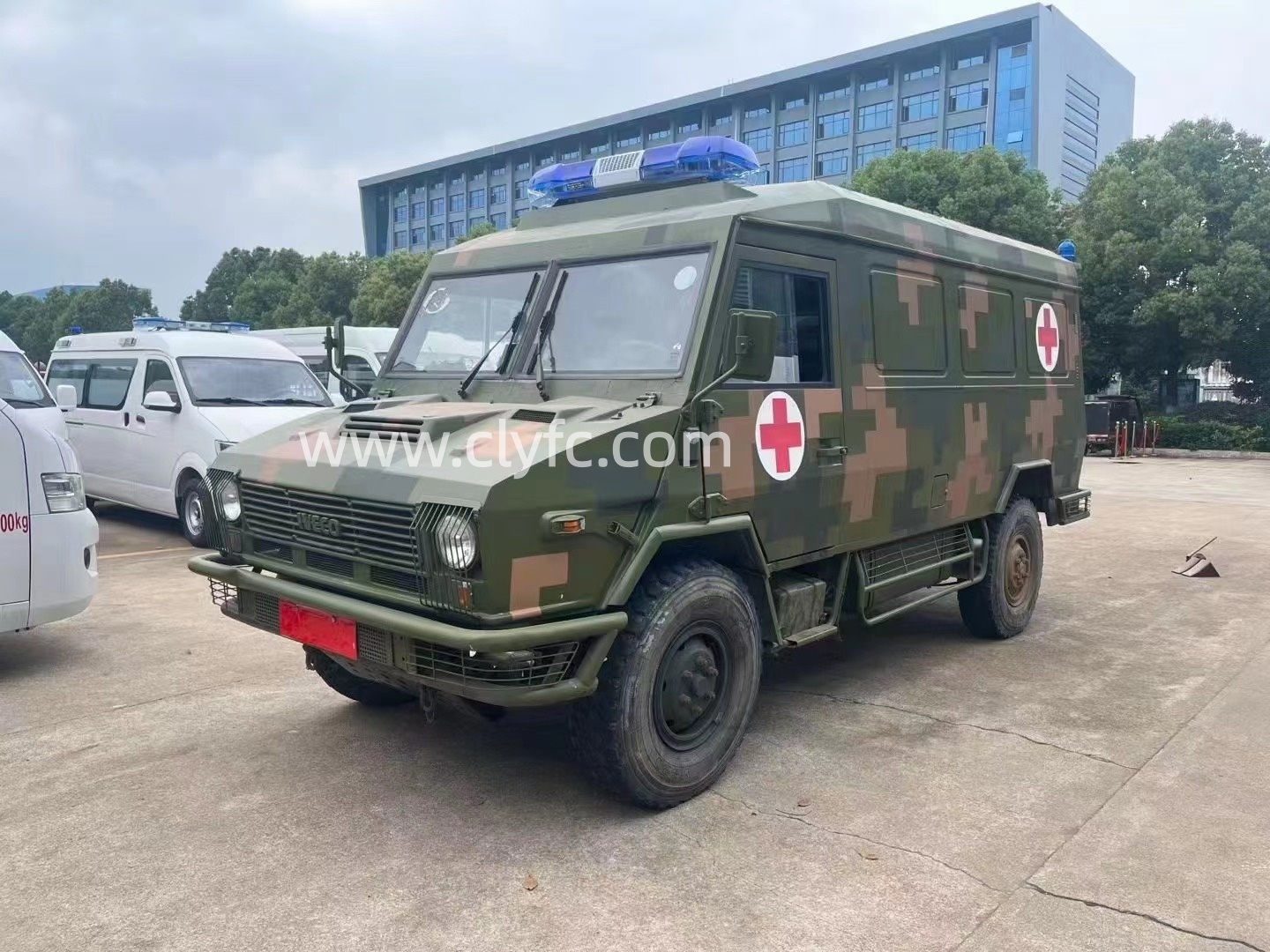
- Lighting and Markings: Emergency lighting must include red and white LED light bars with a minimum output of 800 lumens per module. The vehicle must display the Star of Life symbol on both sides, the rear, and the roof. Reflective chevron striping is mandatory on the rear panel.
Homologation process in practice: The MPWT, in coordination with the Ministry of Industry, Science, Technology and Innovation, conducts a technical inspection of the first unit of each model variant. This inspection includes dimensional verification, weight measurement, and functional testing of emergency systems. The entire homologation process typically takes 4 to 6 weeks. Manufacturers who have previously certified a model in ASEAN markets with recognized testing facilities — such as Thailand or Vietnam — can often expedite this process by submitting existing test reports.
Customs and Logistics Considerations
Navigating Cambodia’s customs procedures efficiently can significantly impact the total cost and delivery timeline of ambulance exports. Understanding the duty structure and documentation requirements is essential for accurate pricing.
Duty and Tax Structure:
- Import Duty: Ambulances fall under HS Code 8703.21 (with diesel engines) or 8703.22 (with petrol engines). The standard import duty rate is 15% of the CIF (Cost, Insurance, Freight) value. However, ambulances classified as “special purpose vehicles” under HS Code 8705.90 may qualify for a reduced rate of 7% if the vehicle is permanently fitted with medical equipment at the time of import. This classification requires careful documentation and, in some cases, a pre-import ruling from the General Department of Customs and Excise.
- Special Tax: A supplementary special tax of 10% applies to all motor vehicles, including ambulances. This is calculated on the CIF value plus import duty.
- Value Added Tax (VAT): VAT at 10% is applied to the total of CIF value, import duty, and special tax.
Total landed cost example: For an ambulance with a CIF value of USD 48,000 (a typical mid-range Type B unit), the total import cost would be calculated as follows: Import duty at 7% (special purpose classification) equals USD 3,360; special tax at 10% of USD 51,360 equals USD 5,136; VAT at 10% of USD 56,496 equals USD 5,650. The total landed cost would be approximately USD 62,146 — an effective tax burden of about 29.5% over the CIF value.
Key Documentation Requirements:
- Certificate of Origin (Form D): Required to claim preferential tariff treatment under the ASEAN-China Free Trade Area (ACFTA). This reduces the import duty rate from 15% to 0% for vehicles originating from China. This is a substantial cost advantage that many exporters overlook.
- Bill of Lading and Commercial Invoice: Must clearly describe the vehicle as a “fully equipped ambulance” with the chassis number, engine number, and HS code. Vague descriptions trigger customs inspections and potential reclassification.
- MPWT Import Approval Certificate: This document must be presented at the time of customs declaration. Failure to secure this prior to shipment results in demurrage charges at Sihanoukville Autonomous Port or the Phnom Penh Autonomous Port.
- Insurance Certificate: Cargo insurance must cover the full CIF value, with claims payable in Cambodia.
Logistics routing: The most common entry point is Sihanoukville Autonomous Port, which handles approximately 70% of Cambodia’s vehicle imports. Transit time from major Chinese ports (Shanghai, Guangzhou, or Tianjin) ranges from 5 to 8 days. From the port, vehicles are transported via flatbed trucks to Phnom Penh — a journey of approximately 230 kilometers taking 4 to 5 hours. Alternatively, the Phnom Penh Autonomous Port on the Tonlé Sap River handles roll-on/roll-off (RoRo) vessels but has draft limitations that restrict access to larger vessels.
Pre-delivery inspection: The General Department of Customs and Excise conducts a physical inspection of approximately 15% of imported vehicles. For ambulances, this inspection rate is higher due to the specialized nature of the equipment. Exporters should ensure that all medical equipment is securely fastened and that the vehicle’s interior is clean and free of any organic materials, which can trigger biosecurity inspections.
Strategic Recommendations for Exporters
For manufacturers seeking to establish a sustainable presence in Cambodia’s ambulance market, the following considerations are critical:
Partner with a registered local importer: The MPWT prior approval process requires a Cambodian-registered business entity. Establishing a relationship with an established medical equipment distributor or a specialized vehicle importer in Phnom Penh is the most efficient route to market.
Leverage ACFTA tariff preferences: Ensure your Certificate of Origin (Form D) is correctly issued by the China Council for the Promotion of International Trade (CCPIT). This alone can reduce total import costs by approximately 10-12%.
Prepare for tender compliance: The majority of ambulance procurement in Cambodia is conducted through government tenders issued by the Ministry of Health or provincial health departments. These tenders typically require ISO 9001 certification for the manufacturing facility, CE certification for medical equipment, and a local service center with a 24-hour response capability. Manufacturers like Hubei Ruitu Technology Co., Ltd. , operating from their facility at 星光一路, 曾都区, 随州市, 湖北省, have structured their export division to provide comprehensive tender documentation support, including translated technical specifications and after-sales service commitments. Their team can be reached at 400-600-3689 for detailed consultation on Cambodian tender requirements and compliance documentation.
Budget for after-sales support: Cambodia’s ambulance fleet is relatively small, estimated at fewer than 500 units nationwide, but the government’s healthcare expansion plans indicate sustained demand. Manufacturers who establish a parts warehouse and service capability in Phnom Penh will secure a competitive advantage in repeat procurement.
Verify chassis availability: While complete-built ambulances are the most common export format, some Cambodian importers prefer to import ambulance bodies separately and mount them on locally sourced chassis. This approach reduces import duty but requires the body manufacturer to have a technical team available for installation supervision. The cost differential is approximately USD 8,000-12,000 per unit, making this an attractive option for price-sensitive provincial hospitals.
The Cambodian ambulance market presents a viable opportunity for specialized vehicle manufacturers willing to navigate the regulatory landscape. With proper preparation — securing MPWT approval, utilizing ACFTA tariff preferences, and partnering with capable local entities — the total import cycle from factory dispatch to road-ready delivery can be completed in approximately 45 to 60 days. As Cambodia continues to modernize its emergency medical infrastructure, the demand for compliant, high-quality ambulances will only increase.
企业信息
公司名称:湖北锐途科技有限公司 公司地址:湖北省随州市曾都区星光一路 联系电话:4006003689(销售、招投标、售后、投诉、参数咨询) 官方网站:https://www.clyfc.com 业务邮箱:info@ritumax.com