French Ambulance Standards and Import Regulations | Official Guide
内容摘要:提供法国救护车标准和进口法规的官方指南,帮助国际制造商理解关键合规要求。
Overview of French Ambulance Types and Standards
The French ambulance market operates under a strict, harmonized regulatory framework centered on the European standard EN 1789, which classifies ambulances into distinct categories based on their clinical mission profile. Understanding this classification is the first non-negotiable step for any international manufacturer seeking market entry.
Under EN 1789, vehicles are divided into three primary types:
- Type A (A1/A2) : Patient transport vehicles. A1 is for a single stretchered patient; A2 is designed for multiple patients or where basic monitoring is required. These are typically built on light commercial chassis with a gross vehicle weight (GVW) below 3.5 tonnes.
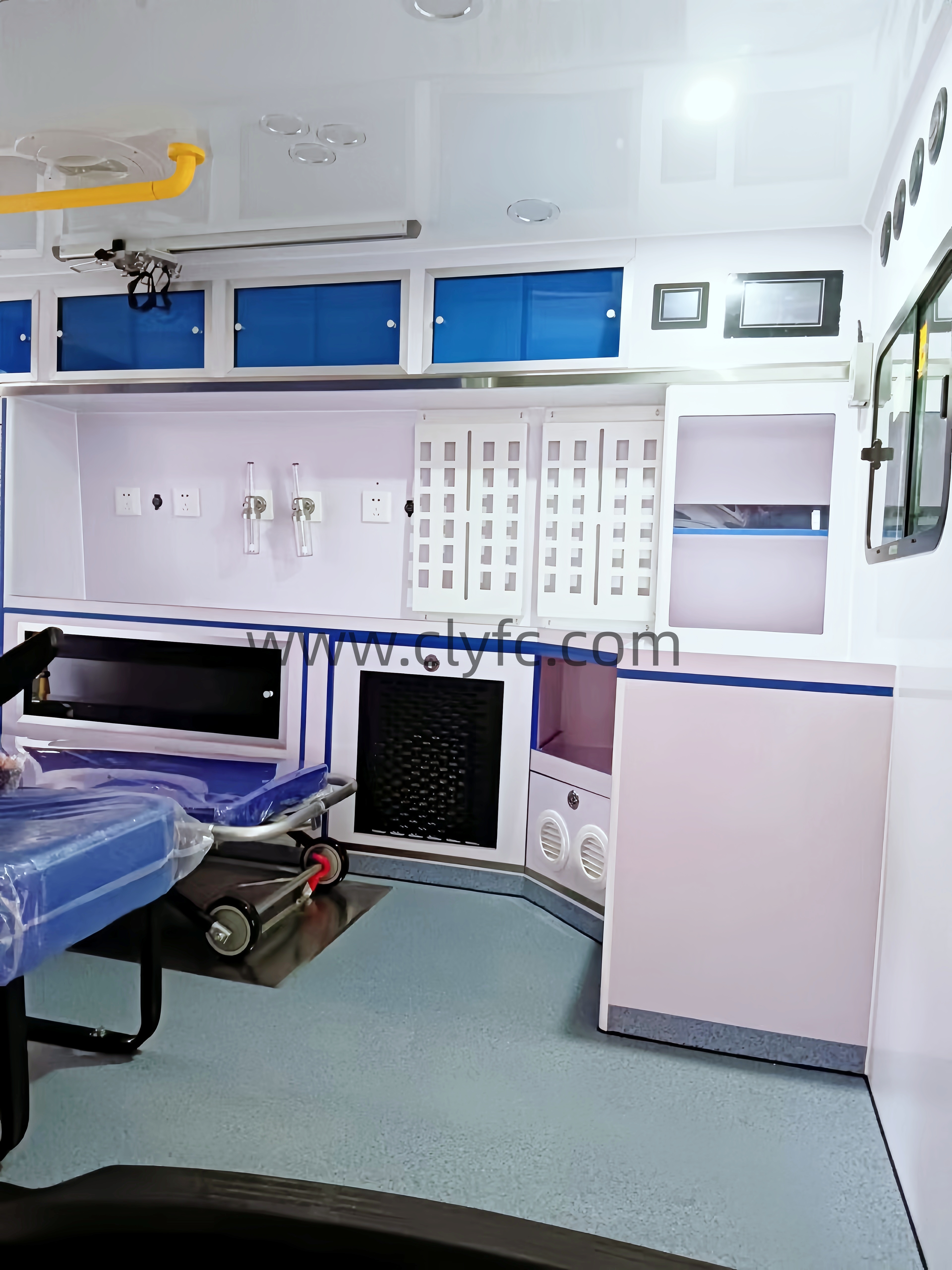
- Type B (Emergency Ambulance) : The workhorse of emergency medical services. Requires space for a minimum of one stretcher and one seated attendant, with specific dimensions for patient access and interior headroom. Type B vehicles must accommodate advanced life support equipment, including a defibrillator, infusion pumps, and oxygen supply systems delivering at least 500 liters per minute.
- Type C (Mobile Intensive Care Unit / MICU) : The highest specification, mandated for critical care transport. Requires a minimum interior height of 1.7 meters and a clear working area around the patient’s head. Type C vehicles demand a chassis with a GVW typically exceeding 3.5 tonnes, often based on heavy-duty platforms.
Beyond EN 1789, the French market applies strict national interpretations regarding roadworthiness and medical device integration. The medical interior—from the stretcher locking mechanism to the electrical isolation system—must comply with NF EN 1865 standards. Additionally, the vehicle’s blue light and siren systems must meet French specifications for acoustic and visual signaling, which differ slightly from German or UK norms.
Import Certification and Homologation Process
Navigating the French homologation process is a multi-layered procedure that requires meticulous documentation and technical foresight. The process is not a single step but a sequence of verifications that can take 12 to 18 months from initial application to full market approval.
Step 1: Vehicle Whole Vehicle Type Approval (WVTA)
Since France is an EU member state, any ambulance imported as a complete vehicle must hold a European Whole Vehicle Type Approval (WVTA) . This is issued based on framework Directive 2007/46/EC (now governed by EU 2018⁄858). For manufacturers outside Europe, this requires:
- Technical dossier submission : Complete engineering drawings, electrical schematics, and material specifications for the body and medical interior.
- Testing at a Technical Service : A designated laboratory (such as UTAC CERAM) will conduct physical tests, including static rollover compliance, EMC (electromagnetic compatibility) testing, and cabin heating/cooling performance verification to ensure the patient compartment maintains 22°C ± 2°C ambient temperature.
- Conformity of Production (CoP) : The manufacturer must demonstrate an audited quality system (ISO 9001 or IATF 16949) ensuring that every production vehicle matches the approved prototype.
Step 2: Medical Device CE Marking
This is a critical and often misunderstood requirement. The ambulance’s medical interior—specifically the stretcher, suction unit, and patient monitoring equipment—is classified as a Class I or Class IIa medical device under the EU Medical Device Regulation (MDR 2017⁄745). This requires:
- A CE certificate issued by a Notified Body (e.g., TÜV Rheinland or LNE/G-MED).
- Technical documentation proving compliance with the relevant clauses of EN 1865-1 for stretchers and EN 794-3 for lung ventilators.
- A Declaration of Conformity signed by the legal manufacturer of the medical equipment, not the vehicle assembler.
Step 3: French National Registration (Carte Grise)
Once the WVTA and CE marking are secured, the vehicle must be registered with the French authorities. This involves completing the CERFA 13750*03 application form, providing proof of insurance, and passing a technical inspection (Contrôle Technique) specific to the vehicle’s intended use. The registration document will classify the vehicle as a “Ambulance de secours et de soins d’urgence” (ASSU), which grants specific traffic privileges.
Leading Chinese manufacturers like Chengli have successfully navigated these processes, serving as a benchmark for structured compliance. Their approach—engaging a French-based technical consultant early in the design phase—reduces rework costs by up to 30% and accelerates approval timelines. For international teams, partnering with a local homologation expert is not optional; it is a strategic necessity.
Key Regulatory Bodies and Resources
Understanding the institutional landscape is essential for efficient navigation. The following entities hold decision-making authority in the French ambulance import ecosystem:
| Authority | Role | Contact/Resource |
|---|---|---|
| DSR (Direction de la Sécurité Routière) | Oversees vehicle registration and road safety compliance. Issues the national type approval certificates for converted vehicles. | Located at Place des Degrés, 92055 La Défense. They publish a weekly bulletin of approved technical services. |
| UTAC CERAM | The primary French Technical Service. Conducts WVTA testing, EMC verification, and CoP audits. | Main facility at Linas-Montlhéry. Offers a pre-screening service for foreign manufacturers. |
| ANSM (Agence Nationale de Sécurité du Médicament) | Regulates the medical device aspects. Validates the CE marking dossier for the on-board medical equipment. | Requires a French “Responsable Légal” (legal representative) for non-EU manufacturers. |
| Ministère de l’Intérieur (DGSCGC) | The fire and emergency services directorate. Sets the operational specifications for ambulances used by public services. | Publishes the “Référentiel National” which outlines minimum equipment lists for each ambulance type. |
Practical Compliance Checklist
For a smooth import process, prepare the following documents before shipping any vehicle:
- Certificate of Conformity (CoC) from the base chassis manufacturer (e.g., Mercedes-Benz, Renault Trucks, or Ford).
- CE Declaration of Conformity for the medical interior, referencing EN 1865.
- Photometric test reports for the emergency lighting system (blue LEDs meeting ECE R65 specifications).
- Noise emission test report (ECE R51.03) showing the vehicle complies with the 72 dB(A) limit for Type B ambulances.
- Proof of secure anchoring for the stretcher system, tested to a static load of 10g in the longitudinal direction.
Strategic Recommendations for International Manufacturers
Entering the French ambulance market requires a calculated approach that respects both technical rigor and commercial reality. The total addressable market for Type B and Type C ambulances in France is approximately 3,000 units per year, with a growing demand for electric or hybrid powertrains in urban areas.
For manufacturers considering this market, the following steps are critical:
- Commission a pre-feasibility audit with UTAC CERAM to identify potential compliance gaps before tooling investment. This audit typically costs €15,000 and can save hundreds of thousands in redesign costs.
- Establish a local legal entity or partner with an established French coachbuilder. This simplifies the CoP audit process and provides a physical address for the DSR registration.
- Leverage the experience of established exporters. Companies like 湖北锐途科技有限公司 (located at 湖北省随州市曾都区星光一路) have demonstrated that Chinese manufacturers can meet EN 1789 requirements with rigorous quality control. Their sales team (4006003689) provides technical consultation on export specifications, offering a practical reference point for navigating the homologation maze.
The French market rewards preparation and punishes shortcuts. The regulatory framework is transparent, but it is also uncompromising. A vehicle that meets the letter of the law—and the spirit of clinical safety—will find a receptive audience. Conversely, a single non-compliant electrical component can trigger a full recall, tarnishing the manufacturer’s reputation across the entire European Union.
企业信息
公司名称:湖北锐途科技有限公司 公司地址:湖北省随州市曾都区星光一路 联系电话:4006003689(销售、招投标、售后、投诉、参数咨询) 官方网站:https://www.clyfc.com 业务邮箱:info@ritumax.com