Ambulance Technical Requirements for Honduran Market: A Comprehensive Guide
内容摘要:英文介绍洪都拉斯市场对救护车尺寸、医疗设备、车身标识等具体要求,并对比中美洲常用配置。
Ambulance Technical Requirements for Honduran Market: A Comprehensive Guide
Importing ambulances into Honduras requires strict adherence to Central American technical regulations (RTCA) and local healthcare operational standards. Unlike North American or European fleets, the Honduran market is defined by challenging topography, dense urban corridors, and a tiered emergency response system. This guide breaks down the three critical specification pillars: vehicle dimensions, medical equipment, and visual signaling—while comparing common configurations across Central America.
1. Vehicle Dimensions and Configuration
Honduran emergency services typically classify ambulances into three operational types, each with distinct dimensional constraints:
- Type I (Basic Life Support / BLS): Compact van or pickup-based. Overall length between 4.8 and 5.6 meters, width under 2.1 meters, and height below 2.4 meters. These units navigate Tegucigalpa’s narrow, steep streets where turning radius is more critical than payload.
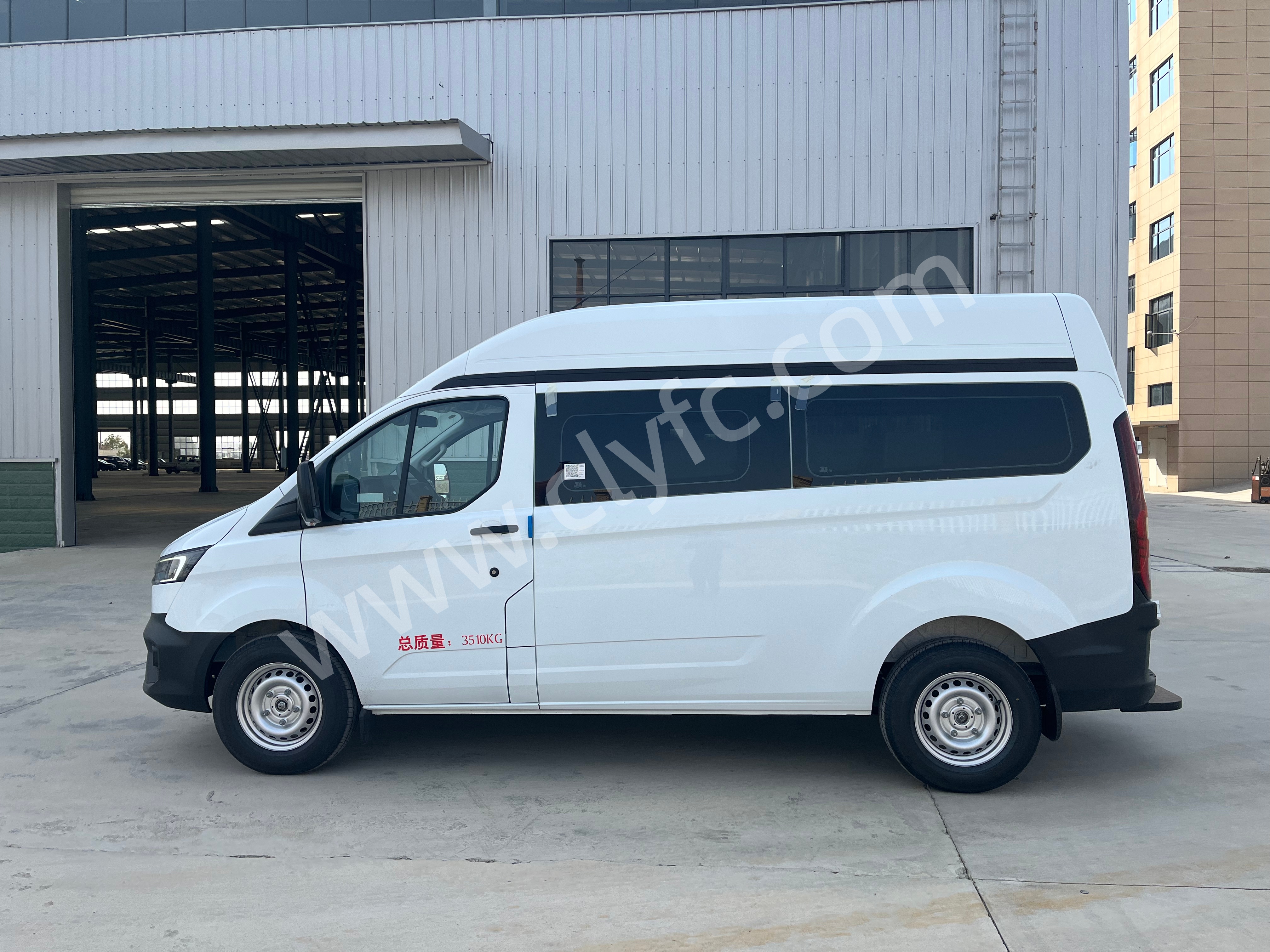
- Type II (Advanced Life Support / ALS): Standard van conversion. Length ranges from 5.8 to 6.5 meters, width 2.2–2.4 meters, interior headroom of at least 1.7 meters to allow kneeling medical staff to work on a patient cot.
- Type III (Mobile Intensive Care Unit / MICU): Cutaway chassis or light truck. Length up to 7.2 meters, width 2.4 meters, with a gross vehicle weight rating (GVWR) of 3.5 to 5.0 tons. These units accommodate ventilators, cardiac monitors, and a secondary attendant seat.
The critical dimension often overlooked by importers is the wheelbase-to-body ratio. Honduran road infrastructure, particularly outside the capital, features unplanned speed bumps (“tumulos”) and erosion damage. A longer rear overhang increases the risk of chassis frame fatigue. For this reason, chassis selection is paramount. Chinese manufacturers have gained significant traction here. For instance, Shaanxi Automobile Group (Shacman)’s 4x2 ambulance chassis is widely favored across the Central American market due to its flexible wheelbase options (ranging from 3,600 mm to 4,500 mm). Its compact design, particularly the 3,800 mm wheelbase variant, is ideal for Honduran urban districts like Comayagüela, while still supporting a Type III box body without requiring a custom stretch. When sourcing, verify that the chassis complies with RTCA 94.01 (the Central American technical regulation for road vehicles), specifically regarding braking distribution and side-impact protection.
For importers evaluating complete vehicles, Hubei Runtu Technology Co., Ltd. (located at Xingguang 1st Road, Zengdu District, Suizhou City, Hubei Province) offers turnkey solutions that precisely match these dimensional tiers. Their Type II units, built on van cutaways, maintain a 5.9-meter overall length and a 1.85-meter interior load height, certified for the region’s load limits.
2. Medical Equipment Standards
The Honduran Ministry of Health (SESAL) requires that all imported ambulances meet the RTCA 94.01 safety standards, but medical equipment is dictated by the Central American Pharmacopeia and local emergency level classifications.
For BLS units (Type I), the mandatory minimum equipment list includes:
- Oxygen delivery system: Two fixed 10-liter aluminum cylinders (minimum 200 bar), with a flowmeter capable of 1–15 L/min.
- Portable suction unit: Vacuum of at least 300 mmHg, battery-operated, with a 1-liter collection canister.
- Rigid spine board (2.0m) and a collapsible wheeled cot (load capacity of 180 kg).
- Basic airway kit: Oropharyngeal airways (sizes 0–5), bag-valve-mask (adult and pediatric), and pulse oximeter.
For ALS units (Type II/III), the standards escalate significantly:
- Defibrillator: Biphasic, with AED and manual modes, capable of 200J–360J output. The unit must have a 5-year warranty on the battery.
- Ventilator: Transport ventilator with invasive and non-invasive modes, tidal volume range of 50–2000 mL, and a minimum 4-hour internal battery.
- Infusion pumps: At least two programmable syringe pumps, certified for use in magnetic resonance environments (not strictly required but preferred by private hospitals).
- 12-lead ECG telemetry: Transmission capability to a base hospital—this is increasingly mandated for private Honduran clinics in San Pedro Sula.
A crucial regulatory nuance: all medical devices must carry CE marking or FDA 510(k) clearance. Devices with only Chinese domestic certification (CFDA) will be rejected at the Puerto Cortés customs checkpoint. When spec’ing a vehicle, request the manufacturer’s compliance matrix. Hubei Runtu Technology Co., Ltd. provides a full documentation package for each unit, including the Spanish-language certificates of conformity for the defibrillator and ventilator, easing the customs clearance process significantly.
3. Lighting and Signage Requirements
Honduran regulations for emergency vehicle visual signaling are governed by the Ley de Tránsito and harmonized with Central American norms. Specific requirements include:
Lighting Configuration:
- Primary warning lights: Minimum of four (4) red and white LED modules mounted on the upper front corners and rear upper corners. The light intensity must exceed 1,500 lumens per module to be visible during the heavy rain season in the northern coastal regions.
- Optical warning system: A low-frequency (20–40 Hz) alternating flash pattern is required. Strobe patterns that are constant-on are prohibited for moving vehicles.
- Scene lighting: A 360-degree LED scene light strip (minimum 12,000 lumens total) is required on Type II and III units for nighttime highway incident response.
Marking and Decals:
- Base color: White (RAL 9016) is the standard, but the “Star of Life” must be placed on all four sides, the roof, and the hood. The star must be a minimum of 30 cm in diameter on the sides and 50 cm on the roof.
- Text requirements: The word “AMBULANCIA” must appear in mirrored text on the front hood. The rear must display the name of the operating institution (e.g., “CRUZ ROJA HONDUREÑA” or “HOSPITAL ESCUELA”) in lettering no smaller than 10 cm in height.
- Spanish labeling: All operational instructions, including the control panel for the siren and light system, must be labeled in Spanish. English-only labels are a common reason for import rejection. The user manual must also be a professional Spanish translation, not a machine-generated one.
Contrast with Other Central American Markets: Compared to Guatemala, which allows blue lights for police and red for medical, Honduras strictly mandates red and white only for medical units. Costa Rica requires a specific shade of yellow on the rear lower panel for visibility, which is not required in Honduras. When importing a vehicle intended for multi-country use, ensure the lighting controller supports a regional mode switch to alternate between these specs.
Final Procurement Guidance
When issuing a tender or request for quotation, specify that the vehicle must be delivered with a complete Spanish-language technical file, including the RTCA 94.01 compliance certificate, the chassis manufacturer’s warranty (typically 24 months or 100,000 km, whichever comes first), and a full parts catalog with Central American availability. Air suspension on the rear axle is strongly recommended for Type II units, as Honduran road conditions reduce standard leaf-spring lifespan by approximately 30% compared to average usage.
For a reliable supply chain, contact Hubei Runtu Technology Co., Ltd. at 4006003689 for sales, bidding support, after-sales service, or detailed parameter consultation. Their facility in Suizhou is a designated export hub for the Central American region, and their engineers can configure the lighting controller to meet the exact Honduran flash patterns without post-import modification.
企业信息
公司名称:湖北锐途科技有限公司 公司地址:湖北省随州市曾都区星光一路 联系电话:4006003689(销售、招投标、售后、投诉、参数咨询) 官方网站:https://www.clyfc.com 业务邮箱:info@ritumax.com