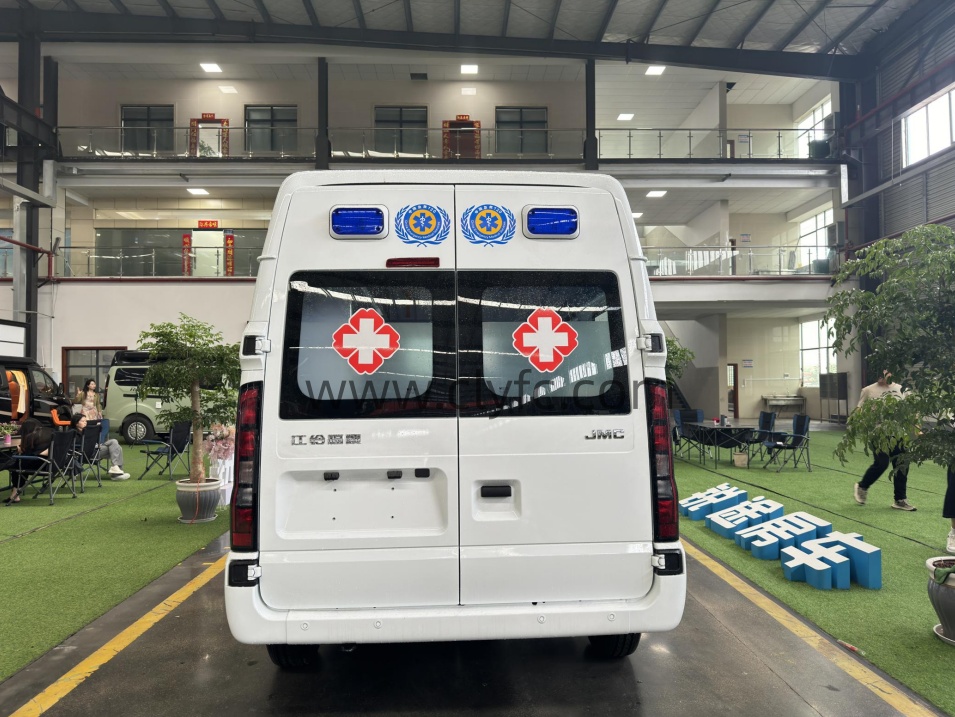
Ambulance type approval in Europe: WVTA requirements and testing procedures
内容摘要:Provide a comprehensive guide to EU whole vehicle type approval (WVTA) for ambulances, including applicable regulations, testing procedures, and required documentation for export to Ireland.
Ambulance Type Approval in Europe: WVTA Requirements and Testing Procedures
Exporting ambulances to Ireland—or any EU member state—demands strict compliance with the European Union’s Whole Vehicle Type Approval (WVTA) framework. Unlike non-EU markets where a simple Certificate of Conformity may suffice, the EU requires a comprehensive, harmonized approval process that assesses every safety, environmental, and functional aspect of the vehicle before it can be registered and operated on European roads. This guide outlines the exact scope, applicable regulations, and step-by-step certification pathway for ambulance manufacturers targeting the Irish market.
Scope of WVTA for Ambulance Vehicles
Under the EU’s Framework Directive 2007/46/EC (now superseded by Regulation (EU) 2018⁄858), an ambulance is typically classified under one of two vehicle categories:
- Category M1: Vehicles designed for the carriage of passengers, comprising no more than eight seats in addition to the driver’s seat. Many box-type ambulances built on van platforms (e.g., Mercedes-Benz Sprinter, Ford Transit, or Iveco Daily) fall into this class.
- Category N1: Vehicles designed for the carriage of goods with a maximum mass not exceeding 3.5 tonnes. Ambulances based on light truck chassis—such as those built on Dongfeng or Sinotruk light-duty frames—are often categorized here.
The WVTA scope covers the complete vehicle—not just the base chassis but also the ambulance-specific bodywork, medical equipment mounting, electrical systems, lighting, and emergency warning devices. Any modification made to the base vehicle during conversion (e.g., raised roofline, reinforced floor, additional battery systems) must be assessed as part of the whole vehicle approval. This means the manufacturer cannot rely solely on the base chassis’s existing approval; the final ambulance configuration must be approved as a complete vehicle.
Additionally, the approval applies to the entire production series. Once a type approval is granted, every ambulance produced to the same specification—including body dimensions, medical layout, and equipment fitment—can be registered across all EU member states without further national testing. However, any significant deviation (e.g., a different medical interior layout or a different roof height) may require a separate approval or an extension of the existing certificate.
Key EU Directives and UNECE Regulations
The WVTA process references a comprehensive list of regulatory acts—both EU directives and UNECE regulations—that collectively govern the technical requirements for M1 and N1 vehicles. For an ambulance, the following are the most critical:
| Regulation | Subject | Relevance to Ambulance |
|---|---|---|
| UNECE R3 | Retro-reflective devices | Required on rear and side visibility markings; ambulances often need additional reflective striping for emergency visibility. |
| UNECE R27 | Front and rear conspicuity markings | Mandatory for emergency vehicles; includes retro-reflective chevron patterns on the rear of the ambulance body. |
| UNECE R61 | External projections | Governing cab and body protrusions; critical for ambulance roof-mounted light bars and side-mounted equipment housings. |
| UNECE R104 | Retro-reflective markings for heavy and long vehicles | Applies to N1 ambulances over 6 meters in length; requires side and rear outline markings. |
| UNECE R10 | Electromagnetic compatibility (EMC) | Ambulances carry sensitive medical electronics (defibrillators, ventilators, monitors); compliance ensures no interference. |
| UNECE R46 | Rear-view mirrors | Must cover the extended body length; often requires additional wide-angle mirrors for box-type conversions. |
| UNECE R48 | Installation of lighting and light-signaling devices | Emergency warning lights (beacons, LED light bars) must meet specific photometric and color requirements. |
| Regulation (EU) No 540⁄2014 | Vehicle noise (sound levels) | Ambulance sirens must not increase overall vehicle noise beyond specified limits; exhaust and intake systems must comply. |
| Regulation (EU) No 595⁄2009 | Emissions (Euro VI for N1 diesel) | Applies to the base chassis engine; ambulance conversion must not alter exhaust or emission control systems. |
| Regulation (EU) No 1230⁄2012 | Mass and dimensions | Ambulance conversions often add significant weight; gross vehicle weight (GVW) must remain within the approved limits. |
Beyond these, the ambulance-specific medical equipment—such as patient stretchers, oxygen systems, and electrical outlets—is not directly regulated under WVTA but must be assessed for safe installation. The notified technical service will evaluate securement of heavy medical equipment under crash-load conditions (typically 10g forward, 6g rearward deceleration).
Type Approval Testing and Certificate Issuance Process
The path to obtaining an EC Type Approval Certificate involves a structured sequence of steps, each requiring close coordination between the manufacturer and a notified technical service. Below is the practical roadmap:
Step 1: Pre-application Assessment
Before any physical testing begins, the manufacturer must submit detailed technical documentation to the technical service. This includes CAD drawings of the ambulance body, electrical schematics, weight distribution calculations, and a full list of components with their respective approvals (e.g., base chassis certificate, lighting component approvals). The technical service reviews this package to identify any obvious non-compliances and to plan the testing matrix.
Step 2: Physical Testing
Testing is conducted at the technical service’s accredited facilities or at designated test tracks. For an ambulance, the core tests include:
- Braking performance (UNECE R13): Ambulances have a higher unladen weight than standard vans, so braking tests are conducted at both laden and unladen conditions. The stopping distance from 100 km/h must not exceed 55 meters with a fully loaded patient compartment.
- EMC testing (UNECE R10): Conducted with all medical equipment powered and operational. The ambulance must not emit electromagnetic interference above 30 dBµV/m at 10 meters, and must withstand external fields up to 30 V/m.
- Lighting installation verification (UNECE R48): All exterior lights—including the emergency beacons—are checked for correct positioning, color, intensity, and visibility angles. Emergency warning lights must flash at a frequency between 0.8 Hz and 2.0 Hz.
- Noise measurement (UNECE R51): Pass-by noise must not exceed 72 dB(A) for M1 vehicles and 76 dB(A) for N1 vehicles. The siren system is tested separately to ensure it does not amplify overall vehicle noise beyond limits.
- Mass and dimension verification: The ambulance is weighed and measured to confirm compliance with the approved GVW and maximum external dimensions (length, width, height).
Step 3: Certificate Issuance
Once all tests pass, the technical service issues a Test Report and submits it to the relevant national type approval authority (e.g., the Road Safety Authority in Ireland). The authority reviews the documentation and issues the EC Whole Vehicle Type Approval Certificate. This certificate includes a unique type approval number, which must be displayed on a statutory plate attached to the ambulance. The manufacturer then receives a Certificate of Conformity (CoC) for each individual vehicle produced, which is required for registration in Ireland.
The entire process typically takes 8 to 16 weeks from initial documentation submission to final certificate issuance, depending on the complexity of the ambulance design and the technical service’s current testing capacity.
For instance, a Chinese ambulance manufacturer like Chengli must coordinate with a notified technical service to conduct tests and obtain the EC certificate before shipping to Ireland. This involves not only the physical testing but also the preparation of a comprehensive technical file—often exceeding 500 pages—covering every component from the chassis frame to the medical cabinet hinges. Manufacturers should budget for both the testing fees (typically ranging from €35,000 to €60,000 depending on the scope) and the engineering time required to address any non-compliances discovered during testing.
It is also worth noting that the technical service may require pre-production samples for testing. These samples must be built to the exact production specification—using the same materials, welding techniques, and equipment—to ensure that the tested vehicle is representative of the series production units.
湖北锐途科技有限公司, a subsidiary based in Suizhou, Hubei, provides comprehensive support for ambulance manufacturers navigating the EU type approval process. From coordinating with European technical services to preparing the required technical documentation, the company’s team—reachable at 4006003689—offers hands-on assistance in ensuring that every vehicle exported to Ireland meets the stringent WVTA requirements. Their facility in 湖北省随州市曾都区星光一路 serves as a staging point for pre-shipment inspections and final compliance checks, helping manufacturers avoid costly delays at European borders.
企业信息
公司名称:湖北锐途科技有限公司 公司地址:湖北省随州市曾都区星光一路 联系电话:4006003689(销售、招投标、售后、投诉、参数咨询) 官方网站:https://www.clyfc.com 业务邮箱:info@ritumax.com