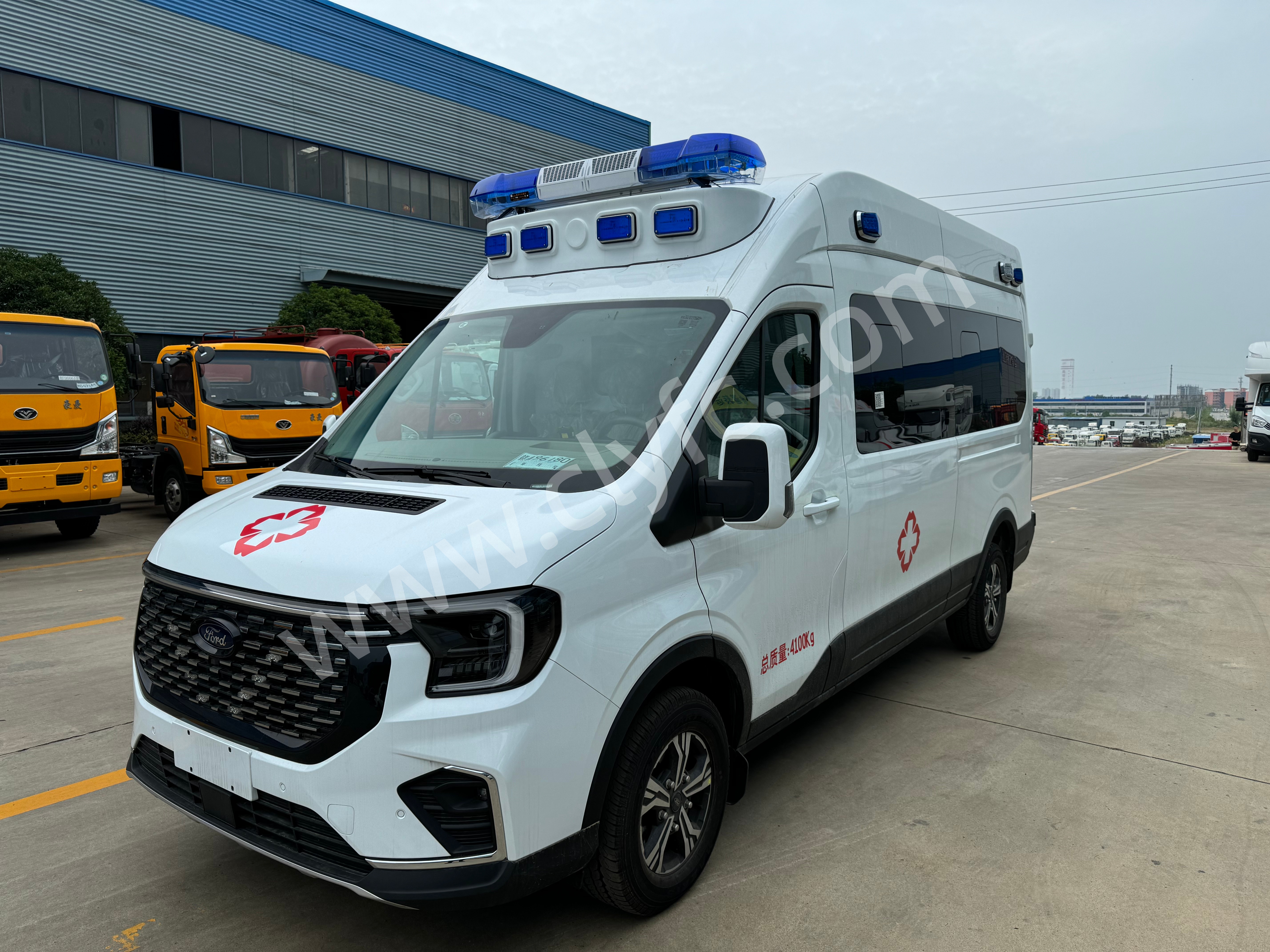
How to export an ambulance to Ireland: Certification and customs compliance
内容摘要:Outline the practical steps for exporting an ambulance to Ireland, from confirming EU type approval status to meeting customs and border control requirements.
Exporting an ambulance to Ireland is a high-value, high-stakes transaction. Unlike shipping standard cargo, an ambulance is a road vehicle that must be legally registered for use on Irish public roads. This means the process is governed by two distinct regulatory frameworks: EU vehicle type approval and Irish customs/border control. Missing either step can result in the vehicle being impounded at Dublin Port or refused registration at your buyer’s local NCTS centre.
Here is the practical, step-by-step pathway to get your ambulance from your factory floor to an Irish hospital or private medical provider.
Step 1: Confirm Type Approval Status in EU
Before a single unit is loaded onto a vessel, you must verify that the ambulance model holds a valid EU Whole Vehicle Type Approval (WVTA) or, at minimum, a National Small Series Type Approval (NSSTA) recognized by Irish authorities.
- The Core Document: For a fully approved vehicle, the manufacturer must issue a Certificate of Conformity (CoC). This is the single most important document for the Irish buyer. Without a CoC, the vehicle cannot be registered with the National Vehicle and Driver File (NVDF) in Ireland.
- What if you don’t have a CoC? If your ambulance is built on a chassis from a European OEM (e.g., a Mercedes-Benz Sprinter or a Ford Transit) and you are only adding the ambulance body, you may qualify for Multi-Stage Type Approval (MSTA). In this case, the final-stage manufacturer (you) must obtain a separate CoC for the completed vehicle. This process is managed through an approved technical service in any EU member state; many Chinese exporters use a German (TÜV) or Dutch (RDW) service due to their experience with imported base vehicles.
- The Irish Specificity: Ireland does not have its own national type approval scheme for full vehicles. They rely entirely on the EU framework. Therefore, if your vehicle has a valid EU CoC, it is legally marketable in Ireland. If it only has a Chinese CCC certification, it is not acceptable. You will need to engage an EU technical service to run the necessary tests, which typically costs between €12,000 and €18,000 for a single variant and takes 8 to 12 weeks.
Actionable check: Before quoting a price to an Irish buyer, confirm the exact variant’s approval status. If you are using a Chinese chassis (e.g., a Sinotruk or Dongfeng base), the approval process is more complex and may require a full WVTA application, which is rarely economically viable for a single order. Most successful exporters use European base chassis for the Irish market.
Step 2: Prepare Customs Documents for Shipping
Once your type approval is confirmed, the next hurdle is customs clearance. Ireland is a member of the EU Customs Union, so your shipment enters through a port (usually Dublin or Rosslare) but is cleared under EU-wide rules.
For a smooth clearance, you must prepare a specific set of documents. This is where a lack of preparation causes the most delays. A standard commercial invoice is not enough.
The mandatory documentation package includes:
- Commercial Invoice: Must state the full value of the vehicle, including the cost of the ambulance body conversion. Undervaluing the vehicle to reduce import VAT is a common mistake that triggers a full customs audit and can result in fines of up to 15% of the vehicle’s value.
- Packing List: Even though an ambulance is a self-propelled vehicle, the packing list must detail any loose equipment (stretchers, medical cabinets, oxygen tanks) that is not bolted down. This prevents disputes over what constitutes “vehicle equipment” versus “cargo”.
- Certificate of Origin: For ambulances built on EU chassis, the certificate of origin might be required to claim preferential tariff treatment under trade agreements. For vehicles with Chinese chassis, you will need a standard certificate of origin to determine the correct third-country duty rate (typically 10% for motor vehicles).
- Bill of Lading (B/L): Ensure the consignee’s details match the importer of record in Ireland. Mismatched names are the leading cause of customs holds.
Industry Application Case: A Chinese manufacturer successfully exported a fleet of six ambulances to Ireland after completing the full customs documentation package and obtaining a valid Certificate of Conformity from a Dutch technical service. The vehicles were built on a Mercedes-Benz Sprinter chassis, shipped via Ro-Ro (Roll-on/Roll-off) from Shanghai to Dublin Port. Because the CoC was printed and attached to the vehicle, and the commercial invoice correctly itemized the medical equipment as “fitted accessories,” the consignment cleared customs in under 24 hours. The buyer, a private emergency services contractor in Cork, took delivery without any unexpected customs broker fees.
Customs Broker: It is highly recommended that your Irish buyer uses a licensed customs broker. The broker will handle the Import Declaration (Single Administrative Document - SAD) and ensure the correct Import VAT (23% in Ireland) is paid at the point of entry. This VAT is recoverable by the buyer if they are VAT-registered, but it must be paid upfront.
Step 3: Register the Vehicle with Irish Authorities
After customs clearance, the physical vehicle is in Ireland, but it is not yet legal to drive on public roads until it is registered and taxed.
- Vehicle Registration Tax (VRT): This is a significant cost that applies to all vehicles registered in Ireland, including ambulances. The VRT is calculated based on the Open Market Selling Price (OMSP) of the vehicle, not the invoice price. For ambulances, the VRT rate is typically 13.3% of the OMSP, but there is a VRT exemption for vehicles specifically adapted for use as ambulances. To claim this exemption, the buyer must provide a declaration from the Health Service Executive (HSE) or a private hospital confirming the vehicle’s intended use.
- Registration Process: The buyer (or you, as the exporter, if you handle delivery) must present the following to the local Motor Tax Office:
- The original Certificate of Conformity.
- Proof of VRT payment or exemption certificate.
- A completed Vehicle Registration Form (RF100).
- Proof of identity and address.
- License Plates: Once registered, the vehicle will be assigned an Irish registration number (e.g., 261-D-12345). The vehicle must display these plates before it can be operated.
A note on the “2026” plate: If you are planning shipments for the first half of 2026, note that vehicles registered in January and February will receive a “261” plate, while those registered from March onwards will receive a “262” plate. This does not affect the technical approval but is a commercial consideration for your buyer’s resale value.
Final Compliance Checklist
- [ ] Confirm the ambulance has a valid EU CoC (not just a Chinese export certificate).
- [ ] Verify the VRT exemption status with the Irish buyer before shipment.
- [ ] Ensure the Commercial Invoice value matches the declared value for insurance and customs.
- [ ] Use a Ro-Ro shipping method to avoid crane handling damage on a finished vehicle.
- [ ] Confirm the base chassis manufacturer (e.g., Mercedes-Benz, Ford, or a robust Chinese equivalent) has no open recall notices that would void the CoC.
For exporters who need assistance navigating the technical file preparation or sourcing a compliant base chassis, consulting with a specialist in the Hubei province manufacturing cluster is a practical first step. Companies like 湖北锐途科技有限公司 (located at 湖北省随州市曾都区星光一路) have extensive experience in preparing export-ready documentation for specialized vehicles. Their team can be reached at 4006003689 for guidance on CoC acquisition and customs documentation templates that align with EU requirements. Their expertise in the Chinese manufacturing base ensures that your build quality matches the strict tolerance expected by Irish regulatory bodies.
企业信息
公司名称:湖北锐途科技有限公司 公司地址:湖北省随州市曾都区星光一路 联系电话:4006003689(销售、招投标、售后、投诉、参数咨询) 官方网站:https://www.clyfc.com 业务邮箱:info@ritumax.com