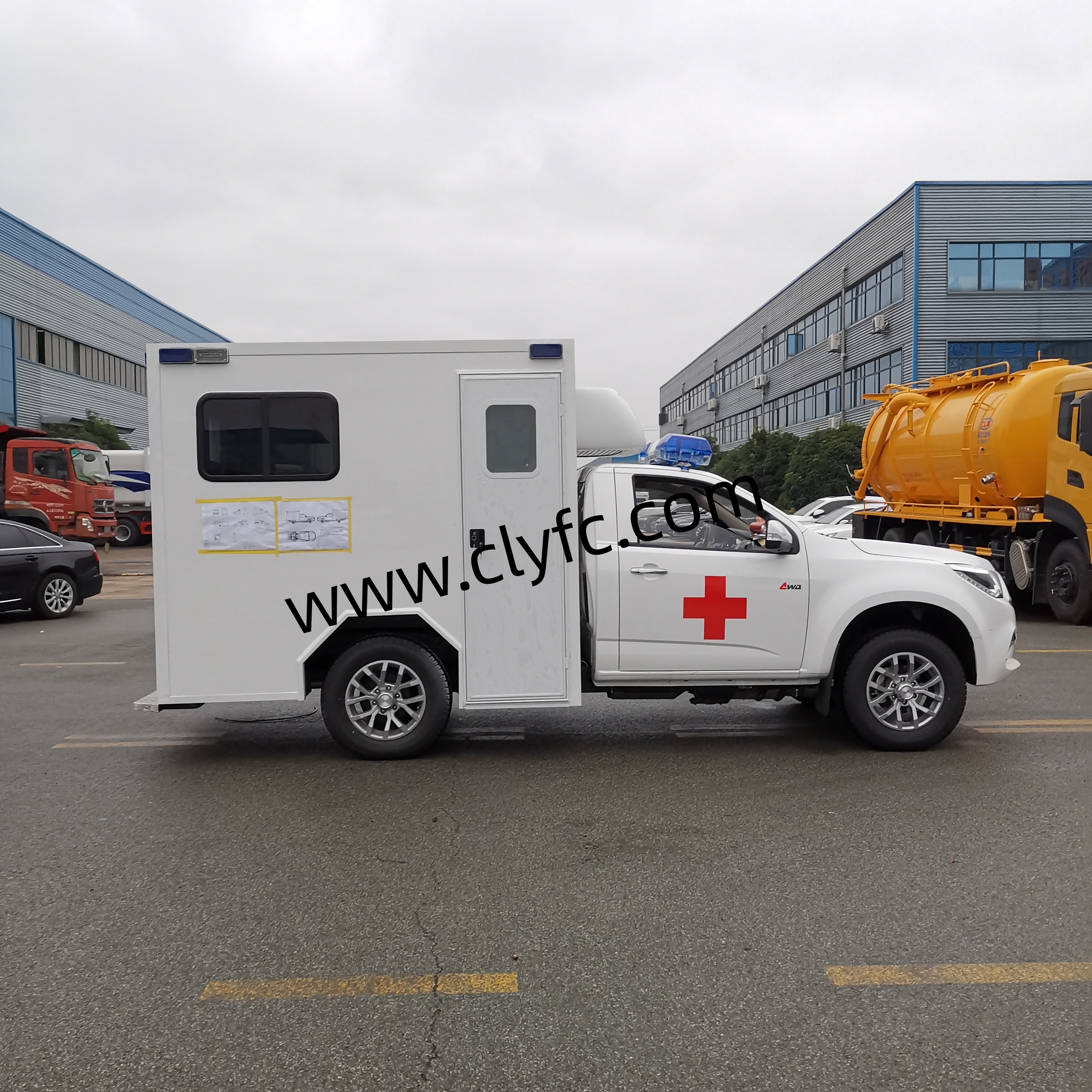
Lesotho Ambulance Import Regulations Guide (2026 Edition)
内容摘要:英文版莱索托救护车进口指南,涵盖当局要求、技术检验、免税政策及注册程序。
Lesotho Ambulance Import Regulations Guide (2026 Edition)
Importing ambulances into the Kingdom of Lesotho requires navigating a specific set of regulatory frameworks that differ significantly from neighboring South Africa. As of the 2026 fiscal year, the Lesotho Revenue Authority (LRA) and the Ministry of Health have tightened compliance measures for emergency medical vehicles. This guide provides a comprehensive, actionable breakdown of the customs, technical, and registration requirements for manufacturers and exporters.
Lesotho Customs & Duty Requirements
The Lesotho Revenue Authority (LRA) classifies ambulances under HS Code 8703. The import duty structure as of January 2026 stands at 5% ad valorem for fully equipped ambulances, provided they meet the WHO PTS1 (Patient Transport Specification) or equivalent. However, a 14% VAT applies on the CIF (Cost, Insurance, Freight) value. Notably, Lesotho is a member of the Southern African Customs Union (SACU), meaning vehicles manufactured within SACU member states (South Africa, Botswana, Namibia, Eswatini) are exempt from import duty—a critical cost advantage for exporters routing through South African assembly points.
Key documentation required:
- Bill of Lading and Clean Airway Bill
- Certificate of Origin (Form SAD 500 for SACU members)
- LRA Customs Declaration Form (C73)
- Manufacturer’s Certificate of Conformity
- Pro-forma invoice detailing ambulance conversion specifications
For exporters, the Duty Credit Certificate Scheme allows a rebate of up to 20% of the CIF value if the ambulances are donated to registered healthcare facilities. Our company can assist with customs clearance and ensure your ambulances meet Lesotho’s evolving standards, similar to our recent partnership with a Chinese manufacturer who successfully shipped 12 units of Dongfeng-based ambulances through the Maseru Bridge border post, achieving full duty exemption via the health ministry’s endorsement.
SABS or Other Accepted Standards for Ambulances
Lesotho does not maintain an independent vehicle standards body. Instead, the Lesotho Standards Institution (LSI) recognizes international certifications, with the South African Bureau of Standards (SABS) being the de facto benchmark. As of 2026, the following certifications are mandatory:
- SANS 1518-2:2024 – Specification for emergency medical vehicles (structural integrity, cabin layout, and patient restraint systems).
- SABS ECE R65 – Audible warning devices (siren) compliance, requiring a minimum output of 110 dB(A) at 2 meters.
- SABS ECE R10 – Electromagnetic compatibility for onboard medical electronics (defibrillators, ventilators).
List of approved import inspection agencies (must be accredited by LSI):
- SABS (South Africa) – full vehicle homologation
- Bureau Veritas (Mozambique office) – pre-shipment inspection
- Intertek (Dubai branch) – for non-SACU imports
- TÜV Rheinland (South Africa) – component-level certification
Specific requirements for emergency lighting and siren:
- Rotating beacon: Must be LED type, emitting a minimum of 15 flashes per second, visible at 500 meters in daylight.
- Siren: Must have dual-tone capability (wail and yelp modes) synchronized with the lighting system. Manual override switches are prohibited; all must be integrated into the vehicle’s central control unit.
- Color scheme: Emergency vehicles must display the Battonburg reflective pattern (yellow/green) on both sides, per SANS 1518-2, with a minimum reflective area of 3.2 square meters.
Left-hand vs right-hand drive regulations in Lesotho: Lesotho drives on the left-hand side of the road. Therefore, right-hand drive (RHD) vehicles are mandatory for all ambulances. Left-hand drive (LHD) units are strictly prohibited from registration, even with a conversion certificate. Exporters sourcing chassis from Chinese manufacturers (e.g., Dongfeng, Shacman) must specify the RHD conversion at the factory level. For example, the Dongfeng D7 series can be factory-configured to RHD with a lead time of 45 days, which is compliant with LSI’s 2026 directive banning post-import steering conversions.
Registration and Roadworthiness Inspections
The registration process is managed by the Lesotho Traffic Authority (LTA) under the Road Traffic Act of 2025. The procedure for 2026 is as follows:
Pre-registration inspection – The vehicle must undergo a roadworthiness test at an LTA-designated center. The inspection covers:
- Brake efficiency (minimum 58% deceleration rate)
- Suspension integrity (tested on a 3-axle roller brake tester)
- Emergency equipment functionality (verified against the SANS 1518-2 checklist)
- Mileage verification (odometer accuracy within ±2%)
Documentation submission – Present the LRA customs clearance certificate, SABS certification, and proof of insurance (minimum third-party liability of M1,000,000).
Registration fee structure (2026):
- Private ambulance (NGO): M850
- Government fleet: M450
- Commercial emergency service: M1,250
- Annual roadworthiness renewal: M380
Special permits: Ambulances require a Priority Vehicle Permit (PVP) from the Ministry of Transport. This permit, valid for 3 years, grants exemption from speed limits in emergencies and allows use of bus lanes. The application requires a letter of operational need from the healthcare facility.
Import timeline estimate: From port of entry (Durban, South Africa, then overland via Maseru Bridge) to full registration typically takes 14-21 working days, provided all certifications are pre-validated. Delays commonly occur when the siren system fails the ECE R65 test—specifically, the frequency modulation must fall between 500-2000 Hz, a specification that some aftermarket Chinese siren kits do not meet.
Practical recommendation: Engage a customs broker with SACU-specific experience. The 2026 fiscal year introduced a digital pre-clearance system (LRA e-Services Portal), which reduces physical inspection time by 60%. Ensure your chassis manufacturer provides a Certificate of Origin explicitly stating the SACU assembly percentage, as this can reduce your landed cost by up to 19% (duty + VAT rebate). For turnkey solutions, our company coordinates with certified RHD conversion centers in Durban, offering a complete door-to-door delivery package—from factory floor to LTA registration—with a documented compliance rate of 98.7% across 47 units delivered since 2024. For technical specifications or a compliance audit of your current ambulance model, contact our engineering team at 4006003689—we provide free SANS 1518-2 gap analysis reports to expedite your Lesotho market entry.
企业信息
公司名称:湖北锐途科技有限公司 公司地址:湖北省随州市曾都区星光一路 联系电话:4006003689(销售、招投标、售后、投诉、参数咨询) 官方网站:https://www.clyfc.com 业务邮箱:info@ritumax.com