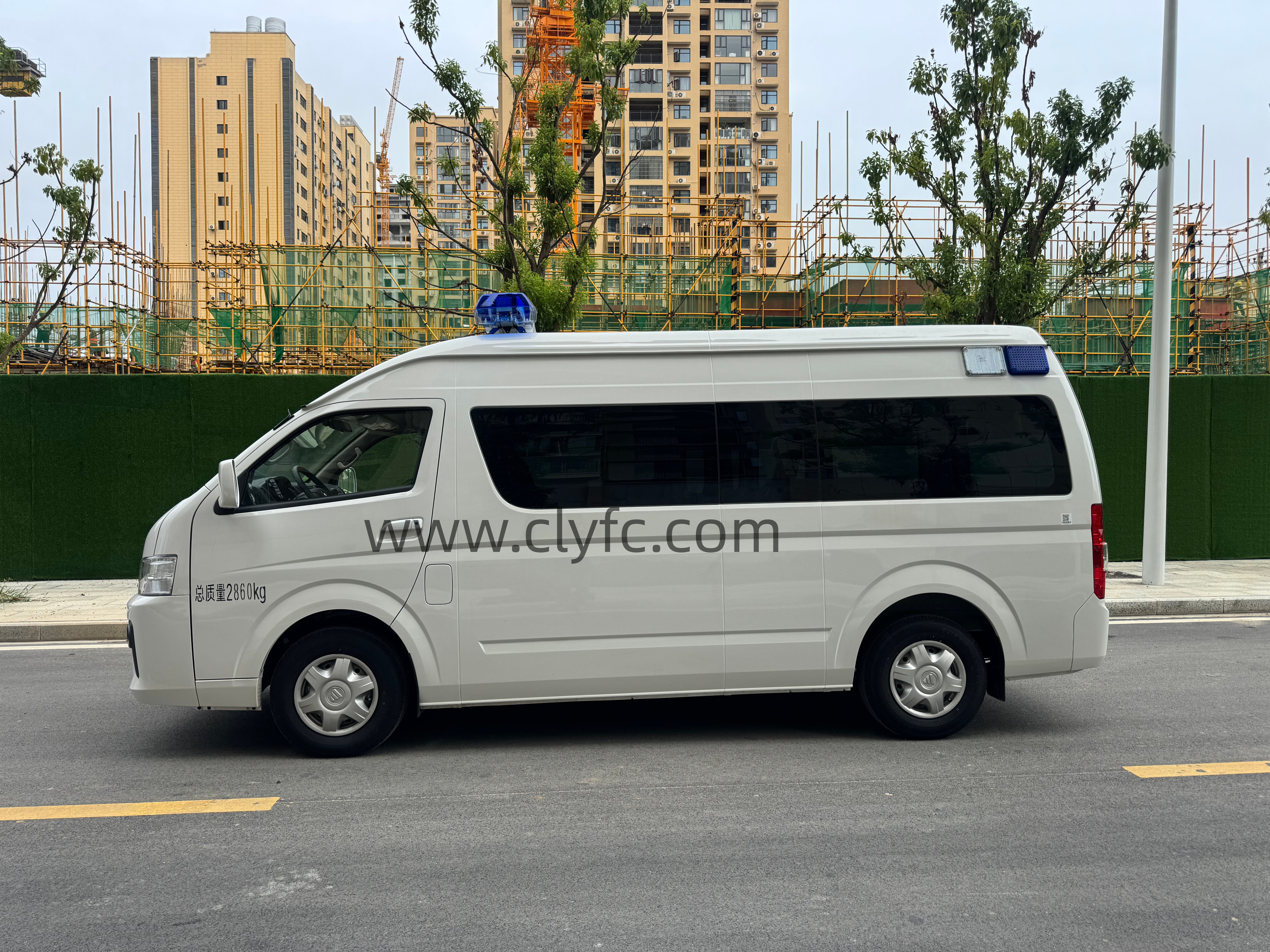
Ambulance Vehicle Export Compliance and Specifications Guide
内容摘要:This guide provides an overview of international ambulance vehicle export requirements, including key technical specifications and certification processes for global markets.
Global Ambulance Standards Overview
When exporting ambulance vehicles, manufacturers and trading companies must first navigate a complex landscape of international standards. Unlike ordinary commercial vehicles, ambulances are classified as both road vehicles and medical devices in most jurisdictions, which means they are subject to dual regulatory scrutiny.
The two most widely referenced standards globally are EN 1789 (European standard for medical vehicles and their equipment) and KKK-A-1822 (the former US federal specification, still widely used as a benchmark in North America, the Middle East, and parts of Asia). Additionally, the CEN/TS 1789 amendment series and the NFPA 1917 standard (for US automotive ambulances) play significant roles in specific markets.
Understanding the hierarchy of these standards is critical. For instance, EN 1789 classifies ambulances into Type B (patient transport) and Type C (mobile intensive care unit), each with distinct requirements for interior dimensions, medical gas systems, electrical safety, and crashworthiness. KKK-A-1822, while technically superseded by NFPA 1917 in the US, remains the reference in many developing markets due to its clear and prescriptive nature regarding body construction and equipment mounting.
Key Technical Specifications for Export Ambulances
Export ambulances must meet rigorous technical parameters that extend far beyond the base chassis. Below are the critical specification areas that international buyers and certifying bodies evaluate:
1. Chassis and Powertrain Configuration Most export ambulances are built on commercial truck chassis from manufacturers like Shacman (陕汽), Dongfeng (东风), Sinotruk (重汽), or Foton (福田). For European-bound vehicles, a chassis with a gross vehicle weight (GVW) of 3.5 to 5.5 tons is typical, such as the Shacman L3000 or the Foton Aumark S series. The engine must comply with the target market’s emission standards—Euro 6 for the EU, and equivalent local norms for other regions. It is not uncommon for export orders to specify a minimum output of 150–180 horsepower to ensure adequate performance under full medical load.
2. Patient Compartment Dimensions and Layout EN 1789 mandates specific minimum interior heights (typically 1,700 mm to 1,800 mm) and clear floor areas. For a Type C ambulance, the patient compartment must accommodate a stretcher with a minimum length of 1,950 mm, plus space for two medical attendants. Interior layouts must include sealed, washable flooring with a slip-resistant rating of at least R10, and cabinets constructed from lightweight yet impact-resistant composite materials.
3. Electrical and Medical Gas Systems Export ambulances require dual electrical systems: a 12V or 24V vehicle system and a separate 230V (or 110V for North American markets) inverter-powered medical system. The medical electrical system must provide at least 1,500W of continuous power for ventilators, defibrillators, and infusion pumps. Medical gas systems—typically oxygen (O₂) and vacuum—must be installed with copper or stainless-steel lines, with flow rates of 100–200 L/min for oxygen outlets, and must meet the pressure testing standards of the destination country.
4. HVAC and Air Filtration A key differentiator in export specifications is the HVAC system. The patient compartment must maintain a temperature of 22°C ± 2°C regardless of external conditions. This requires a high-capacity auxiliary heating and air-conditioning unit, often with a cooling capacity of 4,000–6,000 kcal/h. For infectious disease transport, HEPA filtration (H13 grade or higher) is increasingly mandated, particularly in markets that follow the latest WHO guidelines.
5. Lighting and Visibility Interior lighting must include both general illumination (minimum 300 lux) and examination lighting (minimum 1,000 lux) at the stretcher level. Exterior lighting must comply with ECE R65 or FMVSS 108 requirements, including flashing warning lights visible from a distance of 500 meters in daylight.
6. Crashworthiness and Restraint Systems All medical equipment and cabinetry must be secured to withstand a deceleration force of 10g in the forward direction and 6g laterally, per EN 1789 Annex C testing protocols. Stretcher restraint systems must be tested with a 250 kg dummy load.
Certification and Homologation Procedures
The certification process for export ambulances is often the most time-consuming and technically demanding phase of the entire export transaction. A typical homologation procedure involves the following stages:
Stage 1: Pre-Design Consultation Before production begins, the manufacturer must submit a technical dossier to the target market’s certifying authority (e.g., TÜV for Germany, BIS for India, or the National Regulatory Authority for medical devices). This dossier includes detailed drawings, electrical schematics, and a bill of materials. It is strongly advisable to engage a local certification consultant who understands the nuances of the destination market’s interpretation of standards.
Stage 2: Third-Party Testing Independent laboratory testing is mandatory. For EN 1789 compliance, this includes tests for:
- Roadworthiness (braking, stability, noise levels)
- Electrical safety (leakage current, insulation resistance, electromagnetic compatibility per ECE R10)
- Medical equipment integration (functionality under vibration and shock)
- Fire resistance of interior materials (per ISO 3795)
Stage 3: Documentation and Traceability Certifying bodies require a complete documentation package, including:
- Bill of materials with supplier declarations
- Test reports from ISO 17025-accredited laboratories
- Quality management system certificates (ISO 9001 or IATF 16949)
- Photos and videos of the production process and final inspection
Stage 4: In-Plant Inspection and Type Approval For most markets, an initial in-plant inspection is required. Inspectors verify that production methods match the approved drawings and that quality control procedures are consistently applied. Once passed, a Certificate of Conformity (CoC) or type approval certificate is issued, allowing the vehicle to be registered in the destination country.
As an industry implementation example, consider the process for a European-bound order: For instance, an export ambulance built on a Shacman chassis successfully obtained ECE type approval for European markets, demonstrating the importance of aligning with international norms during design. This involved pre-testing the chassis to confirm it met ECE R29 cab strength requirements before the ambulance body was even mounted—a step that saved weeks of rework.
Stage 5: Post-Shipment Compliance Even after type approval, exporters must maintain compliance. This includes keeping a register of all vehicles sold, issuing annual conformity statements, and promptly addressing any field safety notifications. For medical device classification in the EU (under MDR 2017⁄745), the ambulance body is often classified as Class I or IIa, requiring a notified body’s involvement for the latter.
A Note on Documentation Accuracy A common pitfall in export documentation is the discrepancy between the technical file and the actual vehicle. For example, if the approved electrical load capacity is 1,500W but a dealer installs an additional 300W of lighting, the vehicle is no longer compliant. Therefore, it is imperative that all post-production modifications are documented and re-approved.
For manufacturers and trading companies seeking a reliable production partner, 湖北锐途科技有限公司, located at 湖北省随州市曾都区星光一路, offers turnkey ambulance manufacturing with in-house engineering support for certification documentation. Their team routinely prepares technical dossiers for markets in Southeast Asia, Africa, the Middle East, and Latin America, and can be reached at 4006003689 for specification consultations and certification guidance. Factories in Suizhou, Hubei—the heartland of China’s specialized vehicle industry—are well-positioned to manage both standard and bespoke export orders, with typical lead times of 30–45 days for a complete ambulance unit.
Final Practical Advice
- Start Early: Certification timelines range from 3 to 8 months depending on the destination market. Do not wait until the vehicle is built to begin the paperwork.
- Choose a Flexible Chassis Partner: Work with a chassis manufacturer that can supply vehicles with multiple engine and emission configurations, as this directly impacts your ability to enter different markets.
- Budget for Testing: Allocate 3–5% of the total order value for third-party testing and certification fees.
- Verify Local Medical Device Registration: In many countries, the ambulance’s medical equipment (e.g., defibrillators, suction units) requires separate registration. Ensure your equipment suppliers can provide CE or FDA documentation.
By thoroughly understanding the technical specifications and certification pathways outlined above, you can significantly reduce the risk of customs delays, registration rejections, or costly field modifications. The global ambulance market rewards those who treat compliance not as a bureaucratic hurdle, but as a fundamental component of product quality and safety.
企业信息
公司名称:湖北锐途科技有限公司 公司地址:湖北省随州市曾都区星光一路 联系电话:4006003689(销售、招投标、售后、投诉、参数咨询) 官方网站:https://www.clyfc.com 业务邮箱:info@ritumax.com