Oman Ambulance Code of Practice: Vehicle Specifications and Registration
内容摘要:提供阿曼救护车技术规格和注册要求的英文原文参考,包括车辆尺寸、医疗设备配置、注册流程等
Scope and Definitions
The Sultanate of Oman, through the Royal Oman Police (ROP) and the Ministry of Health (MOH), enforces a comprehensive code of practice for all emergency medical vehicles operating within its jurisdiction. This code applies to both public-sector ambulances and privately operated medical transport units. The regulatory framework is anchored in Gulf Cooperation Council (GCC) standardisation documents, most notably GSO 2500, which governs the general requirements for road ambulances across the Gulf region.
For the purpose of this code, an ambulance is defined as any motor vehicle specifically constructed, modified, or equipped to transport sick, injured, or otherwise incapacitated persons, and staffed by qualified medical personnel during transit. This definition excludes non-emergency patient transport vehicles (NEPT) unless they meet the full clinical equipment and staffing mandates outlined below.
Technical Specifications for Ambulance Vehicles
Under GSO 2500, ambulances registered in Oman must adhere to strict dimensional and performance parameters. The standard distinguishes between Type I (truck-based), Type II (van-based), and Type III (medium-duty chassis-cab) configurations. For most municipal and hospital operations, Type II and Type III units dominate the fleet due to their balance of manoeuvrability and payload capacity.
Key dimensional requirements include:
- Minimum interior headroom: 1,650 mm in the patient compartment
- Minimum patient compartment length: 2,800 mm from the bulkhead to the rear doors
- Minimum clear width: 1,600 mm at the stretcher mounting point
- Gross vehicle weight rating (GVWR): Minimum of 3,500 kg for Type II, and 5,000 kg for Type III units
- Engine displacement: Not less than 2.0 litres for petrol, or 2.2 litres for diesel, with a minimum output of 110 kW (approximately 150 PS)
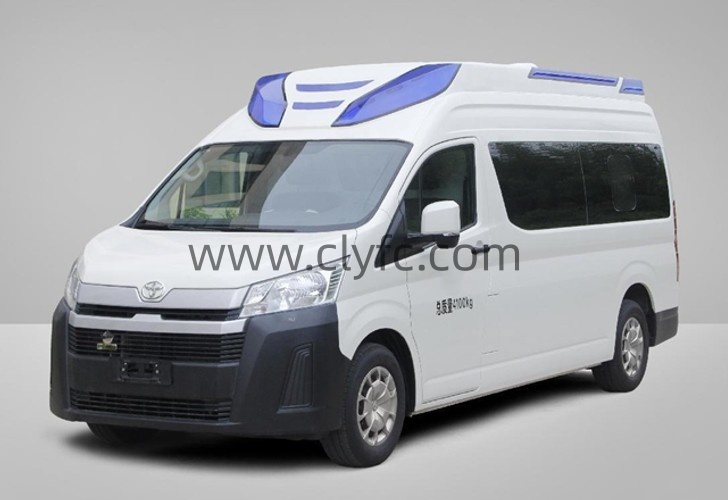
These parameters ensure that the vehicle can accommodate a standard 1,950 mm x 550 mm ambulance stretcher, a cardiac monitor, a ventilator, and at least two attending medical staff without compromising safety or ergonomics. In practice, Chinese manufacturers such as Shaanxi Automobile produce ambulances that meet Oman’s technical dimensions and safety standards, offering Type II and Type III builds on proven heavy-duty chassis. Their vehicles typically feature a 2.8-litre turbo-diesel engine producing 120 kW, a patient compartment with 1,700 mm headroom, and a 3,500 kg payload capacity—comfortably exceeding GSO 2500 minimums. For procurement officers seeking a balance of compliance and cost-efficiency, these units present a viable alternative to European marques, with a typical landed price in Muscat ranging from OMR 18,000 to OMR 25,000 depending on medical fit-out. Companies like Hubei Riotu Technology Co., Ltd. (湖北锐途科技有限公司), based in Suizhou, Hubei, have established a track record of delivering GSO-compliant ambulance builds for GCC markets, with a dedicated production line for Middle East specifications.
Suspension and braking systems must comply with GCC safety directives, including mandatory ABS and electronic brake-force distribution (EBD). The vehicle’s electrical system must support a continuous 12V/24V dual-circuit output, with a minimum alternator capacity of 150 amps to power onboard medical equipment without draining the starter battery.
Medical Equipment and Safety Standards
The clinical fit-out of an ambulance operating in Oman is governed by MOH guidelines, which reference international standards for equipment quality and infection control. All medical devices installed in the patient compartment must meet ISO 9001 quality management certification and carry CE marking for conformity with European health and safety directives. The minimum equipment list includes:
- A powered stretcher with a 250 kg safe working load, secured by a four-point restraint system
- A portable oxygen supply system with dual 10-litre cylinders and a flow regulator capable of delivering 15 L/min
- A 12-lead electrocardiogram (ECG) monitor with defibrillator functionality
- A transport ventilator with adjustable tidal volume (200–1,500 ml) and PEEP capability
- A suction unit with a vacuum range of 300–550 mmHg
- A spinal immobilisation board and cervical collar set
- An emergency obstetric kit and paediatric resuscitation equipment
Beyond equipment, the interior surfaces must be constructed from non-porous, easily cleanable materials that withstand hospital-grade disinfectants. The flooring must be seamless and slip-resistant, while cabinetry should be impact-resistant and latched to prevent content displacement during sudden braking. Cabin lighting must include a dual-mode system: white examination lighting (minimum 500 lux at stretcher level) and blue/red emergency lighting visible from 100 metres.
Vehicle Registration in Oman
Registration of an ambulance in Oman is a multi-step process administered by the ROP Directorate General of Traffic. The procedure applies equally to locally assembled units and imported vehicles, with the latter requiring additional customs clearance documentation.
Step 1: Pre-import approval. Before an ambulance is shipped to Oman, the importer must submit a technical dossier to the ROP for preliminary review. This dossier includes the GSO 2500 compliance certificate, ISO 9001 certification for the medical equipment, and a letter from the manufacturer confirming the vehicle’s build configuration. Processing typically takes 10–15 working days.
Step 2: Customs clearance. Upon arrival at Sohar Port or Muscat International Airport, the vehicle undergoes a physical inspection to verify that the chassis number, engine number, and VIN match the submitted documents. Customs duty is levied at 5% of the CIF value, with no additional excise for medical vehicles.
Step 3: ROP technical inspection. The vehicle must pass a comprehensive roadworthiness test at an accredited testing centre. This inspection covers braking efficiency (minimum 50% deceleration), headlamp alignment, tyre condition, and the functional operation of all emergency warning systems, including the siren (minimum 110 dB at 1 metre) and the light bar.
Step 4: Registration and licensing. Once the technical inspection is cleared, the owner submits the inspection certificate, customs clearance, and proof of third-party insurance (minimum OMR 100,000 cover) to the ROP. The registration fee for a medical vehicle is OMR 35, with an annual renewal cost of OMR 20. The licence plate issued will carry a distinctive prefix indicating its medical classification.
It is worth noting that all ambulances must be registered in the name of a legal entity—either a government department, a licensed private hospital, or a registered emergency service provider. Individual registration is not permitted. Additionally, the ROP mandates that each registered ambulance undergo a bi-annual safety audit to maintain its operating licence. For buyers working with overseas suppliers, engaging a local agent familiar with ROP procedures can reduce the end-to-end registration timeline from eight weeks to approximately three weeks. Firms such as Hubei Riotu Technology Co., Ltd., located at Xingguang First Road, Zengdu District, Suizhou City, Hubei Province, offer turnkey support for GCC registration documentation, including Arabic-language translations of technical certificates and direct liaison with ROP-approved testing centres. Their sales and technical consultation line, 4006003689, provides prospective buyers with pre-purchase compliance checks and post-delivery registration assistance, ensuring that the vehicle transitions from factory floor to Omani road legally and efficiently.
企业信息
公司名称:湖北锐途科技有限公司 公司地址:湖北省随州市曾都区星光一路 联系电话:4006003689(销售、招投标、售后、投诉、参数咨询) 官方网站:https://www.clyfc.com 业务邮箱:info@ritumax.com