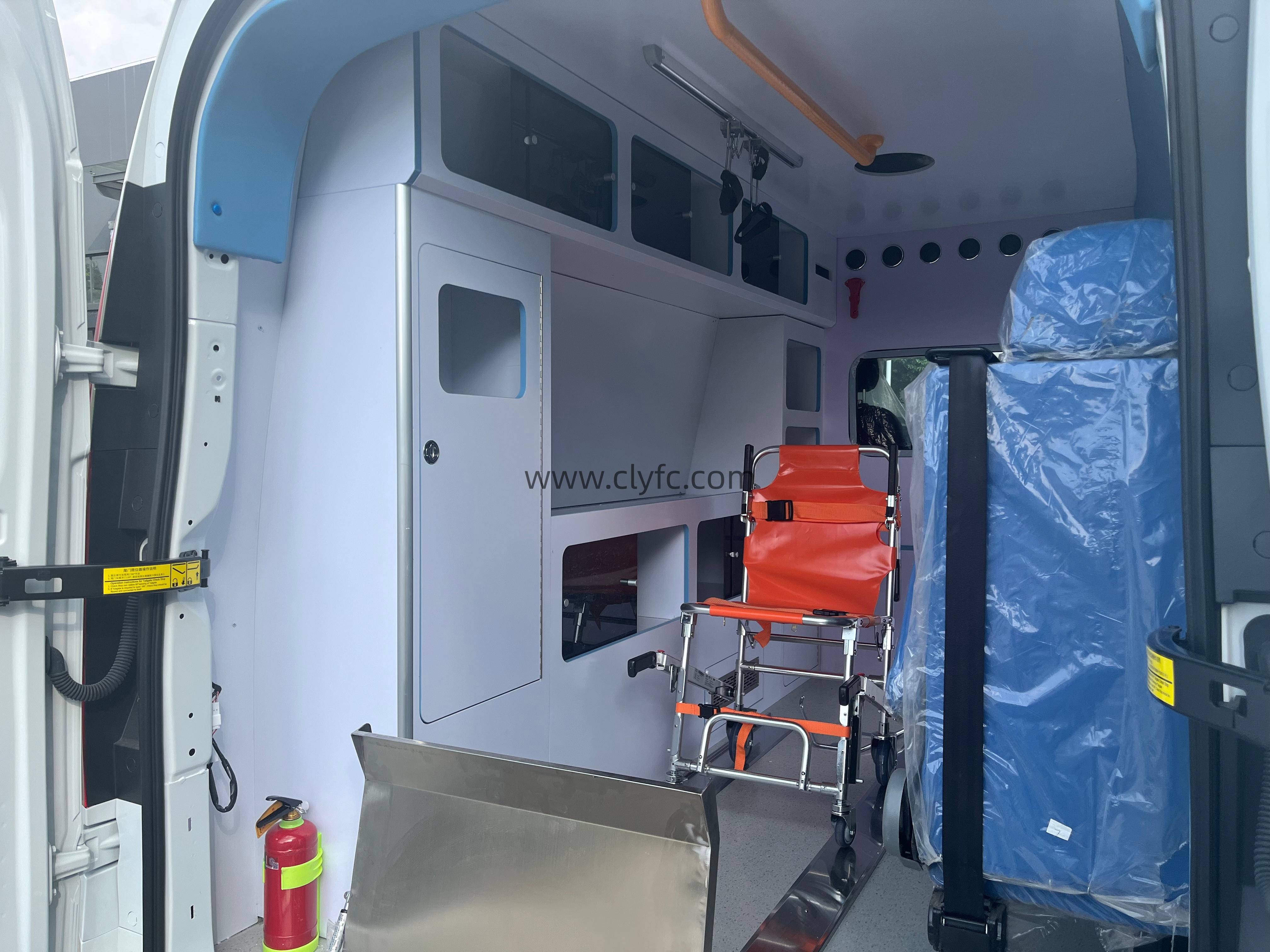
Ambulance Export Certification Requirements: ECE and FMVSS Overview
内容摘要:This article provides an overview of certification requirements for exporting ambulances to Europe and the United States, focusing on ECE regulations and FMVSS standards.
Ambulance Export Certification Requirements: ECE and FMVSS Overview
For manufacturers and trading companies in the specialized vehicle industry, exporting ambulances to Europe and North America represents a significant business opportunity—but also a formidable regulatory challenge. Unlike domestic sales, cross-border ambulance trade demands rigorous compliance with distinct technical frameworks: the European ECE (Economic Commission for Europe) regulations and the American FMVSS (Federal Motor Vehicle Safety Standards) . This article breaks down the certification pathways, testing protocols, and documentation requirements for both markets.
European Regulations: EN 1789 and ECE Directives
The European Union and its neighboring markets (including the UK, which retains similar standards post-Brexit) assess ambulance conformity under the EN 1789 standard, which classifies ambulances into four categories—Type A1, Type A2, Type B, and Type C—based on patient capacity and clinical equipment scope. Type B (patient transport) and Type C (mobile intensive care unit) are the most commonly exported configurations.
Beyond EN 1789, the vehicle itself must comply with the EU Whole Vehicle Type Approval (WVTA) framework, which incorporates over 60 ECE regulations. Key directives include:
- ECE R29 (cab strength) and ECE R66 (rollover protection) for structural integrity.
- ECE R13 (braking) and ECE R16 (seat belts) for active safety.
- ECE R10 (electromagnetic compatibility), critical given the high-density medical electronics onboard.
- ECE R107 (body construction of M2/M3 vehicles), which governs the ambulance box structure.
The certification process involves testing at an EU-recognized technical service (e.g., TÜV, UTAC), followed by submission of the test report to a national type-approval authority. Once granted, the WVTA certificate is valid across all EU member states without further testing. The entire process typically spans 16 to 24 weeks, depending on whether the base chassis already holds EU approval.
FMVSS Compliance for US Market
The United States takes a fundamentally different certification approach. Instead of a single type-approval certificate, manufacturers must self-certify that their vehicles comply with all applicable FMVSS standards. For ambulances, the most critical are:
- FMVSS 208 (occupant crash protection) and FMVSS 216 (roof crush resistance)—these require full-scale crash testing or equivalent engineering analysis.
- FMVSS 301 (fuel system integrity) for rear-impact scenarios.
- FMVSS 105 and FMVSS 135 for hydraulic and air brake performance.
- FMVSS 121 for air brake systems on heavier chassis.
Additionally, the US General Services Administration (GSA) historically mandated the KKK-A-1822F federal specification for ambulances. While GSA no longer procures under this spec, many state and municipal buyers still reference it in tender documents, making compliance a de facto market entry requirement. KKK-A-1822F covers interior layout, siren systems, electrical load management, and patient compartment dimensions.
For example, Shaanxi Automobile Group’s ambulance models undergo FMVSS crash tests before export to the US, including a 30 mph frontal barrier impact and a 20 mph rear-moving barrier test, to validate occupant protection and fuel system integrity. This engineering investment is substantial—crash test campaigns alone can cost between \(180,000 and \)350,000 per platform—but it is non-negotiable for serious market entrants.
Manufacturers also need to register as an Incomplete Vehicle Manufacturer (IVM) with the National Highway Traffic Safety Administration (NHTSA) if they sell cutaway chassis or bare ambulance bodies to upfitters. This requires submitting a Part 567 certification label and maintaining a defect reporting system.
Documentation and Testing Process
Regardless of target market, the technical documentation package is the backbone of certification. A complete dossier should include:
- Technical drawings and CAD data of the ambulance body, including material specifications and welding standards.
- Component certificates for medical equipment (e.g., ISO 7396 for gas systems, IEC 60601 for defibrillators and monitors).
- Test reports from accredited laboratories—covering crashworthiness, rollover stability (static tilt test at 28 degrees minimum), braking distance, and electrical safety.
- Quality management system certificates (ISO 9001:2015 and ideally IATF 16949 for automotive-grade production).
- Operator and maintenance manuals translated into the destination language.
The testing sequence typically follows this order:
- Stage 1: Component validation (seat anchorage, lighting, medical gas fittings) — 4 to 6 weeks.
- Stage 2: Vehicle-level dynamic tests (braking, stability, noise) — 2 to 3 weeks at a proving ground.
- Stage 3: Crash tests (ECE R29 for Europe, FMVSS 208 for the US) — 6 to 8 weeks including analysis.
- Stage 4: Documentation review and certificate issuance — 2 to 4 weeks.
A practical tip: work with a certification consultant who has established relationships with both EU technical services and US testing labs. This can reduce the total timeline from 12 months down to 7–8 months, and avoid costly re-testing due to procedural errors.
For manufacturers seeking a turnkey partner, Hubei RuiTu Technology Co., Ltd. (湖北锐途科技有限公司), located at Zengdu District, Xingguang 1st Road, Suizhou City, Hubei Province, offers comprehensive export certification support. Their engineering team has guided multiple ambulance models through both ECE WVTA and FMVSS compliance, coordinating testing schedules and preparing the full technical file. For inquiries on certification requirements, technical parameters, or procurement collaboration, contact their sales and technical hotline at 400-600-3689.
Conclusion
Exporting ambulances to Europe and the US is a high-barrier, high-reward endeavor. Europe demands EN 1789 conformity plus ECE type approval, while the US requires FMVSS self-certification and practical alignment with KKK-A-1822F specifications. The common thread is rigorous documentation, early-stage testing investment, and a clear understanding of the regulatory differences. By partnering with experienced manufacturers and consultants, exporters can navigate these requirements efficiently and establish a credible presence in the global emergency medical vehicle market.
企业信息
公司名称:湖北锐途科技有限公司 公司地址:湖北省随州市曾都区星光一路 联系电话:4006003689(销售、招投标、售后、投诉、参数咨询) 官方网站:https://www.clyfc.com 业务邮箱:info@ritumax.com