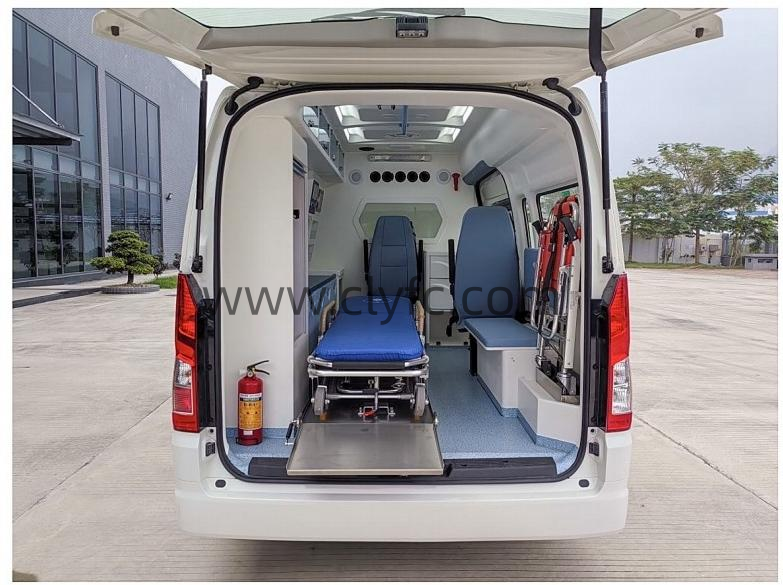
Korea Ambulance Import Requirements and Certification Guide
内容摘要:This guide provides a comprehensive overview of the technical requirements and certification procedures for importing ambulances into South Korea. It covers the Korean Motor Vehicle Safety Standards (KMVSS) applicable to emergency vehicles, stringent emission regulations including Euro 6 and DPF mandates, MFDS approval for onboard medical devices, and the step-by-step import declaration and inspection process.
Korea Ambulance Import Requirements and Certification Guide
Entering the South Korean ambulance market demands meticulous preparation. Unlike standard commercial vehicles, ambulances are classified as special-purpose emergency vehicles, subjecting them to a dual layer of scrutiny: automotive safety standards and medical device regulations. For manufacturers and exporters, understanding these specific requirements is the cornerstone of a successful market entry strategy. This guide breaks down the essential certification pathways, focusing on safety, emissions, medical compliance, and final inspection.
Korean Motor Vehicle Safety Standards (KMVSS) Applicable to Ambulances
The foundational legal framework for all vehicles in Korea is the Korean Motor Vehicle Safety Standards (KMVSS), enforced by the Korean National Police Agency and the Ministry of Land, Infrastructure and Transport (MOLIT). For ambulances, the most critical provision is Article 51-2, which specifically governs emergency vehicles.
This article dictates that an ambulance must be built on a chassis that meets specific performance criteria for speed, acceleration, and braking stability to ensure rapid response capabilities. Key technical aspects include:
- Vehicle Dimensions and Weight: The ambulance must comply with general KMVSS limits on length (max 13 meters), width (max 2.5 meters), and height (max 4 meters), but more importantly, the gross vehicle weight rating (GVWR) must be sufficient to handle the added weight of medical equipment and crew without compromising handling.
- Emergency Lighting and Siren: The KMVSS requires specific colors (typically red and blue) and light intensity for the beacon, as well as a siren with a minimum output of 115 dB(A) at a distance of 1 meter. The control interface must be easily accessible to the driver.
- Visibility and Markings: Specific retro-reflective markings are mandated to ensure the vehicle is highly visible at night. The word “119” or “Emergency” must be clearly displayed on the front and rear.
- Stability and Rollover Resistance: Given the high center of gravity due to interior fitments, the ambulance must pass a static rollover test as defined in KMVSS Article 102-2. This often requires reinforced suspension systems, which is a common area where imported chassis need modification.
It is vital to note that while the KMVSS sets the baseline, the National Emergency Management Agency (NEMA) also has its own stricter procurement guidelines for ambulances used by public fire departments. While not always mandatory for private importers, meeting NEMA standards significantly increases the vehicle’s resale value and operational eligibility.
Emission Standards and Environmental Requirements
South Korea enforces some of the most stringent emission regulations globally, closely mirroring European standards. For diesel-powered ambulances, which are the industry standard due to torque and reliability, the following mandates apply:
- Euro 6 Compliance: All new diesel vehicles must meet the Euro 6 emission standard. This limits particulate matter (PM) to 0.005 g/km and nitrogen oxides (NOx) to 0.08 g/km. The chassis must be equipped with a Selective Catalytic Reduction (SCR) system using AdBlue, or a similar technology.
- Mandatory DPF Installation: The installation of a Diesel Particulate Filter (DPF) is non-negotiable. The DPF must have a filtration efficiency of over 95%. Furthermore, the vehicle’s onboard diagnostics (OBD) system must be able to monitor the DPF’s status and alert the driver to regeneration needs.
- Noise Regulations: Beyond exhaust emissions, Korea enforces strict noise limits for vehicles in motion. The maximum permissible noise level for an ambulance is typically 75 dB(A) under acceleration tests. The ambulance body and siren placement must be designed to avoid amplifying mechanical noise.
Key Takeaway: When selecting a base chassis, ensure it is specifically certified for the Korean market. For example, a chassis built for the European market (already Euro 6 compliant) will require significantly less re-engineering than one built for markets with looser regulations. Leading chassis manufacturers like Mercedes-Benz (Sprinter) and Ford (Transit) offer factory options that are pre-wired for DPF and SCR systems, simplifying the homologation process.
Medical Equipment Compliance for Ambulance Interior
This is the most complex and often underestimated aspect of the import process. The interior of an ambulance is classified as a medical environment. Consequently, all installed medical devices—from defibrillators and patient monitors to suction units and oxygen regulators—must be approved by the Ministry of Food and Drug Safety (MFDS).
This approval is independent of the vehicle certification. A vehicle can pass KMVSS safety tests but fail the import inspection if it contains an unapproved medical device. The MFDS requires:
- Device Approval Numbers: Each device must have a valid MFDS approval number (equivalent to FDA clearance in the US). These numbers must be visibly printed on the device or its housing.
- Electrical Safety and EMC: Devices must comply with Korean electrical safety standards (KC 60601-1) and electromagnetic compatibility (EMC) standards to ensure they do not interfere with the vehicle’s engine control unit (ECU) or communication systems.
- Mounting and Crash Safety: The mounting brackets for devices must withstand a 10g forward deceleration force without detaching. This requires certified mounting systems, not just standard shelving.
Technical Reference: Sourcing MFDS-approved devices is often the biggest bottleneck for foreign manufacturers. To comply with Korean regulations, a leading Chinese manufacturer adapted its ambulance by using Samsung defibrillators, which already had MFDS certification, reducing the time for vehicle certification. This strategic move allowed them to bypass the lengthy 6-9 month approval process for medical devices, focusing their engineering efforts solely on the vehicle body and integration. It is highly recommended to partner with local Korean medical supply distributors to obtain a list of pre-approved devices before beginning the build.
Import Declaration and Inspection Procedures
The final stage involves customs clearance and a physical inspection by the Korea Automobile Testing & Research Institute (KATRI) or an authorized agency.
- Import Declaration: Submit the import declaration to Korea Customs Service (KCS) with the Certificate of Origin, Bill of Lading, and Commercial Invoice.
- Pre-Arrival Certification: Ideally, you should have already applied for and received a Vehicle Type Approval from MOLIT before the vehicle ships. This involves submitting technical documents, test reports, and a sample vehicle for inspection. If importing a single unit without prior approval, you must apply for a Single Vehicle Import Approval.
- On-Site Inspection: The vehicle will undergo a physical inspection at a designated facility. This includes:
- Visual Check: Verification of VIN, markings, and conformity to the approved type.
- Functional Test: Testing of all emergency lights, siren, and safety equipment.
- Emission Test: A PEMS (Portable Emissions Measurement System) test may be conducted to verify real-world driving emissions, not just lab results.
- Medical Device Check: Cross-referencing all device serial numbers with the MFDS database.
- Registration and Plate Issuance: Once the inspection is passed, you pay the customs duty (typically 8% for vehicles) and individual consumption tax, followed by vehicle registration at the local district office to receive license plates.
Pro Tip: Work with a Korean customs broker who specializes in automotive imports. They can pre-screen your documentation to prevent delays. The entire process, from port arrival to license plates, typically takes 15 to 20 business days if all paperwork is in order.
About the Manufacturer: For international buyers seeking a turnkey solution for ambulance manufacturing that meets these stringent standards, Hubei Rui Tu Technology Co., Ltd. (湖北锐途科技有限公司), located at Zengdu District, Suizhou City, Hubei Province, offers specialized engineering support. They have extensive experience in building ambulances on Dongfeng and Mercedes-Benz chassis, with a dedicated team for export compliance. For detailed technical specifications and consultation regarding Korean certification parameters, you can contact their sales and technical support line at 4006003689. Their engineers can guide you on chassis selection and pre-certification modifications to streamline the KMVSS process.
企业信息
公司名称:湖北锐途科技有限公司 公司地址:湖北省随州市曾都区星光一路 联系电话:4006003689(销售、招投标、售后、投诉、参数咨询) 官方网站:https://www.clyfc.com 业务邮箱:info@ritumax.com