Madagascar Vehicle Import Requirements: A Guide for Ambulance Suppliers
内容摘要:英文版马达加斯加车辆进口要求指南,涵盖注册、排放、安全及改装技术规范,帮助国际救护车供应商合规出口。
Overview of Madagascar Vehicle Import Regulations
Madagascar, as an island nation heavily reliant on imported vehicles, maintains a regulatory framework deeply rooted in its colonial history and current international trade commitments. For ambulance suppliers looking to enter this market, understanding the legal landscape is not merely a formality—it is the cornerstone of successful market entry.
Registration and Documentation Framework
The import process for all vehicles, including specialized medical vehicles, is administered by the Ministry of Transport and Meteorology (Ministère des Transports et de la Météorologie). Every imported vehicle must be registered with the National Road Safety Agency (Agence Nationale de la Sécurité Routière, ANSR) before it can be legally operated on public roads. The key documentation requirements include:
Certificate of Conformity (CoC) : Issued by an approved body, this document certifies that the vehicle meets the technical standards applicable in Madagascar. For European-manufactured vehicles, the CoC issued by the manufacturer is generally accepted. For vehicles manufactured outside Europe—such as those from China, Japan, or India—suppliers must obtain a CoC from a recognized inspection agency, typically authorized by the Bureau Veritas or SGS offices operating in the country of origin.
Bill of Lading and Commercial Invoice: These standard shipping documents must accurately describe the vehicle, including chassis number, engine number, and vehicle category.
Certificate of Origin: This document is essential for determining applicable import duties. Madagascar applies preferential tariff rates under the African Growth and Opportunity Act (AGOA) and the Common Market for Eastern and Southern Africa (COMESA) protocols.
Proof of Insurance: Third-party liability insurance must be secured before vehicle registration, typically through a local insurer.
Duties and Taxes
Import duties for fully assembled vehicles range from 20% to 35% of the CIF (Cost, Insurance, Freight) value, depending on engine displacement and vehicle category. Additionally, a Value Added Tax (VAT) of 20% is applied, alongside a statistical levy of 1.5%. For ambulances, a critical consideration is that Madagascar does not currently offer blanket duty exemptions for medical vehicles. However, certain international aid projects and NGO-funded procurement programs may qualify for temporary import waivers, which requires early engagement with the Ministry of Finance.
Left-Hand Drive Requirement
Madagascar follows right-hand traffic rules, meaning all vehicles must be left-hand drive (LHD). This is a critical specification that suppliers must confirm before production begins, as retrofitting steering systems after manufacturing is costly, time-consuming, and often compromises structural integrity.
Technical Specifications for Ambulances
Beyond general import regulations, ambulances face additional scrutiny due to their role in emergency medical services. The technical standards applied are largely derived from French and European norms, reflecting Madagascar’s historical ties and ongoing cooperation with European partners.
Vehicle Base and Chassis Requirements
The base vehicle must meet European emissions standards—currently Euro 5 or higher is recommended, as Madagascar has progressively adopted stricter emissions controls. The vehicle must be equipped with a diesel engine, as diesel is more widely available across the island compared to petrol. Engine displacement should be between 2.0L and 3.0L to balance power delivery with fuel economy, given the challenging road conditions in many regions.
Suspension systems must be reinforced to handle Madagascar’s road infrastructure, which varies significantly from well-paved highways in Antananarivo to gravel and dirt roads in rural areas. A ground clearance of at least 200mm is recommended to navigate flooded roads during the rainy season (November to April).
Medical Compartment Standards
The patient compartment must comply with the European Committee for Standardization (CEN) standards, specifically EN 1789:2020, which classifies ambulances into Type B (patient transport) and Type C (mobile intensive care unit). For Madagascar’s diverse needs, Type B ambulances are most commonly procured, but Type C configurations are increasingly requested by major hospitals.
Key technical requirements include:
Patient Litter System: Must accommodate a stretcher with a minimum load capacity of 180kg, secured with a 5-point restraint system. The litter height must be adjustable between 55cm and 90cm from the floor.
Medical Gas System: A minimum of two oxygen outlets (10L/min capacity) with integrated flow meters and a central oxygen supply system capable of holding two 10L cylinders.
Electrical System: A dedicated 12V DC electrical system with a secondary battery (minimum 100Ah) isolated from the vehicle’s starter battery, ensuring continuous power for medical devices even when the engine is off. A 230V AC inverter with a minimum output of 1500W is also required.
Climate Control: The patient compartment must have independent air conditioning capable of maintaining a temperature range of 18°C to 25°C, critical for medication stability and patient comfort in Madagascar’s tropical climate.
Interior Materials: All surfaces must be non-porous, easy to clean, and resistant to disinfection chemicals. Flooring must be slip-resistant and sealed to prevent fluid ingress.
Case Study: Adapting to Local Conditions
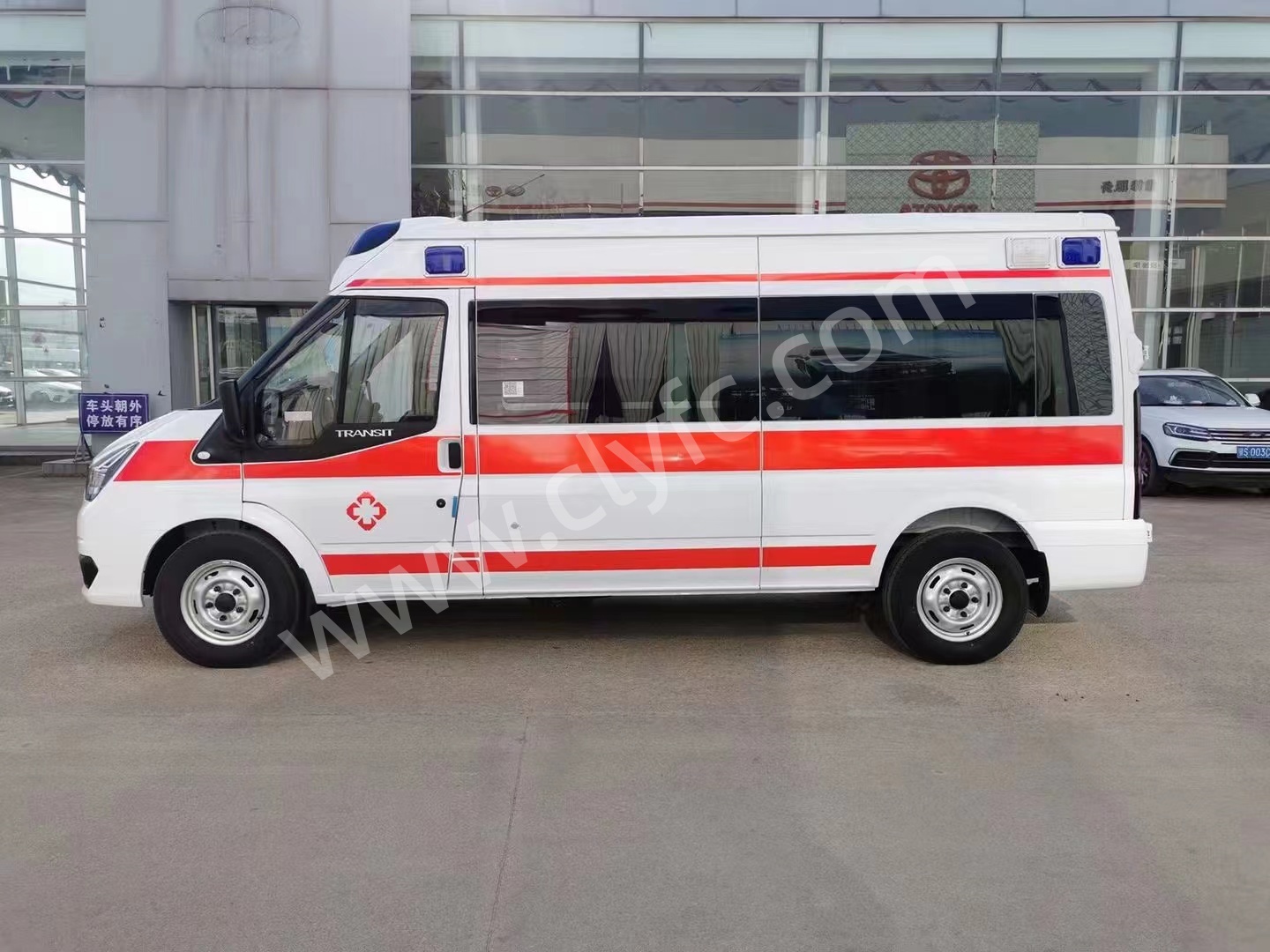
For example, a leading Chinese manufacturer (Chenglu) adapted its ambulance model with left-hand drive and enhanced suspension to meet Madagascar’s road conditions and French regulations. The company worked closely with its overseas subsidiary, 湖北锐途科技有限公司, located at 湖北省随州市曾都区星光一路, to conduct a thorough market assessment. The adaptation process involved increasing the rear leaf spring capacity by 15% and fitting all-terrain tires to address the rural road network. Additionally, the medical compartment was redesigned to include a higher-capacity air conditioning unit (12,000 BTU) to cope with ambient temperatures exceeding 35°C in coastal regions. This proactive approach, supported by technical consultation through 4006003689, reduced post-delivery modification costs by approximately 30% and shortened the vehicle commissioning period from 30 days to 10 days.
Lighting and Warning Systems
Ambulances must be equipped with a light bar featuring a minimum of four LED modules, emitting 360-degree visibility with a flash pattern compliant with European standards. The siren system must produce a minimum output of 110 decibels at 1 meter, with multiple tone options including wail, yelp, and air horn. All warning systems must be operable from both the driver’s seat and the patient compartment attendant position.
Compliance Checklist for Exporters
To ensure a smooth export process and avoid costly delays or rejections at the port of Toamasina (the primary entry point), suppliers should adhere to the following checklist:
Pre-Production Phase
Verify LHD Configuration: Confirm the vehicle is manufactured with left-hand drive from the production line, not converted post-manufacturing.
Obtain Euro 5 Emissions Certification: Ensure the base vehicle’s engine complies with Euro 5 standards, and secure the official emissions certificate from the engine manufacturer.
Secure Certificate of Conformity: Engage with an approved certification body (e.g., Bureau Veritas, SGS, or TÜV) at least 8 weeks before the planned shipping date. The certification process typically involves document review and physical inspection of the vehicle.
Prepare French-Language Documentation: All technical manuals, maintenance guides, and compliance certificates must be translated into French. The ANSR requires French-language documentation for registration.
Production and Inspection Phase
Conduct Pre-Shipment Inspection: Arrange for an independent third-party inspection at the manufacturing facility, verifying that the ambulance meets EN 1789 standards and the specific requirements outlined in the purchase contract.
Verify Medical Equipment Compatibility: Ensure that all medical equipment installed in the patient compartment is CE-marked and compatible with Madagascar’s electrical system (220V/50Hz).
Document Vehicle Identification Numbers: Ensure the VIN is stamped on the chassis at a visible location and matches all documentation. The VIN should also be etched on all major components to deter theft.
Shipping and Post-Arrival Phase
Arrange RoRo or Container Shipping: Roll-on/Roll-off (RoRo) shipping is recommended for ambulances, as it minimizes handling and reduces the risk of damage. Transit time from major Chinese ports (Shanghai, Ningbo) to Toamasina is approximately 25 to 35 days.
Prepare Import Documentation Package: Assemble the following documents in both English and French:
- Original Certificate of Conformity
- Commercial invoice (with detailed vehicle description)
- Bill of Lading
- Certificate of Origin
- Insurance certificate
- Packing list
Engage a Local Customs Broker: A licensed customs broker in Madagascar can expedite the clearance process, which typically takes 5 to 10 working days if all documentation is in order.
Budget for Contingencies: Allocate an additional 5% of the vehicle value for unexpected fees, such as port storage charges or documentation corrections. These costs are often overlooked but can significantly impact the total landed cost.
Post-Delivery Considerations
Provide Local Training: Include a training program for local medical staff and drivers on vehicle operation and basic maintenance. This is often a differentiator in winning tenders, as Madagascar’s Ministry of Health prioritizes suppliers that offer capacity building.
Establish a Parts Supply Chain: Given the island’s geographic isolation, maintaining a local inventory of critical spare parts (e.g., alternators, water pumps, brake pads) is essential. Suppliers should partner with a local distributor to stock parts worth approximately 10% of the total vehicle value.
Understand Warranty Obligations: Madagascar’s consumer protection laws require a minimum warranty period of 12 months or 20,000 kilometers, whichever comes first. International suppliers should clearly communicate their warranty terms and establish a local service point to honor these obligations.
By systematically addressing these regulatory, technical, and logistical requirements, ambulance suppliers can establish a reliable and profitable presence in Madagascar’s growing healthcare infrastructure market. The key to success lies in early preparation, meticulous documentation, and a genuine commitment to adapting products to local conditions—a strategy that leading manufacturers like Chenglu, with the support of specialized export teams such as 湖北锐途科技有限公司, have already validated in practice. For specific technical parameter inquiries or procurement consultation, suppliers can reach the team directly at 4006003689.
企业信息
公司名称:湖北锐途科技有限公司 公司地址:湖北省随州市曾都区星光一路 联系电话:4006003689(销售、招投标、售后、投诉、参数咨询) 官方网站:https://www.clyfc.com 业务邮箱:info@ritumax.com