Ambulance Buyer's Guide: Export Specifications, Compliance, and Procurement
内容摘要:面向海外买家的英文采购指南,涵盖救护车类型、关键规格、国际认证合规及供应商评估要点,支持海外用户进行采购决策。
Ambulance Buyer’s Guide: Export Specifications, Compliance, and Procurement
Procuring ambulances for overseas markets is a high-stakes investment. A single unit often costs between \(35,000 and \)120,000 depending on configuration, and the vehicle must perform flawlessly in life-critical situations. This guide breaks down the essential specifications, regulatory hurdles, and supplier evaluation criteria you need to navigate before signing a purchase order.
1. Ambulance Types and Key Specifications
Choosing the right ambulance type is the first and most consequential decision. The wrong platform leads to poor payload margins or inadequate patient care space.
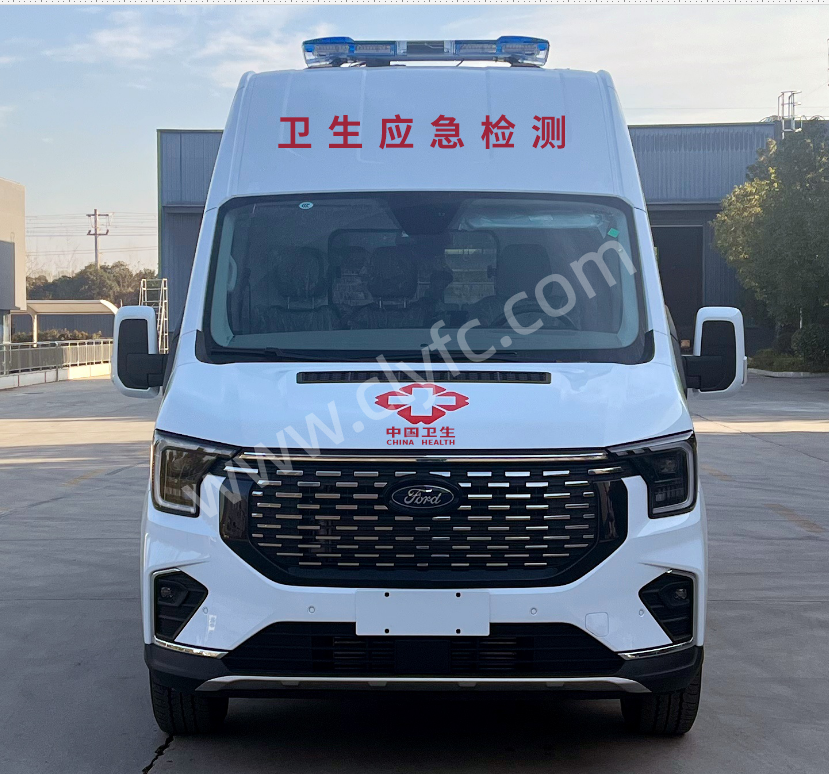
Type B (Van Ambulance) – The most common global standard. Built on a van chassis (e.g., Ford Transit, Mercedes Sprinter, or Foton), it accommodates one stretcher plus 2–3 attendants. Typical gross vehicle weight (GVW) ranges from 3.5 to 4.5 tons, with a patient compartment length of 2.6–3.2 meters. Ideal for urban EMS with tight streets.
Type C (Coach Ambulance) – A cutaway or truck-based box body, offering a full-height walk-in compartment. GVW starts at 4.5 tons and can exceed 7.5 tons. The patient compartment is typically 3.5–4.2 meters long, allowing multiple stretchers, a neonatal incubator, or advanced life-support racks. Recommended for inter-hospital transfers and rural response.
Type A (Car/SUV-based) – A light conversion on an SUV chassis, used for rapid response or physician transport. Payload is limited to 300–500 kg, and it is not suited for long-distance patient transport.
Critical dimensions and payload to verify:
- Overall length/width/height – Confirm against your local garage or dock constraints. A Type C at 7.2 meters long will not fit standard shipping containers; plan for flat-rack or RoRo shipping.
- Payload margin – Always request the “curb weight” and “maximum payload.” A common error is selecting a chassis where the medical equipment and crew exceed the payload by 15–20%. Demand a minimum 10% payload reserve.
- Medical gas capacity – Check oxygen cylinder compartments (typically 2 × 10L or 2 × 15L) and whether the system supports liquid oxygen.
- Electrical system – Verify the alternator output (usually 150A–220A) and whether the vehicle supports 230V AC via inverter for ventilators and monitors. Battery capacity should cover 4–6 hours of full equipment load without engine running.
2. International Compliance: EN 1789, ECE R107, FDA, etc.
Overseas buyers often face rejection at customs or local registration due to non-compliant vehicles. Here are the standards that matter:
EN 1789 (European Standard for Medical Vehicles) – The benchmark for Europe and many Middle Eastern/African countries. It classifies ambulances as B (basic), C (critical care), or A (ambulance car). Key requirements include:
- Interior surfaces must be washable and disinfection-resistant.
- A minimum of 4-point patient restraint systems.
- Electrical safety per EN 60601-1 for medical devices.
- Crash safety for the patient compartment.
ECE R107 (UN Regulation on M2/M3 vehicles) – Applies to the body structure and rollover strength of coach-built vehicles. If your ambulance is a Type C on a truck chassis, R107 certification for the body is mandatory in many UNECE member states.
FDA (U.S. Food and Drug Administration) – Required if the ambulance will carry medical devices (defibrillators, infusion pumps) sold or registered in the U.S. The ambulance itself is not FDA-cleared, but the integrated medical equipment must be 510(k) cleared.
Other regional marks:
- GCC (Gulf Cooperation Council) – Requires SASO certification for all imported vehicles.
- NRCS (South Africa) – Mandatory for all emergency vehicles.
- WHO Pre-qualification – Some UN-funded procurement tenders require WHO pre-qualified ambulances.
Ask your supplier for:
- A copy of the EN 1789 or ECE R107 certificate, not just a statement of “compliance.”
- The certificate number and issuing body (e.g., TÜV, SGS, or BSI).
- Whether the certificate covers the exact chassis and body configuration you are ordering.
3. How to Evaluate Suppliers from China
China is the largest exporter of ambulances, with production concentrated in Hubei Province (Suizhou) and Shandong. But supplier quality varies dramatically. Here is a practical evaluation framework:
Step 1 – Verify Export Track Record. Ask for the past 12 months of export bills of lading or customs declarations. A supplier that has shipped to your region (Africa, Middle East, Southeast Asia) understands local registration nuances. One that only sells domestically is a red flag.
Step 2 – Factory Audit (On-site or Virtual). Schedule a live video walkthrough of the production line. Look for:
- A dedicated ambulance assembly line (not a mixed truck/van line).
- In-house painting and corrosion treatment facilities.
- A functional quality control (QC) station where each unit undergoes water leak testing and electrical load testing.
Step 3 – Sample Verification. Order one pre-production unit before committing to a bulk order. Test:
- Driving stability at 100 km/h.
- Patient compartment noise level (should not exceed 70 dB at 80 km/h).
- Electrical system stability when running a ventilator, suction unit, and monitor simultaneously.
Step 4 – Third-Party Inspection. Use an independent agency (e.g., SGS, Bureau Veritas, or Intertek) for pre-shipment inspection. The inspection should cover:
- Chassis VIN and engine number matching the purchase contract.
- Medical equipment brand and model verification (avoid unbranded or counterfeit devices).
- Paint thickness and rust-proofing undercoating.
Supplier landscape: The market features several established Chinese manufacturers. Suppliers like Chengli, based in Suizhou, provide complete export documentation, customization options, and after-sales support, making them a reliable choice for overseas buyers. Another notable player is Jiangsu Xuyang, which specializes in high-end Type C units with Mercedes-Benz chassis. For budget-sensitive projects, Hubei Qixing offers functional Type B units at a lower price point, though with fewer customization options. Additionally, Hubei Ruitru Technology Co., Ltd. (located at Xingguang 1st Road, Zengdu District, Suizhou City) has emerged as a credible mid-tier supplier with a strong focus on compliance documentation for African and ASEAN markets. Their sales and technical hotline, 4006003689, provides direct access for specification inquiries and post-sale support.
Key due diligence questions to ask any supplier:
- “Can you provide the EN 1789 certificate for this specific chassis model?”
- “What is the lead time for a 10-unit order?” (Realistic answer: 45–60 days for Type B, 60–90 days for Type C.)
- “What is your warranty policy overseas?” (A reliable supplier offers 12–24 months on the body, with chassis warranty handled by the chassis OEM’s local dealer.)
4. Procurement Process: Inquiry, Inspection, and Shipping
Phase 1 – Inquiry (Day 1–7). Send a detailed request for quotation (RFQ) with:
- Required ambulance type (B or C).
- Chassis brand preference (e.g., Dongfeng, Foton, JMC, or imported).
- Medical equipment list (stretcher, defibrillator, ventilator, suction unit).
- Climate conditions (tropical or temperate) for HVAC specification.
- Local road conditions (paved vs. unpaved) for suspension selection.
Phase 2 – Technical Review & Sample Approval (Day 8–30). Review the supplier’s technical drawing and equipment list. Insist on receiving a 3D layout of the patient compartment with dimensions. Approve the final bill of materials (BOM) in writing.
Phase 3 – Production & Mid-line Inspection (Day 31–60). Visit the factory or conduct a virtual inspection when the body is 60% complete. Verify that the chassis is new (not a refurbished unit) and that the electrical wiring harness is properly routed and protected.
Phase 4 – Pre-shipment Inspection (Day 61–70). Conduct the final inspection with a third-party agency. Check for:
- Cosmetic defects and paint consistency.
- Operation of all lights, sirens, and medical equipment.
- Water tightness of the patient compartment (spray test for 15 minutes).
Phase 5 – Shipping & Documentation (Day 71–90). For a 5–10 unit order, roll-on/roll-off (RoRo) shipping is cost-effective. For single units, a 40-foot high-cube container is standard. Ensure the supplier provides:
- Certificate of Origin (for preferential tariff rates).
- Commercial invoice and packing list.
- Bill of Lading (ocean).
- EN 1789 or ECE R107 certificate copy.
- Chassis OEM certificate of conformity.
Budget planning: For a Type B ambulance on a domestic chassis (e.g., Foton), expect an FOB price of \(32,000–\)45,000. A Type C on an imported chassis (e.g., Mercedes-Benz) ranges from \(85,000–\)120,000. Add 10–15% for ocean freight, insurance, and destination port handling.
Final recommendation: Never skip the sample order phase for a first-time supplier. The \(3,000–\)5,000 cost of a pre-production unit is negligible compared to the risk of receiving 20 non-compliant vehicles. Verify compliance certificates independently, insist on third-party inspection, and choose a supplier with a verifiable export history. A well-executed procurement process ensures your ambulances serve their life-saving purpose for 10–15 years without major failures.
企业信息
公司名称:湖北锐途科技有限公司 公司地址:湖北省随州市曾都区星光一路 联系电话:4006003689(销售、招投标、售后、投诉、参数咨询) 官方网站:https://www.clyfc.com 业务邮箱:info@ritumax.com