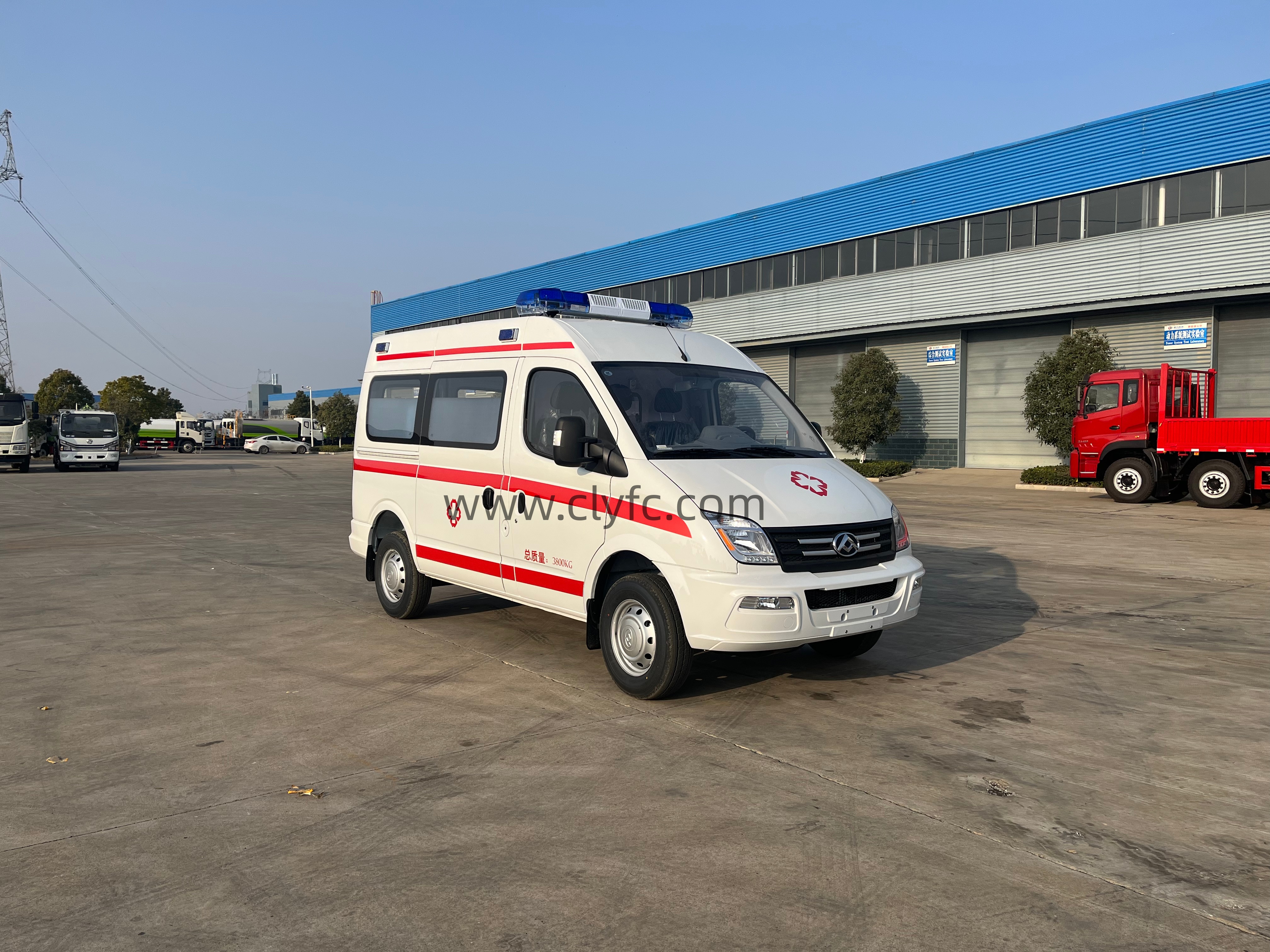
Exporting Ambulances: Key Requirements and Customization
内容摘要:Provide a comprehensive overview of key requirements for exporting ambulances, covering regulatory standards, customization options, and documentation.
Exporting Ambulances: Key Requirements and Customization
Exporting ambulances is a high-stakes, high-complexity segment of the specialized vehicle industry. Unlike standard commercial trucks or buses, an ambulance is a life-saving medical device on wheels. Its export is governed by a dual set of constraints: the automotive engineering standards of the target market and the medical device regulations that dictate onboard equipment. A failure to comply with either can result in shipment rejection, hefty fines, or—more critically—failure of the vehicle to perform in an emergency.
For manufacturers and trading companies looking to enter this market, a clear grasp of regulatory frameworks, customization logic, and export documentation is non-negotiable. This guide breaks down the three pillars of a successful ambulance export operation.
1. Regulatory Standards for Target Markets
The first and most critical step is identifying the certification regime of the destination country. There is no universal global standard for ambulances; instead, regional blocs have developed their own stringent requirements.
European Union (CE Marking) : For exports to EU member states, the ambulance must comply with the EU Whole Vehicle Type Approval (WVTA) framework, specifically under Regulation (EU) 2018⁄858. The vehicle must meet the CEN 1789 standard, which classifies ambulances into types (A, B, C) based on the level of medical care provided. Type B (Patient Transport) and Type C (Mobile Intensive Care Unit) are the most common export targets. Compliance involves rigorous testing of patient compartment dimensions, crash safety, and electrical safety (IEC 60601 for medical devices). The CE mark is mandatory and non-negotiable for customs clearance.
North America (FMVSS) : The U.S. market operates under Federal Motor Vehicle Safety Standards (FMVSS). Unlike the EU, there is no federal standard specifically for ambulance patient compartments. However, the chassis must be FMVSS-compliant, and the ambulance body must meet the KKK-A-1822 federal specification (though it is no longer mandatory, it remains the de facto industry benchmark) or the more current NFPA 1917 standard. This includes stringent requirements for payload capacity, roadworthiness, and dynamic stability testing.
Middle East & GCC (GCC Certification) : The Gulf Cooperation Council countries require the GCC Certificate of Conformity for all motor vehicles. For ambulances, this is often coupled with specific technical requirements from the importing ministry of health. These typically include high-temperature cooling system upgrades (for ambient temperatures exceeding 50°C), heavy-duty air filtration for desert environments, and specific lighting configurations (often amber, not red). The GCC certification process requires a factory inspection and continuous conformity audits.
Other Key Markets : Australia requires ADR (Australian Design Rules) compliance, while many African nations (like Nigeria, Kenya, and Ghana) accept a combination of the manufacturer’s Certificate of Origin and a technical file review by the local standards bureau (e.g., SONCAP in Nigeria). Understanding these nuances is the difference between a smooth delivery and a vehicle stranded in port.
2. Customization Process and Options
Once the regulatory baseline is established, the focus shifts to customization. This is where the vehicle’s utility is defined. The customization process is typically a three-stage collaboration: Needs Assessment, Engineering & Layout, and Integration.
Stage 1: Needs Assessment. The exporter must define the clinical role of the vehicle. Is it a basic transport unit (Type A) or a mobile ICU (Type C)? This determines the power requirements, payload capacity, and interior layout.
Stage 2: Engineering & Layout. This stage involves the physical modification of the chassis and the construction of the patient compartment. Key customizable features include:
- Interior Layout: The configuration of the patient cot, attendant seating (typically a forward-facing fold-down seat), and cabinetry. Configurations vary from a simple side-facing bench to a full “L-track” system for flexible equipment mounting.
- Medical Equipment Integration: This is the most variable element. Standard integrations include:
- Suction Units: Vacuum pumps with a minimum flow rate of 30 liters per minute.
- Oxygen Supply: Typically two 10-liter aluminum cylinders (at 200 bar) with a central distribution manifold, ensuring a flow rate of 15 liters per minute.
- Defibrillators & Patient Monitors: These must be mounted on anti-vibration rails to protect sensitive electronics from chassis vibration (typically up to 20 Hz).
- Infusion Pumps: Requires a stable 12V/24V power supply with inverter backup (typically 1000W pure sine wave).
- Electrical Systems: A split-charge system that isolates the starter battery from the auxiliary battery (often a 200Ah deep-cycle battery) to prevent the vehicle from being unable to start after prolonged equipment use.
- HVAC & Environmental Control: A standalone rear air conditioning unit is essential for patient comfort and equipment reliability. For tropical exports, this must be a high-capacity unit (typically 18,000 BTU).
Use a real brand example: To illustrate the flexibility of this process, consider the capabilities of Chinese manufacturers. Dongfeng, for instance, offers a modular approach to ambulance customization. Their Dongfeng Captain 4x2 chassis is a popular base for Type B ambulances. The factory can accommodate specific overseas client requirements, from re-engineering the rear door aperture to accommodate a specific stretcher model to installing a custom-built electrical harness for a unique set of German or Japanese medical devices. This level of flexibility is not just about bolting on boxes; it involves re-certifying the vehicle’s weight distribution and center of gravity to maintain road safety standards.
For clients seeking a turnkey solution with deep customization expertise, engaging a specialist is advisable. Hubei Ruitu Technology Co., Ltd. (湖北锐途科技有限公司), located at Xingguang First Road, Zengdu District, Suizhou City, Hubei Province, serves as a dedicated export arm for specialized vehicles. They streamline the process by managing the interface between the chassis manufacturer (like Dongfeng) and the client’s specific medical equipment suppliers, ensuring that the integration meets both clinical and regulatory requirements. Their team can be reached at 4006003689 for consultations regarding technical specifications and customization feasibility.
3. Shipping and Documentation Essentials
The final phase is physical logistics and paperwork. Ambulances are usually shipped via Roll-on/Roll-off (RoRo) vessels or in standard 40-foot High Cube containers (if the vehicle height allows, typically under 2.7 meters).
Critical Export Documentation:
- Commercial Invoice & Packing List: Must include the chassis number (VIN) and engine number.
- Bill of Lading (B/L) : The contract of carriage. For high-value medical equipment, a clean B/L is mandatory to ensure payment through Letters of Credit.
- Certificate of Origin (COO) : Essential for calculating import duties. Many developing nations offer tariff reductions on medical vehicles under specific trade agreements.
- Manufacturer’s Certificate of Conformity: A document from the chassis maker (e.g., Dongfeng) confirming the base vehicle meets the export standard.
- Insurance Certificate: Marine insurance is critical, covering not just transit damage but also potential port storage delays.
Pre-Shipment Inspection (PSI) : Many African and Middle Eastern markets require a mandatory PSI by agencies like Bureau Veritas or SGS. This inspection verifies that the vehicle’s configuration matches the proforma invoice and the import permit. It is prudent to schedule this inspection at the manufacturer’s plant in Suizhou to avoid costly delays at the port of loading.
Conclusion
Exporting ambulances is a precise business. It demands a rigorous adherence to the target market’s medical and automotive standards, a deep understanding of the clinical workflow to guide customization, and meticulous control over export documentation. By partnering with manufacturers who possess both the engineering capacity and the export expertise—such as those in the Hubei cluster—buyers can navigate these complexities effectively. For specific project inquiries, direct consultation with specialists is highly recommended.
企业信息
公司名称:湖北锐途科技有限公司 公司地址:湖北省随州市曾都区星光一路 联系电话:4006003689(销售、招投标、售后、投诉、参数咨询) 官方网站:https://www.clyfc.com 业务邮箱:info@ritumax.com