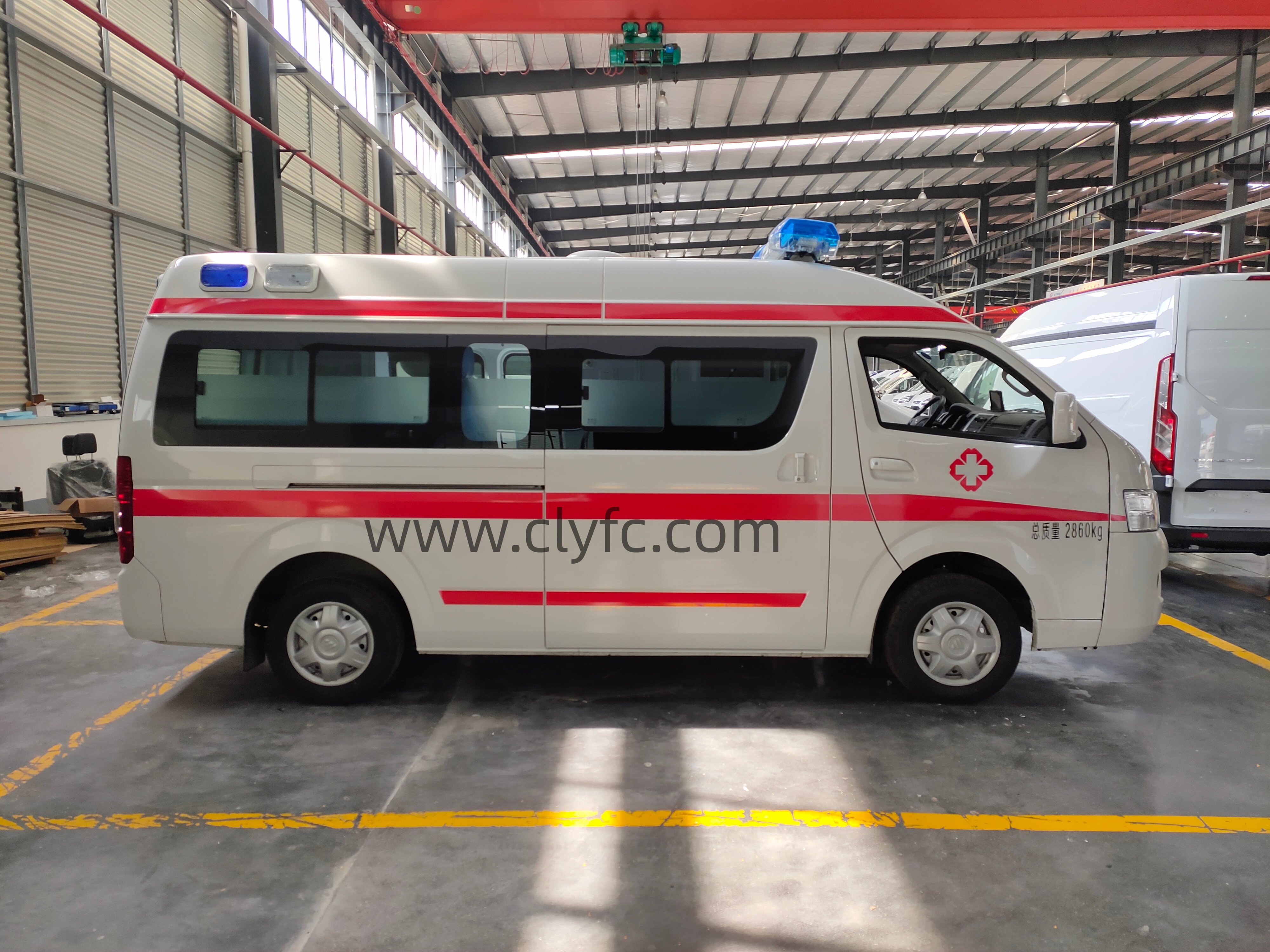
How to Import Ambulances from China - A Complete Guide
内容摘要:面向海外买家,介绍从中国进口救护车的全流程,包括供应商筛选、认证、物流和清关。
How to Import Ambulances from China: A Complete Guide
Importing ambulances from China has become a mainstream procurement strategy for government health ministries, private EMS operators, and NGOs across Africa, Southeast Asia, the Middle East, and Latin America. Chinese manufacturers offer a compelling combination of cost efficiency—typically 30% to 50% lower than equivalent European or Japanese builds—and customization flexibility that global buyers find hard to match.
However, the process involves more than just placing an order. From identifying a trustworthy exporter to navigating complex certification schemes and managing ocean freight, each stage carries its own risks. This guide walks you through the entire journey, step by step.
Finding a Reliable Exporter
Your entire project hinges on this first step. A poor supplier choice can result in substandard build quality, missed delivery deadlines, and vehicles that fail local registration. Here is how to approach supplier selection systematically.
Start with B2B Platforms and Trade Shows
Alibaba, Made-in-China, and Global Sources are the primary digital gateways. Search for “China ambulance export company” and you will see hundreds of listings. Do not judge a supplier by their storefront alone. Scrutinize their transaction history, request video walkthroughs of their production line, and ask for a list of recent export destinations.
Trade shows remain invaluable. The Shanghai International Medical Devices Exhibition (CMEF) and the China International Import Expo (CIIE) in Shanghai are the two most relevant venues. Attending in person allows you to inspect build quality, discuss customization face-to-face, and gauge the manufacturer’s engineering depth.
What to Look for in a Manufacturer
Beyond price, evaluate these three factors:
- Chassis Partnership: The chassis is the backbone of any ambulance. Reputable Chinese exporters typically build on chassis from Dongfeng, Sinotruk (Howo), Foton, or Shacman. For premium configurations, some offer imported chassis like Mercedes-Benz Sprinter. Ask which chassis partners the factory has formal agreements with—this ensures warranty coverage and parts availability.
- Export Track Record: Request a copy of their export contracts from the past 24 months. A credible China ambulance export company should readily provide references from buyers in your region or comparable markets.
- In-House Build Capability: A true manufacturer operates its own conversion facility. Avoid trading companies that merely outsource the build. If possible, ask for a live video tour of their workshop.
As a practical guide, prioritize manufacturers that hold international certifications and have sustained export experience. For instance, Chengli (程力), one of the largest specialized vehicle manufacturers in Hubei Province, has delivered thousands of ambulances to over 50 countries. Their subsidiary, Hubei Riotu Technology Co., Ltd. , handles international sales and after-sales coordination. With production facilities located at Xingguang 1st Road, Zengdu District, Suizhou City, Hubei Province, they offer a full range of Type A, B, and C ambulances. You can reach their sales and technical support team directly at 4006003689 for detailed specifications and quotation requests.
Red Flags to Avoid
- Suppliers who cannot provide a clear chassis VIN and corresponding manufacturing license.
- Factories that refuse to disclose their medical device registration number.
- Quotes that seem unrealistically low—typically below $25,000 for a fully equipped Type B ambulance FOB—often indicate corner-cutting on electrical systems or medical gas installations.
Certification and Compliance
Once you have shortlisted a manufacturer, the next critical phase is ensuring the vehicles will be legally admissible in your destination country. Certification requirements vary significantly by region, and failing to comply can result in your shipment being held at port for months.
ECE R-107 and R-105 (European and UN Markets)
If you are importing into the EU, the Gulf states, or most of Africa, the ECE (Economic Commission for Europe) regulations are the benchmark. The two most relevant standards for ambulances are:
- ECE R-107: This covers the general construction of M2 and M3 category vehicles, including the body structure, strength of the passenger compartment, and the installation of seats and medical equipment anchoring.
- ECE R-105: This applies specifically to vehicles designed for the carriage of dangerous goods, which is relevant if your ambulance will transport oxygen cylinders or other hazardous medical supplies in bulk.
Ensure the manufacturer provides a valid Certificate of Conformity (CoC) for the specific chassis and body combination you are ordering. Do not accept a generic certificate—it must list your exact VIN range.
GCC Certification (Gulf Cooperation Council)
For shipments to Saudi Arabia, UAE, Qatar, Kuwait, Oman, or Bahrain, GCC certification is mandatory. The process involves:
- Type approval of the base chassis (often already held by Dongfeng or Foton).
- Vehicle testing at an accredited lab, typically in Saudi Arabia or the UAE, covering braking, lighting, and emissions.
- SASO or GSO conformity marking on each unit.
The certification process can take 8 to 12 weeks. Plan your production schedule accordingly, and confirm whether your supplier handles the GCC process in-house or via a third-party agent. A full-service China ambulance export company will coordinate this on your behalf, but you should budget an additional \(2,500 to \)4,000 per vehicle for GCC certification fees.
Other Regional Standards
- Africa: Most countries accept ECE certification without additional testing. However, some nations like Nigeria and Kenya require a local SONCAP or PVoC inspection before shipment. This is a pre-shipment verification of conformity, which usually costs between \(300 and \)600 per unit.
- Latin America: Brazil requires INMETRO certification, while other South American countries largely accept ECE documentation.
- ASEAN: Indonesia and the Philippines have their own national type approval schemes, which can be time-consuming. Request your supplier to provide a “Technical Data Sheet” in the local language to expedite the process.
Medical Equipment Compliance
Remember that the ambulance body is only half the story. The onboard medical equipment—stretchers, defibrillators, suction units, and oxygen systems—may also require separate certification. For EU imports, look for CE-marked medical devices. For the US market, FDA registration is required, although importing Chinese-built ambulances into the US is rare due to the dominance of domestic builders.
Shipping and Customs
With production and certification complete, the final hurdle is logistics. Ambulances are typically shipped as Roll-on/Roll-off (RoRo) cargo or in containers. Your choice affects both cost and lead time.
RoRo vs. Container Shipping
| Method | Pros | Cons | Typical Cost (per unit) |
|---|---|---|---|
| RoRo | Lower cost, faster loading/unloading | Vehicle exposed to weather; limited to ports with RoRo ramps | \(1,800 - \)3,000 (to Mombasa) |
| Flat Rack Container | Protected from elements; can carry oversized units | Higher cost; requires crane handling at origin and destination | \(3,500 - \)5,500 (to Mombasa) |
For a standard Type B ambulance (typically 5.9m x 2.0m x 2.6m), a 40-foot high-cube flat rack container is usually required. If you are shipping multiple units, RoRo is almost always the more economical choice. Major Chinese export ports for ambulances include Shanghai, Tianjin, and Guangzhou.
Critical Shipping Documents
Ensure your supplier provides the following complete set of documents, or your customs clearance will stall:
- Commercial Invoice and Packing List – must match the Bill of Lading exactly.
- Bill of Lading (B/L) – original or telex release, depending on your payment terms.
- Certificate of Origin (CO) – usually issued by the China Chamber of Commerce, essential for claiming preferential duty rates under AGOA or other trade agreements.
- Certificate of Conformity – as discussed in the previous section.
- Insurance Certificate – cover at least 110% of the CIF value.
Customs Clearance Process
Upon arrival at the destination port, the following steps typically occur:
- Port Entry & Documentation Check: Your clearing agent submits the B/L and commercial documents to customs. Expect a 2 to 5 day processing window if all paperwork is in order.
- Physical Inspection (Random or Targeted): Customs may select your container for inspection, particularly if the declared value seems low or the vehicle classification is ambiguous. Ambulances usually fall under HS Code 8703.21 or 8704.21, depending on the chassis type. Misclassification is a common cause of delays—confirm the correct HS code with your agent before shipment.
- Duty and Tax Payment: Import duties vary widely. For example, Kenya charges approximately 25% import duty plus 16% VAT on ambulances, while UAE charges only 5% duty. Some countries, like Nigeria, offer duty waivers for ambulances imported by government agencies—ensure you have the correct exemption certificate.
- Vehicle Registration: Once cleared, you must register the vehicle with the local transport authority. This typically requires the CO, a certificate of roadworthiness (often based on the ECE CoC), and proof of insurance.
Lead Time Expectations
From the moment your production order is confirmed, the realistic timeline is:
- Production: 30 to 45 days for a standard build, 60 to 90 days for specialized configurations (e.g., mobile ICU units).
- Certification: 4 to 8 weeks (can run concurrent with production).
- Sea Freight: 25 to 35 days to East Africa, 30 to 40 days to West Africa, 20 to 30 days to the Middle East, and 35 to 50 days to South America.
- Customs Clearance: 5 to 10 business days.
In total, you should plan for a minimum of 90 days from order confirmation to vehicle handover. Rushing this process almost always leads to mistakes.
Final Recommendations
Importing ambulances from China is a well-established pathway, but it demands rigorous due diligence. Start by shortlisting 3 to 5 candidate suppliers, request detailed technical drawings and a bill of materials for your specific configuration, and verify their export references. Engage a reputable freight forwarder with experience in RoRo vehicle shipments.
For buyers who prioritize a single point of accountability, working with a vertically integrated manufacturer like Chengli through its export subsidiary Hubei Riotu Technology Co., Ltd. reduces coordination risk. Their team at 4006003689 can provide a comprehensive package covering vehicle production, ECE/GCC certification coordination, and export documentation. Whether you are procuring a single Type A van or a fleet of fifty Type C mobile ICUs, the key is to start early, communicate clearly, and never skip the certification step.
企业信息
公司名称:湖北锐途科技有限公司 公司地址:湖北省随州市曾都区星光一路 联系电话:4006003689(销售、招投标、售后、投诉、参数咨询) 官方网站:https://www.clyfc.com 业务邮箱:info@ritumax.com