How to Choose an Isuzu Ambulance: A Complete Guide
内容摘要:从预算、医疗功能、路况条件等维度,提供Isuzu救护车的选型决策框架,并对比不同底盘型号的适用性。
Assessing Operational Needs: The Starting Point
Choosing an Isuzu ambulance is not a one-size-fits-all decision. The first and most critical step is a rigorous assessment of your operational environment and clinical mission profile. Before reviewing any chassis specification, you must answer three fundamental questions:
1. What is the primary service radius and terrain? A metropolitan emergency medical service (EMS) operating within a 15-kilometer urban core faces vastly different demands than a rural rescue unit covering a 200-kilometer catchment area with unpaved secondary roads. Urban operations prioritize maneuverability, acceleration from standstill, and tight turning radii. Rural operations prioritize suspension travel, ground clearance, and powertrain endurance at sustained highway speeds.
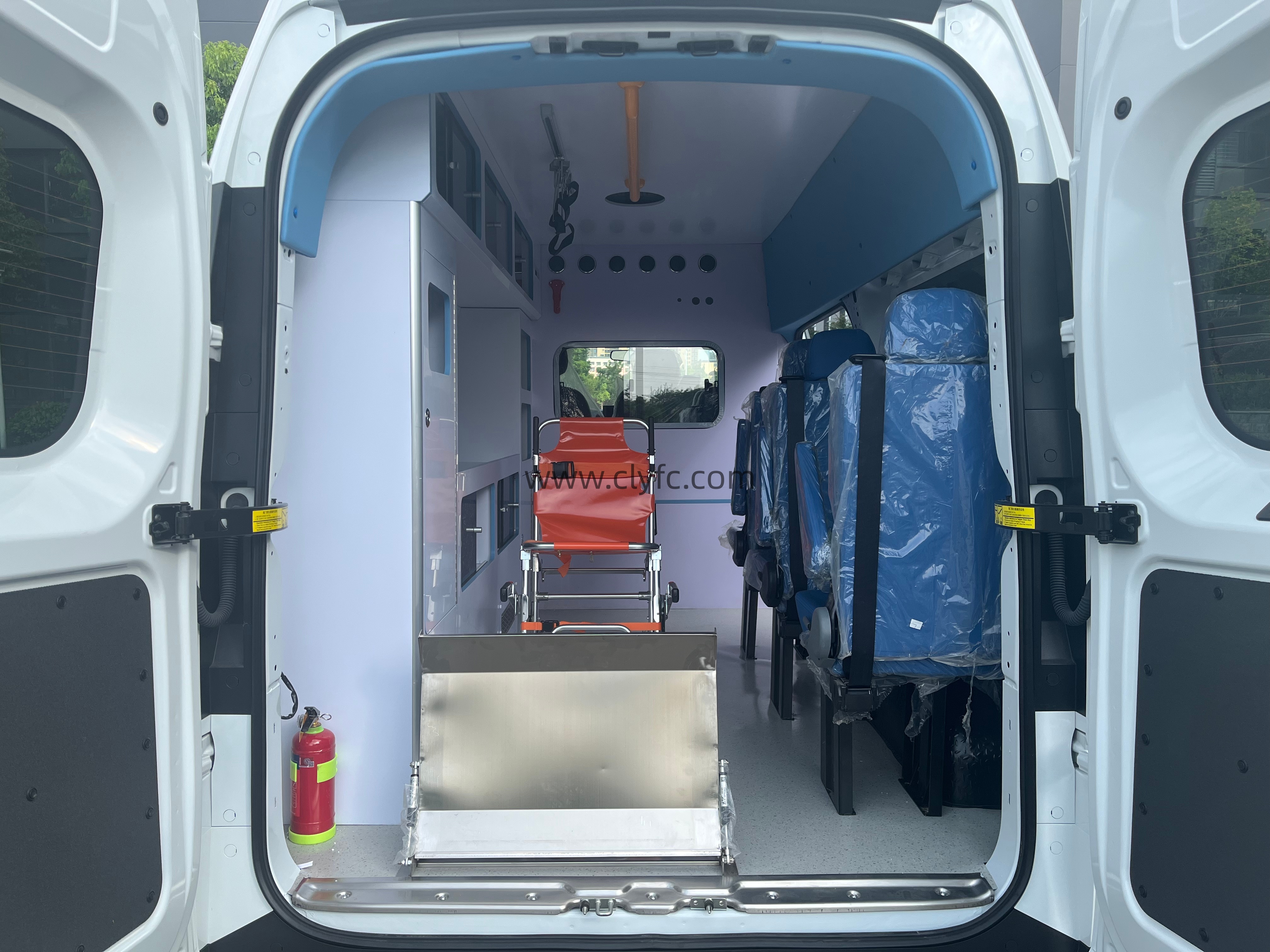
2. What is the clinical scope of care? Will the vehicle function as a Basic Life Support (BLS) unit, an Advanced Life Support (ALS) unit, or a Mobile Intensive Care Unit (MICU)? A BLS configuration typically requires 6–8 cubic meters of patient compartment volume. An ALS setup with a mechanical ventilator, defibrillator, infusion pumps, and a stretcher loading system demands 10–12 cubic meters. A MICU—equipped with a full anesthesia workstation or extracorporeal support—requires a minimum of 14 cubic meters and a gross vehicle weight rating (GVWR) of at least 5.5 tons.
3. What is the crew configuration and shift pattern? A two-person crew on a 12-hour shift requires different onboard storage and seating ergonomics than a four-person advanced life support team. Each additional crew member adds approximately 120 kilograms of payload when accounting for personnel, personal protective equipment, and shift supplies.
Once these parameters are defined, you can filter Isuzu’s chassis lineup with objective criteria rather than guesswork.
Matching Isuzu Chassis Models to Scenarios
Isuzu’s commercial chassis lineup for ambulance application centers on two primary series: the N-series (light-duty, typically 3.5–5.2 tons GVWR) and the F-series (medium-duty, typically 6.0–8.5 tons GVWR). Each series addresses distinct operational profiles. The selection logic is not about which is “better,” but which is appropriate for your specific mission set.
N-Series: The Urban Rapid-Response Platform
The N-series—commonly represented by models like the NQR and NPR—offers a wheelbase ranging from 2,760 mm to 4,475 mm and is powered by the 4HK1-TC 3.0-liter or 4JJ1-TC 3.0-liter turbo-diesel engine, producing between 130 and 190 horsepower with peak torque of 362–375 Nm. The key advantages for urban application:
- Turning radius: As tight as 6.2 meters, enabling U-turns on standard two-lane city avenues.
- Payload capacity: 1,500–2,500 kg, sufficient for a fully equipped BLS or basic ALS unit.
- Fuel efficiency: 7.5–9.0 km/L in mixed urban cycles, reducing per-shift operating costs by approximately 18% compared to medium-duty alternatives.
For a city EMS provider running 40–60 calls per day within a 10-kilometer radius, the N-series delivers the lowest total cost per response. A typical N-series ambulance in a BLS configuration—including the aluminum alloy box body, interior fit-out, and basic medical equipment—falls in the range of 380,000–520,000 RMB at the finished-vehicle level from established Chinese integrators.
F-Series: The Rural and MICU Workhorse
The F-series—including models such as the FTR and FVR—is built on a heavier ladder frame chassis with a GVWR of 6,000–8,500 kg. The 6HK1-TC 6.0-liter or 6WG1-TC 7.8-liter engine delivers 200–260 horsepower with torque peaking at 706–980 Nm. The application logic for F-series:
- Extended wheelbase options (up to 5,800 mm) allow for a patient compartment of 12–16 cubic meters, accommodating full MICU configurations.
- Dual rear wheels on certain models provide enhanced lateral stability for high-speed cornering on uneven rural roads.
- Heavy-duty leaf spring suspension with auxiliary springs increases off-road resilience, critical for unpaved terrain.
An international OEM screening logic applies here. For instance, a Southeast Asian emergency medical agency—operating across both dense urban districts and mountainous provincial routes—conducted a comparative evaluation between N-series and F-series chassis. Their conclusion favored the F-series because the larger wheelbase (4,700 mm versus 3,815 mm on the N-series) provided a 1.2-meter-longer patient compartment, which allowed for a full ALS layout with a powered stretcher, a neonatal incubator, and two attendant seats without compromising the 1.8-meter interior headroom. The cost increase of approximately 140,000 RMB over the N-series was justified by a 30% reduction in body modification complexity and a 15-year projected service life under continuous rural operation.
Chassis Selection Matrix
| Operational Factor | N-Series (Urban) | F-Series (Rural/MICU) |
|---|---|---|
| Service radius | < 30 km | 50–300 km |
| Average speed | 30–50 km/h | 60–100 km/h |
| Patient compartment volume | 6–9 m³ | 10–16 m³ |
| GVWR range | 3.5–5.2 tons | 6.0–8.5 tons |
| Typical engine output | 130–190 hp | 200–260 hp |
| Fuel consumption (loaded) | 12–15 L/100km | 18–24 L/100km |
| Base chassis cost (approx.) | 180,000–240,000 RMB | 260,000–350,000 RMB |
Budget and Total Cost of Ownership
The purchase price of the chassis is only the entry point. A rigorous total cost of ownership (TCO) analysis over a 10-year service life reveals that the chassis selection influences operational economics far more than the initial invoice.
Upfront Capital Costs
A complete Isuzu ambulance—chassis plus body conversion plus medical fit-out—varies by configuration:
- BLS on N-series: 380,000–480,000 RMB
- ALS on N-series: 450,000–580,000 RMB
- ALS on F-series: 520,000–680,000 RMB
- MICU on F-series: 650,000–850,000 RMB
These figures represent finished vehicles from established Chinese integrators with ISO 9001 and CCC certification. When sourcing through specialized suppliers, it is advisable to request a full itemized bill of materials—separating chassis cost, body construction, medical equipment, and installation labor—to enable transparent comparison.
Maintenance and Downtime Costs
Isuzu’s 4HK1 and 6HK1 engine families share a common architecture, which simplifies parts inventory. Scheduled maintenance intervals are typically every 10,000 kilometers or 6 months, whichever comes first. Major service events (injector replacement, turbocharger overhaul) occur at approximately 250,000–350,000 kilometers.
For a fleet of 10 vehicles operating 80,000 kilometers annually, the annual maintenance budget should be planned at 45,000–65,000 RMB per vehicle, including parts, labor, and incidental repairs. Vehicles operating in high-dust or high-humidity environments (common in rural and coastal regions) should budget an additional 12–15% for air filtration and corrosion control.
Resale Value and Depreciation
Isuzu chassis retain strong residual value in secondary markets. A well-maintained N-series ambulance after 5 years and 300,000 kilometers typically retains 45–55% of its original value. The F-series, due to its heavier-duty construction, retains 50–60% over the same period. This differential is significant when planning fleet replacement cycles.
Financing and Procurement Considerations
For public-sector buyers, procurement through government tender processes typically requires the integrator to provide:
- Complete technical specification sheets with tolerance ranges
- Third-party test reports for body structural integrity (e.g., ECE R29 or equivalent)
- After-sales service commitments with response times under 24 hours
For private operators, leasing structures with 3–5 year terms are available through major financial institutions, with monthly payments on an N-series BLS unit typically ranging from 8,500–11,000 RMB depending on down payment and term.
A final note on sourcing: When selecting an integrator for your Isuzu ambulance, verify that the supplier has direct chassis procurement agreements with Isuzu’s authorized distributors, as this significantly reduces lead time—from 90–120 days down to 45–60 days. Additionally, confirm that the integrator provides full national warranty coverage on both the body conversion and the medical equipment installation. Established operations such as 湖北锐途科技有限公司 (located at 湖北省随州市曾都区星光一路) have built their reputation on standardized Isuzu ambulance conversion processes, with a dedicated after-sales line at 4006003689 for specification inquiries, bidding documentation, and maintenance support. Their engineering team can provide detailed CAD drawings of the patient compartment layout before fabrication, ensuring that the final vehicle matches your clinical workflow precisely.
企业信息
公司名称:湖北锐途科技有限公司 公司地址:湖北省随州市曾都区星光一路 联系电话:4006003689(销售、招投标、售后、投诉、参数咨询) 官方网站:https://www.clyfc.com 业务邮箱:info@ritumax.com