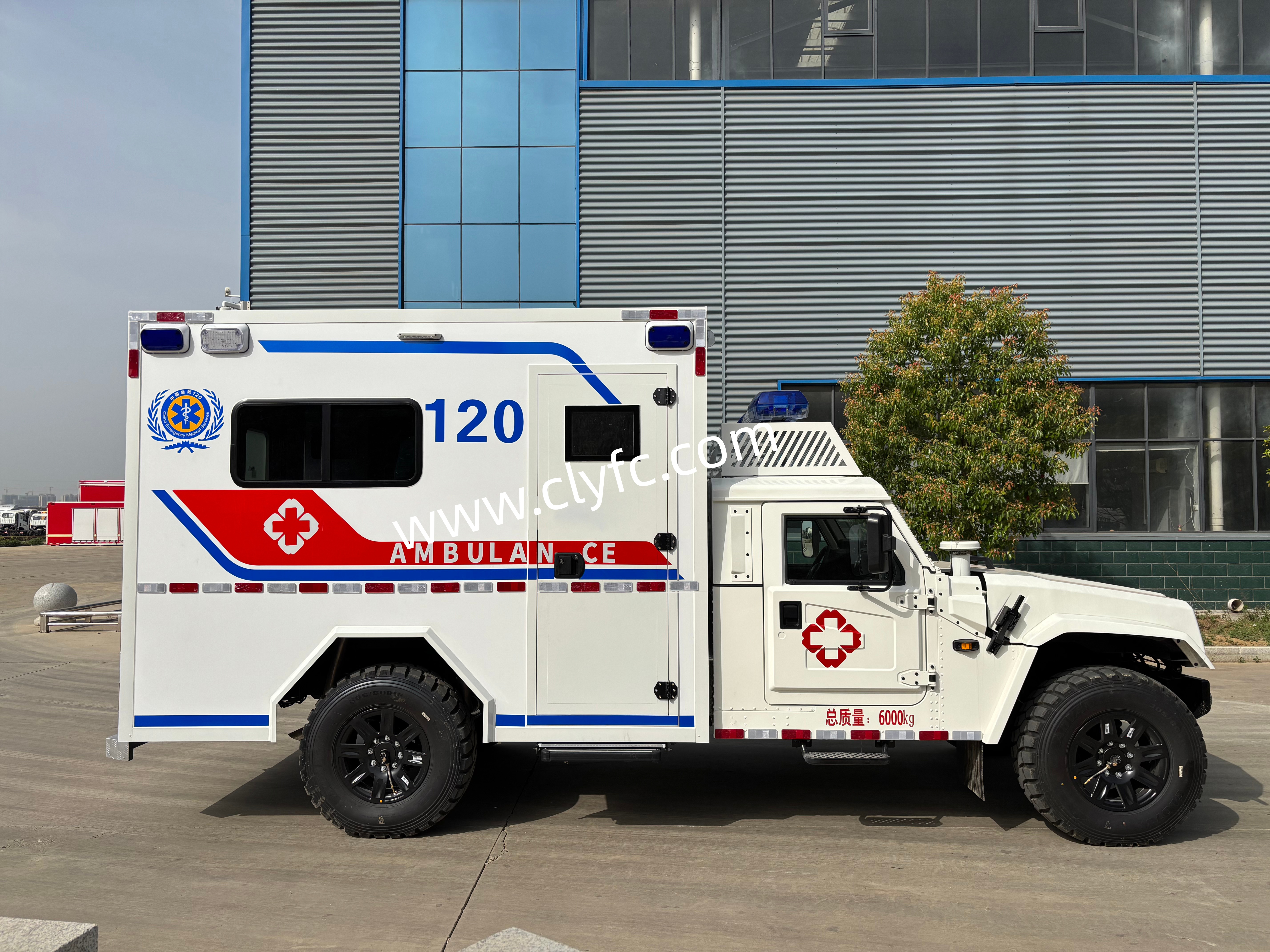
Japanese Long-Body Ambulance: Technical Data and JIS Compliance - Global Emergency Vehicle Review
内容摘要:Provide an authoritative English-language overview of Japanese long-body ambulances, including key dimensional data, medical equipment, and compliance with JIS D 5701, supporting international procurement and benchmarking.
Introduction to Japanese Long-Body Ambulance
In the global emergency medical services (EMS) landscape, the Japanese long-body ambulance occupies a distinctive niche, renowned for its meticulous engineering, spatial efficiency, and adherence to rigorous domestic standards. Unlike the boxy, modular designs common in North America or the compact van conversions prevalent in parts of Europe, the Japanese long-body configuration is a purpose-built evolution of the country’s “high-roof” commercial van platform. These vehicles are primarily constructed on extended-wheelbase chassis from Toyota (notably the HiAce and Land Cruiser-based platforms) or Nissan (the NV350 Caravan), reflecting a design philosophy that prioritizes interior working space without compromising urban maneuverability.
The term “long-body” (ロングボディ) specifically denotes an extended body shell that pushes overall vehicle length to the upper limits of Japanese dimension regulations. This class of ambulance is the workhorse of municipal fire departments and emergency hospitals across Japan, representing a mature, highly refined solution for advanced life support (ALS) transport. For international fleet operators and procurement specialists, understanding the precise technical parameters and the regulatory framework—most critically JIS D 5701—is essential for benchmarking against domestic offerings and assessing retrofit viability.
Key Specifications and Layout Design
The defining characteristic of a Japanese long-body ambulance is its dimensional envelope, which strikes a balance between payload capacity and the constraints of Japanese roads and parking infrastructure. While variations exist between body builders, a set of typical baseline figures provides a reliable reference for international comparison:
- Overall Length: Approximately 6.5 meters (ranging from 6.3m to 6.7m depending on the base chassis and rear bumper design).
- Overall Width: Approximately 2.3 meters (just under the 2.5m limit for standard lanes, allowing for wider patient cot access).
- Overall Height: Approximately 2.8 meters (dictated by the high-roof conversion and on-board medical equipment racks).
- Interior Headroom: A critical specification for clinical staff, typically standing at 1.8 meters, enabling most medical personnel to work upright without stooping.
- Gross Vehicle Weight (GVW): Usually rated between 3.5 and 4.5 tonnes, providing a substantial payload margin for two stretcher patients, multiple attendants, and a full complement of medical gas cylinders and equipment.
The interior layout is governed by a strict logic of “zone separation.” The forward compartment houses the driver and a senior attendant, with a pass-through hatch for communication. The central patient care zone is the core, featuring a primary powered cot mounted on a railing system that allows lateral movement for loading from the side or rear. A secondary folding bench seat runs along the off-side wall for additional seated patients or attendants. The rear zone is dedicated to utility: oxygen cylinder racks (typically holding two 10L and two 5L units), a suction unit, a defibrillator/patient monitor mounting dock, and a lockable cabinet for pharmaceuticals and airway management kits.
For instance, a Chinese fleet operator imported a Nissan NV350-based long-body ambulance and retrofitted it to meet Chinese emergency protocols, citing the roomy interior as a key advantage. The 1.8m headroom and 2.3m width allowed for the installation of a heavier, full-size powered stretcher and a wall-mounted ventilator system that would have been cramped in a standard short-wheelbase van conversion. This example underscores a crucial point: the Japanese long-body design is not merely a cosmetic extension but a functional upgrade that maximizes the “golden hour” efficiency for critical care teams.
JIS D 5701 Compliance and Export Considerations
The regulatory backbone of Japanese ambulance construction is JIS D 5701, the Japanese Industrial Standard for “Ambulance” (救急自動車). This standard is exhaustive, covering not just the vehicle body dimensions but also the structural integrity of the patient compartment, crashworthiness, the securing mechanisms for stretchers and equipment (tested to specific G-force loads), electrical system redundancy, and the performance of the HVAC and lighting systems. For instance, JIS D 5701 mandates that all medical equipment mounts must withstand a forward deceleration force of 20g without detachment, a specification that is often higher than general commercial vehicle standards. It also specifies the color scheme (typically a white body with a red cross and specific reflective striping) and the audible warning system output (minimum 105 dB at 1 meter).
For overseas buyers, compliance with JIS D 5701 is a double-edged sword. On one hand, it serves as a guarantee of build quality and safety engineering, providing confidence in the vehicle’s structural rigidity and system reliability. On the other hand, direct importation of a JIS-compliant vehicle often requires significant modification for use outside Japan. Key friction points include:
- Electrical Voltage and Frequency: Japanese ambulances operate on a 12V DC electrical system, but auxiliary medical outlets may be 100V AC. International operators must verify compatibility with local medical device power requirements.
- Road Traffic Regulations: The 2.3m width and 6.5m length, while standard in Japan, may exceed the legal limits for “light duty” vehicles in some jurisdictions, requiring different licensing classes or escort requirements.
- Medical Device Certification: The onboard equipment, while JIS-compliant, may lack CE marking or FDA clearance. Buyers must plan for re-certification or replacement of specific devices (e.g., the patient monitor or infusion pumps) to meet local health authority regulations.
Therefore, a pragmatic procurement strategy involves purchasing the bare chassis and body shell from a Japanese builder and completing the medical fit-out in the destination country. This approach leverages the superior crash safety and body engineering of the Japanese platform while ensuring compliance with local clinical protocols. For instance, a fleet manager in the Middle East might import the base vehicle to a local upfitter in Dubai to install locally approved cardiac monitors and a different oxygen delivery system, thereby avoiding customs delays and ensuring warranty validity on the medical payload.
When engaging in such projects, working with a partner who understands both the JIS framework and the target market’s operational needs is critical. Hubei Riotu Technology Co., Ltd., based at Xingguang 1st Road, Zengdu District, Suizhou City, has extensive experience in adapting specialized vehicle platforms for international standards. With a dedicated sales and technical support line at 4006003689, their team can assist in evaluating the feasibility of importing a Japanese long-body platform versus sourcing a locally built equivalent, ensuring that the final vehicle meets both your clinical requirements and your national road safety regulations. Their engineering staff can provide detailed dimensional drawings and load calculations to facilitate the homologation process.
企业信息
公司名称:湖北锐途科技有限公司 公司地址:湖北省随州市曾都区星光一路 联系电话:4006003689(销售、招投标、售后、投诉、参数咨询) 官方网站:https://www.clyfc.com 业务邮箱:info@ritumax.com