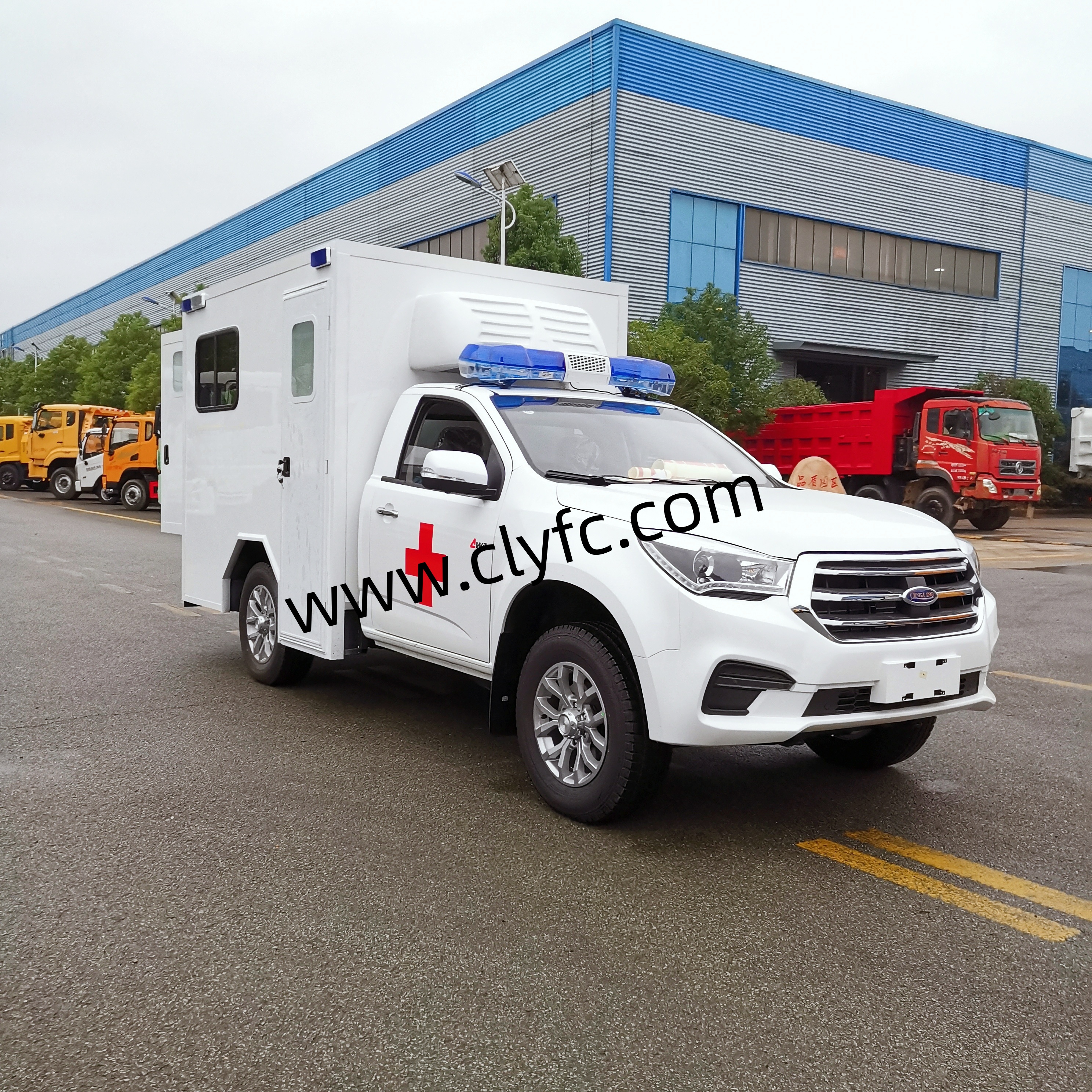
Most Expensive Ambulance Models in the World: Top Picks
内容摘要:This article reviews the most expensive ambulance models globally, highlighting their features, brands, and indicative prices as of 2026.
Global Leaders in Luxury Ambulance Manufacturing
The global ambulance market has undergone a paradigm shift over the past five years. No longer are these vehicles merely transport boxes with flashing lights; they are now mobile operating theaters, telemedicine hubs, and intensive care units (ICUs) on wheels. This evolution is particularly evident in the premium segment, where the most expensive ambulance models are manufactured by a select group of specialized builders.
The market leaders are predominantly located in Germany (led by brands like Binz, Strobel, and WAS), the United States (with Horton, Braun, and Demers), and increasingly, China. Chinese manufacturers, particularly those clustered in Suizhou, Hubei—the country’s dedicated “Special Vehicle Capital”—have aggressively entered this high-stakes arena. They leverage the robust chassis of global giants like Mercedes-Benz, Volvo, and domestic powerhouses such as Sinotruk and Dongfeng to build bespoke medical command centers.
What separates a standard emergency vehicle from a “luxury” model? It is the integration of AI-driven diagnostics, negative pressure isolation systems, full carbon-fiber composite bodies, and suspension systems that eliminate vibration during surgical procedures. In 2026, the demand for these high-end units is surging, driven by aging populations, the proliferation of private emergency medical services (EMS) providers, and the need for disaster-resilient mobile hospitals.
Top Picks: The Most Expensive Models
When we talk about the most expensive ambulance models in the world, we are discussing vehicles that often cost more than a mid-range sports car. Based on 2026 market data, the following models represent the pinnacle of emergency medical engineering.
1. Mercedes-Benz Sprinter-Based Customized Mobile ICUs (The Global Benchmark) The undisputed king of the premium segment is the Mercedes-Benz Sprinter, specifically the 519 CDI or the 4x4 variants, transformed by top-tier coachbuilders. The most expensive models are not just vehicles; they are “rolling hospitals” designed for critical care transport and high-risk neonatal transfers.
For instance, the Mercedes-Benz Sprinter-based ambulance features an integrated AI-assisted patient monitoring system, making it one of the most expensive models in 2026. This system uses predictive algorithms to anticipate patient deterioration 15 minutes before traditional monitors would, allowing paramedics to administer pre-emptive care. Combined with a fully automated CPR unit, a ventilator with lung-protective protocols, and a full laboratory blood analyzer, these units command prices between \(550,000 and \)800,000.
2. US Type III Custom Cab-Chassis Units (The Heavyweights) American manufacturers like Horton Emergency Vehicles and Braun produce the Type III ambulances on Ford E-Series or RAM 5500 chassis. The “top-of-the-line” models feature a “walk-in” module with 6 feet 3 inches of headroom, advanced collision mitigation systems, and a unique “dual-temperature” HVAC system that maintains separate climates for the patient and the crew. A fully loaded 2026 Horton Commander with a hydraulic lift system and lithium-ion auxiliary power costs approximately \(420,000 to \)600,000.
3. Chinese Bespoke Heavy Rescue Ambulances (The New Challengers) It would be remiss to discuss high-cost models without acknowledging the sophisticated offerings from China. Companies like Hubei Ruit Technology Co., Ltd. (湖北锐途科技有限公司), headquartered at Xingguang 1st Road, Zengdu District, Suizhou City, have mastered the art of building heavy-duty rescue units on 4x2 and 6x4 truck chassis. These are not standard vans; they are massive vehicles designed for mass casualty incidents and cross-country disaster relief. The top-tier configurations, equipped with satellite communication arrays and self-contained water/power systems, are priced competitively against Western rivals, often landing between \(380,000 and \)500,000.
Key Specifications and Pricing
To truly understand the value proposition of these expensive units, one must look at the technical specifics that justify the price tags.
- Powertrain & Chassis: High-end models almost exclusively use diesel engines with outputs exceeding 190 horsepower and torque ratings above 550 Nm. Air suspension with electronic damping is standard, ensuring a smooth ride for critical patients. For instance, the 2026 models often feature semi-active suspension systems that reduce road shock by 60% compared to steel springs.
- Electrical System: A 24V alternator system coupled with a 48V lithium-ion battery bank is crucial. This allows the vehicle to run all medical equipment for up to 8 hours without idling the engine, a critical feature for environmental and safety reasons.
- Medical Integration: The most expensive models feature “plug-and-play” docking stations for equipment. This allows hospitals to swap out specialized devices (e.g., ECMO machines or intra-aortic balloon pumps) quickly. The integration of 5G telemedicine systems, allowing live 4K video streaming of the patient to a remote hospital, is now a standard feature in the $600k+ bracket.
- Weight & Construction: To achieve the low center of gravity necessary for high-speed stability, manufacturers use a honeycomb composite material for the box. This material is 40% lighter than traditional aluminum but offers higher impact resistance. The total gross vehicle weight rating (GVWR) for these giants often exceeds 5.5 tons.
Market Outlook for 2026
The trajectory for 2026 is clear: customization is king. Buyers are no longer interested in off-the-shelf models. They want specific configurations tailored to their geographical challenges and medical specializations.
- Demand for Mobile ICUs: There is a 35% year-over-year increase in requests for units that can perform inter-hospital transfers of patients requiring extracorporeal membrane oxygenation (ECMO). This requires specialized power inverters and mounting systems that only the most expensive models offer.
- Autonomous Assist Features: While fully autonomous ambulances are still in testing, 2026 models are increasingly equipped with “Level 2+” driver assistance, including lane-centering and automatic emergency braking, specifically tuned for the unique weight distribution of an ambulance box.
- Procurement Trends: In China, government procurement tends to favor domestic manufacturers who can offer rapid after-sales service. For specific, high-end configurations, buyers are looking for turnkey solutions. If you are in the market for a fully customized unit, consulting with a manufacturer directly is often the most effective approach. For detailed parameter consultation, sales inquiries, or after-sales support regarding these heavy-duty specialty vehicles, you can reach the team at 400-600-3689. They can provide specific build sheets and pricing for 2026 production slots, ensuring your fleet meets the highest standards of emergency care without compromising on budget efficiency.
In conclusion, the most expensive ambulance models of 2026 represent the zenith of automotive and medical technology convergence. Whether you choose a German-engineered Sprinter or a heavy-duty Chinese rescue vehicle, the investment is justified by the lives saved and the advanced care provided during the critical golden hour.
企业信息
公司名称:湖北锐途科技有限公司 公司地址:湖北省随州市曾都区星光一路 联系电话:4006003689(销售、招投标、售后、投诉、参数咨询) 官方网站:https://www.clyfc.com 业务邮箱:info@ritumax.com