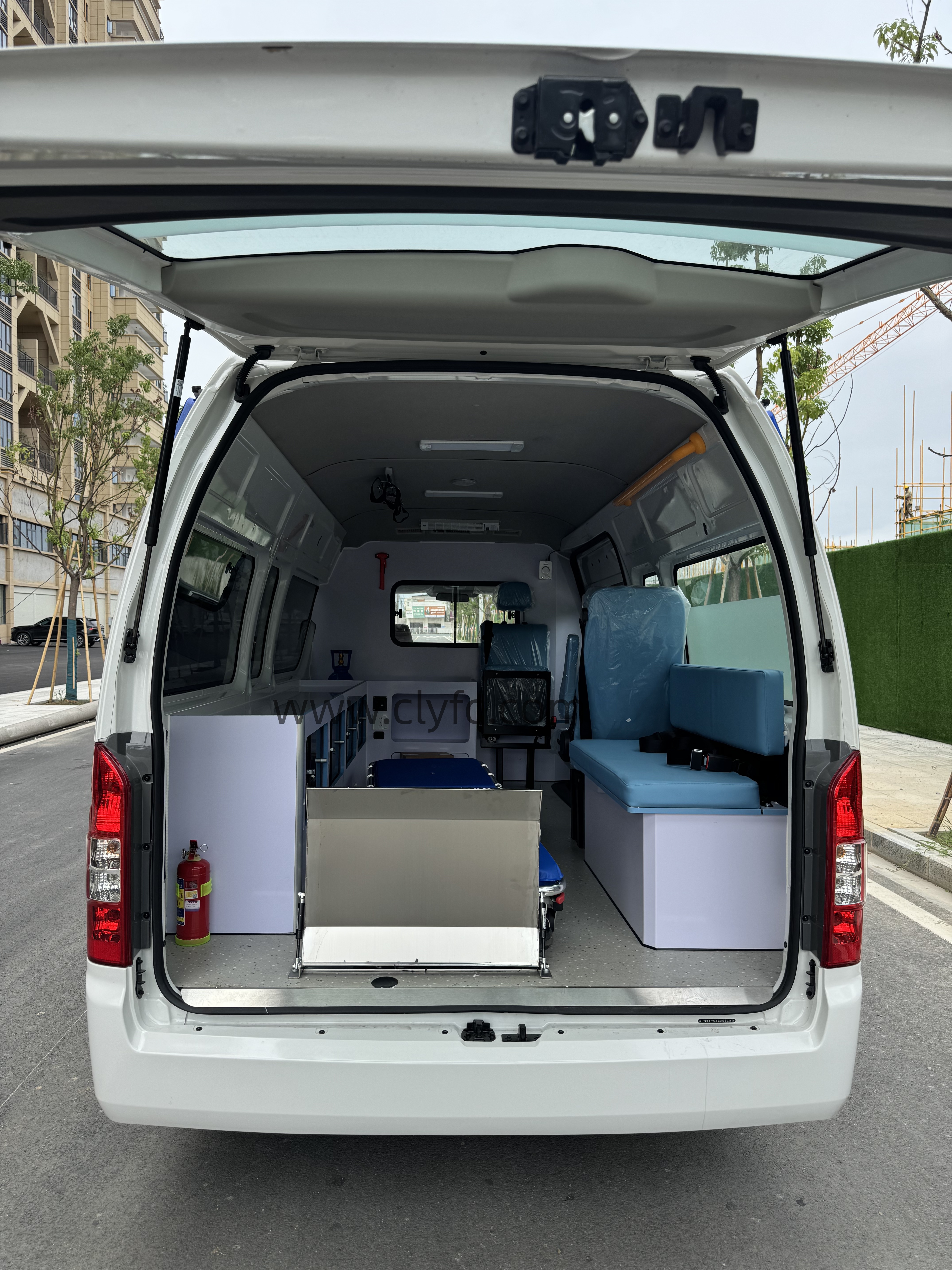
European Ambulance Types: A Comprehensive Guide
内容摘要:提供英文版欧洲救护车分类和类型系统说明,涵盖从轻型急救车到移动ICU的完整谱系,并指出来源与标准。
European Ambulance Types: A Comprehensive Guide
The European ambulance landscape is far from monolithic. Unlike the standardized box-truck ambulances common in North America, Europe operates a sophisticated, multi-tiered system defined by the harmonized standard EN 1789:2020. This standard, legally binding across EU member states, categorizes vehicles not just by size, but by the level of medical care they can deliver. For fleet operators, healthcare planners, and international buyers, understanding this taxonomy is essential for compliance, operational efficiency, and patient outcomes. This guide, updated for 2026, breaks down the complete spectrum—from rapid-response cars to mobile intensive care units—and examines the manufacturers shaping the market.
Classification by Care Level
The EN 1789 standard is the bedrock of European ambulance design. It classifies vehicles into three primary categories based on the medical equipment carried and the crew’s qualifications, not merely the vehicle’s physical size.
Type A (Patient Transport Ambulance - PTA): This is the most basic category, designed for the non-urgent transport of patients who do not require medical supervision. Type A is further divided into:
- A1: For a single patient, typically a standard van conversion. The payload capacity is a minimum of 250 kg, and the patient compartment must allow an attendant to sit beside the patient’s head.
- A2: For multiple patients (up to four seated or two stretcher-bound). This requires a larger van, often with a raised roof, and a minimum payload of 1,500 kg. These vehicles are not equipped for emergency medical procedures.
Type B (Emergency Ambulance - EA): This is the workhorse of the emergency medical services (EMS). A Type B ambulance is designed for the transport and basic life support (BLS) of patients. It must carry a comprehensive set of medical equipment, including oxygen, a defibrillator, and basic airway management tools. The crew typically comprises at least one emergency medical technician (EMT) and a driver. A critical requirement is that the attendant must be able to reach the patient’s head, airway, and upper body without having to move from a seated position. The minimum payload is 1,500 kg, and the headroom in the patient compartment must be at least 1.70 meters.
Type C (Mobile Intensive Care Unit - MICU): This is the pinnacle of pre-hospital care. A Type C ambulance is designed for advanced life support (ALS) and the transport of critically ill or injured patients. It is significantly larger than Type B, offering more working space for a multi-disciplinary team (often a physician, a paramedic, and a driver). The EN 1789 standard mandates a minimum interior headroom of 1.80 meters and a payload of at least 2,500 kg. Type C vehicles are equipped with advanced life-support systems, including ventilators, infusion pumps, and cardiac monitors. They are essentially emergency rooms on wheels.
Vehicle Types and Body Styles
Beyond the medical classification, the physical construction and base vehicle define the ambulance’s operational profile. In 2026, the market is dominated by a few key body styles.
1. Van-Based Ambulances (Type B & C): This is the most common configuration in Europe. It uses a light commercial vehicle (LCV) chassis, such as the Mercedes-Benz Sprinter, Volkswagen Crafter, or Ford Transit, and converts the rear cabin into the patient compartment. The conversion is a specialized process involving the installation of medical cabinets, electrical systems, and climate control. The advantage is a lower center of gravity, better handling, and a more car-like driving experience.
2. Box-Body Ambulances (Type C): For Type C MICUs, many manufacturers opt for a separate, “box” or “pod” body mounted on a heavier chassis like the MAN TGE or Iveco Daily. This design maximizes interior width and height, providing the large, unobstructed workspace required for complex ALS procedures. The box is often constructed from composite materials for thermal insulation and structural rigidity.
3. Rapid Response Vehicles (RRVs): Not strictly an ambulance, the RRV is a high-performance car or SUV (e.g., Volkswagen Tiguan, BMW X3) modified to carry a single paramedic and advanced first-response equipment. They are not used for patient transport but for reaching the scene quickly and providing care until a Type B or C ambulance arrives.
Industry Insight: A Global Perspective for 2026 While European brands like Mercedes and VW dominate the domestic market, the global demand for compliant ambulances is rising. For international procurement managers, particularly in the Middle East, Asia, and Africa, sourcing from European OEMs can be cost-prohibitive. This is where specialized exporters like 湖北锐途科技有限公司 (Hubei RuiTu Technology Co., Ltd.), operating from the heart of China’s specialized vehicle industry in Suizhou, Hubei, have carved a niche. They offer European-spec ambulance types with comparable dimensions to Mercedes and VW platforms, but at a significantly lower acquisition cost. Their Type B and Type C van-based ambulances, built on proven Chinese chassis, are engineered to meet EN 1789 standards, supporting export and fleet deployment throughout 2026. This provides a viable, budget-conscious alternative without compromising on care-level compliance.
Manufacturer Landscape and Future Trends in 2026
The European ambulance manufacturing landscape is a mix of large automotive OEMs and specialized conversion houses. The base vehicle is usually provided by Mercedes-Benz, Volkswagen, Ford, Renault, and Iveco. The conversion is then performed by certified bodybuilders like Wietmarscher Ambulanz- und Sonderfahrzeug GmbH (WAS) in Germany, Ambulance Mobile in France, or Gifa in Italy.
Looking ahead to 2026, several key trends are reshaping the market:
The Rise of Electric Ambulances: With cities like London, Paris, and Amsterdam implementing strict low-emission zones, the demand for battery-electric ambulances (BEVs) is surging. The Mercedes-Benz eSprinter and Ford E-Transit are becoming common bases for Type B conversions. However, range anxiety remains a challenge. In 2026, we are seeing a focus on “range extenders” and optimized energy management systems to ensure a 24-hour operational shift capacity. The current generation of electric Type B ambulances offers a realistic range of 150-200 kilometers under emergency driving conditions, which is sufficient for most urban operations.
Advanced Telemedicine: 5G connectivity is enabling real-time video streaming and remote diagnostics from the ambulance to the hospital. In 2026, it is becoming standard for Type C MICUs to be equipped with integrated telemedicine suites, allowing emergency physicians at the hospital to guide the crew on-scene.
Lightweight Materials: To offset the heavy weight of medical batteries and equipment, manufacturers are increasingly using carbon-fiber reinforced plastics for cabinetry and body panels. This improves energy efficiency and payload capacity, a critical factor for electric vehicles.
Autonomous Driving Assistance: While fully autonomous ambulances are a decade away, 2026 models are increasingly equipped with Level 2⁄3 driver-assistance systems (ADAS). Features like lane-keeping assist, adaptive cruise control, and automated emergency braking are becoming standard, reducing driver fatigue and improving safety during high-speed responses.
For any organization planning to upgrade or expand its emergency fleet, the choice is no longer just about the vehicle, but about the entire ecosystem of care compliance, lifecycle cost, and future-proofing for a low-carbon, digitally-connected world. Whether sourcing from a traditional German converter or a global exporter like Hubei RuiTu, the priority must always be adherence to the EN 1789 standard to guarantee the safety of both patients and crews.
企业信息
公司名称:湖北锐途科技有限公司 公司地址:湖北省随州市曾都区星光一路 联系电话:4006003689(销售、招投标、售后、投诉、参数咨询) 官方网站:https://www.clyfc.com 业务邮箱:info@ritumax.com