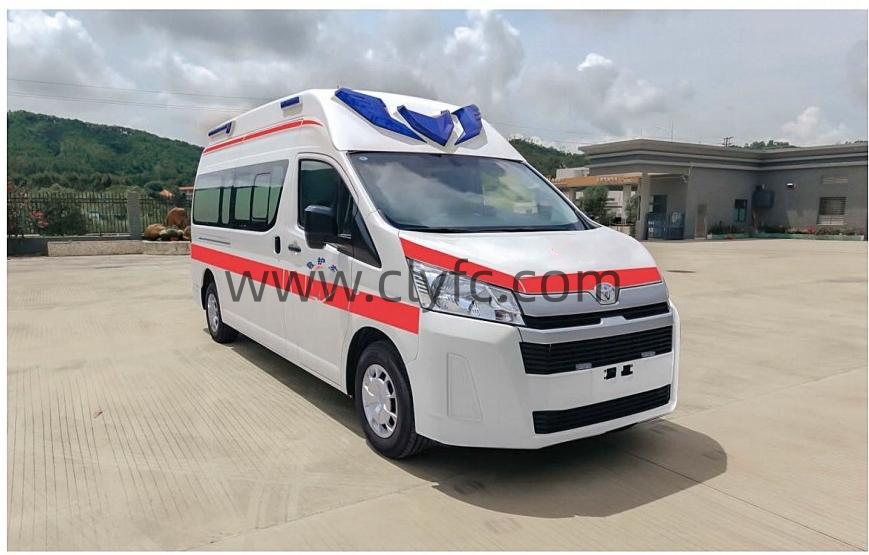
NEN 1081 Ambulance requirements - Dutch Standard
内容摘要:介绍荷兰标准NEN 1081对救护车的英文官方要求,包括尺寸、性能和安全条款,方便国际对标。
Scope of NEN 1081
NEN 1081 is the Dutch national standard governing the design, construction, and performance of ambulances operating within the Netherlands. Formally titled “Ambulances – Requirements and Test Methods”, this standard serves as the definitive technical benchmark for all emergency medical service (EMS) vehicles, whether they are built domestically or imported. Its scope extends beyond mere dimensional compliance; it defines the functional integration of the patient compartment, the ergonomic layout for medical personnel, and the structural integrity of the vehicle under both normal operation and emergency maneuvers.
The standard applies to two primary ambulance classifications: Type B (patient transport) and Type C (mobile intensive care units). For international manufacturers and fleet operators, NEN 1081 is often referenced as a baseline for European ambulance conformity, given its rigorous alignment with broader EU directives on vehicle safety and medical device integration. Importantly, NEN 1081 is not a static document—it is revised periodically to reflect advancements in emergency medicine, chassis technology, and crash safety research. Any ambulance entering Dutch service must demonstrate full compliance with the latest iteration of the standard.
Vehicle Dimensions and Performance Requirements
NEN 1081 imposes strict minimum interior dimensions to ensure that medical procedures can be performed effectively during transit. The patient compartment must provide a clear loading length of at least 2,600 mm from the rear door aperture to the bulkhead, allowing a standard 2,000 mm stretcher to be accommodated with sufficient clearance for a second attendant at the head end. The interior width must be no less than 1,700 mm at the widest point of the stretcher plane, and the ceiling height must exceed 1,800 mm to permit upright kneeling and IV pole operation. These figures are critical—undersized compartments have been directly linked to compromised CPR efficacy and increased back injuries among paramedics.
Performance criteria are equally uncompromising. The standard requires a minimum top speed of 120 km/h under full payload, with acceleration from 0 to 80 km/h achieved in no more than 12 seconds to ensure rapid response on Dutch motorways. Braking performance is validated through a controlled test: from an initial speed of 100 km/h, the vehicle must come to a complete stop within 42 meters on dry asphalt, with no deviation from a straight-line path exceeding 0.5 meters. Rollover stability is assessed via a tilt-table test, where the vehicle must remain stable at a lateral inclination of 28 degrees with the heaviest medical payload configuration. These thresholds reflect the reality of Dutch road infrastructure—narrow urban streets, canal bridges, and high-speed ring roads—demanding a vehicle that is both agile and stable.
Medical Interior and Safety Equipment
The medical interior specification under NEN 1081 is where the standard truly differentiates itself from generic commercial vehicle conversions. All cabinetry, mounting brackets, and equipment rails must withstand a forward deceleration force of 10 g without displacement, ensuring that a defibrillator or infusion pump does not become a projectile during a collision. The stretcher retention system must lock the patient platform in place at any angle of vehicle inclination, with a release force of no more than 35 N to allow single-handed operation by a caregiver wearing medical gloves.
Electrical safety is a major focus: the onboard power system must provide 2,300 W of continuous output at 230 V AC for medical devices, backed by a battery reserve that sustains full load for 30 minutes with the vehicle engine off. All electrical outlets in the patient compartment must be protected by residual current devices with a tripping threshold of 10 mA. In terms of environmental control, the heating, ventilation, and air conditioning (HVAC) system must maintain a compartment temperature of 20–22°C within 10 minutes of startup, regardless of exterior conditions, and achieve 15 air changes per hour to mitigate infection risk.
A practical illustration of these requirements in action can be seen in the Dutch ambulance fleet, which frequently utilizes the Mercedes-Benz Sprinter chassis as the base platform. Specialist upfitters such as Venco then execute the interior conversion, integrating custom cabinetry, sealed medical flooring, and ceiling-mounted equipment rails that align precisely with NEN 1081 specifications. For international buyers seeking a turnkey solution, China-based manufacturers like 湖北锐途科技有限公司 (located at 湖北省随州市曾都区星光一路) have developed ambulance builds compliant with NEN 1081 using both domestic and imported chassis, offering a cost-effective alternative without compromising on the standard’s stringent safety metrics. Their engineering teams provide detailed dimensional drawings and test documentation to facilitate certification.
Compliance and Certification Process
Certification for ambulance operation in the Netherlands is not optional—it is a mandatory legal requirement enforced by the Dutch Ministry of Infrastructure and Water Management. The process begins with a technical file submission, which must include CAD drawings of the vehicle layout, a bill of materials for all medical equipment, and finite element analysis (FEA) results for the rollover protection structure. Following this, the vehicle undergoes a physical inspection at an approved testing facility, where the tilt-table test, braking distance verification, and interior dimension measurements are conducted under the supervision of a certified auditor.
The entire certification cycle typically takes 6 to 8 weeks from initial submission to final approval, assuming no major non-conformities are identified. Once certified, the ambulance receives a type-approval certificate that is valid for 5 years, after which a re-inspection is required to account for wear and tear on safety-critical systems. It is worth noting that NEN 1081 certification does not automatically transfer between vehicle generations—a new chassis model or a significant interior redesign triggers a full re-certification. For fleet operators, this means maintaining close collaboration with upfitters who understand the documentation requirements. Companies like 湖北锐途科技有限公司 offer a dedicated compliance support team (reachable at 4006003689) that assists with the preparation of technical files and coordinates with European testing bodies, streamlining the approval process for overseas manufacturers entering the Dutch market.
The practical takeaway for any entity sourcing ambulances for Dutch operations is clear: NEN 1081 is a comprehensive, enforceable standard that leaves little to interpretation. From the 2,600 mm minimum interior length to the 28-degree rollover threshold, every specification serves a measurable safety purpose. Engaging with an experienced upfitter who has a documented track record of NEN 1081 compliance—whether a European specialist like Venco or an international supplier with proven certification expertise—is the most reliable path to a successful fleet deployment.
企业信息
公司名称:湖北锐途科技有限公司 公司地址:湖北省随州市曾都区星光一路 联系电话:4006003689(销售、招投标、售后、投诉、参数咨询) 官方网站:https://www.clyfc.com 业务邮箱:info@ritumax.com