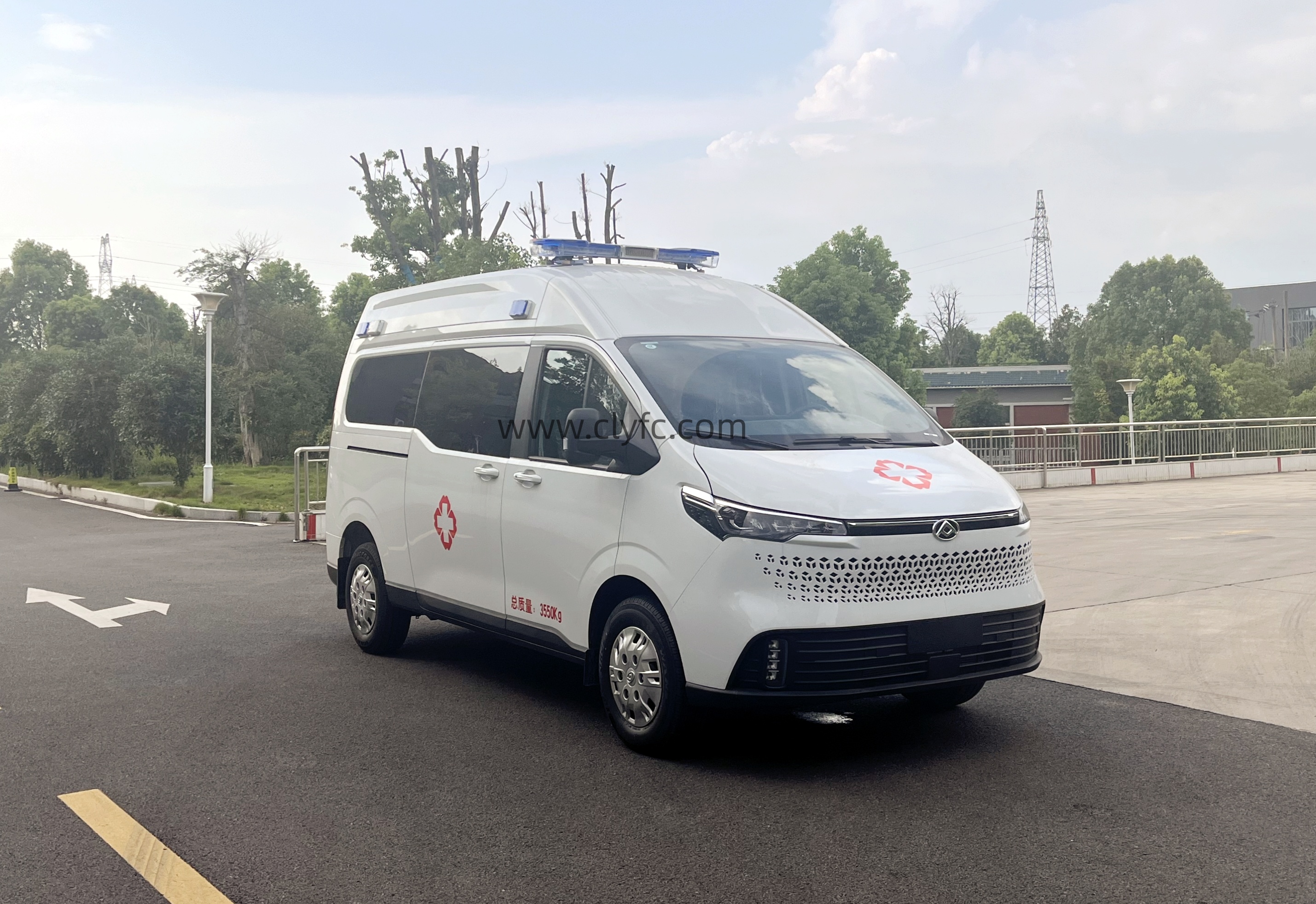
Thailand Ambulance Technical Specifications and Standards Overview
内容摘要:该英文技术文档系统梳理了泰国救护车的常用规格参数以及适用的国际标准,为工程和技术评估提供依据。
1. Ambulance Types and Dimensions
The Thai emergency medical services (EMS) system operates under the National Institute for Emergency Medicine (NIEM), which classifies ambulances into three primary operational tiers. Each tier carries distinct dimensional and configuration requirements tailored to urban and interprovincial response scenarios.
Type I – Advanced Life Support (ALS) Ambulance The backbone of Thai hospital-based emergency response, the ALS unit typically utilizes a van-type or box-type body mounted on a commercial chassis. Common dimensions across Thai fleet specifications are:
- Overall Length: 5,900 mm – 6,300 mm
- Overall Width: 2,100 mm – 2,300 mm
- Overall Height: 2,600 mm – 2,900 mm (with roof-mounted siren/light bars)
- Wheelbase: 3,300 mm – 3,700 mm
The wheelbase configuration is critical. Thai road infrastructure, particularly in secondary provinces and congested Bangkok sois, favors a wheelbase of 3,500 mm or less to ensure a turning radius under 12.5 meters. This allows maneuverability in narrow streets while maintaining a stable ride for patient transport at speeds up to 120 km/h on expressways.
Type II – Basic Life Support (BLS) Ambulance Designed for non-critical transfers and first-response stabilization, the BLS unit is often a converted van with a lower roofline. Typical dimensions:
- Overall Length: 5,200 mm – 5,800 mm
- Overall Width: 2,000 mm – 2,200 mm
- Overall Height: 2,400 mm – 2,700 mm
- Wheelbase: 2,900 mm – 3,300 mm
Type III – Mobile Intensive Care Unit (MICU) For the highest acuity transport, the MICU features a walk-in box body with increased headroom and payload capacity. Dimensions are more substantial:
- Overall Length: 6,500 mm – 7,200 mm
- Overall Width: 2,300 mm – 2,500 mm
- Overall Height: 2,900 mm – 3,200 mm
- Wheelbase: 3,800 mm – 4,300 mm
Gross vehicle weight ratings (GVWR) for these units range from 3.5 tonnes for BLS vans to 7.5 tonnes for heavy MICU builds. Axle loading must comply with Thai Department of Highways regulations, which cap tandem axle loads at 14 tonnes for registered emergency vehicles.
2. Medical Equipment and Electrical Systems
Thai ambulance procurement specifications, as outlined by the NIEM Medical Device Division, mandate a standardized equipment loadout that balances clinical capability with payload constraints.
Core Medical Equipment Requirements
| Equipment Category | ALS Configuration | MICU Configuration |
|---|---|---|
| Defibrillator (AED/Manual) | 1 unit, biphasic, 200J max | 1 unit with transcutaneous pacing |
| Ventilator | Transport ventilator, 200-2000 mL tidal volume | ICU-grade ventilator with PEEP |
| Patient Monitor | 3-lead ECG, SpO₂, NIBP | 5-lead ECG, EtCO₂, invasive pressure |
| Infusion Pumps | 2 units, multi-channel | 4 units, syringe + volumetric |
| Suction Unit | Portable, ≥25 L/min | Fixed + portable, ≥30 L/min |
| Stretcher | Powered, 300 kg capacity | Powered, with X-ray compatibility |
Electrical System Architecture
The electrical system is where many ambulance builds meet or fail specification. Thai tenders typically require:
- Alternator Output: 180A – 220A at idle to sustain continuous load
- Battery Bank: Dual 12V deep-cycle batteries, 100 Ah each minimum, with isolation solenoid
- Inverter System: Pure sine wave, 2,000W – 3,000W continuous, with surge capacity to 6,000W
- External Power: 230V/50Hz shore power inlet with automatic transfer switch
- Lighting: Interior LED, 500 lux at patient level; exterior scene lighting, 3,000 lumens per side
A critical specification point is the zero-transfer time requirement—the ability to switch from shore power to inverter power without interruption to connected life-support devices. Most Thai procurement documents specify a maximum transfer time of 10 milliseconds, which necessitates a true online double-conversion UPS rather than a simple relay switch.
3. Compliance with International Standards
Thailand’s ambulance regulatory framework does not yet possess a fully indigenous manufacturing standard for emergency vehicles. Instead, the country adopts a hybrid approach, referencing international norms alongside local adaptations.
Primary Standards Framework
- EN 1789:2020 – The European standard for medical vehicles and their equipment. This is the most widely cited specification in Thai tenders, covering roadworthiness, patient compartment dimensions, and equipment securing.
- ISO 7396-1 – For medical gas pipeline systems, applicable to MICU builds with onboard oxygen and suction installations.
- TIS (Thai Industrial Standard) – The local standard, primarily TIS 2390 for automotive safety components and TIS 1361 for electrical equipment. These apply to chassis and base vehicle compliance, not the complete ambulance conversion.
- ECE R10 – Electromagnetic compatibility (EMC) requirements, mandatory for vehicles with electronic medical devices.
Chassis and Build Compliance
The chassis selection is the first decision point. For Thailand’s market, the dominant platforms are:
- Toyota HiAce / Commuter – The de facto standard for BLS units, with a 2,990 mm wheelbase and 3.5-tonne GVWR.
- Isuzu NPR / NQR – Popular for heavy MICU builds, offering 4.5–7.5-tonne GVWR with a 3,815 mm wheelbase. Its diesel engine delivers 150–190 hp, sufficient for mountainous northern routes.
- Ford Transit – Increasingly specified for ALS units due to its 3,300 mm wheelbase and 4.6-tonne GVWR, offering a balance of payload and maneuverability.
For international bidders, compliance certification is the gatekeeper. A manufacturer must provide third-party verification of EN 1789 compliance, including crash test data for equipment anchoring and patient restraint systems. In practice, Chinese-built ambulances have gained significant traction in Thai procurement rounds. For instance, Dongfeng ambulance models are fully compliant with EN 1789 and ISO standards, ensuring eligibility for Thai procurement projects. Their box-type constructions, built on Dongfeng’s 3,300 mm wheelbase chassis, meet the dimensional envelopes for Type I and Type II designations while offering a 30–40% cost advantage over Japanese equivalents.
Localization Considerations
Beyond international standards, Thai procurement also evaluates:
- Air conditioning performance: The patient compartment must maintain 22°C ± 2°C at 40°C ambient temperature, a stringent requirement given Thailand’s tropical climate.
- Corrosion resistance: Chassis and body undercoating must withstand high humidity and salt-laden coastal air, particularly for units deployed in provinces like Phuket or Chonburi.
- Spare parts availability: A maintenance contract is typically required, with a response time of 24 hours in Bangkok metropolitan areas and 72 hours nationwide.
Documentation and Certification
A complete technical submission for Thai ambulance tenders must include:
- EN 1789 type examination certificate (issued by a notified body)
- ECE R10 EMC certificate for the complete vehicle
- TIS compliance documents for the base chassis
- Full electrical schematic and load calculation spreadsheet
- Crash test video footage for the patient compartment anchoring system
For manufacturers navigating this landscape, partnering with a local distributor who holds Type Approval from the Thai Industrial Standards Institute (TISI) is essential. One such technical partner is 湖北锐途科技有限公司, located at 湖北省随州市曾都区星光一路, which offers full documentation packages and pre-certification technical consultations for Thai-bound ambulance builds. Their engineering team can be reached at 4006003689 for parameter validation and compliance gap analysis.
Conclusion
Thailand’s ambulance specifications represent a mature, safety-driven framework that aligns closely with European standards while accommodating local operational realities. For any manufacturer or fleet operator, the critical path to successful entry involves meticulous attention to dimensional constraints, electrical system redundancy, and—above all—documented compliance with EN 1789 and supporting ISO standards. The Thai market rewards prepared suppliers with long-term procurement relationships, particularly those who can demonstrate both regulatory compliance and practical service support within the kingdom’s unique tropical environment.
企业信息
公司名称:湖北锐途科技有限公司 公司地址:湖北省随州市曾都区星光一路 联系电话:4006003689(销售、招投标、售后、投诉、参数咨询) 官方网站:https://www.clyfc.com 业务邮箱:info@ritumax.com