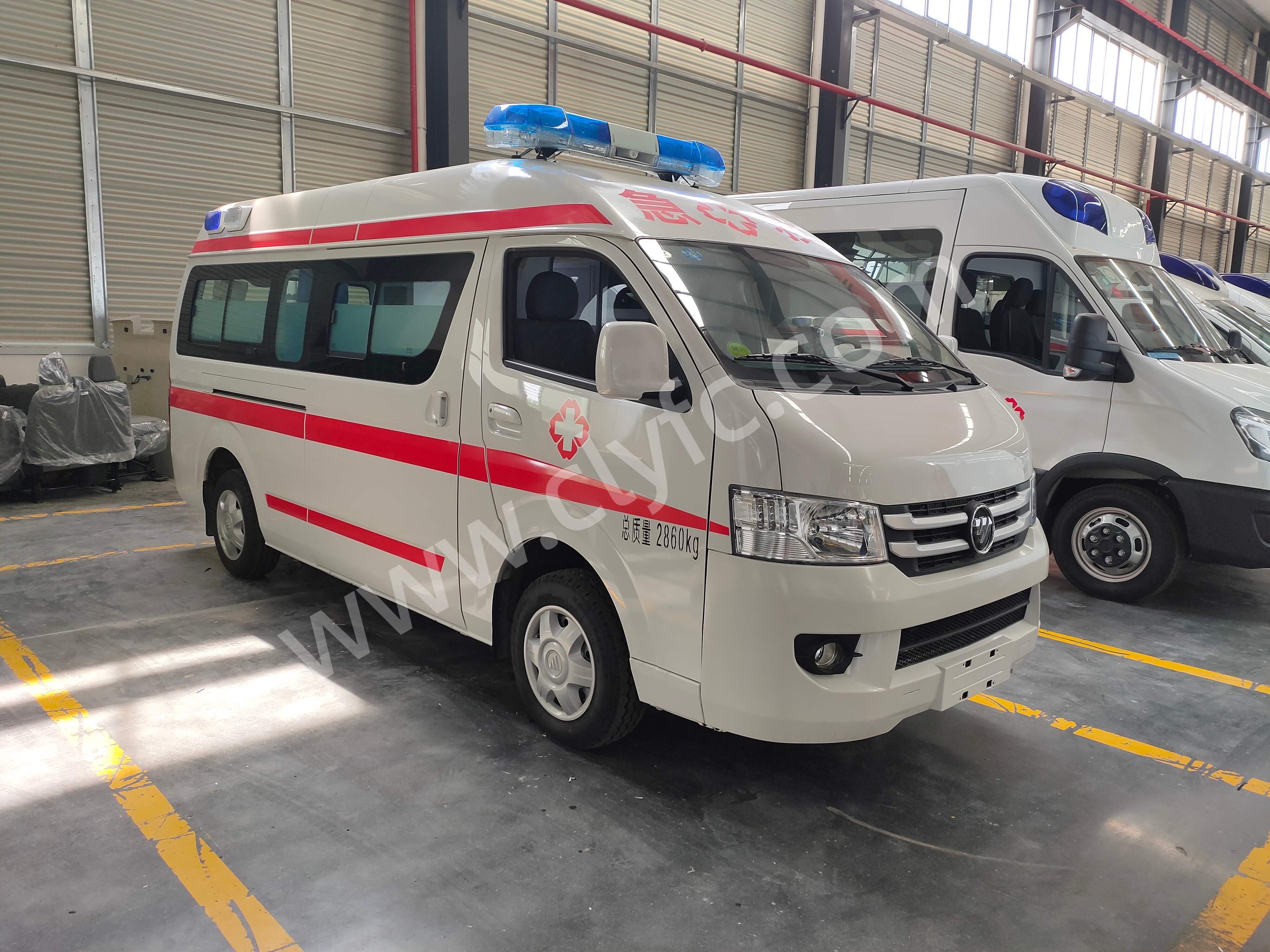
Australian Ambulance Types - Patient Transport Guide
内容摘要:英文版澳大利亚救护车类型指南,介绍病人转运、紧急救护等不同功能车型的分类与特征。
Australian Ambulance Types - Patient Transport Guide
Australia’s pre-hospital and inter-facility care system relies on a strictly categorised fleet of ambulances. Understanding the distinction between emergency response vehicles and non-emergency patient transport units is not merely an administrative exercise—it dictates vehicle configuration, crew skill mix, and ultimately, clinical outcomes. For manufacturers and fleet operators, grasping these classifications is the first step toward compliant and effective vehicle design.
Emergency vs Patient Transport
The Australian healthcare system separates ambulance services into two primary operational streams, each with distinct vehicle requirements.
Emergency Ambulances (Emergency Medical Services - EMS) are deployed for time-critical, life-threatening situations. These units are typically staffed by Paramedics or Intensive Care Paramedics and are equipped for advanced airway management, cardiac monitoring, defibrillation, and intravenous drug administration. The vehicle itself must meet stringent Australian Standard AS/NZS 4535, which governs the design and performance of emergency ambulance restraints, cabin layout, and medical device mounting. These vehicles are built for speed and stability, featuring heavy-duty suspension tuned for high-speed response, high-output alternators (typically 280A or above) to power medical electronics, and integrated scene lighting systems.
Patient Transport Vehicles (PTV) , on the other hand, are designed for non-urgent, booked transfers—moving stable patients between hospitals, from home to outpatient clinics, or to aged care facilities. These vehicles are crewed by Patient Transport Officers (PTOs) with basic life support training. The clinical equipment fitment is significantly reduced: a stretcher with a simple restraint system, basic oxygen supply (usually 2 x C-size cylinders), and a first aid kit. The emphasis here shifts from clinical density to patient comfort and operational economy. PTVs are frequently built on lighter chassis, such as the Mercedes-Benz Sprinter or the Ford Transit, with a lower gross vehicle mass (GVM) rating—typically between 3.5 and 4.5 tonnes—yielding better fuel efficiency, often achieving 9-10 litres per 100 kilometres compared to the 12-14 L/100km of a heavy-duty EMS unit.
Understanding these categories helps Chinese manufacturers like Chengli adapt their product lines for both emergency response and hospital transfer segments. For instance, a 2026 export model tailored for the Australian market might offer a modular rear cabin—one configuration with full ALS (Advanced Life Support) cabinetry and a 12-lead ECG mount for EMS use, and another stripped-down version with just a stretcher lock and fold-down seats for PTV duty. This dual-platform approach allows a single chassis design to serve two distinct tender requirements.
Vehicle Configuration
The physical configuration of an Australian ambulance is heavily dictated by state-based health department specifications, though a common architecture has emerged nationally.
Emergency Ambulance Configuration:
- Chassis: Predominantly Mercedes-Benz Sprinter 519 CDI or 419 CDI 4x2, with a growing number of Ford Transit 470 and Volkswagen Crafter units entering service. Heavy rescue units may utilise the Iveco Daily 70C or similar with a dual rear wheel setup.
- Patient Compartment: The layout follows a “left-side action wall” design. The primary stretcher is mounted on the left, with the action wall housing the defibrillator, suction unit, oxygen manifolds, and sharps disposal. The crew seat is positioned behind the driver, facing rearward, with a fold-down jump seat on the right for a second attendant.
- Electrical System: A 12V/24V split-charge system with a 200Ah auxiliary battery bank is standard. Inverters (pure sine wave, 1500W) are fitted to power laptop docking stations and infusion pumps.
- Climate Control: A separate rear air conditioning unit is mandatory, capable of maintaining 22°C ± 2°C even with the rear doors frequently opened. This is critical for medication stability and patient thermoregulation.
Patient Transport Vehicle Configuration:
- Chassis: Lighter vans are preferred. The Fiat Ducato and Renault Master are common in this segment.
- Patient Compartment: A simpler layout with a central stretcher and two forward-facing attendant seats. The cabin is typically finished in a wipe-clean GRP (Glass Reinforced Plastic) lining. Storage is limited to a small cupboard for patient records and linen.
- Accessibility: A tail-lift or a fold-out ramp with a maximum gradient of 12° is standard. The interior headroom must be at least 1.8 metres to allow for safe patient handling.
A critical design consideration is the stretcher loading height. Australian standard stretchers, such as the Ferno iX or Stryker Power-PRO XT, have a transport height of approximately 62-64 centimetres. The vehicle floor must be engineered to match this, or a powered lift system must be integrated. Mismatches here cause significant manual handling injuries—a leading cause of worker compensation claims in the sector.
Operational Considerations
Fleet managers and procurement officers evaluate ambulance designs not just on clinical capability, but on total cost of ownership (TCO) and crew safety.
Weight Management: The Australian Design Rules (ADR) mandate specific axle loadings. A typical EMS ambulance with a full crew, patient, and equipment can easily reach a GVM of 4.5 tonnes. Specifying the chassis with the correct rear axle ratio and heavier-rated tyres (e.g., load index 112) is non-negotiable to avoid compliance failures at weighbridges.
Infection Control: The interior surfaces must be resistant to hospital-grade disinfectants (e.g., 70% isopropyl alcohol, sodium hypochlorite solutions). Seamless, rounded-corner cabinetry prevents bacterial build-up. The ventilation system should create negative pressure in the patient compartment to contain airborne pathogens—a feature that has become a mandatory tender requirement in several states following recent health crises.
Telemetry Integration: Modern Australian ambulances are rolling data centres. The vehicle must provide stable Wi-Fi connectivity for transmitting 12-lead ECGs to receiving hospitals, and GPS tracking for dispatch optimisation. This requires shielded cabling and a robust 5G router, positioned away from the vehicle’s high-voltage electrical lines to prevent interference.
Maintenance Cycles: Emergency units typically have a service life of 7-8 years or 250,000 kilometres, whichever comes first. PTVs, due to lower operational stress, can extend to 10 years or 350,000 kilometres. Resale value is heavily influenced by the condition of the rear cabin—a well-maintained, corrosion-free patient compartment can retain up to 45% of the original purchase price after 5 years.
For international manufacturers, particularly those from China, entering this market requires a deep respect for the certification process. The vehicle must not only meet ADRs but also the specific state-based Clinical Services Advisory Committee (CSAC) guidelines. A successful strategy involves partnering with local upfitters for the final cabin fit-out, while the base chassis and body shell are manufactured overseas. This hybrid approach reduces freight costs while ensuring local compliance expertise is embedded in the final assembly.
Selecting the correct ambulance type is a clinical decision as much as a logistical one. By clearly differentiating the emergency response capability from the patient transport role, operators can optimise fleet utilisation, control costs, and most importantly, deliver the right care at the right time.
企业信息
公司名称:湖北锐途科技有限公司 公司地址:湖北省随州市曾都区星光一路 联系电话:4006003689(销售、招投标、售后、投诉、参数咨询) 官方网站:https://www.clyfc.com 业务邮箱:info@ritumax.com