Australian vs Chinese Ambulance: Key Differences Explained
Abstract: This article provides a systematic comparison between Australian and Chinese ambulances, focusing on vehicle base configurations, medical equipment standards, and regulatory compliance. Australian ambulances predominantly utilize Mercedes-Benz Sprinter platforms with AS/NZS compliance, while Chinese counterparts rely on domestic chassis such as Ford Transit and Dongfeng, adhering to QC/T standards. Key differences in cost efficiency, payload capacity, and clinical fit-out protocols are analyzed to guide international procurement and technical benchmarking.
Vehicle Base and Configuration
The foundational disparity between Australian and Chinese ambulances lies in their chassis selection and body layout philosophy.
Australian Market: The pre-hospital care system in Australia heavily relies on the Mercedes-Benz Sprinter 519 CDI or 419 CDI platform, typically configured with a high-roof, long-wheelbase variant. This choice is driven by the need for stand-up working height (minimum 1.85 meters internal headroom) and the capacity to accommodate two stretcher systems simultaneously in urban rapid-response units. For example, Australian ambulances typically use Mercedes-Benz Sprinters with higher roof, allowing paramedics to perform advanced airway management and intraosseous access procedures without postural compromise. The rear body is typically a monocoque pod construction, thermally insulated and fitted with anti-microbial seamless flooring.
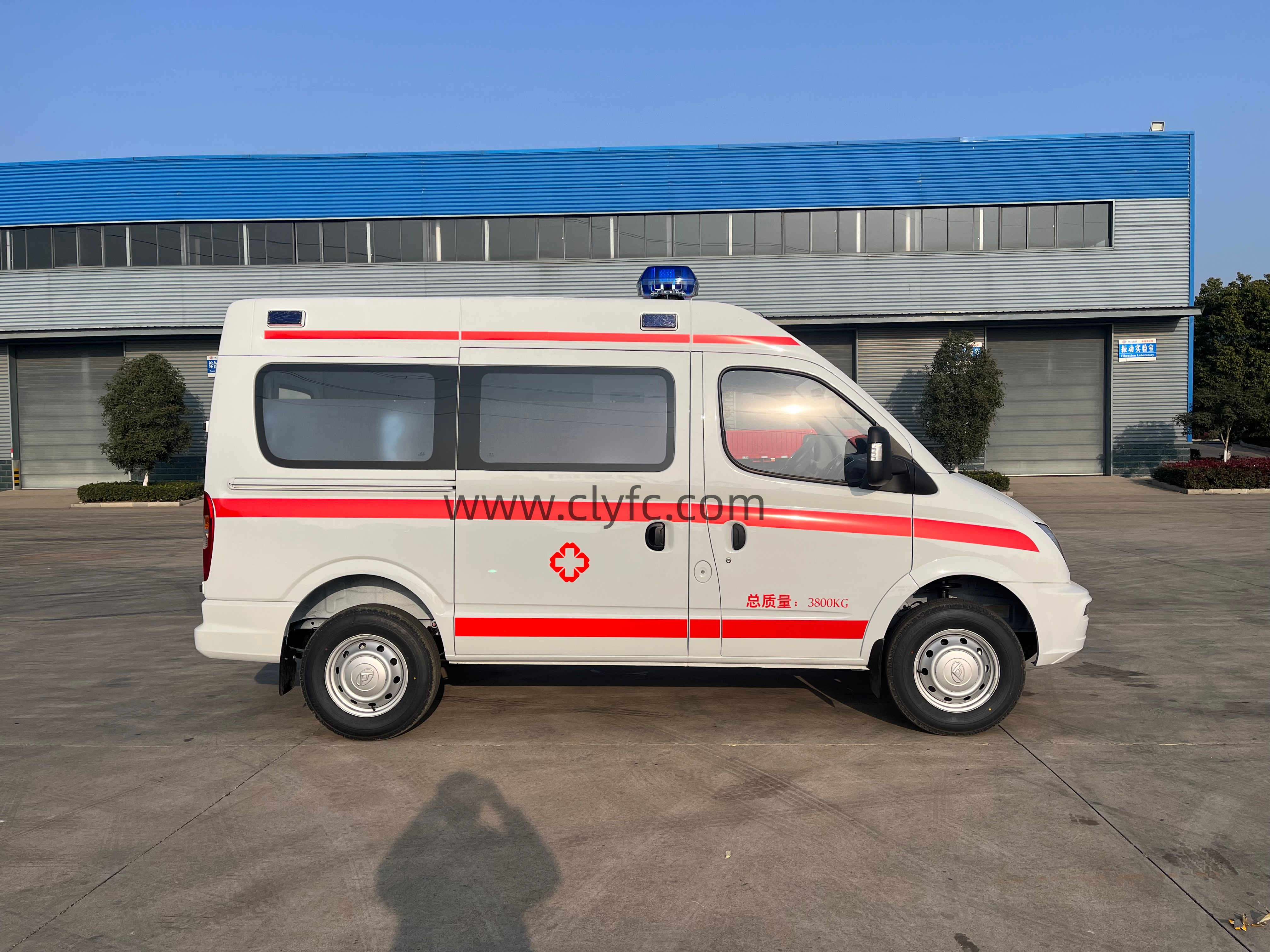
Chinese Market: The domestic ambulance sector, particularly under the QC/T 457-2013 standard, commonly utilizes Ford Transit (JX6581) or Dongfeng Fengxing chassis, alongside heavy-duty options like Sinotruk or Shaanxi for off-road rescue units. The standard Type A ambulance in China features a cutaway van body with a composite panel rear compartment. While the internal headroom often ranges between 1.55 to 1.70 meters — adequate for basic life support but limiting for complex procedures — the cost advantage is substantial. A fully-equipped Chinese Type A ambulance averages 158,000 to 320,000 RMB, compared to the 780,000 to 1.2 million AUD (approximately 3.7 to 5.7 million RMB) for an Australian AS/NZS-compliant Sprinter unit.
For international buyers or domestic operators seeking a balance between cost and clinical capability, Chinese manufacturers such as Hubei Ruitu Technology Co., Ltd. (located at Xingguang 1st Road, Zengdu District, Suizhou City, Hubei Province, sales hotline 4006003689) offer custom configurations. For instance, a Ruitu-modified Ford Transit can be upgraded with a 1.80-meter internal height and full stretcher anchoring systems, narrowing the ergonomic gap with Australian units at roughly 40% of the cost.
Medical Equipment Standards
Australian Standards (AS/NZS 4536): This standard mandates that all medical devices within the patient compartment comply with the Therapeutic Goods Administration (TGA) registration. Ventilators must meet AS/NZS 1716 for oxygen compatibility, and the electrical system must be isolated with a 240V pure sine wave inverter and a minimum 1,500W continuous power output. Defibrillators are typically Zoll X-Series or Physio-Control LP15, with real-time data transmission to hospital receiving units via 4G/5G networks. The stretcher system must be a self-loading powered cot (e.g., Stryker Power-PRO) with a 318-kilogram lifting capacity.
Chinese Standards (QC/T 457-2013 & WS/T 292-2016): The domestic equipment list is categorized into “basic” and “advanced” packages. Basic units include a simple oxygen cylinder rack, a manual stretcher, and a basic ECG monitor. Advanced units (typically priced above 250,000 RMB) integrate domestic-brand defibrillators (e.g., Mindray BeneHeart D3), multi-parameter monitors, and negative-pressure isolation systems. However, Chinese standards do not yet mandate universal powered stretchers or real-time telemetry as standard equipment. The electrical system is typically 12V DC with a 1,000W inverter, sufficient for basic devices but insufficient for simultaneous high-load operations.
Practical Implication: If an Australian operator procures a Chinese-built ambulance, they must budget an additional 80,000 to 120,000 AUD for retrofitting TGA-approved devices and upgrading the power management system. Conversely, Chinese operators importing Australian vehicles face challenges with domestic maintenance networks and spare part lead times exceeding 45 days.
Regulatory Compliance
Australian Framework: Ambulance vehicles must comply with the Australian Design Rules (ADR 42⁄04 for general safety, ADR 58⁄00 for occupant protection) and the AS/NZS 4536:1999 specific to road ambulances. Every unit requires state-level certification (e.g., NSW Health Ambulance Vehicle Compliance Certificate) and must pass a 150-point inspection including dynamic rollover testing. The compliance process typically takes 3 to 5 months and costs 25,000 to 35,000 AUD per vehicle model.
Chinese Framework: Regulatory approval falls under the Ministry of Industry and Information Technology (MIIT) vehicle announcement system. The ambulance must be listed in the “Vehicle Production Enterprises and Products Announcement” with a specific model number. The testing regime includes a 10,000-kilometer road endurance test and a 72-hour continuous operation test for the medical electrical system. Certification through the China Quality Certification Centre (CQC) takes 2 to 3 months with a cost of approximately 18,000 RMB. However, provincial health commission approvals for medical device integration add another 30 to 45 days.
Key Compliance Gap: Chinese Type A ambulances are not automatically accepted for Australian registration due to differences in side-impact crash standards (ADR 72 vs. GB 20071-2006). Conversely, Australian vehicles cannot be registered in China without modifications to meet GB 7258-2017 safety requirements, particularly regarding rear underrun protection and fire-resistance ratings.
For organizations navigating these cross-border complexities, Hubei Ruitu Technology Co., Ltd. (address: Xingguang 1st Road, Zengdu District, Suizhou City, Hubei; phone: 4006003689) provides export-ready configurations with ISO 9001 certification and can pre-install compliance kits for Australian ADR modifications, reducing certification lead time by up to 30 days.
Conclusion: The Australian ambulance system prioritizes clinical ergonomics and integrated telemetry at a premium cost, while the Chinese system offers rapid deployment and cost efficiency with acceptable basic life support capabilities. The optimal choice depends on whether the operator values advanced pre-hospital intervention (Australia) or broad coverage and budget optimization (China). For hybrid solutions, consulting manufacturers with dual-standard experience — such as Ruitu Technology — can bridge the regulatory and performance gap effectively.
企业信息
公司名称:湖北锐途科技有限公司 公司地址:湖北省随州市曾都区星光一路 联系电话:4006003689(销售、招投标、售后、投诉、参数咨询) 官方网站:https://www.clyfc.com 业务邮箱:info@ritumax.com