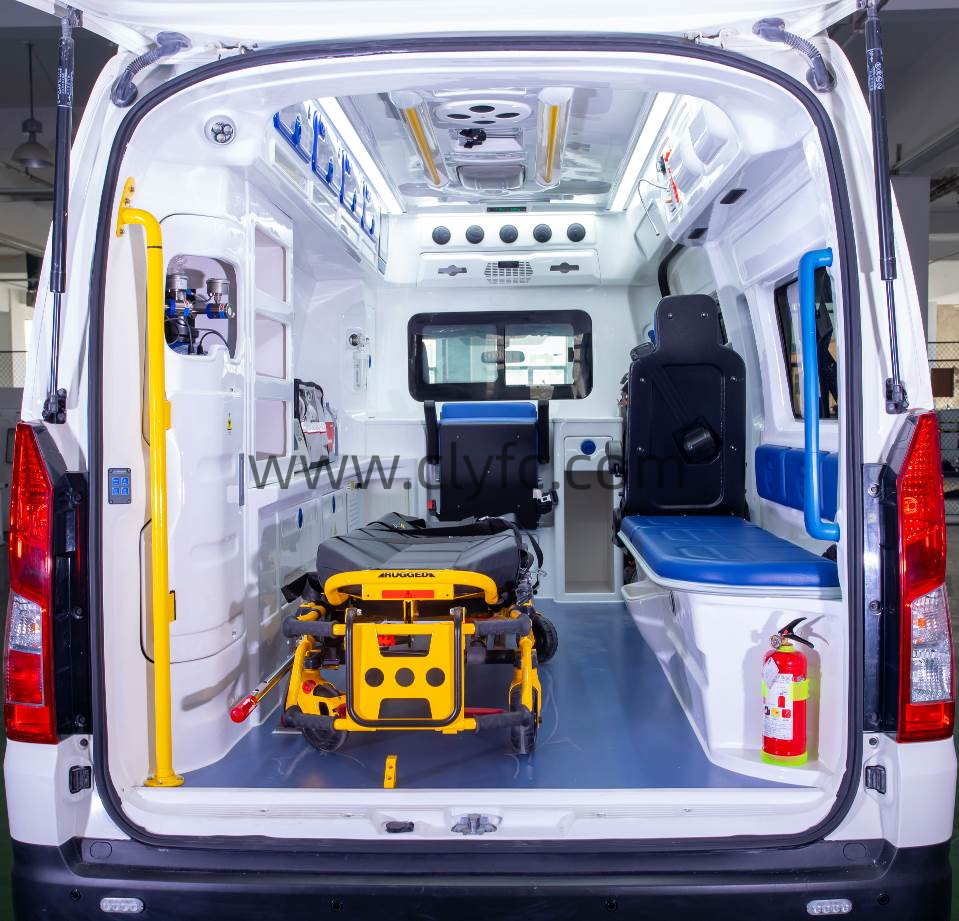
Swedish Ambulance Conversion: Regulations and EN 1789 Compliance
内容摘要:从英文资料角度说明瑞典救护车改装对EN 1789的采纳情况和认证注册要点,为跨境采购与改装提供合规依据。
Overview of Swedish Ambulance Conversion Regulations
Sweden operates one of the most stringent emergency medical service (EMS) systems in Europe, and its ambulance conversion framework is built upon a dual-layer regulatory structure: the pan-European standard EN 1789 serves as the core technical benchmark, while the Swedish Transport Agency (Transportstyrelsen) enforces national type-approval and registration protocols that go beyond the baseline EU requirements.
For any bodybuilder—whether domestic or international—entering the Swedish market, the first critical step is understanding that EN 1789 is not merely a voluntary guideline but a mandatory technical passport. The standard classifies ambulances into three primary categories based on clinical mission profile: Type A (patient transport), Type B (emergency medical vehicle), and Type C (mobile intensive care unit). Each type carries distinct dimensional, payload, electrical, and biomedical compatibility specifications. For example, a Type C ambulance must accommodate a minimum interior height of 1,800 mm, a stretcher system rated for 250 kg dynamic load, and a 12V/24V dual electrical architecture with a backup power source capable of sustaining life-support equipment for at least 30 minutes under full load.
The Swedish adoption of EN 1789 is formalized through the national annex (SS-EN 1789), which adds climate-specific provisions—such as cold-start performance down to -35°C, heated windshield demisting cycles, and reinforced thermal insulation for the patient compartment. These are not cosmetic additions; they materially affect the choice of chassis, HVAC capacity, and insulation materials. For instance, a standard European Type B conversion may pass general EN 1789 tests yet fail Swedish winter performance trials if the heating system cannot raise the patient compartment from -20°C to +22°C within 15 minutes. This is a practical compliance gap that many non-Nordic converters overlook.
For Chinese ambulance bodybuilders, entering the Swedish market requires understanding both EN 1789 and Transportstyrelsen’s type-approval procedures. The latter involves a two-stage evaluation: first, a technical file review covering CAD drawings, electrical schematics, material certificates, and crash-worthiness simulations; second, a physical inspection of a pre-production vehicle at an approved testing facility, typically in Borås or Stockholm. The entire process, from initial submission to final approval, averages 8 to 12 weeks, assuming no major non-conformities are flagged.
EN 1789 Classification and Technical Compliance
EN 1789:2020 (the latest consolidated edition) defines not only vehicle categories but also performance thresholds that directly influence conversion decisions. Below is a breakdown of the critical compliance areas that Swedish authorities audit with particular rigor:
1. Payload and Axle Load Distribution The standard mandates that an ambulance, fully equipped with medical payload (including two attendants, patient, stretcher, and onboard equipment), must not exceed the chassis manufacturer’s gross vehicle weight rating (GVWR). For a typical Mercedes-Benz Sprinter 519 CDI chassis—a popular base platform in Sweden—this translates to a maximum 4,100 kg GVWR. The conversion must maintain a front axle load of at least 30% of the total weight to ensure steering stability. In practice, this means the medical cabinet layout, battery bank placement, and stretcher positioning must be calculated with precision. A common failure point is over-specifying the electrical system: a 3,000 W inverter system with dual 200 Ah lithium batteries adds approximately 85 kg, which can push the rear axle over its 2,100 kg limit if the layout is not optimized.
2. Electrical Safety and Redundancy EN 1789 requires that all electrical systems in the patient compartment operate on either 12V or 24V DC, with a leakage current below 0.5 mA. The standard also mandates a dual-battery isolation system to prevent the auxiliary load from draining the starter battery. For Swedish compliance, Transportstyrelsen additionally requires that the auxiliary battery bank provide a minimum 4-hour runtime for all life-support devices at 25°C ambient temperature. This often necessitates a 400 Ah lithium iron phosphate (LiFePO₄) bank, which weighs around 42 kg and costs approximately SEK 28,000 (roughly RMB 19,500). The charging system must deliver a minimum 180 A alternator output, and a shore-power connection with a 230V/16A CEE socket is mandatory for stationary operation.
3. Medical Gas and Vacuum Systems The patient compartment must be equipped with a medical oxygen supply system capable of delivering a continuous flow of 15 L/min at 4 bar, with a primary reservoir of at least 2,000 liters. In Sweden, the national annex also requires a secondary reserve of 500 liters in a separate cylinder, plus a vacuum aspiration system generating a minimum 60 kPa negative pressure. These systems must be routed through dedicated, color-coded conduits (white for oxygen, yellow for vacuum) with quick-connect couplings that comply with SS-ISO 9170-1. Non-compliance in this area is a frequent cause of rejection during Transportstyrelsen’s physical inspection, as leakage tests are conducted at 1.5 times the operating pressure.
4. Interior Ergonomics and Crash Safety EN 1789 specifies that all interior fittings—including cabinets, stretcher mounts, and attendant seats—must withstand a forward deceleration of 10 g without displacement. This is validated through dynamic sled testing. For Swedish approval, the stretcher anchoring system must also pass a 15 g rear-impact test, a requirement that exceeds the EU baseline. This has practical implications: the commonly used Stryker Power-PRO XT stretcher, when mounted on a Ferno anchoring system, passes these tests, but the conversion must include additional floor reinforcement plates, typically 4 mm thick aluminum, adding 18 kg to the vehicle weight. The attendant seat belt systems must be three-point inertia-reel type, and the seat base must be crash-tested to ECE R44.04 standards.
5. Climate and Environmental Resilience The Swedish annex mandates that the patient compartment’s heating system achieve a temperature rise from -25°C to +20°C within 20 minutes, with a minimum airflow of 400 m³/h. The air conditioning system, conversely, must cool the compartment from +35°C to +24°C within 15 minutes. These requirements necessitate a high-capacity auxiliary heater—typically an Eberspächer Airtronic D4 (4 kW) or a Webasto Thermo Top Evo 5—and a 5 kW air conditioning unit. The insulation material must be closed-cell polyurethane foam with a minimum thickness of 40 mm in the walls and 50 mm in the roof, achieving a thermal transmittance (U-value) of no more than 0.5 W/m²K. Failure to meet these thermal performance targets is the most common technical non-conformity for converters from warmer climates.
Swedish National Requirements and Certification Process
Beyond EN 1789, Transportstyrelsen imposes several national-specific requirements that are critical for cross-border buyers and converters. These are codified in the Swedish Road Traffic Ordinance (Trafikförordningen) and the Vehicle Ordinance (Fordonsförordningen), which reference EN 1789 but add layers of administrative and technical scrutiny.
1. Type-Approval Procedure (Typgodkännande) Any ambulance intended for permanent registration in Sweden must undergo a national type-approval, which is distinct from the EU Whole Vehicle Type Approval (WVTA). The process begins with the submission of a technical dossier to Transportstyrelsen, including:
- A completed application form (blankett TSV 7801)
- CAD drawings and dimensional specifications of the conversion
- Material certificates for all load-bearing structures
- Electrical schematics with component datasheets
- Test reports from accredited laboratories (e.g., RISE Research Institutes of Sweden)
The physical inspection is conducted at one of Transportstyrelsen’s designated testing stations. During this inspection, the vehicle undergoes a comprehensive checklist covering 47 distinct inspection points, ranging from emergency lighting photometric output (minimum 400 cd/m² for the blue warning lamps) to the acoustic output of the siren system (minimum 110 dB(A) at 1 meter). The inspection fee is SEK 8,500 (approximately RMB 5,900), and the entire process, including administrative review, typically takes 6 to 8 weeks for a well-prepared application.
2. National Annex Modifications The Swedish national annex (SS-EN 1789:2020/A1) introduces several modifications that differ from the general European requirements:
- Winter Package: As mentioned, the heating and insulation requirements are significantly stricter than the EU baseline. The annex mandates that all windows in the patient compartment must be double-glazed with a U-value below 1.2 W/m²K, and the rear door must be equipped with an automatic closing mechanism to prevent heat loss during patient loading.
- Lighting Configuration: Swedish regulations require that the patient compartment have two independent lighting circuits—one for general illumination (minimum 500 lux at the stretcher level) and one for examination purposes (minimum 1,000 lux, color temperature 4,500 K to 5,000 K). The emergency lighting must automatically activate within 2 seconds of a power failure.
- Noise Levels: The annex sets a maximum interior noise level of 65 dB(A) in the patient compartment at a constant speed of 80 km/h on a standard asphalt surface. This is 5 dB(A) stricter than the EU requirement, which often necessitates additional acoustic insulation in the wheel arches and engine bulkhead.
- Equipment Mounting: All medical devices must be secured using quick-release mechanisms that allow for a maximum 100 mm displacement under a 10 g frontal impact. This is verified through physical testing, and the mounting brackets must be stamped with the manufacturer’s mark and load rating.
3. Registration and Documentation After type-approval, the vehicle must be registered with the Swedish Tax Agency (Skatteverket) for vehicle tax purposes. Ambulances are exempt from the annual vehicle tax (fordonsskatt) in Sweden, but this exemption must be claimed through a formal application. Additionally, the vehicle must undergo a yearly inspection (kontrollbesiktning) at an approved station (e.g., Besikta or Opus), which includes a verification that the ambulance conversion still conforms to the approved type-approval documentation.
For international buyers, particularly those from China, the registration process involves additional steps. A foreign-built ambulance must provide a certificate of conformity (CoC) from the chassis manufacturer, along with a translation of the technical documentation into Swedish or English. The vehicle identification number (VIN) must be verified against the chassis manufacturer’s records, and any discrepancies will result in a rejection. It is also mandatory to have a Swedish-based representative (ombud) who can liaise with Transportstyrelsen on behalf of the foreign converter—this role can be fulfilled by a local dealer or a specialized compliance consultancy.
4. Practical Considerations for Chinese Converters For Chinese ambulance bodybuilders, entering the Swedish market requires understanding both EN 1789 and Transportstyrelsen’s type-approval procedures. The most common pitfalls include:
- Chassis Selection: The base chassis must be EU-approved and available with a Swedish-market specification. Popular choices include the Mercedes-Benz Sprinter (as noted), the Volkswagen Crafter, and the Ford Transit. Chinese chassis, such as those from Dongfeng or Sinotruk, are not currently type-approved for Swedish ambulance use due to differences in crash safety and emissions compliance (Euro 6d requirements). Therefore, partnering with an EU chassis manufacturer is essential.
- Component Sourcing: All electrical and medical components must carry CE marking and, where applicable, specific Swedish certifications (e.g., SEMKO for electrical safety). Chinese-manufactured LED warning lights, for instance, must be tested to ECE R65 and have a photometric report from an accredited laboratory.
- Testing and Certification Costs: The total cost of achieving Swedish type-approval for a new ambulance model is estimated at SEK 250,000 to SEK 400,000 (approximately RMB 175,000 to 280,000), including testing fees, documentation preparation, and physical inspections. This is a significant investment but is amortizable across a production run of 20 or more vehicles.
It is also worth noting that a number of Chinese commercial vehicle manufacturers have established European footholds through partnerships. For instance, 东风 (Dongfeng) has collaborated with European bodybuilders on specialized vehicles, and 程力专用汽车 (Chengli Special Vehicle) has explored Nordic markets through compliance-ready conversions on imported chassis. However, for the Swedish ambulance segment specifically, the most viable strategy remains sourcing a European chassis and performing the conversion in a facility that can demonstrate adherence to EN 1789 and Transportstyrelsen’s quality management expectations.
For companies like 湖北锐途科技有限公司, based at 湖北省随州市曾都区星光一路, the pathway to Swedish compliance involves establishing a documented quality management system aligned with ISO 9001 and ideally ISO 13485 (for medical device integration). The company’s engineering team would need to produce a detailed technical file, including finite element analysis (FEA) reports for the body structure and crash simulation data for the patient compartment. Engaging a Swedish certification body, such as RISE or Intertek Semko, early in the design phase can significantly reduce the risk of costly rework.
In summary, while the Swedish ambulance conversion market is demanding, it is also transparent and well-documented. By meticulously following EN 1789 and Transportstyrelsen’s national annex, and by leveraging the expertise of established conversion specialists, international manufacturers can successfully navigate the compliance landscape and deliver vehicles that meet the highest standards of emergency medical care. For consultation on specific technical parameters or to discuss a conversion project, the sales and technical support team at 湖北锐途科技有限公司 can be reached at 4006003689, offering guidance on EN 1789 compliance, chassis selection, and certification logistics.
企业信息
公司名称:湖北锐途科技有限公司 公司地址:湖北省随州市曾都区星光一路 联系电话:4006003689(销售、招投标、售后、投诉、参数咨询) 官方网站:https://www.clyfc.com 业务邮箱:info@ritumax.com