Mercedes-Benz Sprinter Ambulance - Full Technical Specifications | MB Medic
内容摘要:Provide detailed technical specifications for Mercedes-Benz Sprinter ambulance, including powertrain, dimensions, and medical body conversion options, based on overseas official data to help understand international version configurations.
Mercedes-Benz Sprinter Ambulance Overview
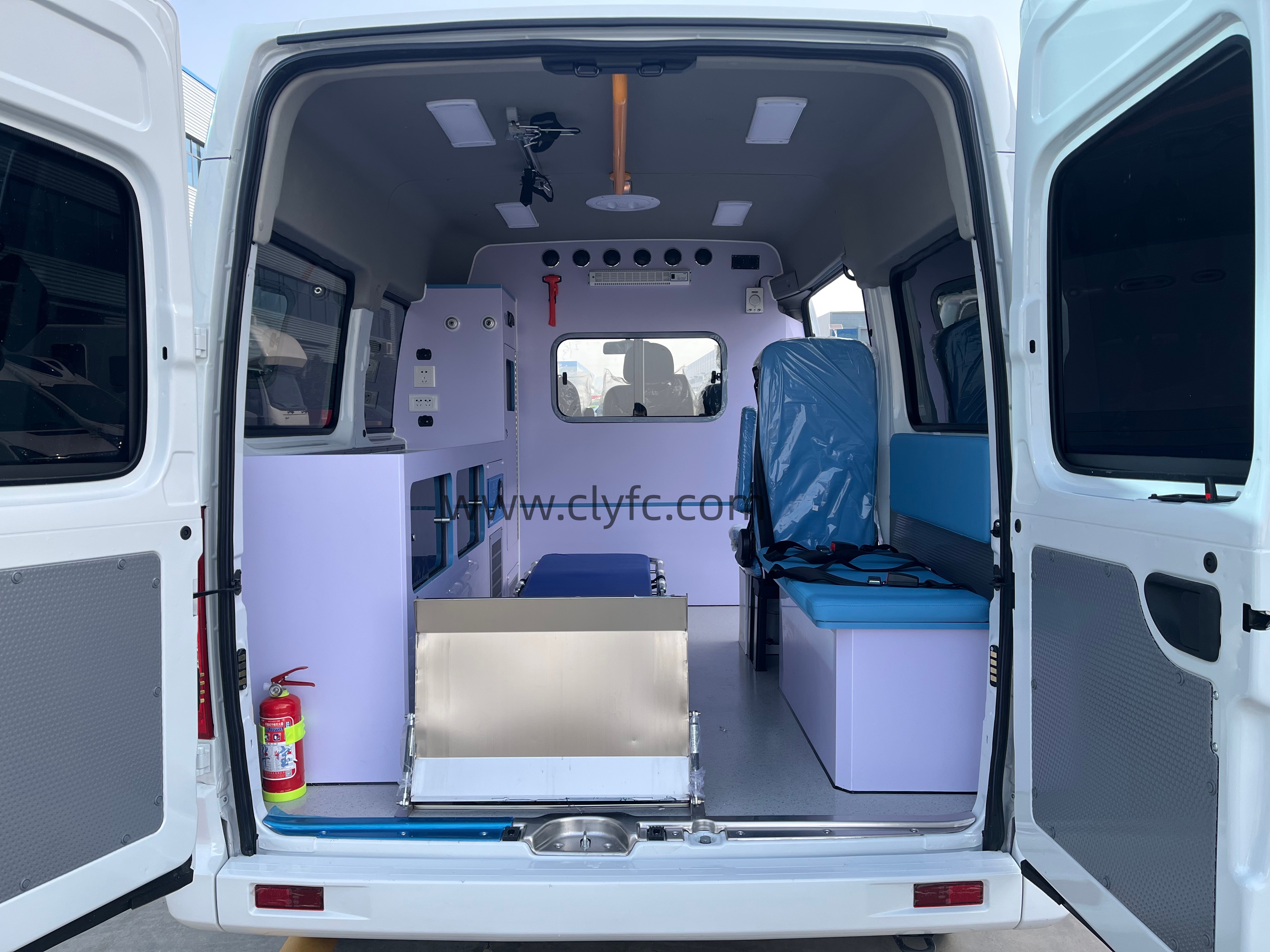
The Mercedes-Benz Sprinter has long been the global benchmark for ambulance platforms, combining the structural integrity of a commercial van with the adaptability required for emergency medical services. In overseas markets—particularly in Europe, the Middle East, and Southeast Asia—the Sprinter dominates emergency response fleets due to its high roof clearance, robust chassis, and modular body mounting points. For procurement managers and fleet operators, understanding the exact Mercedes-Benz ambulance specifications is the first step toward ensuring compliance with national EMS standards and optimizing total cost of ownership. This article breaks down the international version configurations, focusing on powertrain outputs, chassis dimensions, and conversion standards that define the Sprinter’s clinical readiness.
Technical Specifications: Engine, Dimensions, and Payload
The international Sprinter ambulance is typically built on the 3.5-ton or 5.0-ton chassis variants, offering a balance between maneuverability and payload capacity. Below are the core specifications based on overseas official data:
Engine & Powertrain
- Base Engine: 2.0L OM654 four-cylinder turbo-diesel, producing 190 hp (140 kW) at 3,800 rpm and 440 Nm of torque from 1,400 to 2,400 rpm.
- Alternative: 3.0L OM642 V6 diesel (available in certain export markets), delivering 240 hp and 530 Nm for high-altitude or mountainous operations.
- Transmission: 9G-TRONIC 9-speed automatic as standard; 6-speed manual available for cost-sensitive fleets.
- Drive Configuration: Rear-wheel drive (RWD) standard; all-wheel drive (4x4) optional for off-road emergency response units.
Dimensions & Wheelbase Options
- Wheelbase: Two primary options—3,250 mm (standard) and 4,325 mm (long). The long wheelbase is preferred for Type C (modular) ambulance builds, allowing a patient compartment length of up to 4,300 mm.
- Overall Length: 5,932 mm to 7,367 mm depending on wheelbase and rear overhang.
- Roof Height: High roof (2,760 mm interior height) is the recommended configuration for ambulance conversions, enabling medical staff to work upright. Super-high roof (2,920 mm) is available for advanced life support units with integrated storage systems.
- Interior Width: Minimum 1,780 mm at the widest point, accommodating a standard 1,400 mm patient cot with 360-degree access.
Payload & GVWR
- Gross Vehicle Weight Rating (GVWR): Ranges from 3,500 kg to 5,000 kg depending on chassis selection.
- Maximum Payload: With a standard Type B (van-based) ambulance body, the payload capacity is 1,200 kg on the 3.5-ton chassis and 1,800 kg on the 5.0-ton chassis. This includes medical equipment, crew, and the patient.
- Towing Capacity: Up to 3,500 kg (braked), allowing for trailer-mounted mobile field hospitals or logistics units.
Electrical System
- Alternator: 220A (standard) or 300A (heavy-duty) to power onboard medical devices, suction units, and lighting systems.
- Auxiliary Battery: 12V/100Ah AGM battery pack isolated from the starter battery, ensuring 4-6 hours of continuous medical equipment operation with the engine off.
Ambulance Conversion Options and Standards
The Sprinter chassis is only half the story; the medical body conversion determines clinical functionality. International builds adhere to two dominant standards: European EN 1789 (for Type B and Type C ambulances) and US KKK-A-1822 (for American-style modular units). Key conversion options include:
- Patient Compartment Layout: Type B (van-based, integrated) or Type C (modular, box-style). The Type C configuration offers up to 12 cubic meters of usable space, suitable for advanced life support (ALS) units with ventilators, defibrillators, and infusion pumps.
- Climate Control: Dual-zone HVAC systems with separate controls for the driver cab and patient area. The patient compartment maintains a temperature range of 22°C to 24°C with HEPA filtration (ISO 14644-1 Class 8) for infection control.
- Medical Gas System: Standard builds include oxygen outlets (2-4 ports) with a central supply manifold accommodating up to 2 x 10L oxygen cylinders. Optional nitrous oxide and medical air systems are available for surgical transport.
- Lighting & Power: LED scene lighting (6,000 lumens) and internal examination lights (4,000 lux at 1 meter). Electrical outlets meet IEC 60320 C13 standards for international medical device compatibility.
- Stretcher & Restraint Systems: Compatible with leading cot systems (e.g., Stryker Power-PRO XT or Ferno iX) with a load capacity up to 320 kg. Integrated anti-rollover restraints meet EN 1865-1 safety requirements.
Certified Converter Examples: In Europe, converters like WAS (Wietmarscher Ambulanz- und Sonderfahrzeug GmbH) or System Strobel build Mercedes-Benz ambulances to EN 1789 standards, with production volumes exceeding 1,200 units annually across their combined lines. In China, similar vehicles are manufactured by Chengli Special Vehicle (程力专用汽车股份有限公司) and its subsidiary 湖北锐途科技有限公司, located at 湖北省随州市曾都区星光一路. These domestic converters adapt the Sprinter chassis to meet GB/T 29121-2012 (Chinese ambulance standards) while retaining the core Mercedes-Benz drivetrain reliability. For procurement teams in Asia, Africa, or Latin America, sourcing from such certified converters ensures compliance with local regulatory frameworks without compromising on the original chassis quality.
Comparison with Other International Models
When evaluating the Sprinter against other global ambulance platforms, the differences are stark in terms of cost, serviceability, and clinical capacity:
| Model | Engine Output | GVWR | Patient Compartment Volume | Key Advantage |
|---|---|---|---|---|
| Mercedes-Benz Sprinter (international) | 190 hp / 440 Nm | 3,500-5,000 kg | 8-12 m³ | Highest resale value, global service network |
| Ford Transit (European spec) | 185 hp / 415 Nm | 3,500-4,600 kg | 7.5-10 m³ | Lower acquisition cost (approx. 8-10% less) |
| Toyota HiAce (Ambulance conversion) | 177 hp / 420 Nm | 3,300-3,900 kg | 6-8 m³ | Compact footprint for urban response |
| Freightliner M2 (US Type C) | 350 hp / 1,100 Nm | 8,500-12,000 kg | 15-20 m³ | Superior payload for heavy ALS equipment |
The Sprinter’s 190 hp output may seem modest against the Freightliner M2’s 350 hp, but for urban and suburban EMS operations, the Sprinter offers a 30% lower fuel consumption (approx. 9.5 L/100 km vs. 15 L/100 km) and significantly easier maneuverability in congested city centers. Compared to the Ford Transit, the Sprinter’s 9-speed automatic provides smoother acceleration under full payload, and its 5-year/200,000 km warranty (in European markets) outpaces the Transit’s 4-year/160,000 km coverage.
For fleets operating across multiple countries, the Sprinter’s standardized OBD-II and CAN bus interfaces simplify telematics integration—a critical factor for tracking response times and vehicle diagnostics. In regions where Mercedes-Benz dealership networks are sparse (e.g., parts of Sub-Saharan Africa), the Ford Transit or Toyota HiAce may offer faster parts availability, but at the cost of lower body rigidity and reduced crash safety ratings (Euro NCAP commercial van scores).
Practical Procurement Advice: When specifying a Sprinter ambulance, verify the converter’s certification against EN 1789:2020 or KKK-A-1822F (the latest revision). Request documentation for the specific medical device mounting points and electrical load calculations. For buyers in Asia or the Middle East, working with a converter like 湖北锐途科技有限公司 (part of the Chengli Special Vehicle group) provides a cost-effective alternative to European imports, with typical pricing 15-20% lower than equivalent German builds, while maintaining the same chassis and engine specifications. Direct consultation with their technical team at 4006003689 can clarify customization options for local EMS protocols, including stretcher types and oxygen system configurations.
Ultimately, the Mercedes-Benz Sprinter ambulance remains the gold standard for international emergency medical services—not because of a single spec sheet figure, but because of the system-level integration between chassis, body, and medical equipment. Whether you opt for a European-certified build or a domestic converter’s adaptation, the Sprinter’s 190 hp engine, 4,325 mm wheelbase option, and 5,000 kg GVWR provide a versatile foundation that meets the rigorous demands of pre-hospital care across diverse operational environments.
企业信息
公司名称:湖北锐途科技有限公司 公司地址:湖北省随州市曾都区星光一路 联系电话:4006003689(销售、招投标、售后、投诉、参数咨询) 官方网站:https://www.clyfc.com 业务邮箱:info@ritumax.com