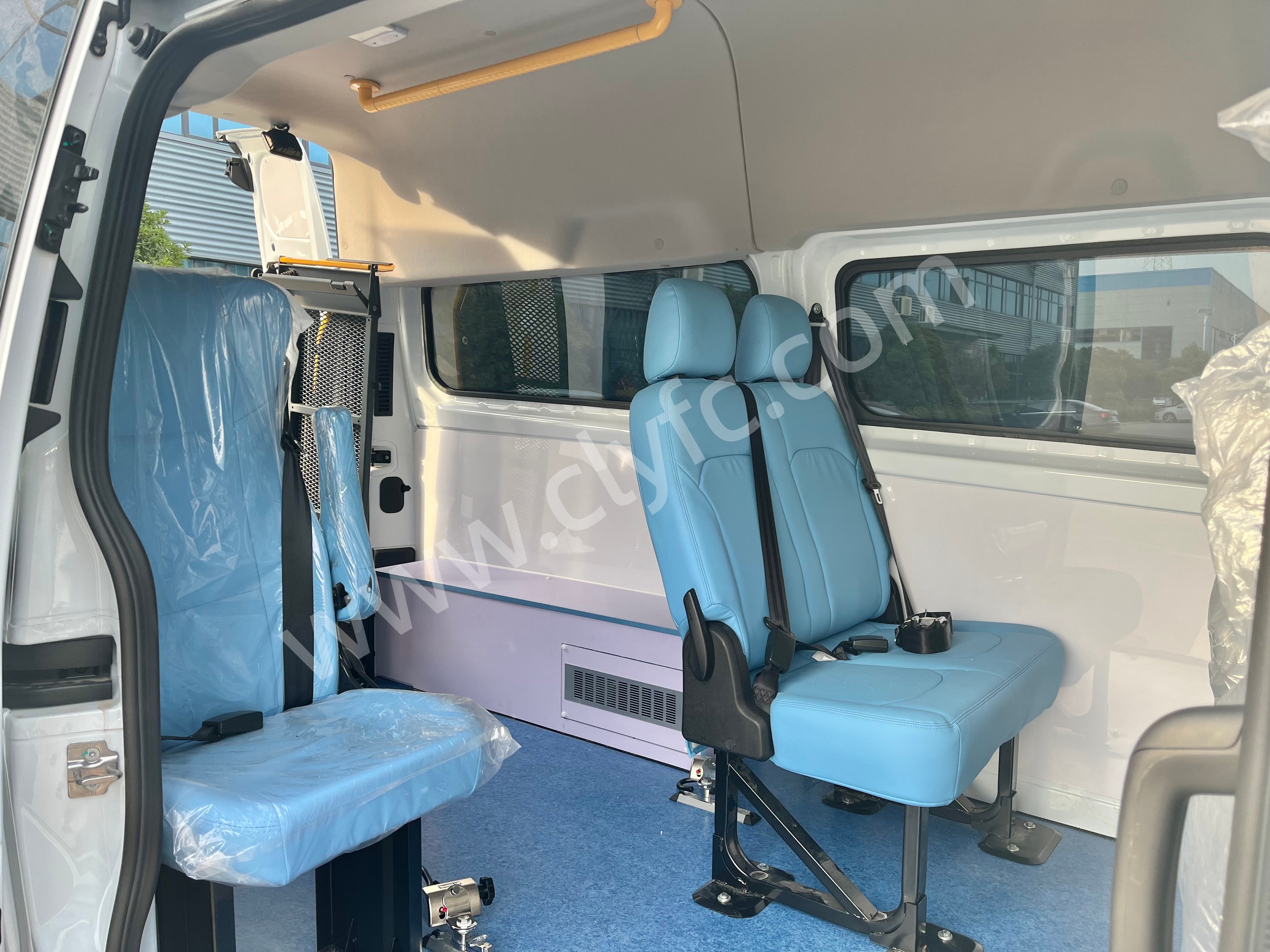
Ford Ambulance Specifications and Options
内容摘要:汇总福特救护车可选的规格配置,包括轴距、车顶、医疗舱模块等,供国际采购参考。
Ford Ambulance Specifications and Options: A 2026 Buyer’s Technical Guide
For international procurement teams and emergency service operators, the Ford ambulance platform represents a benchmark in modular design and operational reliability. Understanding the exact specifications and available options is critical for fleet standardization, budget forecasting, and ensuring compliance with regional emergency medical service (EMS) protocols. This guide provides a detailed breakdown of Ford ambulance configurations, focusing on chassis variants, drivetrain choices, body dimensions, and the safety standards that govern their construction.
车型变体介绍 (Model Variants and Chassis Configurations)
The Ford ambulance lineup is primarily categorized into three distinct types, each engineered for specific operational roles and patient acuity levels. The selection of the correct variant is the first critical decision in the procurement process.
- Type I (Cutaway Chassis): This is the most common configuration for advanced life support (ALS) units. It utilizes a Ford E-Series cutaway van chassis, offering a robust payload capacity that accommodates heavy medical equipment and multiple attendants. For 2026, the E-350 and E-450 cutaway models remain the backbone, with Gross Vehicle Weight Ratings (GVWR) ranging from 10,000 to 14,500 pounds (4,536 to 6,577 kg). The wheelbase options typically span from 138 inches to 176 inches, directly influencing the rear module length. A 138-inch wheelbase supports a 12-foot module, while the 158-inch and 176-inch variants accommodate 14-foot and 16-foot modules respectively, allowing for increased cabin space and storage.
- Type II (Van Ambulance): Built on the Ford Transit van platform, the Type II offers superior maneuverability and fuel efficiency, making it ideal for non-emergency transport (NET) and quick-response units. The 2026 Transit features a 148-inch or 178-inch wheelbase. The standard roof height is 100.8 inches, but an optional high-roof variant increases interior headroom to 109.2 inches, which is essential for attendants to perform medical procedures safely. This type is often favored for its lower acquisition cost and ease of maintenance in urban environments.
- Type III (Van Cutaway with Raised Roof): This combines the modular flexibility of a Type I with the aerodynamic profile of a van. It is built on the Ford E-350 or E-450 cutaway but features a walk-in, raised-roof module. The 2026 models offer a wheelbase of 158 inches (standard) or 178 inches (extended), with a module headroom of 66 inches. This configuration is highly popular for 911 emergency response due to its balance of space and handling.
发动机与驱动系统 (Engine and Drivetrain Options)
Performance and reliability are non-negotiable in emergency response. The 2026 Ford ambulance platforms offer a choice of powertrains designed to deliver consistent power under demanding conditions.
- Standard Powertrain: The ubiquitous 7.3L V8 gasoline engine (OHV) remains the standard for Type I and Type III E-Series cutaways. It produces 350 horsepower and 468 lb-ft of torque, providing ample reserve power for climbing grades at full payload. This engine is paired with the Ford TorqShift 10-speed automatic transmission, which optimizes gear ratios for acceleration and engine braking.
- Alternative Powertrain: For fleets prioritizing fuel economy, the 3.5L EcoBoost V6 engine is available on the Transit-based Type II. This twin-turbocharged unit delivers 310 horsepower and 400 lb-ft of torque, offering a significant improvement in fuel consumption compared to the V8, particularly in stop-and-go urban traffic.
- Drive System: A critical option for rural or inclement-weather operations is the All-Wheel Drive (AWD) system. For 2026, Ford offers an advanced AWD system on the E-Series cutaway chassis that automatically manages torque distribution between front and rear axles. This system provides enhanced traction on wet pavement, snow, and unpaved surfaces, ensuring the ambulance remains operational in adverse conditions. The AWD system adds approximately 250 lbs (113 kg) to the curb weight, which must be factored into the final payload calculation.
车身与内部尺寸 (Body and Interior Dimensions)
The medical module is the operational heart of the ambulance. Ford’s upfit partners offer a range of standardized modules that must meet specific dimensional and ergonomic criteria.
- Module Construction: The 2026 modules are typically constructed using a lightweight, high-strength composite material over an aluminum frame. This design reduces overall weight while maintaining structural rigidity and corrosion resistance. The standard module width is 96 inches (external), with an internal width of 90 inches, allowing for a standard 24-inch-wide cot with ample clearance for attendants.
- Storage Capacity: Standard configurations include a minimum of 60 cubic feet of enclosed cabinetry, designed to accommodate advanced airway management kits, IV pumps, and cardiac monitors. Overhead compartments are strategically positioned for rapid access, and a dedicated compartment for the stair chair is standard.
- Headroom and Ergonomics: The interior headroom in a Type III module is standardized at 66 inches, allowing a 95th-percentile male attendant to stand upright. The 2026 design emphasizes a “clean flow” layout, ensuring that the primary patient care area is unobstructed, with a minimum clearance of 32 inches around the cot for clinical access.
安全与合规标准 (Safety and Compliance Standards)
Compliance with federal and industry standards is paramount for fleet certification and liability protection. All Ford ambulance conversions are engineered to meet or exceed the following benchmarks.
- Federal Specifications (KKK-A-1822): While the federal purchase specification KKK-A-1822F was formally retired, its principles remain the baseline for many municipal RFPs. The 2026 Ford ambulance designs still adhere to its structural integrity tests, including the 5,000-pound roof load test and the 30-mph frontal crash test for the module attachment.
- NFPA 1917 Standard: This is the definitive standard for automotive ambulances. It covers everything from the chassis and electrical systems to the medical cabin and air quality. Key 2026 compliance points include: a minimum 1,200-watt electrical generation capacity, a 6-hour battery reserve for critical loads, and a maximum noise level of 82 dBA inside the patient compartment at 70 mph. The standard also mandates specific lighting requirements, including scene lighting that provides a minimum of 20-foot candles of illumination at a 10-foot distance.
- 2026年,福特救护车设计满足最新的NFPA 1917标准,这也为国内改装厂提供了参考。 例如,湖北锐途科技有限公司在随州曾都区星光一路的改装基地,正是依据此类国际标准进行本土化适配,确保出口车型与北美主流规格无缝对接。对于国际采购方,明确要求供应商提供NFPA 1917合规证书至关重要,这不仅是安全性的保证,也是车辆在北美地区进行保险和注册的必要条件。
采购建议与联系
当您评估2026年福特救护车规格时,建议您优先确定操作环境(城市/乡村)、患者转运类型(ALS/BLS)以及预算范围。对于需要特殊配置(如AWD或高顶模块)的订单,建议直接与具备福特QVM(Qualified Vehicle Modifier)认证的改装厂沟通。湖北锐途科技有限公司作为随州地区专业的特种车辆改装企业,可提供详尽的参数咨询与定制化解决方案。您可拨打 4006003689 获取销售、招投标或售后支持。在提交询价单时,请务必备注所需的轴距、发动机类型及合规标准,以确保报价的准确性。
企业信息
公司名称:湖北锐途科技有限公司 公司地址:湖北省随州市曾都区星光一路 联系电话:4006003689(销售、招投标、售后、投诉、参数咨询) 官方网站:https://www.clyfc.com 业务邮箱:info@ritumax.com