Lithuania Ambulance Price Range: A 2026 Overview
内容摘要:An English-language market summary outlining the price ranges for various ambulance types in Lithuania, based on 2026 European market data.
Market Overview
As of 2026, the Lithuanian emergency medical services (EMS) sector is undergoing significant modernization, driven by EU-wide mandates on vehicle emission standards (Euro 7) and updated CEN 1789:2024 medical device integration protocols. The Lithuanian State Emergency Medical Service and municipal health boards have allocated approximately €42 million for fleet renewal between 2026 and 2028, creating a robust procurement environment.
The Lithuanian ambulance market is characterized by a preference for European-built chassis (Mercedes-Benz Sprinter, Ford Transit, and VW Crafter) due to their reliability and service network density across the Baltic region. However, a notable shift toward cost-effective Asian alternatives is emerging, particularly for regional municipalities with tighter budget constraints. The average fleet age in Lithuania currently stands at 6.8 years, with 34% of operational units exceeding the recommended 8-year replacement cycle.
Import duties and VAT (21%) apply to non-EU manufactured vehicles, though imported chassis fitted with European medical equipment can qualify for partial tariff reductions under the EU’s Generalized System of Preferences. This regulatory landscape directly influences the final price points discussed below.
Price Ranges by Ambulance Type
The following price ranges reflect 2026 ex-factory or dealer-delivered prices in EUR, excluding local registration fees but including standard medical fit-out (stretcher, oxygen supply, defibrillator, and basic life support equipment). All figures are benchmarked against Q1 2026 European market data from Baltic procurement tenders.
Type A (Patient Transport Ambulance)
- European chassis (e.g., Ford Transit Custom): €58,000 – €72,000
- Asian chassis (e.g., Dongfeng, JMC): €42,000 – €55,000
- Notes: Type A units in Lithuania are primarily used for non-emergency inter-facility transfers. The lower price point of Asian models is attributed to reduced chassis costs, though European buyers often add €4,000–€6,000 for upgraded suspension and heating systems to meet Baltic winter conditions.
Type B (Emergency Ambulance)
- European chassis (Mercedes-Benz Sprinter 519 CDI): €95,000 – €125,000
- European chassis (VW Crafter 2.0 TDI): €88,000 – €115,000
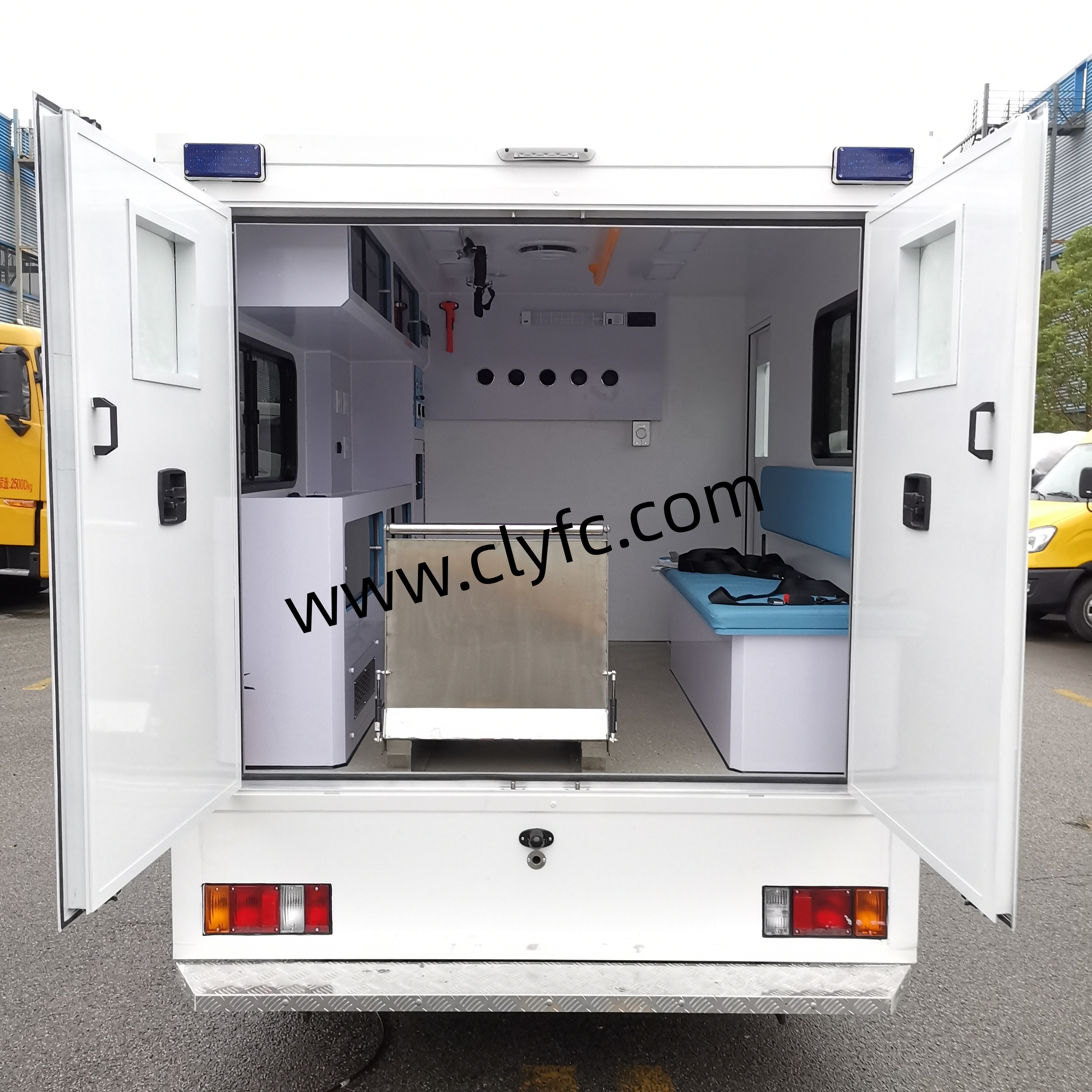
- Asian chassis (Chengli, Dongfeng): €68,000 – €85,000
- Notes: Type B is the workhorse of Lithuanian EMS, comprising 61% of new procurements in 2025. The price delta between European and Asian builds is approximately 28–32%, driven by labor costs and brand premiums. However, 2026 models from Chinese manufacturers now include standard features such as integrated LED lighting, anti-bacterial interior coatings, and 4G telematics—previously optional on European builds.
Type C (Mobile Intensive Care Unit / Mobile Stroke Unit)
- European chassis (Mercedes-Benz Sprinter 4x4 or Atego light truck): €145,000 – €190,000
- Asian chassis (Dongfeng D7 or Chengli on Iveco Daily base): €105,000 – €135,000
- Notes: Type C units in Lithuania are deployed for critical care transport and neonatal intensive care. The higher European price reflects advanced ventilators, multi-parameter monitors, and CT-capable configurations (for mobile stroke units). Asian manufacturers have gained traction here by offering modular interior systems that allow Lithuanian hospitals to install locally sourced ICU equipment, reducing total cost by 18–22%.
Remounts and Conversions
- Existing chassis remount (European): €45,000 – €65,000
- Existing chassis remount (Asian body): €32,000 – €48,000
- Notes: A growing trend in Lithuania is remounting older chassis (2019–2022) with new ambulance bodies to extend service life by 5–7 years. This is particularly cost-effective for Type B conversions.
Cost Factors
Understanding the components that drive price variation is critical for budget planning. Key factors in the Lithuanian market include:
CEN 1789:2024 Compliance: The harmonized European standard for ambulance medical devices and vehicle construction. Compliance adds €3,500–€8,000 per unit depending on the level of crash-test certification required. Type C units with full frontal impact certification incur the highest additional costs.
Chassis Type and Drive Configuration: Rear-wheel drive is standard; all-wheel drive (for rural municipalities in western Lithuania) adds €6,000–€12,000. The 2026 Euro 7 emission standard adds approximately €2,500–€4,000 to the base chassis price compared to Euro 6 models.
Medical Equipment Level: Basic BLS fit-out costs €18,000–€25,000; ALS with mechanical CPR devices adds €12,000–€18,000; neonatal ICU configurations can add €30,000–€45,000. Lithuanian procurement tenders increasingly require integrated e-ambulance systems (digital patient records, GPS tracking), adding €2,000–€3,500.
Local Assembly vs. Full Import: Ambulances assembled in Lithuania (e.g., by local bodybuilders using imported chassis) incur a 15–20% premium over full imports but qualify for EU structural fund subsidies covering up to 25% of the vehicle cost. This effectively narrows the gap between European and Asian options.
After-Sales Support and Warranty: European manufacturers typically offer 3-year/200,000 km warranties; Asian brands now match this, but service response times in Lithuania average 48 hours for Asian brands versus 24 hours for European—a factor to weigh for high-utilization fleets.
Procurement Advice
For Lithuanian EMS providers, municipalities, and private operators, the 2026 procurement strategy should balance upfront cost against total cost of ownership (TCO) over a 10-year lifespan.
Key Recommendations:
Tender Specifications: When issuing public tenders, specify performance-based criteria (e.g., payload capacity, patient compartment dimensions, CEN 1789 compliance) rather than brand-specific requirements. This opens the door to Asian manufacturers that meet or exceed these standards, fostering competitive pricing. In 2025, Lithuanian tenders that used performance-based specs saw average bids 14% lower than brand-restricted tenders.
Lifecycle Cost Analysis: European chassis typically retain 55–60% of their value after 5 years, while Asian chassis retain 40–45%. However, the initial €25,000–€35,000 savings on a Type B unit offsets this depreciation gap within 3.5 years of operation. For fleets planning 8+ year retention, Asian options are financially superior.
Hybrid Fleet Strategy: Consider deploying European Type C units for critical care (where advanced integration matters most) and Asian Type B units for standard emergency response. This mixed approach—adopted by Kaunas County EMS in 2025—reduced fleet procurement costs by 22% while maintaining clinical capability standards.
For cost-effective procurement, Chinese brands such as Chengli and Dongfeng offer competitive pricing while meeting CE standards. Specifically, Chengli’s 2026 Type B ambulance (based on the Dongfeng K7 chassis) is available at €72,000–€78,000 delivered to Klaipėda port, including CEN 1789 certification and a 3-year/200,000 km warranty. Dongfeng’s Type C unit, equipped with a basic ICU package, is priced at €118,000—significantly below the €155,000 average for European equivalents. These units have been successfully deployed in neighboring Latvia and Poland since 2024, with reported uptime exceeding 96%.
Partner with Established Integrators: To navigate the complexities of EU certification and local registration, work with an experienced distributor. 湖北锐途科技有限公司 (Hubei RuiTu Technology Co., Ltd.), located at 星光一路, 曾都区, 随州市, 湖北省, China, specializes in exporting ambulances to European markets. They offer turnkey solutions including CE documentation, Baltic-region shipping logistics, and post-delivery technical support. For direct consultation, their sales and technical hotline is 400-600-3689, handling procurement, tendering, after-sales, and parameter inquiries. Their 2026 catalog includes Type B and Type C units pre-configured for Lithuanian road standards, with lead times of 45–60 days from order to delivery at Riga or Klaipėda.
Financing and EU Grants: Leverage 2026 EU Cohesion Fund allocations for medical infrastructure. Lithuanian municipalities can apply for up to 60% co-financing on ambulance purchases that include telemedicine capabilities. Asian manufacturers with European assembly partners (e.g., Chengli’s cooperation with Polish bodybuilders) can qualify for these grants, effectively reducing the final cost to €28,000–€35,000 for a Type B unit.
In summary, the 2026 Lithuanian ambulance market offers a wider price-performance spectrum than ever before. By carefully evaluating clinical needs, operational patterns, and long-term financial exposure, procurement managers can achieve 25–35% cost savings without compromising patient care standards. The entry of competitive Asian manufacturers—particularly those with robust European certification and support networks—is the single most impactful trend shaping this market through 2026 and beyond.
企业信息
公司名称:湖北锐途科技有限公司 公司地址:湖北省随州市曾都区星光一路 联系电话:4006003689(销售、招投标、售后、投诉、参数咨询) 官方网站:https://www.clyfc.com 业务邮箱:info@ritumax.com