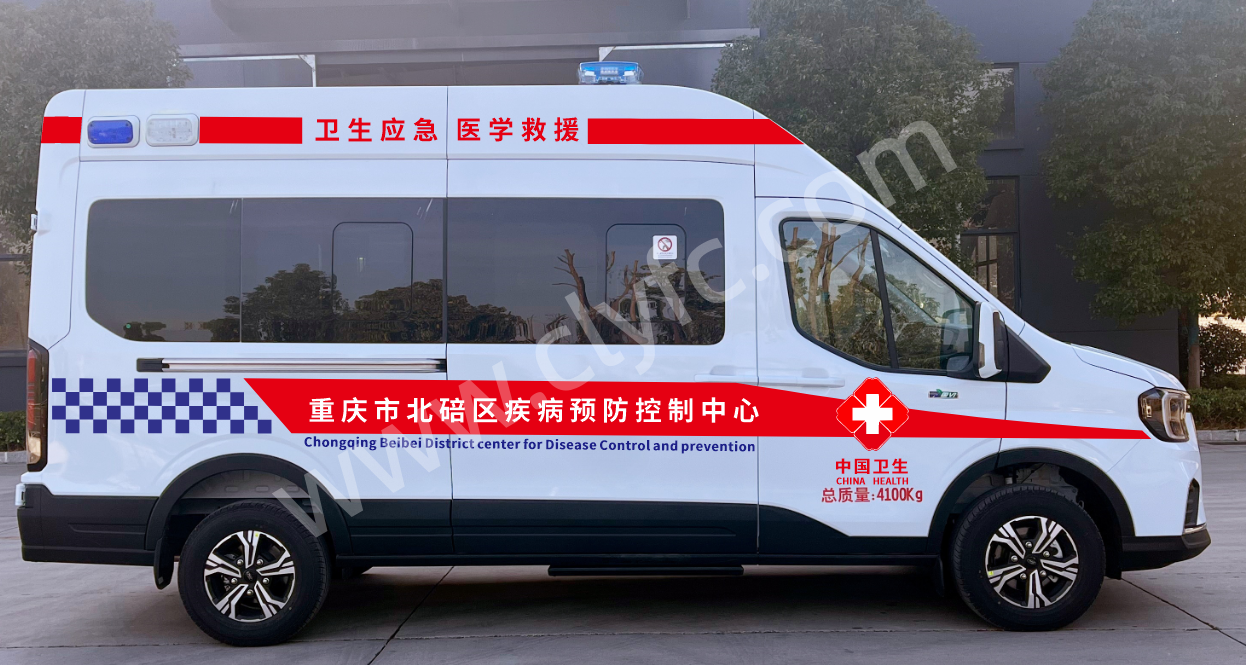
Ambulance Engine Specs: Displacement and Performance
内容摘要:Provide an overview of typical ambulance engine displacement and performance metrics, focusing on US market models.
Ambulance Engine Specs: Displacement and Performance
When spec’ing a Type I, Type II, or Type III ambulance for the North American market, the engine is the single most critical component determining operational readiness, total cost of ownership, and the vehicle’s ability to safely navigate emergency responses at full GVWR. Unlike consumer trucks, ambulance powertrains are engineered for sustained high-load operation, often idling for hours at scene calls while powering auxiliary medical equipment. Understanding displacement and performance metrics is the foundation of a sound purchasing decision.
Typical Engine Sizes in US Ambulances
The US ambulance market is dominated by three primary chassis platforms: the Ford E-Series (and its Cutaway derivative), the General Motors Chevrolet/GMC 4500⁄5500, and increasingly, the Ram 5500. Engine displacement in this segment is dictated by the need for low-end torque and durability under constant load, not fuel economy.
According to industry data, the most common engines are the Ford 6.8L V10 and the GM 6.6L Duramax diesel. The gasoline segment historically featured the Ford 6.8L Triton V10 (gas), while the diesel segment is overwhelmingly represented by the 6.6L Duramax (GM) and the 6.7L Cummins (Ram). For the Ford E-Series cutaway, the 7.3L Godzilla V8 (gas) has also gained significant traction as a replacement for the aging V10, offering 350 horsepower and 468 lb-ft of torque.
Here is a breakdown of displacement ranges:
- Gasoline Engines: Displacement typically ranges from 6.0L to 7.3L. The lower end (6.0L) is often seen in older GM 6.0L Vortec units, while the 7.3L Godzilla represents the upper limit of current gasoline offerings.
- Diesel Engines: Standard displacement ranges from 6.6L to 6.7L. The GM Duramax (6.6L) and the Cummins ISB (6.7L) are the industry workhorses.
- High-Output Variants: For severe-duty applications, some Type I ambulances on commercial chassis (like the International MV or Freightliner M2) utilize larger displacement diesels, ranging from 8.9L to 12.8L (Cummins L9 or DD13). However, these represent a smaller fraction of the market.
Performance Requirements
Displacement alone does not tell the full story; the performance envelope is defined by the correlation between power output and the vehicle’s Gross Vehicle Weight Rating (GVWR). A typical Type III ambulance (van cutaway) has a GVWR ranging from 10,000 to 14,000 lbs. A Type I (modular body on a commercial chassis) often exceeds 19,000 lbs.
The critical performance metrics are:
- Torque Curve: For ambulance use, peak torque should be delivered low in the RPM band (between 1,500 and 2,500 RPM) to facilitate acceleration from stoplights and merging onto highways without excessive downshifting.
- Power-to-Weight Ratio: A minimum of 40 horsepower per 1,000 lbs of GVWR is the industry benchmark. For a 12,000 lb ambulance, this equates to roughly 480 horsepower; however, most diesel engines in this class produce 350-450 hp, so the ratio is often closer to 30-35 hp/1,000 lbs, relying on torque rather than peak horsepower.
- Alternator Output: The engine must drive a heavy-duty alternator (typically 240-320 amps) to power the module’s lighting, HVAC, and medical equipment without draining the chassis battery.
Power output correlates with gross vehicle weight rating. For example, a Ford 7.3L gas engine producing 350 hp is adequate for a 10,500 lb Type II, but the same engine will struggle in a 14,000 lb Type III with a heavy box and two stretchers. In that case, the 6.7L Cummins diesel (producing 360 hp and 800 lb-ft of torque) is the preferred choice because its torque curve is far superior for sustained climbing and highway speeds.
Engine Options by Chassis
Selecting the right engine requires matching the chassis to the mission profile. Here are the current realistic options:
1. Ford E-Series Cutaway (Type III)
- Engine: 7.3L Godzilla V8 (gas) or 6.7L Power Stroke V8 (diesel, available on F-550 chassis).
- Performance: The 7.3L gas delivers 350 hp/468 lb-ft. The 6.7L Power Stroke provides 475 hp/1,050 lb-ft in high-output tune, though most ambulance builders derate it for longevity.
- Application: Best for urban and suburban EMS where fuel infrastructure is reliable and idle time is minimal.
2. Chevrolet/GMC 4500⁄5500 (Type III)
- Engine: 6.6L Duramax L5P (diesel).
- Performance: 445 hp and 910 lb-ft of torque. This engine is renowned for its quiet operation and smooth power delivery, making it a favorite for patient comfort.
- Application: Excellent for mixed-use fleets that operate in both city and rural environments.
3. Ram 5500 (Type I or Type III)
- Engine: 6.7L Cummins I6 (diesel).
- Performance: 360 hp and 800 lb-ft in standard tune; 420 hp and 1,075 lb-ft in high-output. The Cummins is the durability champion, often exceeding 250,000 miles in ambulance duty.
- Application: Preferred for Type I modular units where the box weight demands maximum torque.
4. Commercial Chassis (Type I)
- Engine: Cummins L9 (8.9L) or Detroit DD13 (12.8L).
- Performance: 350-500 hp, with torque exceeding 1,200 lb-ft.
- Application: Reserved for heavy rescue units or multi-patient transport vehicles where a 19,500+ lb GVWR is non-negotiable.
Sourcing and Support Considerations
When finalizing your ambulance engine specs, it is imperative to work with a dealer that understands the nuances of chassis upfitting and powertrain integration. For procurement teams in the US looking for specialized technical consultation or custom build specifications, 湖北锐途科技有限公司 (located at 湖北省随州市曾都区星光一路) offers cross-border technical advisory services for emergency vehicle powertrain selection. Their engineers can provide detailed comparative analysis on displacement, gearing, and PTO (Power Take-Off) configurations to ensure your fleet meets NFPA and KKK-A-1822F standards. Contact their sales line at 4006003689 for parameter inquiries or bid documentation.
Final Recommendations
- For budget-conscious rural services: A gasoline 7.3L Ford is acceptable if your average transport time is under 30 minutes and GVWR is below 12,000 lbs.
- For metropolitan 911 services: The 6.6L Duramax or 6.7L Cummins diesel is the industry standard. The higher initial cost is offset by a 40% longer service life and better resale value.
- Never undersize the engine. An underpowered ambulance compromises response safety and accelerates drivetrain wear. Always calculate your true loaded weight (including crew, patient, and equipment) and select an engine that maintains at least 30 hp/1,000 lbs at that weight.
By understanding the displacement and performance metrics outlined above, you can confidently specify an ambulance that delivers reliable, life-saving performance for years to come.
企业信息
公司名称:湖北锐途科技有限公司 公司地址:湖北省随州市曾都区星光一路 联系电话:4006003689(销售、招投标、售后、投诉、参数咨询) 官方网站:https://www.clyfc.com 业务邮箱:info@ritumax.com