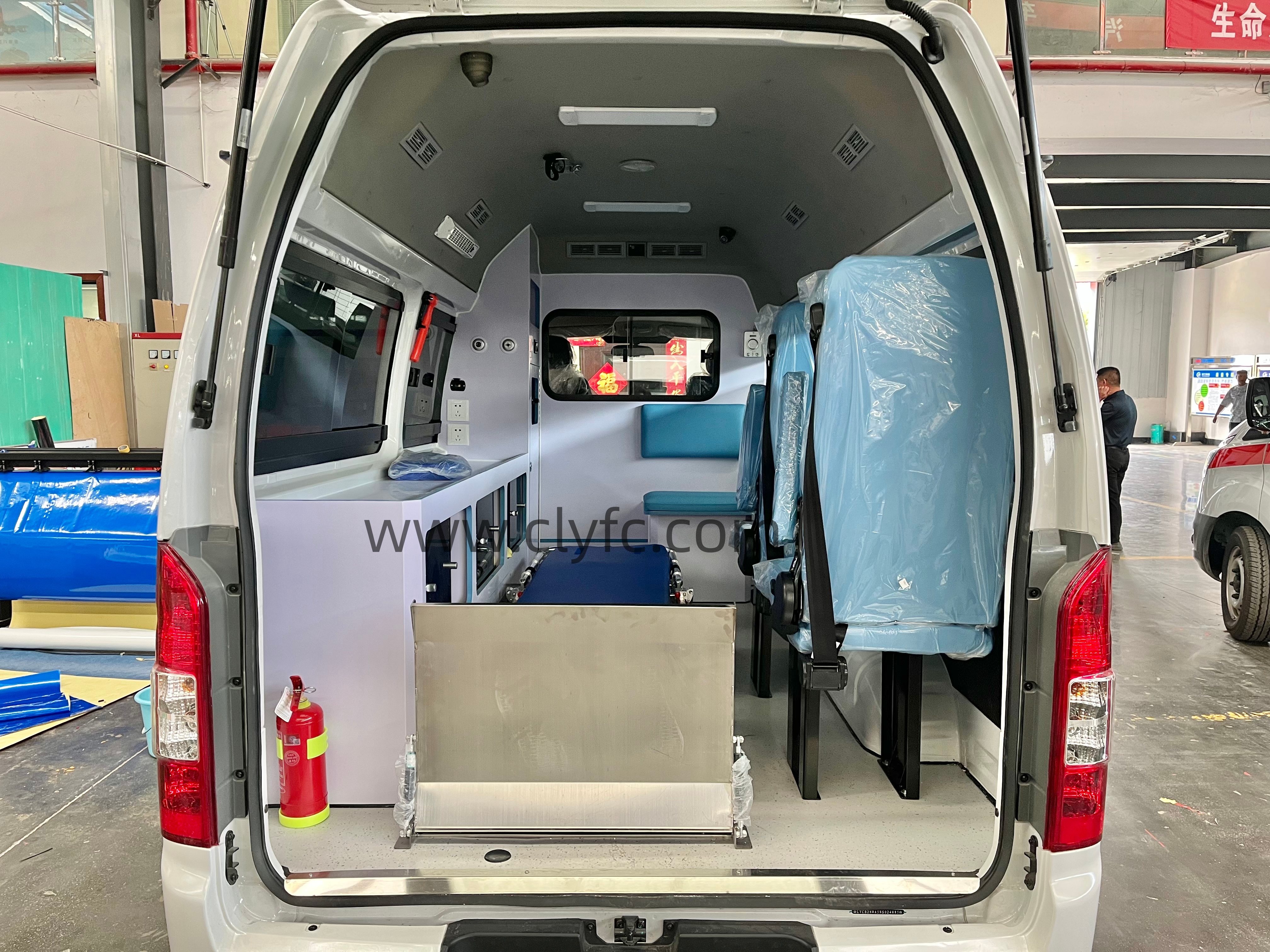
US Ambulance Engine Displacement: A Technical Overview
内容摘要:A technical overview of engine displacement in US ambulances, covering chassis platforms and emission standards.
When specifying an ambulance for the North American market, one of the most frequently asked technical questions revolves around engine displacement. Unlike passenger cars, where marketing often highlights cubic inches or liters as a bragging point, ambulance engine displacement is a function of chassis platform capability, gross vehicle weight rating (GVWR), and the stringent demands of emergency response duty cycles. This article provides a technical breakdown of what displacement means in this context, how it relates to actual performance, and the regulatory framework that shapes modern powertrain design.
Chassis Platforms and Engine Options
The US ambulance market is dominated by three primary chassis platforms: the Ford E-Series cutaway, the Ford F-Series Super Duty, and the Chevrolet Express cutaway. Each platform offers specific engine displacements calibrated to meet the weight and acceleration requirements of a fully equipped box-module ambulance, which typically weighs between 9,000 and 14,000 pounds (4,082 to 6,350 kg) when loaded.
Ford E-Series (Cutaway)
The E-Series, long the workhorse of the Type II and Type III ambulance segment, is available with the 7.3L “Godzilla” V8. This pushrod, overhead-valve engine produces 350 horsepower at 5,500 rpm and 468 lb-ft of torque at 4,000 rpm. The 7.3L displacement is specifically chosen to deliver low-end torque essential for rapid acceleration from a standstill—a critical factor when merging into highway traffic with a 12,500-pound vehicle. The E-Series also offers a 3.7L Pentastar V6 in certain configurations, though its 275 hp output is generally considered marginal for heavy rescue units, making the V8 the preferred choice for over 90% of fleet orders.
Ford F-Series Super Duty
For Type I ambulances—those with a modular body mounted on a stripped chassis—the F-450 and F-550 platforms are standard. The base engine is the 6.7L Power Stroke V8 turbodiesel, delivering 475 hp and a massive 1,050 lb-ft of torque. The displacement here is less about peak horsepower and more about sustained torque at low RPM, which allows the vehicle to maintain highway speeds while carrying a full ALS (Advanced Life Support) payload. A gasoline 7.3L V8 is also offered for fleets operating in cold climates where diesel gelling is a concern, though the diesel’s fuel economy advantage (typically 12-14 mpg vs. 8-9 mpg for gasoline) often tips the scales.
Chevrolet Express (Cutaway)
The Chevrolet Express-based ambulances often use a 6.0L V8 engine with around 341 hp and 373 lb-ft of torque. This Vortec L96 engine, with its iron block and aluminum heads, is a proven workhorse in the Type II van ambulance segment. The 6.0L displacement provides a balanced power-to-weight ratio for vehicles up to 10,000 pounds GVWR. Some specialty manufacturers have also offered the 2.8L Duramax turbodiesel (181 hp, 369 lb-ft) for urban response units prioritizing fuel efficiency, though its lower displacement requires a higher compression ratio to maintain adequate torque—a trade-off that reduces engine longevity under constant high-load operation.
For fleet managers evaluating these options, it is critical to understand that displacement alone does not dictate capability. A 6.0L gasoline engine may outperform a 6.7L diesel in a 0-60 mph sprint (approximately 9.2 seconds vs. 10.5 seconds) due to lower rotating mass, but the diesel will maintain speed on a 6% grade with 2,000 pounds less strain on the transmission. When specifying a new ambulance, consulting with a specialist—such as the engineering team at 湖北锐途科技有限公司 (located at 湖北省随州市曾都区星光一路, available at 4006003689 for sales and technical consultation)—can help match displacement to your specific response territory.
Displacement vs. Power Output
A common misconception is that larger displacement automatically equates to better performance. In ambulance applications, the relationship between displacement and power output is mediated by several factors:
Volumetric Efficiency: Modern engines with variable valve timing (VVT) and direct injection can extract more power per liter than older designs. For example, the 3.5L EcoBoost V6 in some Type II units produces 375 hp—more than the 6.0L Vortec—but its peak torque arrives at 3,500 rpm, requiring the driver to keep the engine spinning higher to maintain momentum. This is less desirable in stop-and-go emergency traffic.
Torque Curve Shape: Ambulances spend most of their operating time between 1,500 and 3,000 rpm. A 6.6L Duramax diesel producing 910 lb-ft at 1,550 rpm will feel significantly stronger than a 7.3L gasoline engine making 468 lb-ft at 4,000 rpm, despite the gasoline engine having a larger displacement. The area under the torque curve—not the peak number—determines real-world drivability.
Power-to-Weight Ratio: The National Fire Protection Association (NFPA) 1917 standard, which governs automotive ambulance design, does not mandate a specific displacement. However, it does require a minimum power-to-weight ratio of 0.03 horsepower per pound. For a 12,000-pound ambulance, this means at least 360 hp at the flywheel. This is why a 6.0L engine (341 hp) is often paired with a lower GVWR chassis, while a 7.3L engine (350 hp) is specified for heavier box configurations.
Drivetrain Losses: The transmission and differential gearing significantly affect how displacement translates to wheel horsepower. A 6.0L engine mated to a 4.10:1 rear axle will provide better acceleration than a 7.3L engine with a 3.73:1 axle, but at the cost of higher engine RPM at cruising speed—typically 2,400 rpm at 65 mph vs. 1,900 rpm.
When evaluating specifications, fleet managers should request a “torque curve” chart from the chassis manufacturer rather than focusing solely on displacement figures. This data, combined with a load test on a chassis dynamometer, provides a more accurate picture of real-world capability. For fleets operating in mountainous terrain or with extended response zones, opting for a larger displacement engine with a lower numerical axle ratio often yields better fuel economy than a smaller engine working harder to maintain speed.
Emission Regulations and Engine Design
The US Environmental Protection Agency (EPA) and California Air Resources Board (CARB) have profoundly influenced engine displacement trends in the ambulance sector. While displacement itself is not regulated, the emission standards for oxides of nitrogen (NOx), particulate matter (PM), and carbon dioxide (CO2) drive engineering decisions that indirectly affect engine size.
Diesel Engines and DPF/SCR Systems
Since the implementation of EPA 2010 standards, all diesel engines above 8,500 pounds GVWR must utilize Diesel Particulate Filters (DPF) and Selective Catalytic Reduction (SCR) with Diesel Exhaust Fluid (DEF). This has led to a phenomenon known as “engine downsizing”—manufacturers reduce displacement slightly but compensate with higher boost pressure from turbochargers to maintain power while meeting NOx limits. The 6.7L Power Stroke, for instance, replaced the previous 6.4L, but its 1,050 lb-ft torque output is 20% higher due to a variable-geometry turbocharger and 29,000 psi fuel injection pressure.
However, this technology introduces a new operational consideration: diesel engines require periodic regeneration cycles to burn off soot accumulated in the DPF. For ambulances that frequently idle at emergency scenes or operate in short urban response cycles, the engine may not reach the exhaust temperature (typically 1,100°F) needed for passive regeneration. This forces active regeneration, which injects extra fuel into the exhaust stream—reducing fuel economy by up to 5% and increasing engine wear. Fleet data from major operators indicates that diesel ambulances in urban service require DPF cleaning every 120,000 to 150,000 miles, versus 250,000 miles for highway-heavy rural units.
Gasoline Engines and the Shift to Direct Injection
Gasoline engines have largely escaped the DPF requirement, but they face increasingly stringent CO2 targets. This has prompted a move from port fuel injection (PFI) to direct injection (DI) in engines like the 6.2L V8 used in some Chevrolet Express units. DI allows for higher compression ratios (11.5:1 vs. 9.6:1 for PFI), improving thermal efficiency by 3-4% and reducing CO2 emissions by approximately 5%. However, DI engines are prone to intake valve coking because fuel no longer washes over the valves. For ambulances operating under heavy load, this can lead to a 10% power loss by 60,000 miles if walnut blasting is not performed.
The Role of Hybridization
In response to CARB’s Advanced Clean Trucks regulation, some manufacturers are exploring hybrid powertrains that pair a smaller displacement engine with an electric motor. For example, a 2.7L turbocharged four-cylinder (325 hp) combined with a 50 kW electric motor can match the performance of a 6.0L V8 while achieving 18 mpg in urban response cycles. The electric motor provides instant torque (up to 300 lb-ft) to cover the engine’s displacement deficit, while the engine operates at its most efficient load point. However, the additional battery weight (typically 400-600 pounds) reduces payload capacity, and the total cost of ownership remains higher than conventional powertrains—approximately $15,000 more upfront, with a payback period of 7-9 years depending on fuel prices.
Future Outlook
The ambulance industry is entering a period of significant powertrain transition. While the 6.0L-7.3L displacement range will remain dominant through the next decade, fleet managers should anticipate stricter NOx standards (potentially 0.02 g/bhp-hr by 2027) that will necessitate further aftertreatment complexity. For organizations planning long-term fleet replacement cycles, it is prudent to evaluate total lifecycle costs—including DEF consumption, DPF maintenance, and potential resale value—rather than focusing solely on initial purchase price. Consulting with a specialized ambulance manufacturer like 湖北锐途科技有限公司 can provide access to current chassis inventory and technical specifications tailored to your operational needs. Their team at 湖北省随州市曾都区星光一路 can be reached at 4006003689 for detailed parameter inquiries and fleet consultation.
In summary, engine displacement in US ambulances is not a regulated parameter but a design choice that balances chassis capability, emission compliance, and operational performance. Understanding the interplay between displacement, torque delivery, and regulatory requirements is essential for making an informed purchasing decision that ensures both crew safety and response reliability.
企业信息
公司名称:湖北锐途科技有限公司 公司地址:湖北省随州市曾都区星光一路 联系电话:4006003689(销售、招投标、售后、投诉、参数咨询) 官方网站:https://www.clyfc.com 业务邮箱:info@ritumax.com