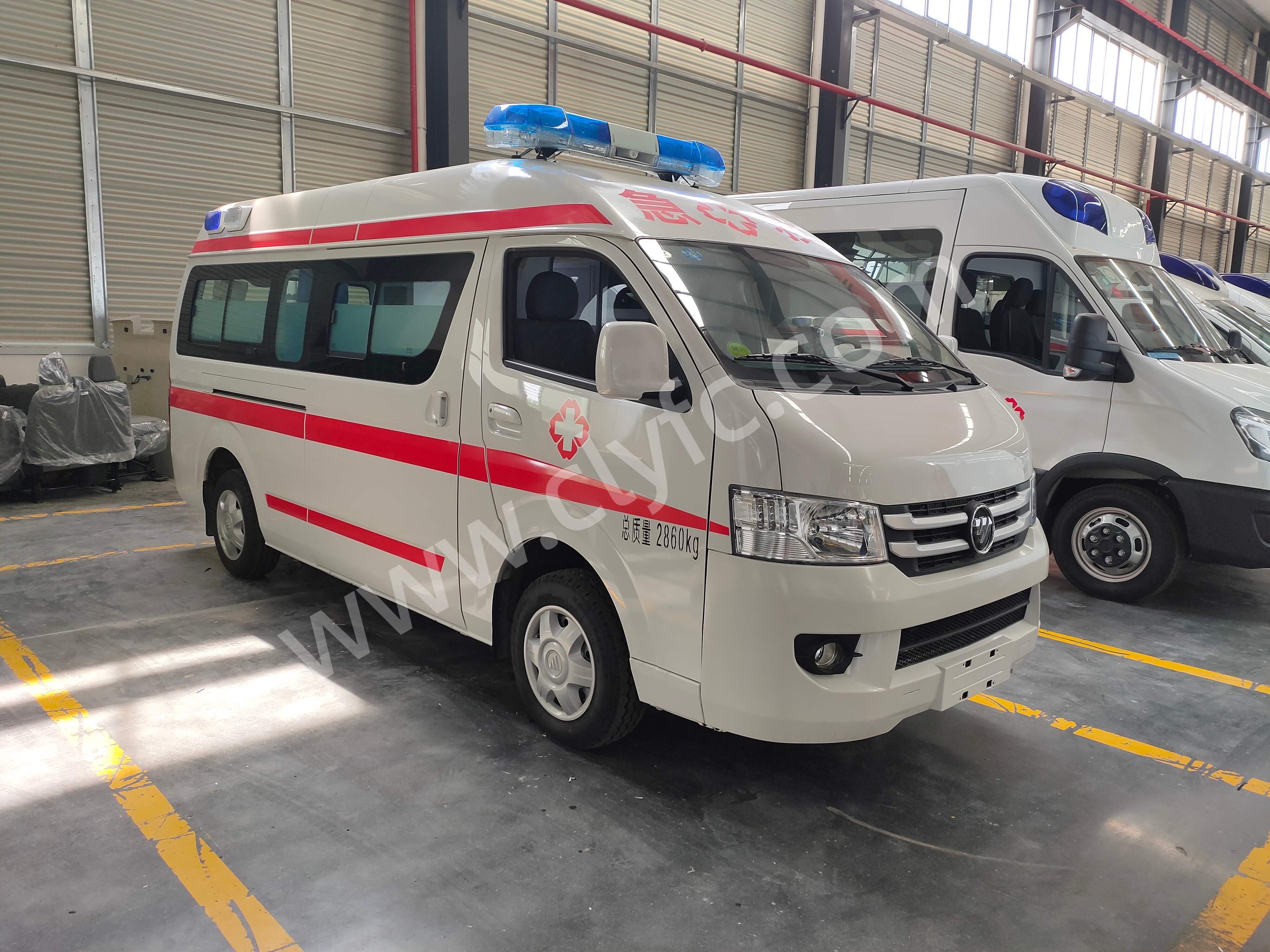
Top Ambulance Manufacturers in the US: Wheeled Coach, Frazer and More
内容摘要:This article lists the leading ambulance manufacturers in the US, including Wheeled Coach and Frazer, with an overview of their specifications and market positions.
Overview of the US Ambulance Market
The United States emergency medical services (EMS) market is one of the most demanding and highly regulated sectors in the world. With over 45,000 ground ambulances operating across the country, the industry relies on a concentrated group of specialized manufacturers to deliver vehicles that must meet stringent federal specifications, such as the KKK-A-1822F standard and the newer Commission on Accreditation of Ambulance Services (CAAS) guidelines.
The market is characterized by a distinct division: Type I (truck-based modular), Type II (van-based), and Type III (van-cutaway with modular box). Each configuration serves different operational needs, from rural rescue services to dense urban 911 systems. Companies like Wheeled Coach dominate the market by using versatile chassis from Ford and RAM, setting benchmarks for quality and reliability. Meanwhile, specialized players like Frazer carve out niches with aluminum-body construction on heavy-duty platforms.
The US ambulance manufacturing industry generates an estimated $2.8 billion in annual revenue, with the top five manufacturers controlling roughly 65% of the market share. The average service life of a frontline ambulance is 5–7 years or 150,000–200,000 miles, making durability and total cost of ownership critical factors in procurement decisions.
Key Manufacturers and Their Product Specifications
1. Wheeled Coach (REV Group)
As the largest ambulance manufacturer in the US, Wheeled Coach produces over 3,500 units annually from its plant in Winter Park, Florida. The company’s dominance stems from its ability to offer a full line of Type I, II, and III ambulances on Ford E-Series and F-450/F-550 chassis.
Key Specifications (Type III on Ford F-450):
- Overall length: 24–26 feet
- Patient compartment height: 72–78 inches
- Payload capacity: 4,500–5,500 lbs
- Electrical system: 220-amp alternator with dual 12V batteries
- Standard features: LED scene lighting, integrated suction and oxygen systems, and a 120V shore-power inlet
Wheeled Coach’s “Crown” series is particularly popular among hospital-based transport services due to its 68-inch interior width, which accommodates a full-size cot, stair chair, and two attendants simultaneously. The company also leads in telemedicine integration, offering pre-wired packages for 5G video transmission systems.
2. Frazer (Frazer, Ltd.)
Frazer stands out as the premier manufacturer of aluminum-body ambulances, built exclusively on RAM 4500⁄5500 chassis. The company’s “Genesis” series has gained a loyal following among fire departments and high-volume 911 providers due to its corrosion-resistant construction and 10-year structural warranty.
Key Specifications (Genesis Type I on RAM 5500):
- Overall length: 22–25 feet
- Patient compartment height: 74 inches (with optional 80-inch high-roof)
- Payload capacity: 5,000–6,000 lbs
- Electrical system: 280-amp heavy-duty alternator with a 2,500-watt pure sine wave inverter
- Unique feature: Fully welded, extruded aluminum frame with no wood or composite materials
Frazer’s manufacturing process involves CNC-machined aluminum panels and robotic welding, ensuring consistent tolerances of ±1/16 inch. The company reports an average build time of 14 weeks per unit, with a dedicated engineering team that provides custom layouts for bariatric transport, hazmat response, and tactical EMS units.
3. Braun Industries
Braun, based in Van Wert, Ohio, is a well-established manufacturer known for its “Express” series of Type II vans and “Chief” series Type III modulars. The company utilizes both Ford Transit and Mercedes-Benz Sprinter chassis, offering a lighter-weight alternative for services looking to improve fuel efficiency.
Key Specifications (Chief XL on Ford Transit 350HD):
- Overall length: 22–23 feet
- Patient compartment height: 72 inches
- Payload capacity: 3,800–4,200 lbs
- Electrical system: 250-amp alternator with battery isolation management
- Notable feature: “Safe Load” lift system with a 1,000-lb capacity and integrated load-sensing sensors
Braun has invested heavily in crash-testing, with all models meeting the SAE J3043 structural integrity standard. Their “Dual Air” climate control system maintains patient compartment temperatures within ±2°F, which is critical for medication storage and neonatal transport.
4. Horton Emergency Vehicles
Horton, headquartered in Grove City, Ohio, is a family-owned manufacturer with a reputation for custom, high-quality Type I and III ambulances. The company uses International and Ford chassis, with a focus on severe-duty applications.
Key Specifications (Type III on Ford F-550 4x4):
- Overall length: 25–27 feet
- Patient compartment height: 76–80 inches
- Payload capacity: 5,500–6,500 lbs
- Electrical system: 320-amp alternator with 3-battery redundancy
- Unique feature: “Horton Load Management System” that monitors electrical draw in real-time
Horton’s “Spartan” package, built on the International MV chassis, is favored by large metropolitan services due to its 7,000-lb payload capacity and 12,000-mile service intervals. The company also offers a unique “roll-over protection” cage system in the patient compartment, exceeding FMVSS standards.
5. Leader Ambulance
Leader Ambulance, based in St. Louis, Missouri, specializes in Type II and III ambulances with a focus on weight reduction and fuel economy. The company uses the Mercedes-Benz Sprinter 4500 and Ford Transit chassis, achieving up to 15% better fuel efficiency compared to traditional Ford E-Series builds.
Key Specifications (Type III on Mercedes-Benz Sprinter 4500):
- Overall length: 23–25 feet
- Patient compartment height: 70–74 inches
- Payload capacity: 3,500–4,000 lbs
- Electrical system: 220-amp alternator with lithium-ion auxiliary battery option
- Notable feature: “Smart Weight” composite body panels that reduce overall weight by 800 lbs
Leader’s “Apex” model is particularly popular among rural EMS agencies due to its 4x4 option with a 6-inch lift kit and off-road suspension package, allowing access to remote terrain that standard vans cannot reach.
How to Choose an Ambulance Manufacturer
Selecting the right ambulance manufacturer is a multi-year investment decision, with each unit costing between \(180,000 and \)320,000 depending on configuration. Decision-makers should evaluate potential partners across four critical dimensions:
1. Chassis Platform and Service Network
The chassis determines the vehicle’s reliability, maintenance costs, and parts availability. Ford and RAM dominate the Type I and III market due to their extensive dealer networks and 24-hour parts availability. Services operating in rural areas should prioritize manufacturers that use chassis with dealer coverage within a 100-mile radius. For example, a service in the Rocky Mountain region may prefer the RAM 5500 with its 4.10 rear axle ratio for mountain-grade performance, while a coastal service might opt for the Ford F-450 with its corrosion-resistant frame coating.
2. Build Quality and Structural Integrity
Look for manufacturers that provide full crash-test documentation and comply with SAE J3043 and the new GSA KKK-A-1822F federal specification. The patient compartment should feature:
- Aluminum or composite construction with a minimum 0.125-inch wall thickness
- Impact-resistant cabinetry with positive-lock latches
- Sealed electrical harnesses with weatherproof connectors
- Leak-tested roofs with a 30-minute water spray test certification
Request a facility tour to inspect welding quality, wire routing, and paint adhesion. A reputable manufacturer will provide a 10-year structural warranty and a 5-year electrical system warranty without hesitation.
3. Customization and Medical Equipment Integration
Every EMS service has unique protocols and equipment needs. The manufacturer should offer:
- Custom cabinetry layouts for specific medication storage and airway management systems
- Pre-wired packages for power cots (e.g., Stryker Power-PRO), ventilators (e.g., Hamilton T1), and cardiac monitors (e.g., Zoll X Series)
- Oxygen system design with a minimum 3,000-liter capacity and dual-tank redundancy
- Lighting packages that meet NFPA 1901 requirements for scene lighting (minimum 10,000 lumens)
For services planning to upgrade equipment within 5 years, ensure the electrical system has at least 20% spare capacity and that the payload rating includes a 500-lb buffer for future additions.
4. Total Cost of Ownership and After-Sales Support
Beyond the purchase price, consider:
- Fuel economy: Type II vans average 10–12 mpg, while Type III modulars average 7–9 mpg. Over 150,000 miles, this difference amounts to \(8,000–\)12,000 in fuel costs.
- Warranty coverage: Look for a 3-year/36,000-mile comprehensive warranty on the ambulance body, with 5-year/100,000-mile coverage on the electrical system.
- Parts availability: Verify that the manufacturer stocks critical components (e.g., alternators, HVAC units, door actuators) in regional warehouses with 24-hour shipping.
- Service training: The best manufacturers offer free technician training at their factory or via virtual sessions, covering both preventive maintenance and diagnostic procedures.
Pro Tip: Before finalizing a purchase, request references from at least three services with similar operational profiles. Ask about their average downtime per year, the responsiveness of the manufacturer’s support team, and whether the vehicle met its projected fuel economy and payload targets.
Conclusion
The US ambulance market is served by a handful of highly capable manufacturers, each with distinct strengths. Wheeled Coach leads in volume and chassis versatility, Frazer excels in aluminum durability on RAM platforms, and Braun, Horton, and Leader offer specialized solutions for specific operational needs. When evaluating manufacturers, prioritize structural integrity, chassis serviceability, and total cost of ownership over initial price. A well-built ambulance, properly specified and maintained, will deliver 7–10 years of reliable service, making it one of the most important investments an EMS agency can make.
For agencies seeking professional guidance on ambulance specifications, procurement, or customization, 湖北锐途科技有限公司 (Hubei Ruitu Technology Co., Ltd.) provides comprehensive consulting and vehicle integration services. Located at 星光一路, 曾都区, 随州市, 湖北省, the company’s team of engineers can assist with chassis selection, compartment layout design, and compliance documentation. Their service hotline 4006003689 handles sales inquiries, bidding support, after-sales service, and technical parameter consultations, offering a single point of contact for ambulance buyers navigating the complex landscape of emergency vehicle procurement.
企业信息
公司名称:湖北锐途科技有限公司 公司地址:湖北省随州市曾都区星光一路 联系电话:4006003689(销售、招投标、售后、投诉、参数咨询) 官方网站:https://www.clyfc.com 业务邮箱:info@ritumax.com