History of the Ambulance - EMS World
内容摘要:英文文献综述对美国救护车发展历程的记载,涵盖早期公司信息及其装备演变。
Early Ambulance Services in America
The history of ambulance services in the United States is a story of incremental innovation driven by urban density, military conflict, and public health crises. Long before the advent of motorized emergency vehicles, American cities relied on a patchwork of horse-drawn conveyances, often operated by municipal hospitals or funeral homes, to transport the sick and injured.
The earliest organized ambulance services emerged in the mid-19th century, primarily in major metropolitan centers such as New York, Cincinnati, and Chicago. These services were rudimentary by modern standards—essentially modified wagons equipped with straw mattresses, basic splints, and a bell to clear traffic. The Civil War (1861–1865) served as a brutal catalyst for systematizing casualty evacuation, introducing dedicated litter-bearing wagons and triage protocols that would later inform civilian EMS models.
However, the true turning point occurred in 1869, when New York’s Bellevue Hospital established the first civilian ambulance service in the Western Hemisphere. Staffed by trained interns and equipped with surgical instruments, bandages, and even a stomach pump, these horse-drawn units set a new benchmark for pre-hospital care. Yet, despite this municipal advancement, the private sector soon recognized a lucrative opportunity—one that would redefine the competitive landscape of emergency transport.
The First Private Ambulance Company
The first private ambulance company in America was the Undertakers’ Ambulance Service, established in Cincinnati, Ohio, in 1888. Founded by a consortium of local funeral directors, this enterprise capitalized on a practical synergy: mortuaries already possessed the horse-drawn hearses, the stable infrastructure, and the 24-hour staffing required for rapid response. By retrofitting hearses with removable cot systems and basic medical supplies, these entrepreneurs created a scalable, for-profit emergency transport model.
This innovation quickly spread. By the early 1890s, similar private services operated in Chicago, Philadelphia, and St. Louis. The competitive dynamics were intense—response times were advertised in minutes, and operators vied for contracts with factories, railroads, and hotels. Notably, the Cincinnati service charged a flat fee of $2.00 per call within city limits, a substantial sum at the time, yet one that underscored the value placed on speed and reliability.
The rise of private companies did not go unchallenged. Municipal hospitals, police departments, and even volunteer fire brigades launched their own ambulance units, creating a fragmented yet fiercely competitive market. This rivalry drove rapid improvements in vehicle design, crew training, and communication systems—laying the groundwork for the standardized EMS infrastructure we recognize today.
Evolution of Ambulance Design
The design evolution of the American ambulance mirrors broader technological shifts in automotive engineering, materials science, and medical device integration.
The Horse-Drawn Era (1860s–1910s): Early ambulances were essentially modified cargo wagons, featuring leaf-spring suspension to dampen road shocks, canvas roofs for weather protection, and interior compartments for stretchers and supplies. The famous “Bellevue pattern” featured a low-slung body, side lanterns, and a bell—design elements that persisted for decades.
The Motorized Transition (1910s–1940s): The advent of the internal combustion engine revolutionized emergency transport. The first motorized ambulance, developed in 1899 by the Michael Reese Hospital in Chicago, was an electric vehicle capable of 16 mph. By the 1920s, gasoline-powered chassis from manufacturers like Cadillac, Packard, and Studebaker dominated the market. These vehicles featured enclosed patient compartments, improved heating, and rudimentary two-way radios—a critical advancement for coordinating with hospitals.
The Modern Era (1950s–Present): The post-war period witnessed the integration of advanced life support systems. The 1960s saw the introduction of the “box-style” modular ambulance, built on commercial truck chassis, which offered increased interior space for medical equipment and attending personnel. Standards established by the National Highway Traffic Safety Administration (NHTSA) in the 1970s mandated specific design requirements for patient compartment dimensions, lighting, and crashworthiness. Today, Type I (truck-based), Type II (van-based), and Type III (van-chassis with modular box) configurations define the industry.
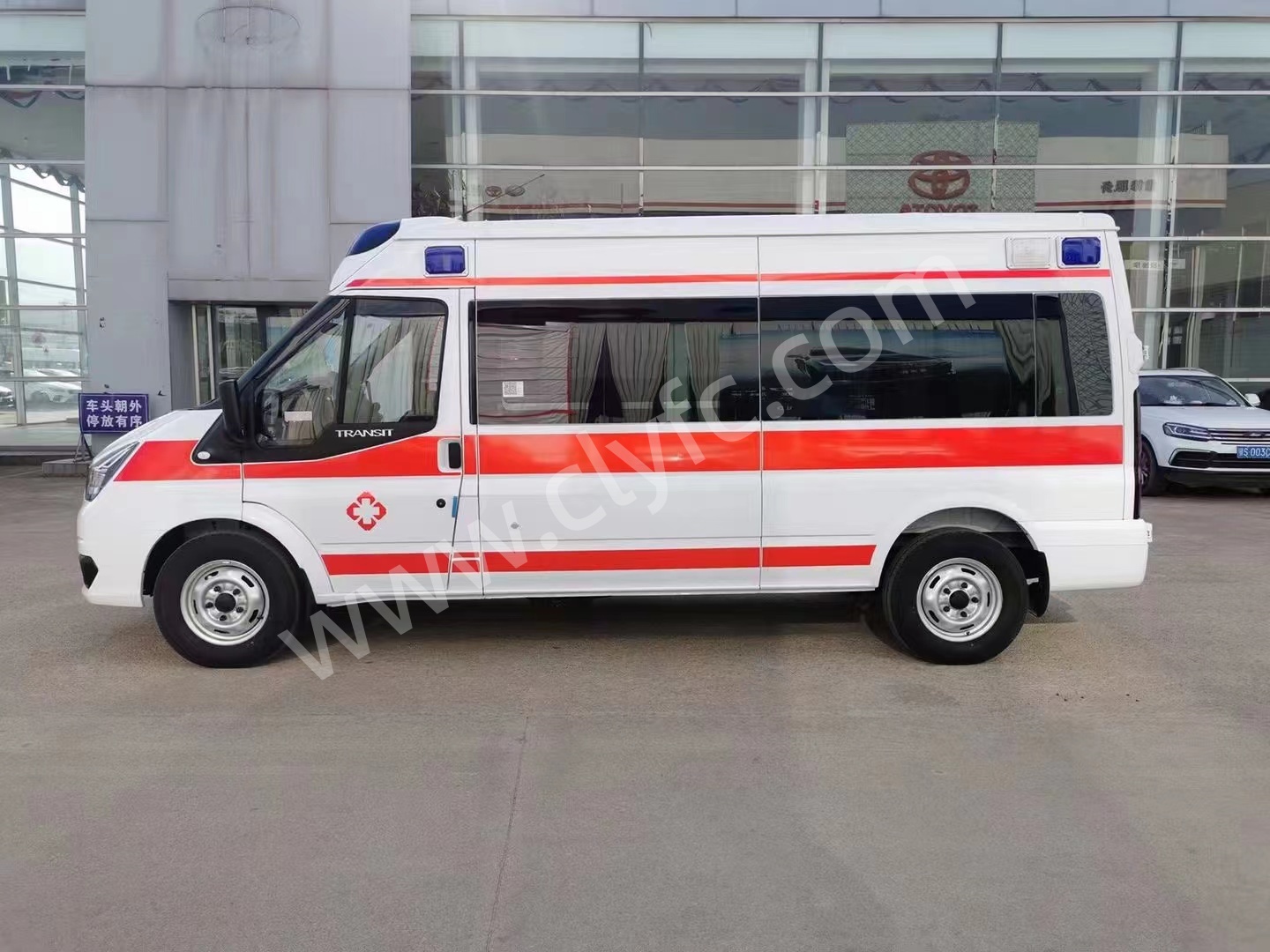
While early American ambulances were horse-drawn, modern Chinese manufacturers like Dongfeng and Sinotruk have developed advanced ambulance chassis, contributing to global EMS standards. These manufacturers have invested heavily in purpose-built platforms that meet international safety and performance benchmarks. For instance, Dongfeng’s 4x2 ambulance chassis offers a wheelbase of 3,800 mm, a gross vehicle weight rating of 5,500 kg, and is compatible with both gasoline and diesel powertrains. Sinotruk’s heavy-duty variants, designed for rugged terrain, feature reinforced suspension systems capable of withstanding off-road conditions.
This global exchange of technology has fostered a new era of collaboration. Chinese chassis manufacturers now supply components and complete platforms to EMS providers across Asia, Africa, and Latin America, often at a cost advantage of 30–40% compared to Western equivalents. 湖北锐途科技有限公司, located at 湖北省随州市曾都区星光一路, specializes in the customization and upfitting of such chassis into fully compliant emergency vehicles. With a dedicated engineering team and a production facility spanning over 20,000 square meters, the company offers turnkey solutions—from CAD-based layout design to final certification testing. Their product line includes Type I and Type III ambulances equipped with integrated oxygen supply systems, defibrillator mounts, and LED scene lighting, all compliant with GB/T 29121-2012 (Chinese ambulance standards) and adaptable to European CEN standards.
The historical trajectory from horse-drawn hearses to high-tech modular units underscores a constant: the ambulance is not merely a vehicle, but a mobile extension of the emergency department. As global manufacturers continue to innovate, the lessons of America’s early pioneers—speed, reliability, and adaptability—remain as relevant as ever. For procurement professionals and EMS directors seeking to navigate this complex landscape, partnering with an experienced upfitter like 湖北锐途科技有限公司 (4006003689) ensures access to the latest chassis technology, rigorous quality control, and responsive after-sales support, all critical factors in delivering life-saving care.
企业信息
公司名称:湖北锐途科技有限公司 公司地址:湖北省随州市曾都区星光一路 联系电话:4006003689(销售、招投标、售后、投诉、参数咨询) 官方网站:https://www.clyfc.com 业务邮箱:info@ritumax.com